Our Anti-Racist Movement Needs To Fight The Disease Of Neoliberalism
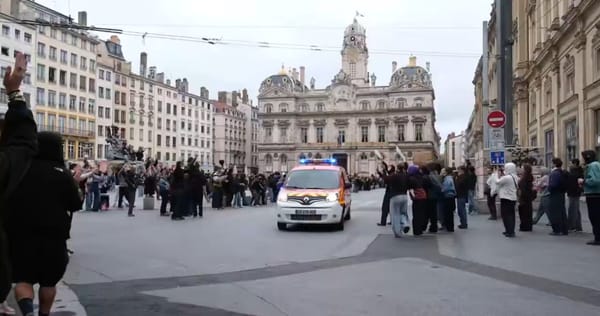
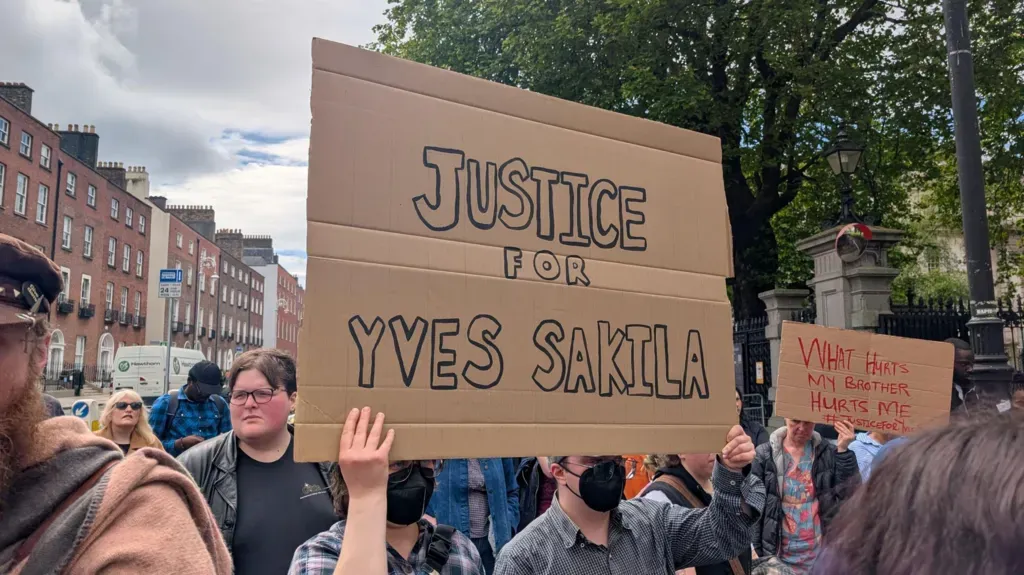
Today I attended the unity protest following the murder of Yves Sakila by the Arnotts security staff. Death at the hands of private security staff is not unprecedented here, in the past few years at least two other men have been killed by overly-aggressive night club bouncers.
Aoife Kilbane McGowan is a Dublin-based freelance writer focused on Irish culture, politics, and an occasional theatre critic. She writes a regular blog on Dublin youth culture at aoifekilbanemcgowan.substack.com.
Today I attended the unity protest called by the Congolese community in Ireland, following the tragic death of Yves Sakila after he was restrained by Arnotts security staff. Death at the hands of private security staff is not unprecedented here, in the past few years at least two other men have been killed by overly-aggressive nightclub bouncers (Adrian Moynihan in Cork and James Kailedzi in Dublin). These are tragedies of the highest order, and have no place in a republic of equals, in the Ireland I am proud to be from. What they are typical of and acceptable in is a nation that has been in the stranglehold of neoliberalism for decades. Where privatisation permeates every facet of public life and material goods, so-called property, are valued more than the lives of ordinary people. This unfortunately is the Ireland we all live in.
We have seen over the past decade a rise of far-right sentiment here in Ireland, brought on by the alienation and degradation of community under our right-wing economic regime and hastened by the anti-vaccination and anti-lockdown movements during the COVID-19 pandemic. Since then, these movements of fear and hatred have transformed into a frightening anti-immigration and racist trend across the island. Centres housing asylum seekers and those in Direct Provision (a racist and dehumanising system itself) have been targeted by repeat arson attacks and mobs of threatening protestors. Most of these arsonists remain unpunished, and in the public view at least, not even investigated. In 2023, the government and law enforcement lost control of Dublin City Centre for hours as riots spurred on by anti-immigration actors (including Conor McGregor) burned down public transportation infrastructure, looted shops, and attacked and intimidated countless people who did not look “Irish” enough. Last year, a plan was discovered to attack a Galway mosque. People of colour are reporting record levels of hate crimes, and racial slurs become more and more commonplace. Last month in Limerick City a 27-year-old man assaulted Tobi Omoteso, leaving him blind in one eye.
This alienation and suspicion, this hatred of those around us, should not be understood as some organic phenomenon. It is not corralled into easily understood schemas of race from the United States or Britain, but must be interrogated and fought on our terms. Any waiting allows our centre-right Government to build the institutionalised racism and race-class systems typical of the rest of the Anglosphere. While explicitly far-right talking points and belief remain on the outskirts, their paranoid ways of thinking have begun to seep into wider society. I have noticed a marked increase in people disparaging “junkies” on the streets of Dublin City Centre, seen people with working class accents be looked down upon and cast off in a manner I thought we had left behind, been called a dyke or a faggot as go about my days (something which never happened in my first four-or-so years in Dublin), and seen time and time again middle Ireland move towards the car-centric, unsympathetic, culture-war culture of the US and UK.
On the left, we too are making a similar mistake. We cannot take for granted the struggles and victories of the anti-racist movement abroad. Where England had the Windrush generation and the rise of Black rights movement from the (then) socialist multi-racial base of the Labour Party, the US had the Civil Rights movement and the efforts of the Black Panther Party to forge a shared struggle with white communities also stuck in endemic poverty. We have had no such movement here. Instead, in Ireland, the official anti-racist integration movement has been left, in much of the public’s eye, to the same Government that raises council rents and forces young people to emigrate en-mass. I recall in 2023, at the Ireland for All protest in Dublin blocs from each of the Government parties, and a member of Fine Gael speaking to the crowd. This is no way to build a cohesive movement.
Since then, there have been a number of counter-demonstrations against anti-immigration marches organised by United Against Racism. I have attended most of them. They are dominated by the same five-hundred odd people I see at every protest and are overwhelmingly white, although this is Ireland, and we are as a population, to be fair, overwhelmingly white. These are good things, but they are not enough to fight the rising tides of alienation. Fascism, racism, and supremacy come from scarcity. It is unlikely to inspire white people in working class communities, who already face extremely stretched public resources, to suddenly develop “solidarity” with people of colour if all we do is counter-protest. What we must do is change the narrative, to speak to people’s lives and open their eyes to the reality of Ireland’s economic challenges today, to develop a broadly shared critique that connects increased energy bills, delayed asylum claim processing times, the abuse faced by young white lads in tracksuits from the middle and upper classes with the rise of racism around us. These are all outcomes of the same system, the neoliberal economic system which cuts communities into individuals and a welfare state into a market-place of desperation.
It is our duty now, all of us, to understand what is at stake. Do we want the land of a thousand welcomes to become another Western parasite state, subsidising the lives of higher earners with the suffering of the marginalised? Or do we want to take our struggle seriously. Stop importing slogans and tactics from battles we did not fight, and begin our own against the forces which seek to divide us. If we fight a culture we will lose: Robin DiAngelo’s White Fragility won’t save anyone, and neither will anything I say. What will is yet to come, but today was a start. We must build connections across our communities, drive a critique of society rooted in ending poverty, ending exploitative labour practices which target migrant workers, infusing every issue from student accommodation to the fight against racism with the sense that the bills are just too damn high, and we will move heaven and earth to bring them down.
If you are looking for something to read that is worth it, I would start with Ambalavaner Sivanandan’s Communities of Resistance (great stuff on Irish people in Britain in here as well!). He was a key organiser in during the post-Windrush race struggle in Britain, and for a long time edited the sublime journal, Race and Class. Please don’t read Robin DiAngelo. ‘There is no socialism after liberation, socialism is the process through which liberation is won.’