Brown Envelopes, Bags of Brown, Brownshirts, and Bertie: A Unified Timeline of How Dublin Became Patient Zero for Reaction
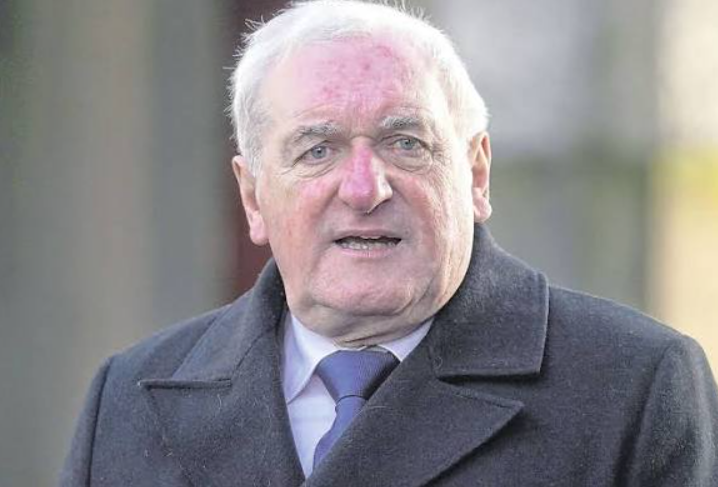
Bertie swapped brown envelopes while in power for political capital on hate against brown and black people. Irony: he and FF built the crises they blame on immigrants. The Irish right blaze a path for FF rule at the expense of everyone darker than milky tea.
This was originally meant to be an urban followup of the previous article on the political unrest in the countryside that led to the Fuel Protests, (which can be found Here ). When I wrote about the rural unravelling, I was told by some that it was a different world and completely irrelevant to the urban issues. That the dynamics of the countryside - the tractor protests, the Mercosur deal, the shadowy meetings in Athlone hotels - were specific. A niche concern. The real fight, the real working class, was in the cities. That was our turf, our home ground. We had the history, the communities, the estates.
Well, while we were all watching the country lanes, things have gone very sour in the city streets. And if the rural story was one of the left's absence, the urban story is one of the left's failure to defend its own base. This is the parallel tale, stretching back to the pandemic, back even further to the Haughey era, of how the far right stopped being a fringe nuisance and started building a base in the very communities we thought were ours facilitated by Fianna Fail policy.
That got waylaid for a bit by my own personal torments, but that may have been for the best, considering Bertie Ahern’s recent canvassing activities. I have decided to go much further back in my timeline than my planned covid start and demonstrate how Fianna Fail have had a serious synergy with the Irish Far Right on the one hand, and on the other the businessmen who would go on to capitalise on the growing privatisation of asylum accommodation. Now is the time to put a halt to Fianna Fail talking out both sides of their mouth and catching no flies in the process. But first, allow me to dispel the myth of “Cosmopolitan Dublin”.
Dublin Exceptionalism of the worst kind:
I have repeatedly gotten into arguments with the rest of the Irish left on the issue of reactionary politics being centred, within Ireland, in the urban centres. This bucks the trend of most other countries in the west, it deeply, deeply upsets the urban intellectual who really wants us as a nation to be, essentially Germans or Swedes but with more banter and refuses to do anything at all about the actual issue. That would require introspection and looking at what surrounds them. The facts, however, speak for themselves. All actual evidence illustrates the fact that Dublin is not just part of the problem, it is the central hub, and patient zero in infecting everywhere else in the country.
While Dublin accounts for roughly 28% of the national population, it consistently records just under half (44-50%) of all hate crimes and hate-related incidents in the state.
The most prevalent motive for these crimes is racial discrimination, at 39%, with anti-nationality motives increasing sharply.
In the 2024 local elections, all four seats won by far-right candidates were in Dublin. While the national vote share for far-right parties was under 2%, candidates in working-class areas of Ballymun-Finglas secured over 20% of the vote, and over 32% in some pockets. In the European elections, the combined far-right vote in Dublin was 15%, a historic high nearly double the estimated national average of 7.5%
The two most violent anti-immigration flashpoints in the state were in Dublin: the November 2023 riot and the Coolock protests in July 2024. In October 2025, a protest at the Citywest IPAS centre drew crowds of over 2,000, four times the number of the 2023 Dublin riots.
There is a well documented phenomenon of right wing groups organising what they themselves call “flying columns” of activists, predominantly from poorer areas, to add numbers to events across the country as well as reports of them organising whole buses where public transport links do not exist. This is causing nationwide contagion based on a few hubs nationwide, reflected well in the hate crime statistics. The main hub is Dublin with ancillary hubs in all large Leinster towns, followed by Cork with ancillary bases in Fermoy, Mallow and parts of West Cork, then Athlone (technically an ancillary of Dublin, then Donegal-Sligo-North Mayo, but Dublin is the beating heart of it.
This data makes it impossible to argue that Dublin is just another part of a national trend.
The scale and concentration are different. This is not some Dublin bashing event from a whinging culchie. This is an outside looking in analysis of hard truths our comrades in Dublin need to look at, that communities need to be empowered to deal with by first admitting that there is a specific problem specific to our unique material conditions as a nation and if it is not looked at properly, if it is not dealt with, it has the potential to take the whole country with it.
This is not a case of separate unrelated phenomena. It is a story of a single, intertwined system that spans over four decades. The brown envelope (Fianna Fáil’s institutionalised corruption), the bag of brown (the heroin and crack cocaine that devastated working-class communities and completely destroyed their ability to resist and organise), and the brownshirt (the far-right activist who claims to defend those communities, in some cases while dealing bags, in all cases while ensuring our hundred year FFG hegemony continues for the next hundred years by being the shock troops that destroy any actual resistance) are all connected. And standing at the junction of all three, for over forty years, has been Bertie Ahern’s Fianna Fáil. The party created the conditions for the drugs epidemic through policy, neglect and developer cronyism, absorbed organised crime’s methods of accruing money and influence, and then, when the backlash came, positioned itself alongside the far right to blame immigrants for the chaos it had incubated.
This is the unified timeline of how we got here.
The First Era: The Rotten Foundation — Fianna Fáil’s Institutionalised Corruption (1979–1997)
The culture was set from the top. Charles Haughey, who led Fianna Fáil from 1979 to 1992, “regularly took bribes” and was the central figure in the Ansbacher scandal, a Cayman Islands scheme where the ultra-wealthy were aided in hiding money from the Revenue Commissioners.
To better understand the foundations of this foundation please see my previous article on how FF built their power to do so since the foundation of the state: The Parish Hall Empire
Haughey took control of Fianna Fáil’s “secret fund-raising committee” after becoming leader in 1979. A former Fianna Fáil TD, Denis Foley, was discovered to have held two Ansbacher accounts, one opened in 1979 and a second in 1990.
The scale of the corruption was staggering. Des Traynor, Haughey’s personal financial adviser and key architect of the Ansbacher deposits, withdrew £41,000 from his personal bank account to pay Haughey’s bills when Haughey was Taoiseach. Drawings from accounts controlled by Traynor that corresponded to credits to the Haughey bill-paying account climbed from £55,000 in 1985, when Fianna Fáil was in opposition, to more than £271,000 in 1990 when Haughey was Taoiseach of the Fianna Fáil-Progressive Democrat coalition.
In 1997, developer Tom Gilmartin alleged that he told Bertie Ahern in 1989 that he gave Pádraig Flynn £50,000 for Fianna Fáil—Flynn kept the money for himself, and “Bertie did nothing about it.” That same year, the Mahon Tribunal began its investigation into planning corruption. What it would eventually uncover would shake the state to its foundations.
But the corruption was never just about individual greed. It was systemic, and it shaped the built environment of the state. As Tom Gilmartin famously alleged, Fianna Fáil “make the mafia look like f***ing monks.”
The Second Era: The Heroin Wave Floods Working-Class Dublin (Late 1970s–1980s)
While Fianna Fáil politicians were taking brown envelopes, working-class Dublin was being flooded with bags of brown. And the state’s response was not rescue or any form of assistance, it was neglect and indifference.
In the late 1970s and early 1980s, particular working-class areas of Dublin’s inner city developed a community drugs problem, characterised by a large number of people using drugs in a small area. Heroin, introduced in the late 1970s, soon flooded the flat complexes and neighbourhoods of inner-city Dublin, as children as young as 12 fell victim.
The architect of much of this devastation was Larry Dunne, a Dublin gangster who ran a highly organised crime network with strong links to England. Tens of thousands in the capital’s inner city became addicts on the heroin smuggled into Ireland by the swaggering Dunne. Through the late 1980s and 1990s, the number of chronic addicts every year in Dublin touched 20,000. Dunne’s was an operation with young “runners” spreading his drugs around the capital. With the nickname “Larry does not carry,” he built a network that would outlast his own imprisonment and set the template for every Dublin drug gang that followed.
The community response was organised, but it came from below, not from the state. Concerned Parents Against Drugs (CPAD) became a citywide network whose intention was to empower local communities to tackle the problem themselves. But the damage had already been done. The heroin epidemic had hollowed out communities, creating the desperate conditions that the far right would, decades later, exploit.
The state, meanwhile, was concerned with things it viewed as much more important, forgetting about the working class families who believed their lies and built them. Fianna Fáil was busy building its relationships with developers, and the drugs epidemic was treated as a problem for the communities it affected and no concern of Fianna Fail, not a national crisis requiring a national response. This was in an era of increasing working class activism and anti imperialist activism in Dublin and there is a funny similarity that sticks in my mind between what happened in Dublin and what happened in black communities in the US in the same era.
The Third Era: Fianna Fáil Creates the Housing and Services Crises (1997–2010)
This is the era in which Fianna Fáil built the bonfire that the far right would later use as seed flame for their arson campaign. The party that defined the Irish republic for most of her history systematically dismantled the state’s capacity to house, heal, and serve its own people. Every crisis now blamed on immigrants—the housing shortage, the hospital waiting lists, the overcrowded schools—was built by FF policy.
The Housing Betrayal
In 1990, local authorities in Ireland spent the equivalent of €600 on emergency accommodation for homeless people. Not €600 a week. €600 for the entire year. The number of homeless families was five.
By 2026, the number of people accessing emergency homeless accommodation had reached 17,517—including 5,571 children—all at record levels. 12,198 were recorded in Dublin alone, representing a staggering 12% year-on-year increase. Since Fianna Fáil and Fine Gael joined forces, the number of homeless people had risen by almost 10,000, a 160% increase, with over 5,000 children living in homelessness.
How did this happen? Fianna Fáil (and Fine Gael but they will have their own article later).
In 1997, when FF and the Progressive Democrats formed a government, the average price of a new house was just under €100,000 and there were 26,000 applicants on local authority housing waiting lists. By 2002, house prices had doubled to over €200,000 nationally and over €300,000 in Dublin, while waiting lists had swollen from 26,000 to 48,000. In July 2002, the FF-led government instructed local authorities to discontinue turnkey developments—stopping the construction of new social housing. In the 2003 Estimates, FF cut social housing provision by a further 5%, abolished the first-time buyer’s grant, and increased VAT on new homes, adding approximately €6,000 to the cost of purchasing a new home.
In 1998, FF Finance Minister Charlie McGreevy introduced a tax incentive scheme for developers building homes in rural areas that allowed them to write off 50% of their capital expenditure against tax—directly fuelling the property bubble. A property bubble underpinned by “loose and reckless bank lending, and years of Fianna Fail tax cuts”.
Then came the 2008 crash. The Fianna Fáil-led government of 2008–11 implemented austerity in order to bail out the collapsing financial institutions and enforce the cost of recession, adjustment and financial losses onto the state, public services and the public. The social housing capital investment budget was the second-hardest-hit area of public spending in the entire state, reduced by 88%—from €1.46 billion in 2008 to €167 million in 2014. Total public funding for new council housing fell by 94% between 2008 and 2013. The FF government’s 2008 bank guarantee saddled the state with the debts of Anglo Irish Bank and Irish Nationwide, a disastrous and costly error whose consequences the Irish people are still paying for.
Since 2011, FF and FG together have spent almost €10 billion of taxpayers’ money on subsidies to landlords. By 2023, annual expenditure on emergency accommodation had ballooned to €345 million, with €270 million of that paid directly to for-profit entities. The state simply stopped building social housing and started funnelling public money to private landlords, creating a market in which property became a speculative asset rather than homes for the people.
The Health Service: Starved to Breaking Point
In 2009, the FF-led government imposed a recruitment embargo on the public health service—a moratorium on hiring and promotions that the HSE itself was instructed to enforce. The embargo, combined with successive budget cuts, resulted in a collapse in hospital capacity. Between 2008 and 2012, there were 941 fewer public hospital beds. Eight A&E units were closed in ten years.
By 2026, the trolley crisis had become routine. The Irish Nurses and Midwives Organisation stated that February 2026 was the worst February on record for hospital overcrowding, with 11,595 patients treated without a hospital bed. April 2026 was the worst April on record, with 11,175 patients waiting for beds across the country. University Hospital Limerick recorded 1,978 patients on trolleys in a single month. Nationally, the INMO recorded a 29% annual increase in patients on trolleys from April 2025 to April 2026.
The FF playbook was now clear: create the crisis (by stopping social housing construction, imposing recruitment embargoes, closing hospital beds and Garda stations), let the crisis fester, and then—when the backlash came—blame immigrants for taking homes and hospital beds that the state had deliberately refused to build or staff.
The Fourth Era: Fianna Fáil Creates the Direct Provision Market and Racialises Irish Citizenship (2000–2004)
The Birth of Direct Provision
In March 2000, then FF Minister for Justice John O’Donoghue announced a new system of direct provision, providing asylum seekers with accommodation, food and a weekly allowance while their applications were being processed. It was initially described as an “interim” system which would provide accommodation for six months. As Fintan O’Toole wrote years later: “Ireland never had a system for processing applications for asylum fairly within six months. At the time of the McMahon report, 55 per cent of people in the asylum system and 41 per cent of those in direct provision centres had been waiting for five years or more”.
The real purpose of the system, O’Toole argued, was “to be sufficiently miserable to dissuade people from wanting to come to Ireland”. But it had another function: it was a private giveaway of public money. Two decades on, just seven of the 39 direct provision centres in Ireland were State-run. The remaining 32 were privately owned businesses. Between 2000 and the late 2010s, the state paid private companies over €1.3 billion to house asylum seekers. Mosney Holiday PLC, owned by a couple who donated €6,500 to Fianna Fáil in 2008, received over €139 million as of 2017. That must be some kind of record for a 9 year return on investment.
This was the foundational contradiction. Fianna Fáil created a privatised, for-profit system that enriched party donors while warehousing asylum seekers in conditions described as “cruel and indefensible”. Then, when that system created inevitable social tension, the party turned around and echoed the very racist sentiments to win back voters who were angry about the crisis they had created.
The 2004 Citizenship Referendum: The Original Sin
The year 2004 was the hinge. In January, the Fianna Fáil–Progressive Democrats government rushed the Immigration Bill 2004 through the Seanad in two hours flat. The bill provided for medical screening of all non-nationals and empowered immigration officers to refuse entry to people with disabilities or mental illness. Independent senator Joe O’Toole described it as “rooted in an Aryan philosophy that would be worthy of Nazism at its worst.”
Then came the Citizenship Referendum. Labour leader Pat Rabbitte alleged in the Dáil that US consultants brought in by Fianna Fáil had identified immigration as the main voter issue, placing it 17 points ahead of health. The party denied it, but the timing was damning: Taoiseach Bertie Ahern had told the Dáil on 17 February that there were no plans for a constitutional referendum in 2004, yet Justice Minister Michael McDowell brought forward proposals only three weeks later. It also emerged that McDowell had met with the Masters of Dublin’s maternity hospitals on the issue as far back as October 2002, almost two years before the referendum was announced.
The referendum passed with 79% of the vote. FF launched its “yes” campaign claiming it would “protect” Irish citizenship and close a “loophole.” FF TD Noel O’Flynn, who had previously made widely condemned remarks about abuses of Ireland’s citizenship laws, said after the result that he felt “vindicated” by it. As Fintan O’Toole wrote: “This referendum was a disgrace to Irish democracy. It was cooked up by the Fianna Fáil-Progressive Democrats government on the basis of scare stories about foreign women coming to Ireland to have their babies purely so that those children could then claim Irish citizenship.”
On the doorsteps in 2004, a Fianna Fáil candidate was asked what the party was going to do about “the fucking n******s.” The party had made its bed, and it knew exactly who it was inviting to lie in it.
The Fifth Era: The Golden Age of Organised Crime (1990s–2016)
While Fianna Fáil was creating the housing crisis and embedding corruption in all other arenas of Irish life, a parallel power structure was being built in Dublin’s criminal underworld.
The Kinahan Organised Crime Group (KOCG) was founded by Christy Kinahan, a native Dubliner, in the late 1990s and early 2000s during the Celtic Tiger period. Kinahan’s first convictions date back to the late 1970s and involved car theft, burglary, handling stolen goods and forgery. The group reportedly began as a street gang of inner-city drug dealers in Dublin, but soon grew on a global scale to become the multi-million euro criminal network that it is today.
By the 2010s, the KOCG was alleged to be the most powerful criminal organisation in Ireland and one of the largest organised crime groups in the world, with operations spanning Ireland, the UK, Spain, and the United Arab Emirates. Irish courts concluded that the group is a murderous organisation involved in the international trafficking of drugs and firearms. In 2022, the United States Department of State announced rewards of up to US$5 million for information leading to the arrest and/or conviction of Kinahan family members, a measure reserved for the world’s most dangerous transnational criminal organisations.
The cartel’s significance to this story is twofold. First, the drugs epidemic that devastated Dublin’s working-class communities—the same communities the far right would later claim to represent—was driven by the Kinahan cartel and its predecessors. Second, as we shall see, the far right’s street-level activists often came from the same criminal milieu.
The Crumlin-Drimnagh feud began in 2000 and resulted in the number of people shot dead annually exceeding 20 during several years, peaking at 24 in 2006, with homicides peaking at 152 in 2007. By 1996, 80% of all crime in Ireland was drug-related. The state’s response was belated, fragmented, and—as with housing and health—the burden fell on communities to organise their own defence.
This was very apparent in Limerick city where there was no response until the community itself recognised its problems and organised around it to force change. I am from the rural hinterland of Limerick myself, and this is what I hope the fine, proud, strong people of Dublin can achieve if they first admit their unique problem in the modern era and stop shit flinging when people from down this way try to tell them “lads, ye have a serious problem” it is not for the one upmanship. The future of the nation hinges on the rehabilitation of Dublin. If this is not solved we all go down with it, even Limerick, who has escaped the worst of this due to the very community organisation and the forcing of action on regeneration as well as organised crime that I am trying to impress upon you all. It is not sour grapes, it is genuine concern and the kind of outside giving out that needs to be listened to.
The Sixth Era: The Mahon Verdict and the Crash — Everything Exposed (2008–2012)
The 2008 crash was the moment the contradictions of the Fianna Fáil model became impossible to ignore. The FF-led government’s bank guarantee, introduced on the night of September 30, 2008, saddled the state with the debts of Anglo Irish Bank and Irish Nationwide—a disastrous betrayal of the Irish people whose consequences are still being paid for.
Then, in March 2012, the Mahon Tribunal delivered its final report after 15 years and at a cost of €300 million. Its central finding was devastating: “corruption in Irish political life was both endemic and systemic. It affected every level of Government from some holders of top ministerial offices to some local councillors and its existence was widely known and widely tolerated”. However, like with everything else in this country, nothing much was done.
The report found that Bertie Ahern had been untruthful in his evidence. It judged Pádraig Flynn to have been corrupt, finding that he had “wrongfully and corruptly sought a substantial donation” from developer Tom Gilmartin for the party and, having been paid IR£50,000 for that purpose, pocketed the money and proceeded to “utilise the money for his personal benefit”. It found that Albert Reynolds had abused his political power when as Taoiseach he sought a donation from property developer Owen O’Callaghan at the same time as O’Callaghan—against whom a finding of corruption was also made—was seeking government support to build a stadium in Neilstown, Co Dublin.
When adverse findings against Charles Haughey by the McCracken and Moriarty Tribunals were taken into account, the three men who led Fianna Fáil from 1979 to 2008 were all found to have seriously abused their positions as party leader and Taoiseach. As the Irish Examiner put it: “Mahon uncovers the rotten heart of our debased political life and, specifically, the corrupt, corrosive, cancerous culture that characterised so many of Fianna Fáil’s officer class. What was once a party of idealistic republicans had become a posse of grubby realtors and property-sector fixers for hire”.
Micheál Martin, the current Taoiseach, was a member of all Ahern’s cabinets from 1997 until 2008. His silence during those years was, as the Irish Independent noted, in stark contrast to his vocal condemnation of Ahern’s ethical lapses after the report’s publication.
The 2011 general election saw Fianna Fáil decimated. But the party’s fundamental character did not change. It retreated, regrouped, and—as we shall see—waited for the political winds to shift back in its favour.
The Seventh Era: The Incubation — The Far Right’s Long Gestation (2014–2019)
The far right did not emerge suddenly in 2023. It was built, slowly and deliberately, over a decade of political organising, digital network-building, and strategic exploitation of the crises that Fianna Fáil had created.
The Direct Provision Protests and the First Counter-Mobilisation (2014)
In the late summer and autumn of 2014, residents in Direct Provision centres across the country staged a series of protests supported by the left in unity. They had three clear demands: close all asylum centres, give all residents the right to remain and work, and end all deportations. In Cork, residents at the Kinsale Road centre took control of their centre for ten days; residents of Ashbourne House in Glounthane undertook a hunger strike. The protests exposed the brutality of the system Fianna Fáil had built: adults were living on €19 per week, children on €9.60. There were high rates of suicide, most of these centres were overcrowded and full of vermin and the whole situation was and still is, beyond reprehensible. But something else was happening alongside these protests from within the system: the same towns where Direct Provision centres were located were also the places where, a few years later, the first anti-immigrant protests and arson attacks would occur. The state’s policy of dispersing asylum seekers to poorer areas—often without any actual support and resources—was creating the resentments that the far right would later exploit.
The Birth of the Far-Right Parties (2015–2016)
In July 2015, Identity Ireland was launched in Dublin—a minor anti-immigration, far-right party that favoured leaving the EU and returning to the Irish pound. It was the first of a new generation of explicitly anti-immigration parties.
In November 2016, the National Party was founded by Justin Barrett, the former leader of Youth Defence, and James Reynolds, a former IFA county chairman who was expelled for his behaviour. The party was far-right, nationalist, and explicitly anti-immigration. Barrett had his first semi legitimisation as a political actor in campaigning against the Treaty of Nice and he was also known for attending events organised by open fascists in Germany and Italy. The National Party’s 2017 press event in Dundalk was clumsy and poorly attended, but it marked the arrival of an organised far-right presence that would, over the following years, embed itself in the anti-immigration protests, inspiring many imitators that spread across the country.
The 2016 general election manifestos of both FF and FG were notably thin on immigration—one analysis found they were “returning empty fields” when searched for “immigrant” and “immigration” keywords. The strategic silence of the centre-right allowed the far right to claim anti-immigration politics as its exclusive territory. This was not the same as supporting immigrants, or anti racism. It was an intentional, strategic silence of “now is not the time yet”.
The Peter Casey Test Run: Proof of Concept (2018)
The 2018 presidential election was a political earthquake. Peter Casey, a businessman with no political experience, came second with 23.25% of first-preference votes—nearly a quarter of the electorate—after making comments about Travellers and welfare recipients that were widely condemned as racist and classist. A Fianna Fáil source privately admitted: “If he gets it, we are all fucked; every candidate will be looking to go after someone or some group just to get attention.”
Casey’s result proved that there was a substantial constituency for anti-immigrant, anti-Traveller politics in Ireland. Nearly one in four voters was willing to back a candidate whose platform was built on targeting minorities. The far right took note. So did Fianna Fáil.
Also in 2018, the Irexit Freedom to Prosper Party (which would later become the Irish Freedom Party) was launched, holding events in Dublin attended by approximately 600 people and hosting Nigel Farage as a speaker, running under slogans like “Open borders = housing chaos.” And in November 2018, the first significant act of anti-immigrant arson occurred: a planned asylum accommodation at a hotel in Moville, Co Donegal, was set alight. The Department abandoned its plan to house people there. It was the first in what would become a grimly familiar pattern of hands off policing, lack of investigation and rewarding the actions of the far right by action rather than word.
The Verona Murphy Episode and the Normalisation of Anti-Immigrant Rhetoric (2019)
In the 2019 Wexford by-election, Fine Gael candidate Verona Murphy made controversial remarks about asylum seekers. She performed strongly, securing 9,543 first-preference votes. There was “no mass voter boycott” of her after the remarks. Murphy’s strong performance sent a message to every mainstream politician watching: you could say these things and not be punished at the ballot box. You might even be rewarded.
Meanwhile, far-right YouTube channels were building substantial audiences. One figure had 19,000 subscribers and was broadcasting anti-immigration content to a growing audience. The digital infrastructure of the far right was being built, and it would prove decisive when the pandemic arrived.
The Eighth Era: The Lockdown Algorithm Reeducation Camp — Conspiracies, Lockdown Protests, and the Far Right’s First Mass Mobilisations (2020–2022)
When the country shut down in March 2020, most of the left organised mutual aid networks, delivered groceries to the cocooning, and tried to hold the state accountable for its handling of the crisis. But something else was brewing online.
By August 2020, anti-mask and anti-lockdown protests were taking place in Dublin. These were not large by later standards, but they were significant because they represented the first time since the anti-water charges movement that a new, cross-class coalition was being assembled around a shared grievance. And the left was nowhere near it.
In some cases, our work was counter productive. The vaccines themselves and the proposals of mandates were, at its core, a bodily autonomy issue and instead of phrasing things in terms of “yes you have your right to bodily autonomy, but everyone else does too and are under no obligation to risk their bodies for your autonomy” it, despite our best efforts our approach did not work, because the propaganda had things in such a way that most intervention would fail. That is grossly apparent in hindsight.
Instead of calling into question why the hospitality sector, the biggest possible vector for transmission, was being exempted from the lockdowns with increasingly farcical loopholes, while construction was being halted, we gave our best impression of european and american liberals and a smug little knowledge-is-dangerous position of supporting science while not even trying to understand the science. I got semi cancelled, faced with screeching semi intentional obtuseness and a 30 day ban from Facebook for explaining that it was not the ivermectin itself that was landing people in hospital and making men sterile, it was the fact they were taking livestock ivermectin whose dosages as well as secondary ingredients were causing this and that this rhetoric while a soft win, put in danger people in the global south with access to Facebook who need to take ivermectin for waterborne parasites and was an equally dangerous form of misinformation. There were a lot of similar things going down along with lumping people who had legitimate health exemptions in with the anti vaxxers. I am only half vaxxed because the first one worsened health issues and I found out I was pregnant the day before I was due to take the second (completely unrelatedly I later suffered a miscarriage, I have gynaecological issues and RH negative blood, it was not my only one) but for some reason at least on that, there was sympathy for me because I was half vaxxed and people who were unvaxxed because of legitimate diagnoses of illnesses that exempted them, were called liars and attacked.
These same hospitality billionaires and multi millionaires that would profit off the suffering of the refugees in the IPAS system later, were the protected entity during the covid years, Hotels being open was not essential. Construction and vehicle maintenance were, both shut down which had the handy side effect of increasing property prices because we built basically nothing and ground could not be broken on anything because even if they opened construction, construction cannot function without equipment and vehicles. But do not step between a Fianna Failer and their racing weekend getaway, or his hotelier friend and profiting off of the “staycations”.
We made a misstep in focusing solely on the anti vaxxers instead of looking at that, the online transmission of an algorithm driven mind virus that backed it up and the zeroing in interest on interfering in Irish political life by the international right.
I remember the change in people well. My life changed little because I am asocial by nature, my family is more like a clan and equally asocial so cocooning was never an issue and I had the agricultural travel exemption because I had due to me not having a bob and having to make do, 2 areas of grazing 40 miles apart. So I largely had the county to myself and others like me. But the odd time I would run into someone, you could see the mental unravelling of what used to be decent people. You could see the algorithmic switch flip online as soon as social media platforms knew they had a captive audience, and you cannot convince me that this was not orchestrated especially from what we now know of the activities and fascist daydreaming of the assorted tech tycoons. This was a decentralised fascist reeducation camp from home. I will never as long as I live forget the change in people. I would also like to say to all socialists here that just by talking to people, you do not know what level of difference you are making. I rented several plots from several predominantly elderly people across the county and just by having long shouting chats at a distance of around 10 feet on my way in and out of places, none of them fell victim to the conspiracies. A lot of the people I did not see again until after the lockdowns were lifted because they lived outside of my general cross county range so no across the road shout chats, came to me unrecognisable after it.
In February 2021, a large demonstration on Grafton Street descended into violence. Three gardaí were injured—one hospitalised—and 23 people were arrested. A senior garda told the media: “These are serious far-right extremists who are behind this. They are a well-organised network willing to use violent means to achieve their aims.”
By July and November 2021, several thousand people were marching through Dublin against vaccine passports and public health measures. The far right was learning to mobilise, and they were doing it on our streets. The left’s response was, charitably, a shrug. The protests were dismissed as a fringe of cranks and conspiracy theorists. There was no serious attempt to engage with the genuine fears and disorientation that the pandemic had produced. We ceded the entire terrain of pandemic dissent to the far right, instead of calling into question the governments handling of it from a place of concern for the public, we allowed the government to position us in front of them to take the flack for them while concealing their mishandling because of our (rightful) fears of misinformation. and the far right used it to build mailing lists, Telegram channels, and a network of activists who would form the core of what came next.
Meanwhile, the crack cocaine epidemic was silently exploding. By 2023, 4,923 people sought drug treatment with cocaine, in its powder or crack form, as the main problem. The crack cocaine problem in Dublin’s south inner city reached “critical” levels and was threatening the “fabric and heart” of communities in the area. Children living in the Oliver Bond flat complex were witnessing people “comatosed on the stairs” after injecting drugs and “sexual favours being given”. One in three people being treated for cocaine addiction in Ballymun were on crack—higher than in any other part of Dublin. The areas that had the highest numbers of crack cocaine users in treatment “included the inner-city areas. It also included Finglas and Cabra and Tallaght”. The very communities the far right was beginning to organise were the ones being devastated by an epidemic the state was failing to address.
The Ninth Era: The Great Pivot — From Anti-Lockdown to Anti-Immigration (2022–2023)
As the pandemic receded, the far right pivoted with remarkable speed and discipline. The same networks that had been built around anti-lockdown and anti-vaccine agitation simply shifted their focus to housing and immigration. I spoke of what I witnessed on the rural end of this pivot in my previous linked article, but that was just one prong of a two pronged approach.
The narrative was devastatingly simple: “They” (migrants) are getting houses while “You” (the Irish working class) are on a waiting list for 15 years. This was a lie built on a grain of truth. By January 2024, 13,531 people were in emergency accommodation—an increase of 1,777 people in just 12 months. Families were being evicted into homelessness while hotels were being used to house international protection applicants. Largely because there was an opportunity for the Irish political class to enrich their buddies in the hospitality sector on the basis of EU funds for the Ukrainian Refugee Crisis. People were desperate. The far right gave them a simple scapegoat. The left offered a complex lecture on the failures of neoliberal housing policy, I know, I was one of the left doing so at the time. Still am in many respects in the hopes someone will listen.
The Arson Campaign Begins
Between August 2023 and August 2024, government reports documented 33 arson attacks on existing or planned accommodation for asylum seekers. The pattern was chillingly consistent. A rumour on a local Facebook group, amplified by far-right Telegram channels. A protest outside a building rumoured to be earmarked for IPAS accommodation. And then, within days or weeks, a fire. The benefits to the hospitality tycoons in this were numerous.
IPAS centre goes ahead = guaranteed income on and off season as well as the ability to cut staff.
IPAS centre burns down = lucrative insurance payout on worthless dilapidated boom era hotels in Ballygobackwards now suddenly worth something and a state sanction on redevelopment after the rubble is cleared
IPAS centre is pulled out on part way through development = student housing or other lucrative redevelopment with the back broke on the planning issue.
The only people losing in all this is the general population that do not want to live in a fascist hell scape and the refugees.
In Ringsend, a vacant pub was burned; it was actually to become a homeless family hub. In Sandwith Street, tents belonging to homeless international protection applicants were set alight following anti-immigrant demonstrations. In Ballybrack, Ballincollig, Finglas, Buncrana—the geography of arson spread across the country. The government effectively admitted defeat in some areas, with property owners withdrawing offers to house asylum seekers after the Ross Lake House hotel attack in Galway.
The Organised Crime–Far Right Nexus Emerges
It was during this period that the links between organised crime and the far right became visible. British far-right leader Tommy Robinson was photographed posing with convicted Ballyfermot heroin dealer Anthony “Harpo” O’Driscoll while visiting Ireland to document anti-refugee protests. Robinson also boasted of family links into the heart of the Kinahan cartel.
A report by the Institute for Strategic Dialogue noted that Irish anti-immigration groups had been working alongside British nationalists and Northern Irish loyalists, with Tommy Robinson welcomed to Dublin by Derek Blighe, former leader of the Ireland First political party. The “inverse intersectional solidarity” that had Orangemen standing beside self-proclaimed Irish patriots was now an open feature of the far right’s organising.
The Tenth Era: Parnell Square and the Night Dublin Burned (November 2023)
At approximately 1:30 p.m. on November 23, 2023, a man stabbed three young children and a care assistant outside Gaelscoil Choláiste Mhuire on Parnell Square East. Within thirty minutes, posts speculating about the nationality of the alleged attacker were circulating on X and Telegram.
By 4:45 p.m., elements within the crowd at the crime scene pushed through the Garda cordon. What followed was the most violent riot in modern Irish history, surpassing even the 2006 riots. By the end of the night, 60 gardaí had been assaulted, three of them seriously. Thirteen shops had been looted or damaged. Four buses and one Luas tram had been destroyed. Eleven Garda vehicles had been torched. Total damage ran to tens of millions of euros. 57 people were eventually arrested.
The riots were a strategic victory for the far right. They proved they could mobilise hundreds of people at a moment’s notice via social media. I sat there all night as it developed as people sent me news, screenshots and I cried at the time, because even though I could not fully formulate the thought, I knew this was the beginning of what is becoming, and will become the darkest period of Irish society and political life since the foundation of the state.
They proved they could set the political agenda, forcing every news bulletin and every politician to talk about immigration on their terms. And they proved they had a constituency. The people looting Foot Locker and torching buses were not all seasoned fascists; they were a section of the disenfranchised urban working class who had been fed a diet of “Ireland is full” and “you have been left behind,” and who saw the riot as a cathartic release.
The left, in the aftermath, was largely reduced to issuing statements condemning the violence. Myself included. This night would see my first appeal to calm and against misinformation on social media. I was in bed early because I was unwell, do not have a television and got news of the riots when a comrade from Tipperary rang me to tell me Dublin was on fire and we need to put something out now, this minute. So I put out an appeal in my pyjamas under the light of a bad LED bulb in my bedroom. After I had texted the only black person I knew in Dublin, to tell him to stay inside at home. (Himself and his wife, both Somali immigrants bought their first car off of me not long before, a 2006 Toyota Yaris he came down on the train for so he could get to work after his job moved across the city, a lovely little family making their way in the world, this is who is primarily affected by this kind of wanton fascist barbarism). This condemnation was necessary, a very important component, but for want of ability for further action it also left a vacuum where a political explanation and an intersectional yet class-based alternative should have been.
The Eleventh Era: Coolock, the Summer of Fire, and the Electoral Breakthrough (2024)
The Coolock Campaign
In July 2024, the far right’s strategy of embedding itself in working-class communities reached its most developed form. The former Crown Paints factory on the Malahide Road in Coolock had been earmarked to accommodate 550 international protection applicants.
A protest camp was established in March 2024. In the early hours of Monday, July 15, a Garda operation began to clear the camp. Petrol bombs were thrown, an excavator was destroyed by fire, and violent clashes erupted. Over the following days, the site was set on fire four times. 32 people were arrested, with 22 charged and brought before the courts. A digger was set on fire by protesters, a security guard was injured, and bottles and fireworks were launched at gardaí.
Anti-immigrant independent councillor Gavin Pepper was present at the protests. Other elected far-right politicians, including Malachy Steenson and representatives from the National Party and Irish Freedom Party, were also at the scene. The state’s response was telling: by 2025, the government had scrapped the 547-bed facility entirely. The message sent to communities across the country was unmistakable: if you burn and threaten and intimidate with sufficient intensity, the state will back down. This is a luxury position the left has never known and never will know. It is something that we have to come to terms with and is evidence of the state's complicity.
The Electoral Breakthrough
In June 2024, the far right got a foothold in the institutions. More than 100 candidates stood for far-right parties or as far-right independents in the local elections. Six were elected. On Dublin City Council alone, three anti-immigration councillors won seats. Gavin Pepper in Ballymun-Finglas secured over 20% of the vote, and over 32% in some pockets. Pepper’s victory was significant: a taxi driver and landlord who had made his name pushing an anti-immigrant agenda online blaming them for rising rents, deprivation and the housing crisis instead of himself especially when he was recorded talking badly about HAP tenants. As well as being front and centre at any and all protests. He has solidified his position by being “good on local issues” in his own area, following to the letter the hundred year long Fianna Fail Slibhin playbook that built the “Parish Hall Empire”
In the general election that followed in November 2024, the far right failed to win any Dáil seats. But the local election breakthrough was real. The movement had moved from the street to the ballot box, from disruption to representation.
And Fianna Fáil was watching closely.
The Twelfth Era: Fianna Fáil Adopts the Far-Right Playbook (2024–2025)
The Language Shift
Throughout 2024 and 2025, the rhetorical convergence between Fianna Fáil and the far right accelerated dramatically.
In January 2024, FF TD Robert Troy called for a “honest, frank and realistic” national debate on immigration “in the wake of recent arson attacks.” In April, FF TD Willie O’Dea stated the government should “stop playing to the woke gallery” and “stop listening to the out-of-touch Greens and NGOs”—language indistinguishable from far-right talking points.
By November 2024, Fianna Fáil’s election manifesto promised a new “Homeland Security”-style Department to deal with “national security and migration.” FF candidate Dympna Cunniffe posted a TikTok asking: “Would you want your children walking to school adjacent to the comings and goings of 1,000 asylum seekers awaiting background checks from countries dubbed ‘high risk’?” Fine Gael leader Simon Harris criticised her for using “the language of the far right.” Another FF candidate, Edel McSharry, said it was “reprehensible” that government policies “incentivised large and small scale landlords to prioritise refugees over indigenous families”—explicitly framing Irish people as “indigenous” and asylum seekers as outsiders, a classic far-right trope.
FF leader Micheál Martin said he “did not agree with or approve” the comments but refused to condemn them. The signal was clear: the rhetoric was embarrassing but not disqualifying. In other words, “hold your fire it is not ready for us yet”
The Policy Convergence
In early 2025, the government launched a campaign of very publicised deportation flights and expanded the list of “safe countries.” “Minister after minister has trotted out the line that Ireland is somehow a ‘soft touch’ or ‘easy target’ for migration”—language previously confined to far-right social media now spoken from the government benches.
A far-right Dublin City councillor, Malachy Steenson, expressed public approval of FF/FG’s anti-immigrant direction. The synergy was becoming explicit. This along with Pepper, Steenson et al forming a voting block in all but name against the left with the government parties on the floor of Dublin City Council.
In October 2025, a protest at the Citywest IPAS centre drew crowds of over 500. An anti-migrant rally in Drogheda was held days before a near-fatal arson attack on families in a building housing asylum seekers on Halloween night. The government was accused in the Dáil of using rhetoric that fuelled anti-immigrant sentiment.
In November 2025, gardaí arrested individuals in connection with a far-right plot to bomb a mosque in Galway. One was a convicted drug dealer who had been arrested by the local drugs unit in Portlaoise for selling cocaine. Another was purportedly according to the media a Sinn Féin activist although Sinn Fein had turned him down for membership who had previously admitted to selling cocaine. Documents described as a “manifesto” for the extremist group spoke of attacking “Ireland’s first mosque” in Galway as well as IPAS centres and hotels housing migrants.
Meanwhile, loyalist paramilitaries were now working together with international crime gangs and crime gangs in the republic to sell drugs. The PSNI’s Head of Organised Crime revealed that drugs—not political extremists—posed the “primary serious organised crime threat” and that these groups would work with “anybody in order to perpetuate their criminal enterprise, regardless of nationality, regardless of geographical location, regardless of political ideology.”
The fusion of the brown envelope, the bag of brown, and the brownshirt was complete.
The Thirteenth Era: Bertie’s Return — The Mask Fully Off (2026)
In May 2026, the circle closed. Former Taoiseach Bertie Ahern was secretly recorded while canvassing for the Fianna Fáil by-election candidate in Dublin Central. He told a voter:
“The ones I worry about are the Africans. I agree with you on the Africans. We cannot be taking in people from the Congo and all these places. I think there is too many from those places”.
He went on to express fears about “the next generation” of Muslims: “I do not worry about this generation of Muslims. The next generation, when the kids start growing up, there then that is when I think the problem will be.” He told the voter he had shared this concern with Justice Minister Jim O’Callaghan.
When the video surfaced, Ahern’s response was a classic non-apology: he had “no problem” with people from Africa or “the Congo,” his issue was only with “the speed at which people were processed through the immigration system”. He added: “I am in Dublin Central all the time and down around Gardiner Street, inner city, and you just hear endlessly people giving out about it”.
It is worth noting that there is purportedly government strategic investment in the mining operations stripping the Congolese people of their resources and leaving them subject to every kind of inhumanity known to man, leading to broken, fractured people emigrating from there and that is part of the Fianna Fail built state portfolio too.
Taoiseach Micheál Martin called the comments “not appropriate” and said it was “not, in my view, correct or proper” to be “specific about any given ethnicity”. But he refused to stop Ahern from canvassing for FF’s candidate. The reprimand was procedural, not political. Ahern was not disowned; he was gently corrected while continuing to campaign for the party.
The party whose leader Charles Haughey was the central figure in the Ansbacher scandal, whose finances were described by the Mahon Tribunal as evidence of “endemic and systemic” corruption, whose Finance Minister created the tax breaks that fuelled the property bubble, whose councillors were found to have taken corrupt payments, whose policies of austerity hollowed out the state’s capacity to respond to the heroin and crack epidemics, whose Direct Provision system enriched party donors while warehousing asylum seekers in misery—this same party was now, through its former leader, using precisely the same rhetoric as the far right to blame immigrants for the crises it had created.
The Death of Yves Sakila and the New Rhetorical Justification of Death Sentences for Minor Crimes So Long as the Perpetrator Is Black
Days after the Bertie Ahern controversy hit headlines, a Congolese man, Yves Sakila, died while allegedly shoplifting somewhere between his detention by security men contracted to Arnotts from a very controversial security company with links to Israel and being handed over to the Gardai and being pronounced dead. The Irish Network Against Racism described a video of the incident, which shows Mr Sakila being held on the ground for almost five minutes as "very disturbing".
It said he is heard shouting in distress as he is being detained but by the end of the video he appears to be motionless. The 35-year-old man was later pronounced dead at the Mater Hospital.
The scene itself echoed the circumstances surrounding George Floyd’s death, as has the rhetoric coming from the right.
It does not matter to me, high up or low down what previous minor convictions the man had.
Ireland does not have the death penalty and even if we had, shop lifting is not a crime worthy of a death penalty anywhere in the world. I am not a “law and order” type of person, but beyond the obvious element of race and rhetoric, this is an issue of our civil liberties and human rights as a nation. A man lies cold over some over priced tat and the same people who set Dublin on fire and looted O'Connell street have been transformed into god fearing law loving conservatives overnight because the man in question was black. Bertie Ahern was not responsible for his death, to that matter no one had any way of knowing his nationality only his race but that does not change the fact that the whole scenario is the result of decades of policy.
Why are security companies with volumes of testimony from former employees on how bad they are not stripped of their licence?
Why are security men only licensed for static security accosting shop lifters at all?
Why is an Israeli linked company allowed to operate security in Ireland at all and why was the sanctions bill turned down yesterday?
Why is the hateful rhetoric that may have contributed to perhaps some of the security men strong arming the man not only allowed to go on unchallenged but now being contributed to by high profile, mainstream politicians?
Why was he allegedly shop lifting in the first place? What intersection of the innumerable social issues Fianna Fail have birthed caused this man to have the record he had? Was it poverty? Was it drugs? Was it untreated mental illness? All of these issues are entirely in the remit of the Irish government and affect hundreds of thousands of people in Ireland, of every creed, colour and kind.
It is worth noting that his cause of death has not yet been established officially, but even if he was alive, the situation itself was a contravention of his rights and has to be answered for.
Conclusion: The Unholy Trinity of Brown Envelopes, Bags of Brown and Brownshirts. The Battle Ahead
The arc of this unified timeline is clear. Over four decades, Fianna Fáil has:
1. Institutionalised corruption that starved the state of resources and hollowed out public trust.
2. Created the housing crisis by stopping social housing construction, fuelling a property bubble with tax breaks for developer donors, and implementing austerity that cut capital investment by 88%.
3. Created the health crisis through recruitment embargoes and budget cuts that left the country with fewer hospital beds and nearly a million people on waiting lists.
4. Created the Direct Provision market, a privatised, for-profit system that enriched party donors while warehousing asylum seekers in conditions described as “cruel and indefensible.” Revamped and worsened by the IPAS system.
5. Racialised citizenship in the 2004 referendum, using US consultants to identify immigration as the key electoral wedge issue.
6. Watched and learned as far-right parties were founded (2015–2016), as Peter Casey proved anti-minority politics could win votes (2018), and as anti-immigrant arson and violence became a nationwide campaign (2023–2024).
7. Adopted the far right’s rhetoric (2024–2025), with party candidates using language about “single males,” “indigenous families,” and “soft touch” that was indistinguishable from the rhetoric found on far-right Telegram channels.
8. Completed the synergy in 2026, when the former Taoiseach and behind the curtain FF kingmaker, Bertie Ahern was recorded using explicitly racialised language to blame Africans and Muslims for crises FF had created.
The far right did not need to blaze a trail. Fianna Fáil had already mapped out the route, laid the tinder, and handed them the matches. What the brown envelope began, the bag of brown deepened, and the brownshirt exploited—and standing over all of it, giving it political legitimacy, was Bertie.
The task for the left is not to compete with Fianna Fáil on the terrain of anti-immigrant politics. It is to reclaim working class politics. It is to expose the entire edifice: the corruption that created the crises, the policy choices that starved communities of resources, and the cynical synergy between the party of government and the far-right street forces it claims to oppose. The only way to defeat the brownshirts is to name the system that created them—brown envelopes, exploitation of brown people, bags of brown, and all.