Winter Hardship and the Political Economy of Money in Ireland
That is the paradox being considered this Winter. A society may be able to produce enough food, warmth and the ordinary goods of daily life, but individuals may be denied access to them because they don’t have enough purchasing power.
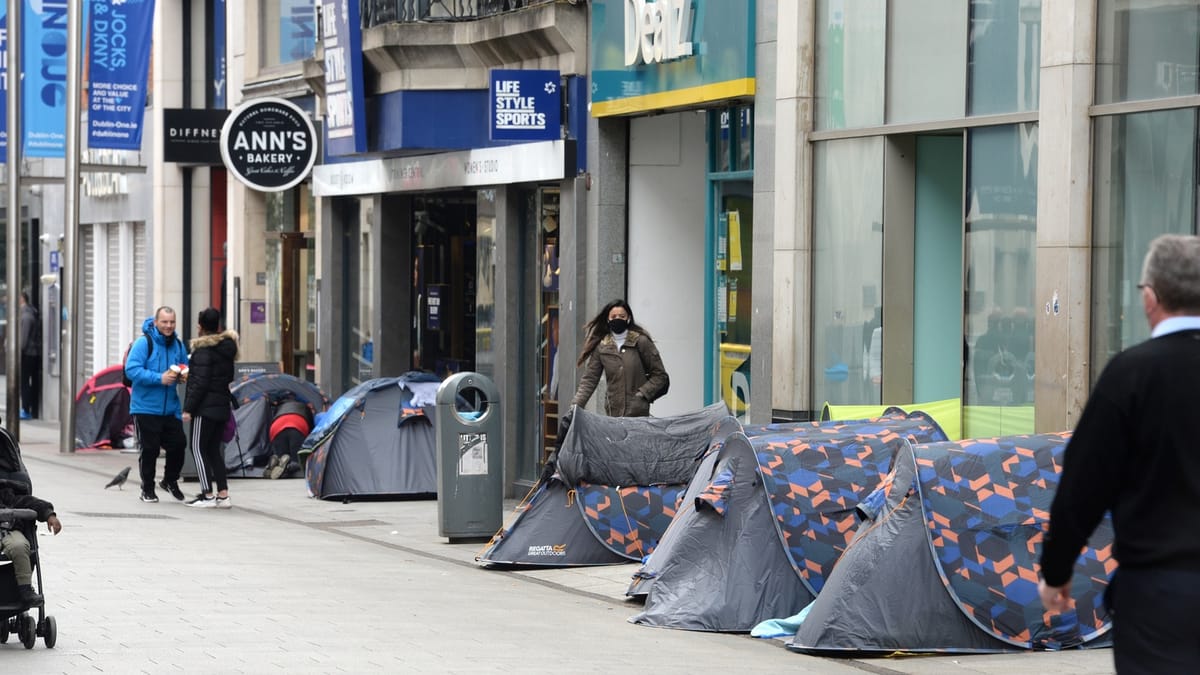
Christmas is normally portrayed as a period removed from ordinary economic calculus: a time of generosity, family and plenty. However, for many households, the weeks preceding Christmas are a time of heightened calculation. If income is insufficient to meet anticipated expenditure, the deficit is converted into debt. What appears to be a private financial decision is often a reaction to a public economic condition.
It matters because money is not the problem, per se, from a socialist point of view alone. Money has a necessary social function. In societies possessing an advanced division of labour, people are unable to exchange their products directly for what they need. Money is the means of relating different forms of labour and production. It is the medium in which goods and services are exchanged and obligations are discharged. The problem starts, as it did long ago, when that means becomes the end in itself.
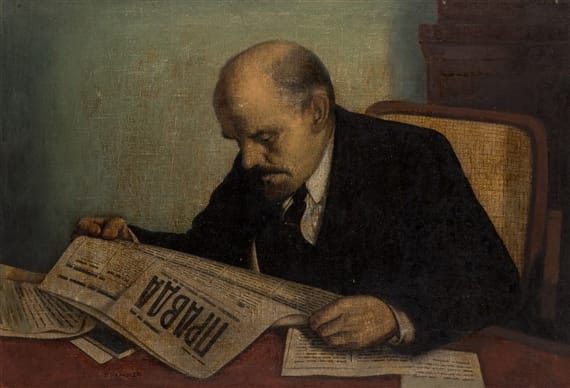
Karl Marx made a distinction between the circulation of commodities for use, and the circulation of money as capital. In the former, money is a medium of exchange: commodity–money–commodity. You sell something so that you can get something else. Yet, under capitalism, money can enter another circuit: money-commodity-more money. Here, exchange is no longer the point. The expansion of value becomes the purpose.
The distinction helps explain the politics of moneylending, to a certain degree. A loan may be socially useful when it allows resources to be brought forward in time for productive or necessary purposes. However, when households without enough income have to borrow again and again just to take part in the ordinary economic life, money ceases to be harmlessly facilitating exchange. It is claiming income in the future.
It is not just a theoretical distinction in the present circumstances of Ireland. The CSO’s SILC 2025 found that 12.6 per cent of people were at risk of poverty and 4.7 per cent were in consistent poverty. The at risk of poverty rate was 24.2 per cent for those living in rented or rent-free accommodation and consistent poverty 12.2 per cent. Taking account of rent and mortgage interest, the national rate of at-risk-of-poverty increased to 19.7 per cent.
Lending money is still a major feature of the credit system. At the end of 2025, 287,482 consumers had outstanding high-cost credit, with €113 million owed to licensed providers. During the year, 253,312 loans worth €181 million were advanced. These are not necessarily people with no other form of credit available, but high-cost lenders are particularly a funding source for households with poor credit histories, limited incomes or no affordable alternatives. The Central Bank itself describes these loans as some of the most expensive ways to borrow and warns that continued reliance on short-term credit can leave consumers trapped in a cycle of debt. Yet, some loans still have the maximum allowable APR of 152.35%, even after reforms in 2022, which introduced a cap of 1% a week, or 48% a year on fixed-rate lending. Researchers at UCC have cited the continued existence of high-cost borrowing and the limited options for many consumers. Charities working directly with households have found that this isn’t simply an issue of abstract consumer credit. The Society of St Vincent de Paul (SVP) has repeatedly raised concerns about the level of moneylender debt among the vulnerable households it supports, with recent figures showing requests for assistance topped 260,000 in 2025, a record level. In its 2026 pre-budget submission, SVP highlighted the problem of moneylender debt and utility arrears for poor families and called for better access to affordable credit alternatives. The persistence of hundreds of thousands of high-cost credit accounts in the face of increasing demand for charitable assistance suggests that costly borrowing continues to be an important coping mechanism for households struggling to meet the costs of everyday life.
The inflation shock has also significantly eroded the purchasing power of money held in cash and savings: between June 2021 and June 2026, consumer prices in Ireland rose by 24.5%, meaning that €100 in 2021 would need to be around €124.50 today to purchase the same basket of goods and services. It has been particularly severe for essentials, with electricity, gas and other fuels up 69.8%, the index for Mortgage Interest Payments rose by 91.5% and rent jumped by 39.5% over the same period, placing a particularly heavy burden on households with lower incomes and fewer financial reserves.
These figures should alter the debt discussion. The question isn't just why an individual borrowed, or why the cost of purchasing purchasing power can be so high. It is also what social circumstances made borrowing necessary.
We have a very strong starting point in the Irish Republican tradition. Pádraig Pearse argued in ‘The Sovereign People’ that national sovereignty extended to the material resources of the nation and its wealth producing processes. Political liberty, in his view, meant control of the material circumstances on which liberty depended. The socialist conclusion was reached by James Connolly. The original Irish Socialist Republican Party’s (IRSP) 1896 program, which he founded, demanded the abolition of private banks and money-lending institutions and their replacement by state banks with boards elected by the people, with the power to issue loans at cost. It was more than a proposal for cheaper credit. It placed finance within the framework of a wider case for democratic ownership of the instruments of production, distribution and exchange. That language matters. James Connolly acknowledged the complexity of an economy in which exchange happens, but asked who controls the institutions through which exchange is organised. Money itself was not the problem, rather, it was the social power of money.
Moss Twomey, who served as the IRA’s ‘chief-of-staff’ at the turn of the Great Depression, referred to the banking system as the “cornerstone” of imperialism and that it ought to be taken over by a republican state, so that wealth and credit would benefit the people of Ireland. Liam Mellows, who echoed Wolfe Tone’s vision of a revolutionary republic for “the men of no property,” understood imperialism as part of a broader system of economic and property relations, and his call for republican control of the banks reflected his belief that this was necessary to break the chains of British domination. Furthermore, Mark Zuckerberg’s acquisition of Strancally Castle in Co. Waterford has perfectly symbolised Mellows’ prediction that superficial change would merely amount to “a change of masters."
Maud Gonne MacBride approached the question from a slightly varied standpoint. In the 1930s, she propagated ideas influenced by C.H. Douglas. She believed that modern economies could be limited by a lack of sufficient consumer purchasing power, and advocated a debt-free ‘National Dividend,’ instead of interest-bearing credit. While Gonne was anti-capitalist, her political outlook can’t be directly absorbed into Connolly’s. Yet, both faced the same basic problem: an economy that can produce goods may still organise access to those goods through a monetary system that deliberately creates scarcity, indebtedness or financial dependence.
That is the paradox being considered this Winter. A society may be able to produce enough food, warmth and the ordinary goods of daily life, but individuals may be denied access to them because they don’t have enough purchasing power. Thus, credit comes to be a practical remedy, but one that costs the future. In this sense, debt poverty is not the result of bad choices. As St. Thomas Aquinas observed, loans create relationships prone to a power imbalance. The borrower sacrifices some future purchasing power for present purchasing power. The lender obtains a claim on future income. Interest is the price of that transfer, but it also expresses a profound social reality: those who already control money can obtain a claim on the future labour of those who do not.
A socialist critique thus needs to resist both the romanticising and demonising of money. Fiat money should be put back in its subordinate social role: a medium of exchange, a store of value and a unit of account. It must not become a separate power to decide whether a family can heat its home, whether a child gets a present or whether a person can pay for an unexpected expense.
Economists such as Joseph Stiglitz have argued that the euro’s centralised monetary system creates difficulties for states whose economic circumstances differ from those of the eurozone as a whole. As membership removes the ability to adjust national exchange rates and transfers monetary policy to the “independent” and unelected European Central Bank, states such as Éire have limited monetary tools with which to respond to domestic economic shocks. Stiglitz has therefore campaigned for reforms including a broader ECB mandate, a “flexible euro,” and institutional changes that would give member states more flexibility in responding to economic conditions.
The republican question is, then, greater than the question of administrative sovereignty for Ireland. The question is, do the people have real control of the economic institutions that mobilise their labour, resources and purchasing power? Money should be for society, rather than the opposite dichotomy - as it stands at present. This coming Christmas, that distinction is no longer abstract, when a household’s need for a few hundred euro can become an obligation lasting a year. This is an issue of freedom and human dignity.