There Will Be Another Day: Reading the Housing Crisis Through Peadar O’Donnell and George Gilmore
Peadar O’Donnell spent a lifetime insisting that formal independence without social content left existing injustices intact under new management. The empty apartments, the stretched rents and the generation locked out of home ownership proves him right.
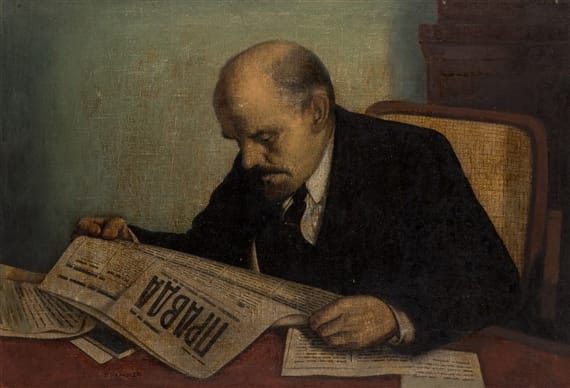
Peadar O’Donnell, an acclaimed novelist, revolutionary Deputy and member of the IRA Army Executive and Council, understood that property was never a neutral backdrop to politics. Born in the Rosses of West Donegal in 1893, he grew up among small farmers for whom a few acres of thin soil determined whether a family stayed, starved or emigrated. As a socialist-republican, he spent decades arguing that administrative state independence counted for little while the land itself remained under the control of those who treated it as a source of tribute, rather than a means of livelihood. That conviction, forged in the land struggles of the 1920s, still cuts through the housing crisis of the present with unexpected force. The IRA, he believed, should act as a people’s army, rooted in the struggles of workers and working farmers in the tradition of James Connolly. As editor of ‘An Phoblacht’ he pushed this line hard, urging republicans to take up the everyday grievances of the underprivileged.
His most sustained campaign focused on the land annuities. These annual payments, carried over from the UK land-purchase schemes, continued to extract money from smallholders after the Free State had been established. Hoping that a social revolution would destroy the Free State, Peadar O’Donnell organised resistance began in Co. Donegal churchyards and spread across the west and south. Farmers simply stopped paying. He urged republicans to orientate towards the rural poor so that they might “roast the Treaty in the fire from this kindling.” The agitation forced the issue into national politics and contributed to Fianna Fáil’s electoral success in 1932. In his later memoir ‘There Will Be Another Day,’ he framed the refusal to pay as both economic self-defence and an act of republican loyalty. The underlying principle was straightforward: no system that drained the land of Ireland for the benefit of distant claimants could claim to have completed the struggle against the British imperialists.
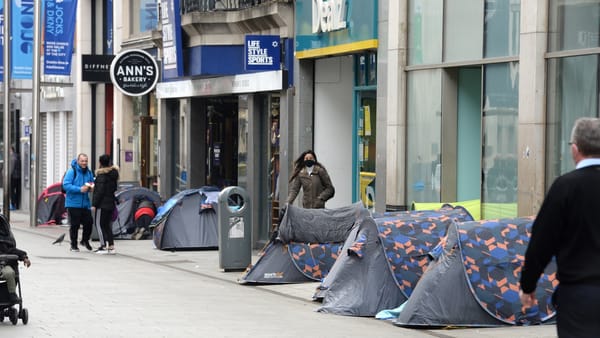
The same principle illuminates the housing crisis that has defined the state for more than a decade. Recent ESRI research finds that house prices sit roughly 17 per cent above the level consistent with incomes, interest rates and demographics. The burden falls most heavily on middle-income households. National median prices presently hover at €399,999 and are considerably higher in Dublin, standing at €500,000. Rents in the capital routinely consume 40 to 50 per cent of a typical professional salary. Institutional landlords and investment funds now supply an ever-growing share of private tenancies, while large areas of zoned and serviced land remain undeveloped because holding them for speculative capital gain remains more profitable than building homes. This isn’t simply a shortage of bricks and mortar. It’s instead a crisis rooted in the treatment of land as a financial asset first and a social necessity second.
Housing pressure is taking on a particular significance in the Gaeltacht, where the shortage of affordable homes is not simply a housing problem but a threat to the future of communities where Irish is still spoken as an everyday language. Research published by Údarás na Gaeltachta in 2024 found that the number of families in the Gaeltacht was growing faster than the number of houses available. This indicates increasing pressure on the existing housing stock and suggests that housing supply is struggling to keep pace with demand. Young people who grew up in these areas can find themselves unable to buy or rent locally, while second homes, holiday lets and difficulties securing planning permission further reduce the supply of homes available to local families. The Housing Commission has specifically identified the shortage of social housing, planning difficulties and the impact of second homes as issues requiring targeted action in Gaeltacht areas. As of 2026, only 71% of Gaeltacht housing stock was occupied, compared with 87% elsewhere. Additionally, 11% of Gaeltacht houses were classified as empty, compared with 8% in the rest of the State. The proportion of people under 18 in these districts is falling, while the proportion aged over 55 is increasing. There is an important historical lesson here too. In 1929, a parliamentary debate characterised housing conditions in the Gaeltacht as ““squalid cottages, ill-lighted, ill-ventilated, hopelessly inadequate for the decent accommodation of their occupants.” Districts such as Connemara, Erris, the Rosses of Donegal and parts of Cork and Kerry which comprised the Fíor-Ghaeltacht were identified as areas where these conditions were particularly prevalent. Peadar O’Donnell depicted the harsh and grinding poverty of the Gaeltacht during this period in his novel ‘Adrigoole.’ Writing from his own experience of Co. Donegal, he was critical of those who mourned the decline of the Gaeltacht, while overlooking the poor social conditions of the people living there. His point remains relevant insofar that protecting the language also involves preserving the communities and homes in which the language is lived.
Peadar O’Donnell would have recognised these contemporary patterns immediately. He never accepted that the transfer of political power from Dublin Castle to a domestic parliament was sufficient in itself. In ‘The Gates Flew Open,' he observed that the establishment had secured what it desired - the transfer of the prevailing system’s patronage - while the deeper social questions remained unresolved. Land, for him, was the decisive terrain. He had backed land seizures during the early years of the struggle and later argued that the republican movement should root itself in the struggles of workers and working farmers, rather than treating social questions as a secondary component of the struggle. When land is allowed to function primarily as a vehicle for speculation and rent extraction, the predictable result is scarcity for the many and excess accumulation for the few. That dynamic is visible across contemporary Ireland.
The consequences are measurable. Adults delay forming households, remain in parental homes well into their thirties, or emigrate because such opportunities are beyond reach. Social-housing delivery, though improved in absolute numbers, continues to lag far behind need. Planning delays, infrastructure shortfalls and the financialisation of residential property reinforce one another. Billions have been spent on subsidies and schemes, yet the fundamental relationship between land ownership and housing supply has changed little. Peadar O’Donnell’s insistence that the people of Ireland own the land of Ireland was never a romantic flourish. It was a practical claim against any arrangement that engineers scarcity for private advantage.
In an economic model which has driven many from homeownership and into private rental accommodation, tenant empowerment has become more relevant. The conditions facing tenants of housing units are also a longtime issue. In the 1930s, the Protestant revolutionary socialist and IRA Army Executive member, George Gilmore, would become active in organising local tenants leagues through the Republican Congress. He did so with Peadar O’Donnell. When that organisation faded, Gilmore took the material they had collected about Dublin’s terrible slums to the editor of the ‘Irish Press.’ As Prof. Anthony Coughlan highlights, the series of articles on slum landlords published in that broadsheet helped persuade the Government to launch the first large-scale programmes of slum clearance and council-house building.
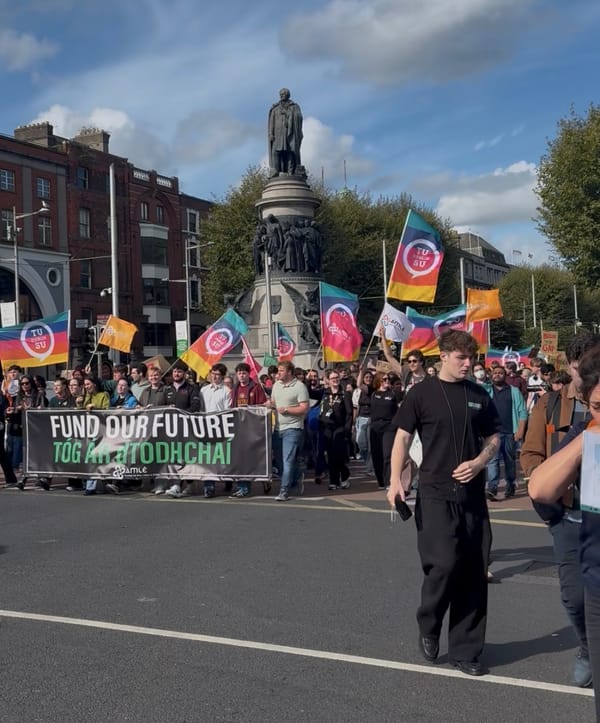
That being said, information from tenant surveys, and investigative reporting points to a sustained decline in maintenance standards in local-authority housing, with many county and city council tenants living with persistent mould, damp and structural problems. The Irish Human Rights and Equality Commission (IHREC) has highlighted these failings, noting that local-authority tenants continue to endure inadequate conditions - including rodent infestations, sewage issues and chronic disrepair - and that the State has not taken sufficiently timely or effective action to remedy them. Local authority tenants are twice more likely to report housing deprivation, environmental deprivation and over-crowding than owner-occupiers. Meanwhile, private tenants are also more likely than owner-occupiers to experience housing deprivation. Nearly a decade after a European Committee of Social Rights finding that the State was violating tenants’ rights, IHREC continues to warn that slow progress on regeneration and under-resourcing of councils are perpetuating these human rights-related short-comings. A ‘Good Practice Compendium’ by the Chartered Institute of Housing shows that collective tenant participation and involvement in the decision making process in Ireland can lead to improved outcomes, supporting the principles set forth by George Gilmore and Peadar O'Donnell.
A report published by the University of Galway indicates that altering the constitutional foundation of its evaluative standards from "unenumerated rights" and "bodily integrity," based on a natural law reading of the Constitution, to a designated Article on a right to housing ratified in a referendum, associated with contemporary international legal principles, would represent a significant and momentous advancement in access to dignified housing, while diplomatically maintaining the common law basis and the doctrine of separation of powers.
The parallel is not perfect. Annuities were a specific colonial residue; today’s crisis involves the additional components of complex planning law, increasing input costs and global capital flows. Yet the underlying logic remains continuous. In both periods, a minority controls a scarce resource essential to ordinary life and extracts value from that control. In both periods, the majority experiences the result as insecurity and forced mobility. Peadar O’Donnell spent a lifetime insisting that formal independence without social content left existing injustices intact under new management. The empty apartments, the stretched rents and the generation locked out of home ownership suggest that this unfinished business has simply changed its outward form.