Aontacht: A Step Towards A Revolutionary Press?
A programme for Aontacht would have to be anti-imperialist and would have to challenge the collaborationist activity of much of the opposition. It has made something of a start in opposing the liberalism, reformism and parliamentary approach of much of the left.
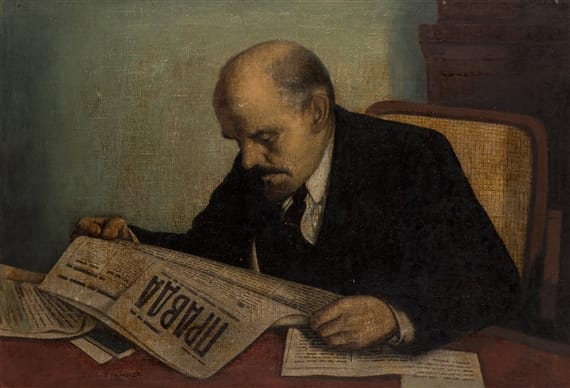
In mid-September the editors of the online magazine Aontacht issued a statement commemorating 5,000 supporters on Instagram.
They went on to make claims about the political significance of the new forum:
“The purpose of Aontacht is to be a revolutionary socialist newspaper, offering our services to the revolutionary socialists. There is at once what we call the newspaper, and then its composition. The newspaper is composed of a mycelium network which establishes links with the revolutionary socialist movement, which is for now in its infancy. The newspaper is organically tied, through its activities, to this revolutionary socialist movement. In other words, the newspaper works directly with various class-conscious groups, highlighting them, while at the same time being part-and-parcel of the same movement and intervening. These class-conscious elements are dispersed across Irish society and are far off from being united in a vanguard; yet, we must still attempt to march as a bloc
Into the future, the vision for Aontacht is a big tent of opinion for socialists and republicans. One where groups and parties, big and small can have a voice, to the exclusion of centrist “liberalism” as is found in mainstream vaguely “left-leaning” outlets, to the exclusion of reaction as is found in cult “free speech” outlets, as well as to the exclusion of the aforementioned cliquishness as found in most other leftist outlets.
The vision is for an outlet where public debate is encouraged, where criticism and self-criticism is encouraged”.
In a short period of time a supporter of the magazine provided a telling critique.
The "organic links to the movement" framing is the load-bearing claim in this piece, and it isn't currently doing the work it needs to.
If that language is meant to carry real weight rather than just describe a vibe, it needs an actual criterion behind it. Some minimal, checkable standard for who counts as part of the bloc and why. Right now the boundary is drawn by editorial judgment in the moment and described after the fact as organic. That's not a criticism of any particular call you've made. The problem is that the claim itself is unfalsifiable. "Organic" can justify almost any decision after the fact as either staying rooted or refusing to break from the bloc, and there's no way for anyone outside the editorial room to check it against anything.
Publishing the standard wouldn't settle every disagreement about who belongs in the tent. But it would convert "trust that we're doing this right" into something people can actually hold you to.
There has been no response to this critique, but it does raise an important question. What is the foundation on which a coherent socialist movement can be built?
Firstly, the Internet is a bad platform for discussion. The current exchange proves that and most posts have very little in the way of reaction. The danger is that the platform will turn into a notice board, many posts and no cohesion.
The way to avoid this is to step out of the internet and organise physical activities that we can then assess. This is the idea of praxis. Our theories of society and class struggle can be tested in action and become the focus for further theory and action.
Praxis has to be based on class analysis. The very first task of socialists is to describe the workings of the capitalist society in which we find ourselves.
The nature of the Irish state is unmistakable. It is one of the most imperialist dependent states on the globe. Every penny of the current budget is devoted to the further financialisation of the economy. Politically the state is openly, if unofficially, part of NATO and preparing for war with Russia.
The problem is that the majority of parties and the trade union leaderships accept the capitalist programme and there is no debate.
A programme for Aontacht would have to be anti-imperialist and would have to challenge the collaborationist activity of much of the opposition. It has made something of a start in opposing the liberalism, reformism and parliamentary approach of much of the left.
At the end of the day it is the emergence of independent working class organisation that will enable an Irish revolution. Our task is to effectively prepare for it.