Unfinished Business: The 2026 Strikes and the Long Shadow of Troika Austerity
Strikes in themselves won’t automatically overturn the post-crisis settlement. They do, however, force a public confrontation with the unfinished business of the austerity years.
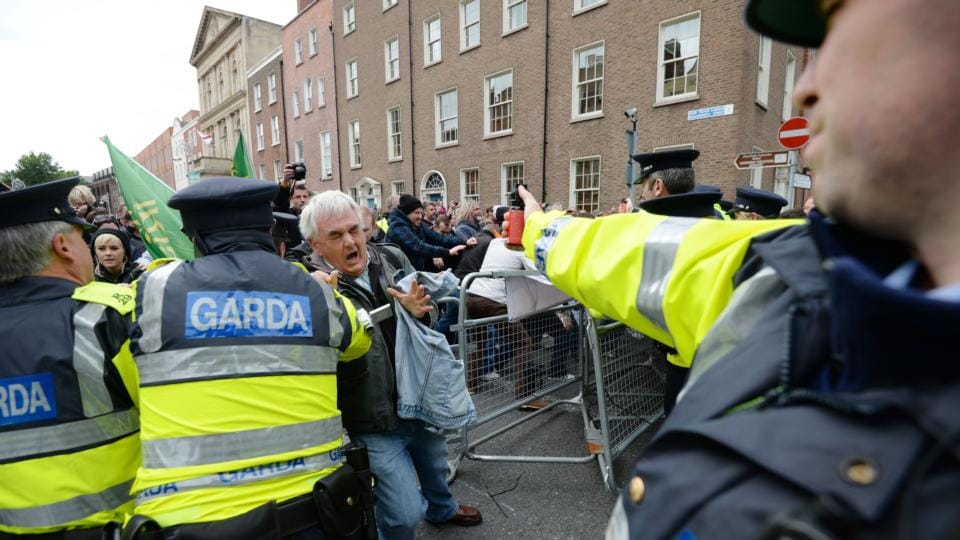
In October 2026, more than 300,000 public sector workers, including teachers, nurses, doctors, civil servants and special needs assistants (SNAs), went out on strike across Ireland in the largest such mobilisation in nearly two decades. Schools are closed, non-urgent hospital appointments have been cancelled in large numbers, and many public services are disrupted. Up to 150,000 medical appointments due to take place on 14 October alone were canceled. It became the largest strike action in the state in approximately 20 years. The Courts Service announced that courts would be unable to run, and Leinster House itself had to close. The immediate cause is the failure to agree a new public service pay deal after the Public Service Agreement 2024–2026 expired at the end of June. A new agreement was not reached between ICTU-affiliated trade unions and the government. The General Secretary of the Irish National Teachers’ Organisation (INTO) remarked that this was the first time that a government had allowed a public pay deal to expire in approximately 40 years, and explicitly rejected what he claimed was the government’s intention to agree “the same kind of deal that they've done since 2011, during austerity.”
A wider wave of industrial unrest seems to have been encouraged by the fuel protests. Trade-union leaders said workers had taken notice after the government made concessions to farmers and haulers (many of whom, it could be said, hail from working-class backgrounds) following disruptive, direct action. The ‘Irish Times’ reported in April that the result had fed calls for a more militant response from workers to the cost-of-living crisis.
The main unions involved argue that pay has lagged behind the cost of living and that any new agreement must restore lost ground and protect living standards. The government allocated €1.2 billion in Budget 2027 and says that it’s ready to talk, but unions have criticised the scale of the provision and the sequencing of negotiations. They also rejected WRC talks offered by Minister Jack Chambers. The dispute has already produced work-to-rule action since late September.
Beneath the current deadlock rests a longer history. The additional working hours still contested in schools today were first imposed under the Croke Park Agreement and reinforced by the Haddington Road Agreement of 2013. Those deals were central to the public-sector contribution to the EU/IMF/ECB (Troika) programme of so-called “fiscal adjustment." As part of an ongoing series of externally imposed, bone-cutting austerity measures, Haddington Road delivered further savings through increment freezes, changes to overtime and flexi arrangements, pay reductions for higher earners, and a lengthened working week without compensation. Workers previously on 35 hours or fewer moved toward a minimum of 37 hours; others were pushed toward 39. These measures were given legislative force under the Financial Emergency Measures in the Public Interest (FEMPI) Acts.
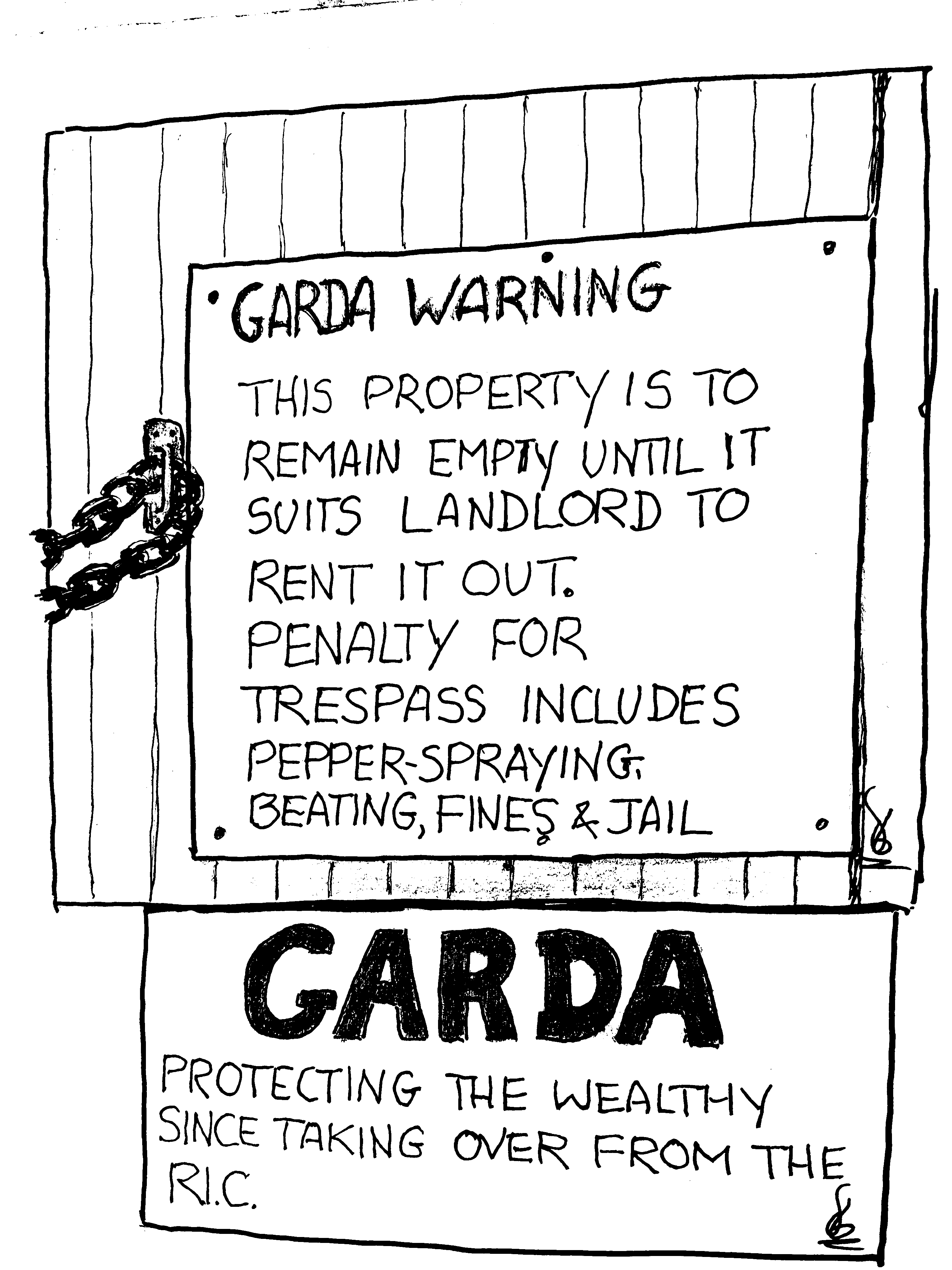
A concrete legacy of that period is the “Croke Park hours” - additional structured time for meetings, supervision, planning and related activities. Primary teachers still carry an extra 36 hours per year; post-primary teachers 33. These hours are not paid as overtime. In the current dispute, teaching unions have directed members to withdraw cooperation with Croke Park hours as part of the work-to-rule. INTO, ASTI and TUI members have been instructed not to undertake work scheduled or counted as Croke Park hours, not to attend related meetings or open nights, and not to allow those hours to be rescheduled or banked. This has already affected pre- and post-school supervision in many primary schools. The action makes the connection between 2013 and 2026 explicit: the same unpaid hours extracted during the crisis years remain a live industrial issue. Later agreements restored elements of pay and, in some cases, formal working-time increases. Yet the productivity and flexibility gains secured under Haddington Road were largely retained. Local bargaining provisions in more recent deals were intended to allow sector-specific improvements; union leaders have stated that the Department of Public Expenditure’s approach left significant numbers of workers without badly-needed payments they had expected.
The recent strikes therefore sit within a longer pattern. Public-sector workers delivered substantial savings and permanent changes to working time under the pressure of the Troika programme. Even during a period of austerity, relative industrial peace may have been taken for granted. Subsequent governments have treated those gains as a baseline while negotiating incremental pay adjustments that unions argue have not fully kept pace with prices. The insistence that pay be discussed only after other items, or within a fixed fiscal envelope, continues the logic of constraint established in the crisis years.
The state is no longer subject to a formal bailout programme (infamously the Council Decision 2011/77/EU). The broader framework of EU fiscal rules and domestic expenditure controls, however, still shapes the parameters within which public pay is negotiated. The preference for multi-year agreements that embed “reform” and productivity measures, while treating pay as residual, is continuous with the approach taken under Haddington Road. Public-sector workers face the same housing (with ESRI research showing that housing costs drag 20% of children into poverty), childcare, energy and food-price pressures as other workers. Many are women (recent CSO statistics show that women account for 75.9% of employees in Human Health & Social Work and 74.9% in Education) concentrated in caring roles that have historically been undervalued. Health and education comprises about 70% of aggregate public sector employment. On the role of women in workers’ organisation, James Connolly notably opined that “none so fitted to break the chains as they who wear them, none so well equipped to decide what is a fetter. In its march towards freedom, the working class of Ireland must cheer on the efforts of those women who, feeling on their souls and bodies the fetters of the ages, have arisen to strike them off.” When they withdraw labour, they disrupt services that working-class communities rely on; that’s the source of their leverage. For the most part, attempts to frame the disruption as harm inflicted by solely ‘privileged’ or ‘overpaid’ public servants ignore the history of extracted unpaid hours and the incomplete restoration of living standards relative to costs. In this sense, most of those who are affected by industrial action, as both the employees and service users, are working-class people - will the neo-liberal government give the working-class population the badly-needed support it deserves?
Strikes in themselves won’t automatically overturn the post-crisis settlement. They do, however, force a public confrontation with the unfinished business of the austerity years. The Croke Park hours still being refused on picket lines are a direct institutional link to externally imposed austerity measures. Supporting the initiative of the strikers means recognising that the terms imposed under Troika pressure were never fully reversed - they were normalised. A society that takes working-class living standards seriously cannot treat those terms as permanent, or their roots as separate.