Comhar na gComharsan and the Decolonial Imagination in Contemporary Ireland
Decolonisation demands more than symbolic appreciation, as it requires an interrogation of the ongoing colonial logics that continue to marginalise Gaeilge and its speaker communities.
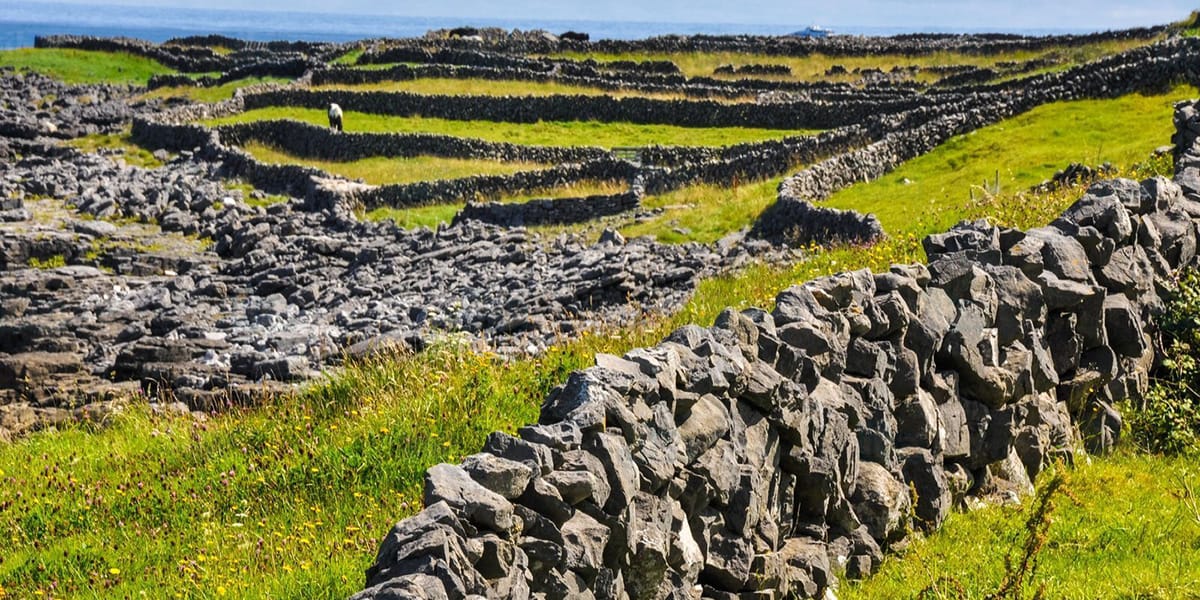
The Irish language has been deliberately eroded through colonisation, and the “hegemonic and homogenising intentions of settler colonialism continue to reverberate in modern discourses” that frame Gaeilge as politically charged and institutionally inconvenient. The dominance of English in Ireland isn't a neutral outcome of modernity, but a structure actively produced through centuries of coercive policy. As MacKenzie, Engman and McGurk demonstrate, “language (i.e. the promotion of English and suppression of Gaeilge) was an early tool of control,” and “the victory of the English language in this territorial and ideological struggle has been so thorough in its replacement of Gaeilge” that even avowedly neutral institutions treat the indigenous language as a threat to harmony.
In this context, the twenty-first-century embrace of this culture - through language apps, Irish-language film, and the international success of artists - is necessary but insufficient. Decolonisation demands more than symbolic appreciation, as it requires an interrogation of the ongoing colonial logics that continue to marginalise Gaeilge and its speaker communities, including the tacit assumption that anglicised modes of social organisation and individualist values constitute a superior or more “modern” baseline for Irish society as a whole. Notably, one article points to the individualism of the English language. Its grammar places the individual subject at the centre of the sentence, such as "I am sad,” or "I broke my arm.” Meanwhile Gaeilge's verb-subject-object structure and its relational constructions such as “tá brón orm” ("sadness is on me") encode a collectivist orientation in which states and actions are not possessed by a sovereign “I" but arrive upon a person situated within a wider social field. Similarly, traditional Irish cultural forms are not merely artistic but social - they’re structured as occasions for collective participation, rather than sites of individual genius. The seisiún is the clearest example. It’s regarded as inherently egalitarian, involves collective authorship, and functions as a combination of social interactions that binds community together. Poetry, similarly, was historically performed communally and transmitted through organised groupings, rather than purely individual authorship.
Furthermore, the real issue and persistence of prejudice against Irish cultural norms in Britain today isn’t a matter consigned to that of historical residue. It’s quite interesting how recent commentary from the mainstream press highlights patterns that reflect this real, living difference between Anglo-individualism and Irish Gaelic collectivism. One individual recounts how greeting and engaging with people in England whom they didn’t know had caused them, as an individual, to be perceived as “something dangerous and odd.” Another found it strange that Londoners didn’t possess a strong sense of family kinship, either. Even ‘Vogue’ magazine featured an article by a person from Kerry, (described as “a place as famous for its friendliness as it is its rugged landscapes”), who mentioned how “certain contrasts between the English and the Irish became immediately evident - and compounded [their] rapidly mounting feelings of isolation” after moving to London. As Róisín Lanigan argues in ‘The Irish News,’ contemporary England exhibits a “blanket ignorance of Irish culture,” while simultaneously flattening “real Irish culture” into marketable ‘paddywhackery’ (referring to examples such as interest in ‘spice bags’ and the movie actor Paul Mescal). She also points out that English culture’s priority of politeness and avoiding direct confrontation (remarking that they’re “socialised out of being plain-speaking in any way”) means that prejudice leads to covert ways of marginalisation against the Irish. In their work, Mac an Ghaill also traces the institutional erasure of Irish specificity from British sociology and state policy. Writing on the ‘Invisible Irish,’ Steifoín Ó Brennían outlined that “while many would deny it, there is, throughout every level of English Society, a prejudice against Irish people.”
A central obstacle to decolonisation is the persistence of British colonial attitudes towards Gaeilge, which operate not through overt prohibition, but through the discursive framing of the language as inherently political, disruptive, or sectarian. MacKenzie et al. document how Queen’s University Belfast rejected Irish language signage on the grounds that Gaeilge undermined its “neutral” stance - a “neutrality which tacitly endows English with distinction and authority” while constructing the indigenous language as “disruptive and dangerous,” echoing “centuries-old discourses of the barbaric Irish”. This isn't a relic of the distant past, as the proposed Irish Language Act contributed to the collapse of the Northern Ireland Executive for three years (2017-2020), demonstrating how the mere prospect of parity between Gaeilge and English remains politically destabilising. Only in the past few years, a legal battle emerged where a woman’s request to inscribe the phrase “In ár gcroíthe go deo” (“In our hearts forever”) on her gravestone in Coventry was initially refused unless accompanied by an English translation, because a diocesan judge ruled that the Gaeilge wording risked being mistaken for “a political statement” or “some form of slogan”. The family fought the decision for nearly three years, before the Court of Arches overturned it as discriminatory, finding the assumption that the inscription would be read as a political slogan had no “rational footing”. This showed not only ignorance of Gaeilge, but an active fear of it. In contemporary urban Britain, a family's grief was subordinated to the management of that fear.
Additionally, despite professing tolerance, the Westminster political class, cosmopolitanism and metropolitan liberal universalism as seen in London and elsewhere, are well-documented as being a ‘wolf in sheep’s clothing’ when it comes to the Irish, being remarkably ignorant of their history, culture and political sensibilities. Its cosmopolitanism comes with a straitjacket, as the Irish are acceptable only insofar as they conform to metropolitan liberal orthodoxies, To such an ironically closed, elite grouping, anything outside them is promptly labelled as backward or dangerous. British liberal cosmopolitanism can ironically be the contemporary cultural expression of imperial thinking. The old imperial ambition of unifying disparate peoples under a supposedly superior set of standards survives in the language of universal values, enlightened progress and cosmopolitan ‘inclusion.’ As Walter Mignolo, Timothy Brennan and Kira Huju demonstrate in separate academic features, the supposedly universal is often little more than the particular worldview of a dominant metropolitan elite, dressed up as a universal ideal. Huju discusses “the social rules for belonging among the ‘cosmopolitan elite’ at the geopolitical margins of international society” and refers to a quote by the Indian left-revolutionary, Ram Manohar Lohia, who asserted that “a cosmopolite is a premature universalist, an imitator of superficial attainments of dominant civilisations, an inhabitant of upper-caste milieus without real contact with the people.” In the Irish context, the irony is that a supposedly open and pluralistic British cosmopolitanism can demand precisely the seemingly superior cultural and ideological conformity that its professed universalism claims to have overcome. This has also been looked at in an academic essay on ‘Metropolitan Liberalism and Colonial Autocracy’ by Barry Hindess.
Contemporary British attitudes are also visible in the cultural sphere. As commentary on ‘Kneecap’ observes, the rappers’ “open criticism of British rule, expressed through their music and film led to objections to them receiving public subsidies from the British taxpayer”. The film’s eventual BAFTA success raises the question of whether Britain is “beginning to recognise the damage of colonialism on the psyche, culture and economics of those who are oppressed,” yet the same commentary cautions that “it may be too early for a film opposing colonial British rule to be awarded the award for outstanding British film”. Indeed, not that long ago, Ken Loach’s ‘The Wind that Shakes the Barley’ was subjected to universal condemnation in the public opinion of Britain (a befuddled ‘Los Angeles Times’ noted that it was even likened to ‘Mein Kampf’), with Loach calling it “the most savage response I’ve ever had to a film” [Note: The film is based on the IRA’s Cork Brigade, of which the author’s great-grandfather was the leader]. Nonetheless, it won the coveted Palme d’Or award at Cannes, and Cillian Murphy (who portrayed the main character), enthusiastically asserted “I'm thrilled for Ken Loach and all of us who worked on the film, and as a Corkman, for Cork, where most of the film was made.”
While the repeal of a penal-era law banning Gaeilge in Northern Ireland’s courts in 2025 was welcomed as a “major milestone,” it took nearly three centuries to undo a prohibition that had established English as the only language of legal authority. Decolonisation requires naming these legacies not as historical curiosities, but as active institutional orientations that continue to shape the conditions of Gaelic life.
The most powerful contemporary vehicle of anglicised norms is the economic logic of neoliberalism, which treats individuals as competitive actors and renders collective obligations increasingly invisible. Ben Ó Ceallaigh’s research demonstrates that “neoliberalism… stands in contradiction to the requirements of language revitalisation,” and that the Great Recession, which followed the 2008 economic crash weakened the vitality of Gaeltacht communities through deindustrialisation, unemployment, and the problematic nature of tourism in minoritised language areas. The performance ethic that accompanied Ireland’s economic transformation has had measurable cultural consequences: “compassion and generosity, which as part of the country’s Catholic heritage were so deeply engrained in the Irish psyche as to have been taken for granted, are being sacrificed as a result of Ireland’s sustained economic growth with its focus on performance and achievement”. The same research finds that Irish society retains “high levels of in-group collectivism,” yet this collectivism is increasingly counterposed to the “high levels of performance orientation, assertiveness and individualism characterising US culture” that have been imported into Irish organisational life.
These anglicised norms are not confined to the economy. In the field of mental health, Darach Murphy argues that within contemporary Irish mental health settings the language, concepts and methods of psychological investigation originate from Anglo-Saxon and Protestant culture which were first transported to Ireland during colonial times. The presumption that English-derived frameworks are neutral and universal, while Gaelic ways of knowing are particular and optional, is itself a colonial inheritance. Decolonisation requires refusing this hierarchy and asking whose knowledge, whose language, and whose social logic is treated as the baseline against which all else is measured.
Decolonisation also requires naming the institutional reproduction of anglicisation. An interesting feature, somewhat ironically published in the ‘Irish Times,’ suggests that the State’s perspective on Gaeilge and its speakers “has become indistinguishable from that of British colonial rule,” sharing London’s “indifference about the societal viability of Irish” and a “sociopolitical insouciance about the social challenges of speaker communities”. The “institutional power class” are described as “the new colonialists” in their treatment of Ireland’s “struggling native culture”. A language revival “oblivious to the erasure of its existing speaker communities is a contradiction in terms”. Domestically, this isn’t a matter of individual bad faith, but of structural orientation. The pursuit of “the socio-economic benefits of Anglo globalisation became pivotal to the Irish realpolitik,” and “symbolic assertions about the historical importance of Irish” were “no match for the promise of English-mediated socio-economic transformation”.
The counterweight to anglicised individualism sits in Gaelic collectivism, and its contemporary reclamation is a direct act of decolonisation. The tradition of meitheal denotes “the co-operative labour system in Ireland where groups of neighbours help each other in turn with farming work,” and at its heart rests “community unity through cooperative work and mutually reciprocal support”. Meitheal is “the Irish expression of the ancient and universal appliance of cooperation to social need”. This isn't nostalgia. It’s a surviving alternative to the presumption that individual market participation is the natural or superior form of social life. Reviving and practising meitheal principles - in community projects, cultural activism, and local economic initiatives - is a concrete way of refusing anglicised individualism.
If meitheal names the practice, then ‘Comhar na gComharsan’ - literally “the co-operation of neighbours” - names the philosophy that provides a contemporary purpose. This is a vision of society in which reciprocal obligation among neighbours is the organising principle of economic and social life, not a residual folk memory. Comhar na gComharsan was articulated as an Irish Republican social and economic philosophy advocating an economy of worker-owners grouped into co-ops, positioning decentralised, co-operative ownership as the basis for personal freedom against capitalist wage-labour. A feature in ‘Marxist Review’ from 1973 described how it was perceived as by Republicans as “a particularly Irish or Gaelic philosophy.” James Connolly identified a native tradition of collective ownership and mutual obligation in pre-conquest Gaelic society, which he termed “Celtic Communism,” and pointed to experiments such as the Ralahine co-operative as modern expressions of that older communal ethic. In ‘Towards the Republic,’ Aodh de Blacam similarly invoked the “communal Gaelic State,” in which land was held as a national possession under Brehon law and every freeman enjoyed both private tillage and rights in common resources, presenting this as the historical foundation for a co-operative rural order. Relating this, he opined:
“In co-operative labours and in a thousand pleasing social traits, the observer may see relics of a very different life from that of Anglicised Ireland.”
De Blacam also claimed that:
“The co-operative societies may become the most effective patrons of Irish music, Irish drama and Irish talent that these have ever enjoyed. We can also foresee the societies inviting the thinkers and scholars of the nation, and distinguished foreign visitors, to lecture in their halls; and in this, and other ways, leading the restoration of the democratic culture of old.”
However, this revaluation must be critical, as Gaelic collectivism must be articulated with social justice, not used as a substitute for it. It must connect language rights with human dignity and resist the temptation to romanticise community as a compensation for state withdrawal.
Decolonisation must extend beyond the classroom into the whole of society. In media and the public sphere, it means demanding genuine parity for the Irish-language public sphere rather than accepting its subordination to English-language norms, and supporting Irish-language film, broadcasting, and digital platforms as infrastructure of collective life. The success of Irish-language cinema - ‘An Cailín Ciúin’ providing “many audiences outside of Ireland with their first opportunity to see a film in Irish,” and ‘Kneecap’ placing the language at “the very heart of the film” - demonstrates that Gaelic cultural production can challenge the anglicised presumption that English is the natural language of serious art.
In economic life, decolonisation means recognising neoliberalism as a language-shift driver and supporting community-controlled economic initiatives, co-operatives, and local exchange systems that embody meitheal principles rather than treating the market as the natural horizon of social organisation. Ben Ó Ceallaigh’s conclusion points toward “anti-systemic movements and policy proposals such as the ‘Green New Deal’” as potential creators of “a macroeconomic regime that would be more favourable to linguistic minorities than that of neoliberalism”. In community life, it means practising mutual aid, volunteering, and intergenerational transmission as decolonial acts that refuse the privatisation of care and belonging. In institutional and political life, it means holding the State and its institutions to account for treating Gaeilge as a private heritage option rather than a societal viability project, and insisting that language policy be evaluated by the flourishing of speaker communities, not by symbolic gestures. Scholarship in the ‘Irish Journal of Sociology’ on decolonising Ireland today insists that the land is “a complicated semi-peripheral ‘mixed colony’, in which rhetorics, logic, and grammar are simultaneously colonial and decolonial,” and that decolonisation therefore requires interrupting the complicit reproduction of colonial divisions, as well as celebrating Gaelic revival.
The embrace of Irish Gaelic culture in the twenty-first century offers a genuine opportunity for decolonisation, but only if it’s pursued as a critical and transformative practice across the whole of society. This requires understanding Gaeilge not solely as heritage to be celebrated, but as a site of ongoing colonial contestation; recognising that British colonial attitudes persist in the framing of Irish language, people and culture as politically charged and institutionally disruptive; and refusing the presumption that anglicised individualism is a neutral or superior baseline for social life. The task here isn't so about about speaking Gaeilge per se, but to ask what speaking it is for - and against. The answer must involve a deliberate revaluation of Gaelic collectivism, a practical commitment to the philosophy of Comhar na gComharsan and the collective futures that Gaeilge makes possible, and a refusal to accept that the language can flourish while the society that sustains it is organised on anglicised-individualist terms.
Bibliography
• Dooley, N., McAllister Wylie, D. and Piplani Kapur, N. (2024) ‘A Tale of a Modern Meitheal: SETU Sustainability in the Arts Festival’, Core. Open access. Available at: https://core.ac.uk/download/620269704.pdf.
• Khoo, S.-M. (2024) ‘Decolonising in Ireland: A complicated semiperipheral “mixed colony”’, Irish Journal of Sociology, 32(1–2), pp. 79–97. Open access. doi: 10.1177/07916035241239876.
• MacKenzie, A., Engman, M. and McGurk, O. (2022) ‘Overt and symbolic linguistic violence: plantation ideology and language reclamation in Northern Ireland’, Teaching in Higher Education, 27(4), pp. 489–501. Open access. doi: 10.1080/13562517.2022.2028767.
• Murphy, D. (2012) ‘The Failing “Mental” Health System Has Its Roots in Anglo-Saxon Conceptions of “Normality” and “Deviance”. Is It Time for an Indigenous Irish Replacement?’, Technological University Dublin, Conference paper. Open access. Available at: https://network.bepress.com/explore/social-and-behavioral-sciences/.
• Ó Ceallaigh, B. (2022) ‘Economic Disruption and Language Shift – Some Ethnographic Data from Ireland After the 2008 Crash’, Studies in Comparative Politics, 17–45. Open access. doi: 10.2478/scp-2021-0002
• ‘The evolving social, economic and religious fabric of Irish society helps us to understand the scores for altruism’ (2007) The Irish Journal of Management, pp. 3–56. Open access. Available at: https://mural.maynoothuniversity.ie/id/eprint/20290/
• ‘Does Kneecap’s Bafta win signal changing UK attitudes to British colonialism in Ireland?’ (2025) The Conversation, 7 March. Open access. Available at: https://theconversation.com/does-kneecaps-bafta-win-signal-changing-uk-attitudes-to-british-colonialism-in-ireland-251634
• de Blácam, A. (1918) ‘The Gaelic State’, in Towards the Republic: A Study of New Ireland’s Social and Political Aims. Dublin: T. Kiersey, p. 19. Reproduced by Cartlann. Available at: https://cartlann.org/authors/aodh-de-blacam/towards-the-republic/the-gaelic-state/
• Ó Cuileagáin, N. (2025) ‘The story of Ireland’s first socialist commune in 1830s’ Clare’, RTÉ Brainstorm, 30 May. Available at: https://www.rte.ie/brainstorm/2025/0530/1502600-ralahine-clare-socialist-commune-1830s-ireland-john-scott-vandeleur-edward-thomas-craig/
• McDonagh, L. (2022) ‘Exploring “ownership” of Irish traditional dance music: Heritage or property?’, International Journal of Cultural Property, 29, pp. 183–200. doi: 10.1017/S094073912200011X
• Rapuano, D. L. (2001) Jigging and Reeling Around the Midwest: an Ethnography of Irish Traditional Music Sessions. M.Lib.St. thesis. Indiana University South Bend. Available at: https://hdl.handle.net/2022/22383
• Crosson, S. (2008) The Given Note: Traditional Music and Modern Irish Poetry. Cambridge Scholars Publishing. Available at: https://researchrepository.universityofgalway.ie/entities/publication/79371b21-df16-4f43-9f95-88cfc222bcb7
• Schreffler, C. R. (2016) Motivation and Identity in an American Irish Music Community. PhD thesis. University of Colorado. Available at: https://pdf.core.ac.uk/corefilesystem/pdf/1249/593684297.pdf
• Marxist Review (1973) ‘Éire Nua: A Critique’, (2), pp. 1–3. Available at: https://www.marxists.org/history/etol/newspape/irish-USFI-publications/marxist-review-no-2-jan-feb-1973.pdf
• The Irish Times (2006) ‘Irish lead actor “absolutely thrilled”’, 29 May. Available at: https://www.irishtimes.com/news/irish-lead-actor-absolutely-thrilled-1.1009160
• Tax Research UK (2025) 'Language, responsibility, and care', Tax Research UK, 29 September. Available at: https://www.taxresearch.org.uk/Blog/2025/09/29/language-responsibility-and-care/
• The Guardian (2021) 'Coventry family wins legal battle for Irish wording on gravestone', The Guardian, 25 February. Available at: https://www.theguardian.com/world/2021/feb/25/coventry-family-overturns-ban-on-gaelic-wording-on-gravestone
• The Irish News (2020) 'The Church of England reflects on its Irish language heritage in gravestone row', The Irish News, 10 June. Available at: https://aus.irishnews.com/arts/thebluffer/2020/06/10/news/the-church-of-england-relects-on-its-irish-language-heritage-in-gravestone-row-1967733/
• Cambridge University Press (2026) ‘Glossary’, in The IRA 1956–69: Rethinking the Republic. Cambridge: Cambridge University Press. Available at: https://www.cambridge.org/core/books/abs/ira-195669/glossary/86760BA1DA6CF2FC6369771CB637320D
• Chilton, P. P. (2014) ‘Claiming Connolly: The Legacy of James Connolly and Irish Republicanism, 1966-2005’. PhD thesis. University of Western Australia. Available at: https://research-repository.uwa.edu.au/files/3360221/Chilton_Philip_Peter_2014.pdf
• The Irish Times (2021) ‘Criticism of The Wind that Shakes the Barley reflected British unfamiliarity with conflict, says historian’, The Irish Times, 9 August. Available at: https://www.irishtimes.com/news/ireland/irish-news/criticism-of-the-wind-that-shakes-the-barley-reflected-british-unfamiliarity-with-conflict-says-historian-1.4642711
• Los Angeles Times (2006) ‘Made in Eire and raising ire’, Los Angeles Times, 18 June. Available at: https://www.latimes.com/archives/la-xpm-2006-jun-18-ca-barley18-story.html
• Vogue (2024) ‘I had dinner with strangers to try and cure my London loneliness. Here’s what I learnt’, Vogue, 26 April. Available at: https://www.vogue.co.uk/article/dinner-party-with-strangers
• The Irish Times (2022) ‘“They think we’re all diddly-dee and made of potatoes, and drink pints for breakfast”: Irish in London’, The Irish Times, 17 November. Available at: https://staging.irishtimes.com/abroad/2022/11/17/they-think-were-all-diddly-dee-and-made-of-potatoes-and-drink-pints-for-breakfast/
• The Irish Post (2014) ‘Are Irish people really more friendly than the English?’, The Irish Post. Available at: https://www.irishpost.com/news/irish-people-really-friendly-english-30806
• Ó Brennían, S. (1985) ‘The “Invisible” Irish’, Irish Studies in Britain, (7), p. 9. Available at: https://repository.londonmet.ac.uk/1954/1/AIB.ISIB.Z.6.1985.pdf
• Poole, R. (2025) ‘From colony to curriculum gap: the erasure of Irish history in Britain’, Morning Star, 17 March. Available at: https://morningstaronline.co.uk/article/colony-curriculum-gap-erasure-irish-history-britain
• Mac an Ghaill, M. (2025) ‘The sociology of critical diasporan epistemology: British state and academic erasure of post-war Irish immigrants’, The Sociological Review. Advance online publication. Available at: https://doi.org/10.1177/00380261251343697
• Lanigan, R. (2026) ‘To be Irish in England today is to be the punchline of an unfunny joke’, The Irish News. Available at: https://www.irishnews.com/opinion/roisin-lanigan-to-be-irish-in-england-today-is-to-be-the-punchline-of-an-unfunny-joke-VLLJIIYMUREBTDS7BOAGQWZFHY/
• Huju, K. (2023) 'The cosmopolitan standard of civilization: a reflexive sociology of elite belonging among Indian diplomats', European Journal of International Relations, 29(3), pp. 698–722. doi: 10.1177/13540661231170731
• Brennan, T. (2001) 'Cosmopolitanism and internationalism', New Left Review, (7), pp. 75–84. Available at: https://newleftreview.org/issues/ii7/articles/timothy-brennan-cosmopolitanism-and-internationalism
• Mignolo, W. D. (2000) 'The many faces of cosmo-polis: border thinking and critical cosmopolitanism', Public Culture, 12(3), pp. 721–748. doi: 10.1215/08992363-12-3-721
• The Irish Times (2026) ‘Opinion: Ireland’s “power class” has a colonial attitude to the Irish language’, The Irish Times, 13 March. Available at: https://staging.irishtimes.com/opinion/2026/03/13/opinion-when-it-comes-to-the-irish-language-the-states-ruling-class-are-the-new-british/
• Hindess, B. (2017) ‘Metropolitan liberalism and colonial autocracy’, in Hillier, J. and Rooksby, E. (eds) Habitus: A Sense of Place. 2nd edn. London: Routledge, pp. 117–130. doi: 10.4324/9781315253701-13