The Left Must Stop Ceding Nationalistic Imagery To The Right
“Operation: Raise the Colours” was an initiative started by right-wing actors in the United Kingdom to fly the national flag. The knee-jerk reaction of the liberal left, and its media apparatus in both cases was to disavow the nationalistic imagery in full, essentially ceding it to the Right.
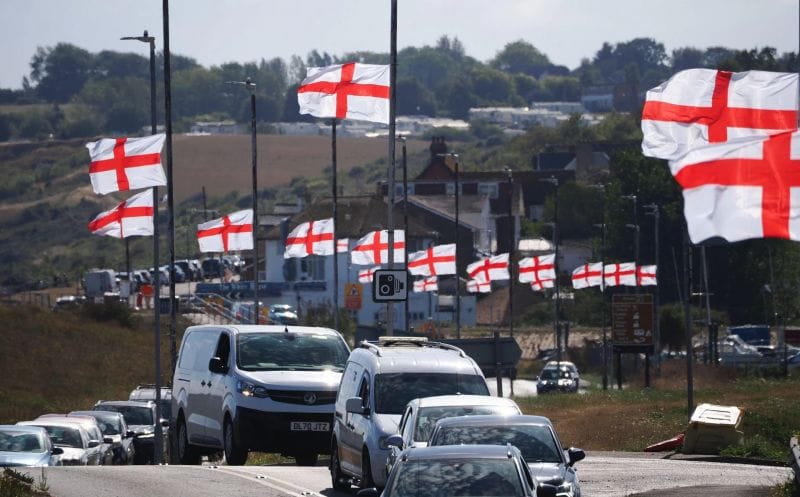
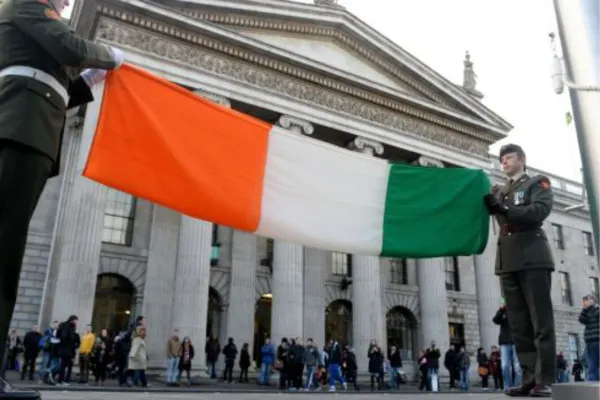
“Operation: Raise the Colours” was an initiative started by right-wing actors in the United Kingdom to fly the national flag. A similar campaign was done in Ireland, during which calls were made to Dublin City Council to remove the flags that were put up. The knee-jerk reaction of the liberal left, and its media apparatus in both cases was to disavow the nationalistic imagery in full, essentially ceding it to the Right. It is important to recognize what is happening here, and why this reaction is the wrong one when it comes to political strategy for revolutionary socialists.
The liberal left are utilising a negative definition. Anything the right are, they are the opposite of, without any self criticism or self reflection. The right know this and ruthlessly use this to weaponise the liberal left against ordinary working class people to drive them into the arms of the right. Pointing at the national flag and telling foreigners “you should be scared of this” is in no way a progressive position. We cannot allow ourselves to be pulled down into this mire.
The working class of England, Scotland, and Wales We need to take Britain and Britishness back from the far right; and the same argument can be made for Ireland and Irishness. The flag, the name, the identity, everything. As an Irish republican socialist, organising for years in Britain, I have had to unlearn a great deal of anti Britishness and indeed anti Englishness. It is more true to say that my development as a socialist has required my reappraisal of Britishness and Englishness as just another identity politics subdivision used to distract us from our actual material goals. The flag of Britain is supposed to be an expression of the unity between the component nations of Britain. As an Irishman the Union Jack, or “Butcher’s Apron”, comes with different connotations. Connotations I do not expect everyone in Britain to be aware of due to the nature of education under capitalism. This is by design and not the fault of the masses. But if we surrender the flag, the nations or the name to the right, we lose. We make the simplest expression of patriotism problematic. Which it should not be. And we lose in even a scientific and historical sense.
So what is Britain if not a dirty word? A lot of folk on the self-identified “left” say Britishness is actually imposed Englishness. Let's unpack that. Many say that the Irish were Britain's first colony, where they tested and perfected genocide and early imperialism. I myself grew up under the shadow of the Fort Protector (1548) in Ireland's first plantation outside of “the Pale”, Portlaoise (colonial name Maryborough) in county Laois (colonial name Queen's County). Some say it was Wales, a name that means “foreigner or outsider” in old English. Some say it was the Scots, though who do we even mean by the Scots? Do we mean the Scotti, the 5th century Irish raiders in the 5th centuryclan? Do we mean the lowland ex Northumbrians? Do we mean the Strathclyde cumbrics? Do we mean the Dal Ríada Irish Gaels? Do we mean Hebridean Norwegian Vikings?
In truth, the first victims of Britain were the English or rather the people who lived there then. Let's even ignore for the minute the Angles, the Jutes, the Saxons, the Romans and the Vikings. Just look at 1066 and the French Norman invasion, the Domesday Book, the enclosures of land, the closing of the commons, the fact that the largest land owners in Britain today are direct descendants of those Norman knights, that their institutions such as the financial Vatican that is the city of London, the old guilds, shady trusts and crusade era models for international banks still exist today. These same institutions are what have the people of Scotland, Ireland and Wales hamstrung. This is also as much the case in England for the working class. When we say England invaded Ireland 800 years ago what we actually mean is Welsh born, Flemish speaking French Norman knights of Viking descent invaded 800 years ago. 1169, the Norman invasion of Ireland, is little over 100 years past 1066, the Norman conquest of Britain.
So how were the English colonised? Just look to the language used around food for a great example. If you toiled in the fields you were looking after cows, sheep, pigs and deer. If you were the lords being served by those who toiled you were getting beef, mutton, pork and venison. All French words that have been lent to English through class division. It is not normal to differentiate between the name of the animal and the name of the meat. The English language is like this specifically because of colonisation by the French Normans. Earlier Old and Middle English word construction was reserved for the underclass for much of history post Norman invasion. Cutthroat, pickpocket, turnkey, cutpurse, sneakthief, these early modern English words follow the more Anglo Saxon form of verb-noun. bWhereas the ruling class’s Norman French gave us the "noun + past participle" pattern such as god-fearing, weather-beaten, spell-bound, etc. This further illustrates the class divide even within the English language that we seldom consider. What we unfortunately think of as British is based on the history from the Norman invasion onwards especially from after the Tudor period. The subjugation, the extraction of value, the imperialism, the destruction of nature. But what this is, at its core, is class warfare.
But back to the 11th century. As well as old English, a spoken language in parts of England at the time, and indeed in Scotland and Wales, was essentially an early form of Welsh. Some place names still hold within them a kernel of meaning, a descriptor for an area that has been lost. “Pen” meaning hill is in hundreds of place names. Plymouth from the river Plym (Brythonic Prym, meaning "plum tree river") + English 'mouth’, often used for an estuary. Exeter: From Isca Dumnoniorum, where Isca is the Brythonic word for water. Still seen in modern Irish as uisce or gáidhlig as uisge. Cumbria: The county itself is named from Cymry, the Brythonic word for "fellow countrymen.” Incidentally the same word for Wales in Welsh. Even our rivers hold onto this Brythonic origin. Thames: From Tamesis, likely meaning "dark one.” Avon: A direct borrowing of the Brythonic word afon, meaning "river" (found in Stratford-upon-Avon, Bristol Avon, etc.). Still seen in Irish and Gáidhlig as abhainn or in Welsh as the original afon. The destruction of indigenous language as a means of severing a people from a land is a classic technique used across colonial projects for centuries. This is not unique to the Brythonic languages within these isles but I think the point needs making. We don't really see it or think about it anymore. The term we use for this family of languages is Brythonic which might sound familiar. It sounds like Britain. (Specifically what is known as P Celtic languages like Welsh, Cornish and Breton as distinct from Q Celtic languages (Gaelic languages) such as Irish, Scots Gaelic and Manx).
But what does Britain mean? Well, it's also Celtic. It comes via the Latin Britannia, which the Romans used for the island. This, in turn, is from the Greek Pretanike, which comes from the original Celtic root. The exact root of the word is a little unclear but it could be the painted folk (perhaps tattoo? Perhaps woad?) the exalted or high people or it could literally be followers of the polytheistic Celtic goddess (and later, Christian saint) Brigid or Bríd. Let's think about that for a second. Britain, the island. Brythonic, the language family of Welsh, Cornish and Breton. Brittany, the area in northern France where the Breton speaking Celtic Britons left to, once the Anglo Saxons arrived. Brigantes, the Celtic English tribe at the time of the Roman invasion. Brehon law, the precolonial Irish law system. Are these things then British? Ireland in Irish is Éireann which is derived from the Celtic goddess Éiriú. Brigid being a root for Britain is consistent with this system. An Irish person making St Brigid's crosses on the 1st of February could technically be paying homage to the original patron saint of Britain. Can Britishness be tied to these cornerstones of Celtic identity? If not, why not? Is it when the Saxons came that you no longer view the people as Celtic or as worthy? How about further back? What about the Beaker People? Or the Neolithic early farmers? Or mesolithic hunter gatherers? Do we only classify them as the true authentic inhabitants of the land?
People on the left shy away from Britishness due to what they feel it represents. The vast majority of working class people do not. They see it simply as their nationality. If we concede this to the right we immediately lose the vast majority of the working class through our own laziness and nitpicking. Either Britain means nothing but the collective term for all the peoples and places within this island and the wee islands off the coast or it means its history. If it means its history then why not its whole history? Why ignore the Celtic roots? Why ignore the story of the subjugation of the working class that's always been happening in these lands for centuries? Within the name of our very island is encapsulated the bastardisation of meaning and the reduction of subjugated people. This is true. But it's also just the symbol of the place we live. It's either not that deep or exactly as deep as the whole of the story requires. Either way, we as communists mustn't shy away from Britishness. That doesn't mean that once the working people of this land take up the mantle of control as the ruling class that they must retain the flag or even the name! What happens once all power is truly in the hands of the working class is a different conversation than where we're at today in 2026.
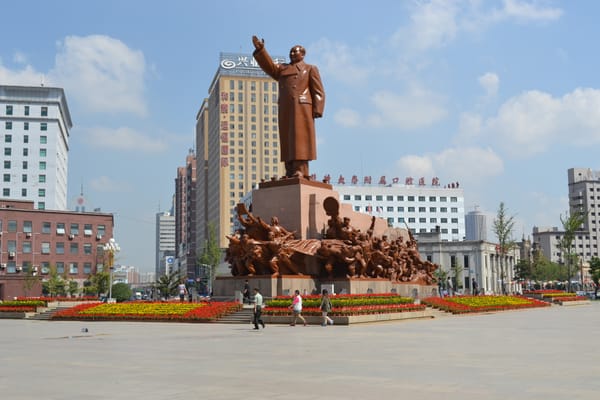
To decolonise or to smash imperialism doesn't mean requiring a complete abandonment of all the hallmarks of a country. This is throwing the baby out with the bath water. Let us look to China for how they have tied Marxist Leninism to patriotism in a way that makes them one and the same. In the aftermath of the anti-imperial war with Japan and subsequent civil war, China was at the tail end of the “century of humiliation”, underdeveloped, economically broken and with utterly decimated infrastructure. But in the relatively short time between China's establishment as the People's Republic of China in 1949 and today they have smashed all records in human development, infrastructure building, economic growth and the eradication of poverty. They are rightly able to frame these successes as being both inherently Chinese and inherently socialist in nature. Major modern projects like the spearheading of green energy production, the Beijing Olympics, the high-speed rail network, absolute poverty eradication, and space exploration (e.g., the Tiangong space station) deserve to be highlighted. Not to mention having the world's largest middle class, larger than the entire population of America, and becoming the world's second largest economy and rising.
How they tell the story of these achievements is by not only presenting them as merely technological or economic successes, they are framed as direct results of the superiority of the "socialist system with Chinese characteristics.". The centralised planning and mobilisation capacity of the party-state are credited for these feats. Taking pride in China's rapid development, which is itself patriotism, automatically means having confidence in the socialist system. This was not always the case. Even the Chinese name Zhōngguó, meaning middle kingdom, carries connotations of imperialism. If you're looking for them. The term Zhōngguó was initially applied to the "royal demesne" of the Western Zhou dynasty. Over time, it also referred to the central plains of China, and eventually, to the state itself. Again, you could absolutely make the case that this is a colonial and problematic name but truly who cares? They augmented the name by adding that it's the people's republic. They have applied Marxism-t Leninism to their material conditions in the form of sino centric socialism. We must also do the same, not looking backwards but to look inwards to socialism with British characteristics. Could we not be the People's Republic of Britain?
The central point within this article is this: no ethnic distinction or linguistic background is either universally bad or absolved of all wrongdoing. You can't choose a flavour of nationality like a favourite band. And further, the crimes of a nation are the crimes of its owning class, past and present. The gains of a nation are the gains of the working class, past and present. This is not cherry picking, this is fact. We need to grow up and get serious about socialism and part of that is dismantling identity politics in all its forms, not just the ones you fancy. The Irish, the Welsh, the Scottish, the Cornish, the Manx, they should not hate the English. They should hate the English institutions just as the working class English do. A working class lad from Govan has more in common with a postie from Scunthorpe than a Highland lord looking to subjugate him under the saltire instead of the union jack. Do not concede either of these flags or identities to the right. They are yours by virtue of your residency. They are meaningless and meaningful in equal quantities so don't get lost in the sauce. Don't be baited by the right’s division around identity.
An important example from Ireland is this: the Orange Order was not established in the aftermath of the 1690 Battle of the Boyne (a battle between a Dutch protestant king and an English catholic one). It was created over a centuryalmost 100 years later as a counter revolutionary force against the United Irishmen (and their ultimate 1798 rebellion) to divide the working class. The United Irishmen consciously and strategically sought to unite "Catholic, Protestant, and Dissenter" under the common banner of Irishness and democratic reform. This could not be allowed to happen under British rule so violent sectarianism was revived and pumped with money. This is the blueprint and you are seeing it again today in so many ways.
Learn from the mistakes of the past and learn from your history or be doomed to endlessly repeat it.
Notes and References
“Operation: Raise the Colours” / Flag Campaign
The campaign began in Birmingham in summer 2025, organised by Ryan Bridge. It spread across the UK, with flags appearing on lampposts in Edinburgh despite council warnings, and similar activity in Falkirk, Aberdeenshire, and Renfrewshire. Critics accuse the group of links to the English Defence League and Tommy Robinson, and describe it as far-right. In France, Raise the Colours activists were banned by the French government for targeting migrant boats.
“Butcher’s Apron” as a term for the Union Jack
The term was coined by Edinburgh-born Irish revolutionary James Connolly as a pejorative for the Union Flag, referencing alleged British imperial atrocities. It is commonly used by Scottish nationalists and Irish Republicans as a byword for British colonial rule. For a historical analysis of British state violence in Ireland, see: P. Gowan, ‘The NATO Powers and the Balkan Tragedy’, in New Left Review, No I/234 (March-April 1999), p. 103. While focused on the Balkans, Gowan's work contextualises liberal imperialist interventions, a framework often applied to British history in Ireland.
In reference to Ireland as Britain’s first colony - the Norman/English involvement in Ireland began in the twelfth century, when Anglo-Norman adventurers settled in Wales gained a foothold in the south-east. Henry II landed in 1171 and secured lordship over part of the country, later designating his son John as Lord of Ireland. English monarchs styled themselves “Lord of Ireland” until Henry VIII assumed the title of King in 1541.
The Norman invasion of Ireland (1169)
The Anglo-Norman invasion of Ireland c. 1169 is described as “a significant dividing line in Irish history, just as 1066 has been in English history.” The invasion involved forces from South Wales and was followed by Henry II’s landing in 1171.
The Domesday Book
The Domesday Book was the great land survey of 1086 instigated by William the Conqueror to enable him to tax the land correctly. Evidence submitted to Parliament states that the Domesday Book “provides clear evidence that lands were taken from the Anglo-Saxons and given to Norman lords and clerics,” with only two tenants-in-chief being Anglo-Saxon.
For a detailed analysis of the linguistic and social impact of the Norman Conquest on the English language, see D. Crystal, The Stories of English (Penguin, London, 2005), pp. 124-156.
For the etymology of "Britain" and its connection to Celtic mythology and the goddess Brigid, see P. Berresford Ellis, The Druids (Constable, London, 1994), p. 28.
Norman descendants owning British land
A 2014 parliamentary submission argues that manorial rights perpetuate the oppression of Anglo-Saxon descendants by Norman invaders, and that “if the descendants of the Norman lords wish to maintain their rights then the descendants of the Anglo-Saxons, whose land the Normans took, should also have the right to reclaim their land.”
On the subjugation of Brythonic languages and the etymology of British place names, see J. Room, The Penguin Dictionary of British Place Names (Penguin, London, 2003); and for a broader Celtic context, see J. T. Koch, ed., The Celtic Heroic Age: Literary Sources for Ancient Celtic Europe and Early Ireland and Wales (Celtic Studies Publications, 1995).
The Orange Order as a counter-revolutionary force
The Orange Society was established on 21 September 1795 following the Battle of the Diamond. Contemporary evidence describes its objects as “self-defence, the maintenance of the Protestant religion, and of British connexion,” with the immediate cause being “the disorders of the Country; which rendered life insecure and threatened to overpower the law.”
On the historical development of Chinese socialism and the integration of patriotism with socialist construction, see W. Hui, China from Empire to Nation-State (Harvard University Press, 2014); and for a perspective on China's development model, see M. J. Dunford and L. Gao, ‘Chinese Perspectives on the Belt and Road Initiative’, in Cambridge Journal of Regions, Economy and Society, Vol. 11, No. 1 (March 2018).
For more on the United Irishmen and the Orange Order as a tool of counter-revolution, see T. A. Jackson, Ireland Her Own: An Outline History of the Irish Struggle (Lawrence & Wishart, London, 1947); and P. Berresford Ellis, A History of the Irish Working Class (Pluto Press, London, 1972).
For an analysis of the Tudor conquest of Ireland as a prototype for colonial techniques, see: D. B. Quinn, The Elizabethans and the Irish (Cornell University Press, Ithaca, 1966); and for its legacy, see R. F. Foster, Modern Ireland: 1600–1972 (Penguin Press, London, 1988), pp. 3-38.
On the Norman invasion and the establishment of feudal structures in England and Ireland, see M. T. Clanchy, England and Its Rulers: 1066–1307, 4th ed. (Wiley-Blackwell, Oxford, 2014); and for the Irish context, see S. Duffy, Ireland in the Middle Ages (Palgrave Macmillan, Basingstoke, 1997).
For a classic study on the class-based nature of the English language following the Norman Conquest, see N. F. Blake, A History of the English Language (Palgrave Macmillan, Basingstoke, 1996); and for a detailed socio-linguistic analysis, see D. A. Kibbee, For to Speke Frenche Trewely: The French Language in England, 1000–1600: Its Status, Description and Instruction (John Benjamins Publishing, Amsterdam, 1991).
On the historical enclosures of common land in England and their social impact, see J. L. and B. Hammond, *The Village Labourer, 1760-1832: A Study in the Government of England Before the Reform Bill* (Longmans, Green and Co., London, 1911); and for a Marxist perspective, see K. Marx, Capital: A Critique of Political Economy, Vol. 1, trans. B. Fowkes (Penguin Books, London, 1976), Part Eight: So-Called Primitive Accumulation.
For the history of the City of London's unique financial and political institutions, see D. Kynaston, The City of London, Vol. I: A World of Its Own 1815–1890 (Chatto & Windus, London, 1994); and for a critical view, see N. Shaxson, Treasure Islands: Tax Havens and the Men Who Stole the World (Vintage, London, 2012).
Regarding the strategic use of sectarianism by the British state to undermine the United Irishmen, see T. P. Power, ed., The United Irishmen and the International Revolution, 1795–1803 (Irish Academic Press, Dublin, 1998); and for the founding of the Orange Order, see A. Jackson, The Two Unions: Ireland, Scotland, and the Survival of the United Kingdom, 1707–2007 (Oxford University Press, Oxford, 2012), pp. 124-128.
On the concept of "socialism with Chinese characteristics" and the fusion of patriotism with socialist development, see X. Zhang, The China Wave: The Rise of a Civilizational State (World Century Publishing, New Jersey, 2012); and for more on the theoretical framework, see M. A. K. Halliday, The Chinese Path to Socialist Modernization (International Publishers, New York, 2023).