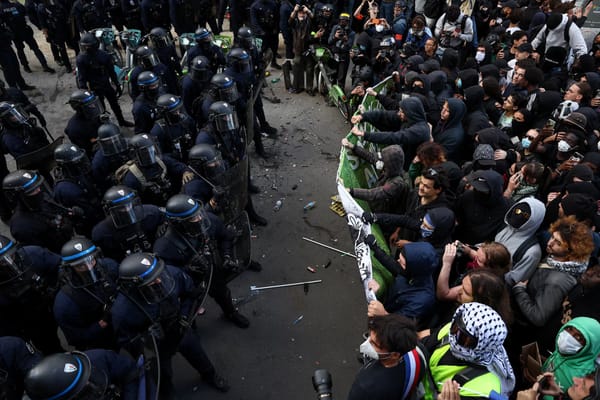
The People Of Yemen Take To The Streets In Celebration As Ansar Allah Takes The Red Sea
Saudi Arabia called Trump twice begging for help. He said no. Yemen now controls the Bab el-Mandeb Strait and the ‘Axis of Resistance’ has its hand on the throat of global trade.
Good day, Aontacht readers,
And every so often, during the relentless grind of imperial violence and Western hypocrisy that we cover in the spectacle, something happens that makes you want to put the laptop down and just appreciate it for a moment. Not because it is clean or simple or without cost, because it is none of those things. But because it is real, and it is enormous, and it is the kind of thing that the people in charge of the world’s most expensive military apparatus were absolutely certain could never happen.
So let’s talk about this week in Yemen.
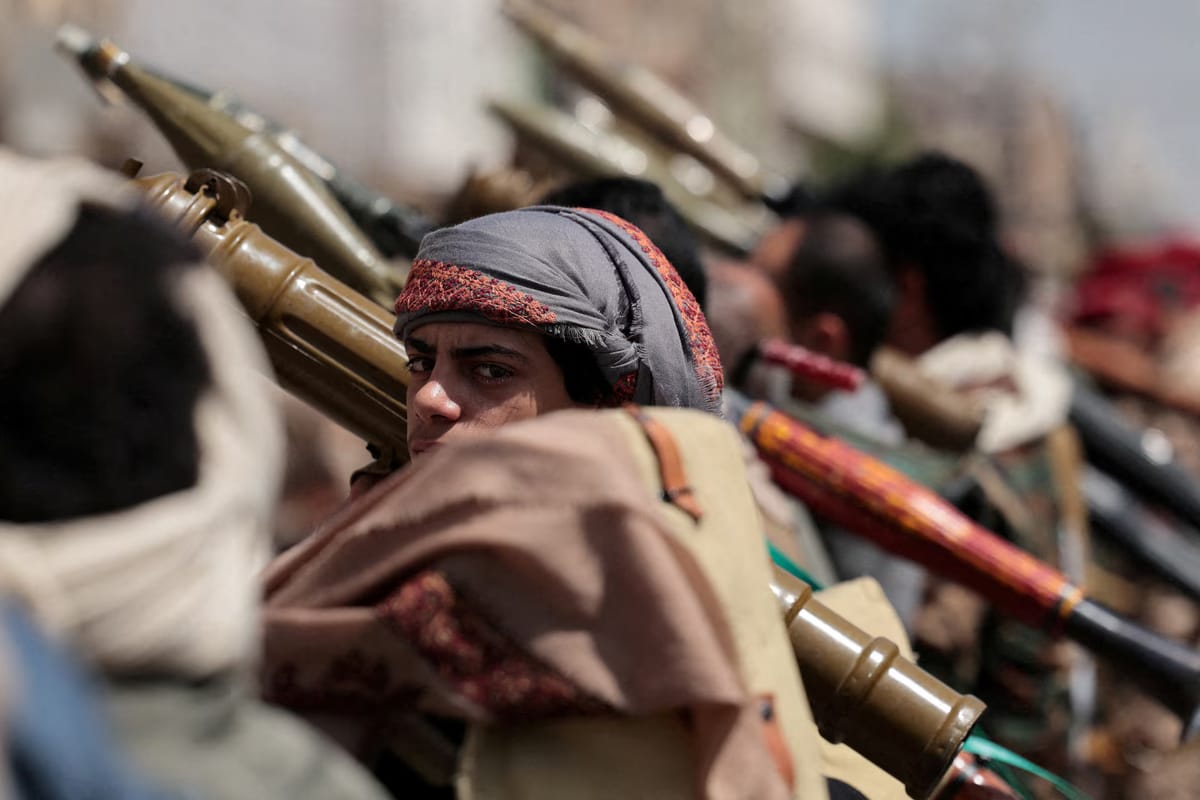
Between the 3rd and the 11th of September, the Yemeni Armed Forces, Ansar Allah, whom the Western press always seems to insist on calling the ‘Houthis’ as though a diminutive nickname might make them easier for people to dismiss, launched a multi-pronged military operation along Yemen’s western coast. The Saudi-backed forces that had held that coastline for years, armed and funded and trained by Riyadh and Washington, folded like a pancake. Not gradually over time or in good order. They straight up melted and surrendered or simply fled. They abandoned their American-made Oshkosh M-ATVs, their armoured vehicles, their artillery pieces, their mountains of ammunition, and they left.
Watch: Yemeni forces inspect US-made military armored vehicle after liberating Mokha from Saudi-backed mercenaries.
Watch: Ansar Allah fighters celebrate the capture of another area and all the materiell that comes with it.
By Friday the 11th of September, Ansar Allah stood in full command of the Bab el-Mandeb Strait, both shores, and the island of Mayun sitting in its centre, which divides the strait into its two shipping channels.
The Bab el-Mandeb, or the Gate of Tears as it would be in English, narrows to just twelve miles at its tightest point. Roughly ten to twelve percent of global trade passes through it. It is now controlled by a movement that has spent two years blockading Israeli shipping in solidarity with Gaza, that has fought the American navy to a standstill, and that is closely allied with Iran, which already controls the Strait of Hormuz to the east.
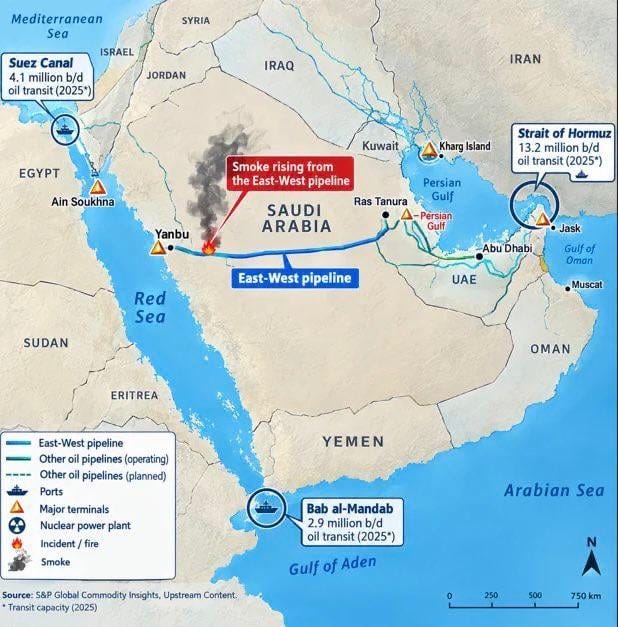
Between them, these two chokepoints now sit in the hands of the Axis of Resistance, and there is no alternative route for Saudi oil exports. The kingdom and its friends…are fucked. To put it plainly.
what actually happened.
The operation began with a three-pronged advance from western Taiz, southern Hodeidah, and toward Mocha itself. Mocha fell first, the historic Red Sea port city captured after the forces of Tareq Saleh, commander of the Saudi-backed National Resistance and nephew of Yemen’s former president, withdrew in what one report described as disarray, with Saleh himself relocating his command centre to a safe location, which is one way of putting it. Then came the cascade. Al-Khawkhah and Hays fell in Hodeidah province. Khalid ibn al-Walid camp, the largest military base in the region, was captured, opening the final push to the coast. Dhubab fell, the coastal town directly opposite Mayun island. And then, on Friday morning, Ansar Allah fighters boarded boats, landed on Mayun unopposed, and raised their flag over the island that sits in the middle of one of the world’s most important waterways. A ‘Yemeni government’ official confirmed it to AFP:
‘The Houthis now have a full grip over the Bab al-Mandab area.’
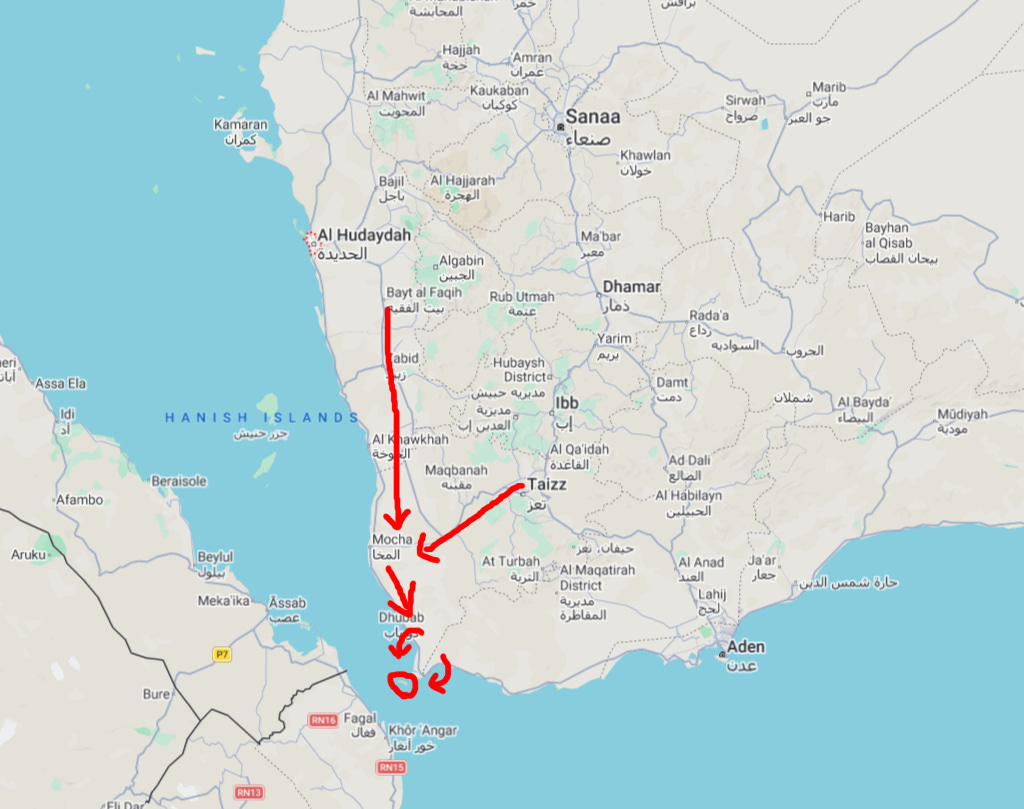
Ansar Allah’s military spokesman, Brigadier General Yahya Saree, laid out the numbers. Over 5,400 square kilometres liberated. Six districts cleared. Seven military divisions comprising 38 brigades destroyed, routed, or captured. At least 210 Yemeni prisoners, some held for between five and eight years in Saudi-backed prisons with death sentences hanging over them, freed and returned to Sana’a.
Watch: Ansar Allah soldiers shake hands with prisoners held by the Saudi backed forces on the western coast.
The Saudi response was predicably to bomb. Dozens of airstrikes hit Mocha, Dhubab, and other newly captured areas. Saudi jets hit Mocha airport. They bombed convoys. It was ultiimately in vain and made no difference, because as always, air power cannot hold ground. Especially if the occupying forces have run away.
Saudi Crown Prince Mohammed bin Salman was…upset to say the least. Supposedly, he called Donald Trump twice on Thursday, begging for American airstrikes to stop the advance. Trump declined. The White House concluded, according to US officials, that direct intervention was too risky, too costly, and too likely to fail. Instead, Washington offered intelligence support and deployed over a hundred military advisers to Saudi Arabia, which is really just a bit of a consolation prize for the losers. Trump later told reporters that Ansar Allah had contacted the Americans and said ‘they did not want to fight them’. I’m not sure how true that is, it’s probably the other way around but the message is clear enough.
Henry Kissinger famously observed that to be America’s enemy is dangerous, but to be America’s ally is fatal. Mohammed bin Salman is learning this in real time. The Empire has decided Yemen is not worth fighting for, and its oldest client in the region has been left to bleed.
Brilliant.
the cost, and the celebration.
This is not a clean victory. It never is. The International Organization for Migration reported at least 46,000 people displaced since the fighting began, with the number rising by the hour. Over 500 people killed in a week, most of them combatants but inevitably some civilians, because that is what the tentacles of US imperialism do, and Yemen has felt that more than most places on earth. This is the price of liberation in a country that has been bombed, starved, and blockaded by Saudi Arabia and its Western sponsors for twelve years, and the Yemeni people know that price better than anyone. They have been paying it since 2014.
But on Friday evening, in Sana’a, thousands poured into the streets.
Watch: Celebrations in Sana’a, Yemen last week.
They waved Yemeni flags. They chanted. Schoolchildren marched holding banners. Enormous crowds gathered to celebrate the liberation of the west coast, and the Ansar Allah-led government vowed to take the rest of the country from Saudi-backed forces. I will include the video, because it is worth seeing.
This is not the manufactured jubilation of a Western liberation, not the carefully staged scenes of crowds greeting armies that have arrived with shock and awe and the promise of democracy. These are people who have been bombed for a decade, who have watched their children starve under a blockade backed by the same countries that lecture the world about human rights, who have buried their dead by the thousands, celebrating because their enemy was driven from their coast by their own forces, with their own hands, against every prediction of every expert who said it could not be done.
what it means.
For Saudi Arabia, the position is now catastrophic in a way that the kingdom’s considerable public relations budget will struggle to manage. Its primary oil export route was already compromised by Iran’s control of the Strait of Hormuz. The contingency plan was the east-west pipeline emptying into the Red Sea, designed precisely to bypass Hormuz. That pipeline now empties its oil into waters whose southern exit is controlled by Ansar Allah. Saudi exports are boxed in from both directions, and there is no third option.
Israeli Channel 14 described the capture of Mocha as a strategic event with far-reaching consequences, which is something of an understatement from a channel not generally given to praising Yemeni military achievements.
For the United States, this is a particular kind of humiliation, the kind that comes not from being defeated in a fight but from declining to show up for one. The most powerful military alliance in history watched a movement it has been bombing since 2015, a movement it sanctioned and blockaded and starved and dismissed as Iranian-backed rebels, take control of one of the world’s most important chokepoints, and decided the wisest course was to send a hundred advisers and hope nobody noticed.
Watch Ansar Allah fighters take a moment to greet young Yemeni boys who are saluting them from the side of the road.
The Saudis spent twelve years and hundreds of billions of dollars trying to crush Ansar Allah. They failed. The Americans spent years bombing Yemen with drone strikes and selling Riyadh the weapons to do the rest. They failed too. And the movement they tried to destroy now controls the gate to the Red Sea, has a hand on the throat of global trade, and celebrated its victory with schoolchildren marching through the capital of a country the world spent a decade trying to forget existed.
The Axis of Resistance, a term that has moved from the fringes of political commentary to something that describes a genuinely coherent strategic reality, now sits astride the two most important maritime chokepoints on the planet. Iran holds the Strait of Hormuz. Yemen holds the Bab el-Mandeb. Between them, they have more leverage over the global economy than the entirety of NATO’s naval presence in the region has managed to prevent. That is not a talking point. That is geography.
The Empire’s grip on the Middle East is slipping, and not because of any single dramatic event but because of the accumulated weight of a decade of resistance that refused to be bombed into submission. Yemen is the proof of concept. If a country that has been starved and blockaded and reduced to rubble by the wealthiest military coalition in the region can do this, then the strategic calculus that the Empire has been running on for seventy years needs rather urgent revision.
And on that thought, I will let you go.
This article was originally published in the Spectacle.