The Patron Saint Of The 9 To 5: Dolly Parton, The Gay Icon And The Dignity Of Working Women
Dolly belonged to a different America: an America of 2 room log cabins and no running water, of fathers paying the doctor with cornmeal, women clocking into whatever work they could get to support themselves and their families and being paid less for it.
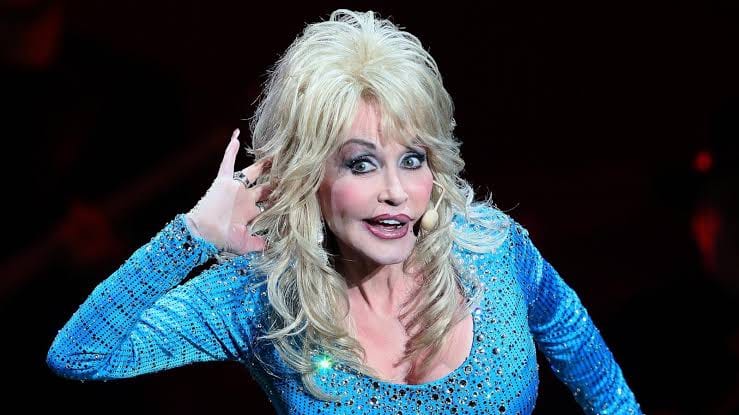
The news of Dolly Parton’s passing last night lands with a melodious sorrow similar to the keening-like Appalachian tones of her lamentation “Little Sparrow”. A song bourne from a pain familiar to any woman with a loving heart. It feels impossible, not just because of the sheer magnitude of her presence for nearly six decades, but because in spite of her 80 years of age many of her fans felt Dolly Parton was supposed to be a permanent fixture, a rhinestone-studded North Star in a popular culture that usually lacks any sort of compass at all. By the time this reaches print, many, especially in working class America will be in mourning.
Working class America is an entirely different country to the one valourised in most contemporary popular culture or on the news. It’s a different place entirely to modern corporate country music and mega churches.
Dolly belonged to a different America: an America of 2 room log cabins and no running water, of fathers paying the doctor with bags of cornmeal, of women clocking into whatever work they could get to support themselves and their families and being paid less for it.
For those of us on the left, our cultural canon often privileges the industrial heartland or the pulse of the inner city. We sometimes forget the working class heart that could always be found in trailer parks or the mountain hollers of the American Rural South and places like it. Dolly Parton could never be ignored. She was one of the most authentic and persistent voices of the American working class, specifically, the working-class woman and she was highlighted in pink and rhinestones for fear you would ever overlook her.
Parton’s story began in a one-room cabin in Locust Ridge, Tennessee, the fourth of 12 children, with a childhood of material poverty that she never romanticised nor resented. Instead, she wore it. She understood that the shame associated with poverty is a weapon used by the owning class to keep workers silent. Dolly refused to be shamed by it. She took the "Coat of Many Colors" a patchwork garment sewn by her mother from rags and transformed it into a symbol of proletarian dignity. The story wasn't about what she lacked, it was about the true wealth of the working class. it was about the richness of labour, the value of a mother’s loving work, and the profound wealth of solidarity within a struggling family.
Where Bruce Springsteen sang about men racing in the street, Dolly Parton sang about the women working in the office, the salon, and the kitchen.
Her seminal hit, 9 to 5,was and is an anthem of labour alienation. It articulated the specific exploitation of female labour, the "boss man" who takes credit for a woman’s mind while leering at her body. Dolly wrote that song by clicking her acrylic nails together, mimicking the sound of a typewriter, because she knew the sound of devalued women’s work intimately.
It was a rallying cry for the pink-collar proletariat, it was a demand for fair pay and respect in a system built to extract both. But the film itself was inspired by something real: the 9to5 organisation, a grassroots movement of women office workers fighting for equal pay and against sexual harassment.
Parton’s song became their anthem. It was, as one writer put it, “unapologetically feminist, deeply rooted in the realities of labour and workplace exploitation”.
Her legacy as a feminist icon is complex, but precisely because of that complexity, it is useful. Dolly rejected the label of "feminist" for years, not out of a disagreement with equality, quite the opposite, but because the mainstream feminist movement often looked down on the kinds of women Dolly represented: women with big hair, long nails, and a love for men who might not deserve them.
Dolly understood that for many working women, femininity is not a false consciousness to be discarded, it is a form of self-expression in a world that wants to strip them of agency. Feminism only caught up to this recently and Dolly was part of that.
Unlike many self-appointed ‘queer icons’ of the 21st century, Dolly Parton’s solidarity with gay and trans people was never contingent on its profitability. From its outset, her career centred around granting dignity to the pariahs, the unrespectable, the oppressed; uplifting the queer community was for her not a bold statement for which she expected applause, it was just a consistent application of her classic egalitarian principles.
Her exaggerated look – drawn intentionally from a Tennessee towns local ‘tramp’ – spoke a thousand words before she could utter a sentence, for it signalled to queer people across the world that she chooses to sit at the same table as “the dregs of society” every day.
We ought to keep Dolly Parton’s name on the lips of our children, for she is the definitive example of someone who spent her eighty years on this Earth assured of her values and unhesitant in her purpose.
She told the truth about the lives of women that polite society ignored or actively kept down. She sang about unwanted pregnancies (eg. Down from Dover), about the desperation of poverty (eg. Daddy Come Get Me), and about the quiet desperation of domestic life. She never sang about her characters purely as victims. She sang about them as survivors. She elevated the "Backwoods Barbie" trope to a position of power, proving that someone could be from the sticks, be "overdone," and still be the smartest, most successful person in the room.
She never abandoned her people. She never “classed herself up,” as author Sarah Smarsh puts it. She could certainly have. She had the money and it was expected. Instead, however, she doubled down: the tight clothes, high hair, too much makeup, the twangy voice. “It takes a lot of money to look this cheap,” she famously joked.
Perhaps her most radical act was her ownership of herself. From the very beginning, she retained the publishing rights to her songs, famously turning down Elvis Presley for 'I Will Always Love You' to do so. This acumen allowed her to build Dollywood not as a vanity project, but as an engine of economic development for her 'people’. It’s important that we remember she actively chose not to be a billionaire. She could have. She could have invested her money in portfolios but instead she chose to invest her money in improving the lives of the people she grew up amongst and their children and grandchildren.
Her philanthropy, most notably the Imagination Library, was mutual aid on a massive scale. A scale never before imagined let alone attempted by an American artist before. It was, in large part, because her father died never learning to read.
She didn't just sing about working-class struggle. She acted. She recognised that the key to liberation lies in literacy and education, and that the state was failing to provide it.
The Imagination Library has now gifted more than 330 million books to children around the world. Before that, in 1991, she personally pledged $500 to every seventh and eighth grader in Sevier County if they graduated high school. The dropout rate dropped from 35 percent to 6 percent. She stepped in where the social safety net was torn, not as an outside "savior," but as a former neighbor who had escaped poverty and was giving back.
Dolly Parton was a walking contradiction to the cynicism of the modern world. A Christian who supported the LGBTQ+ community and recognised their humanity where others demonised them. She was a sex symbol who demanded intellectual respect. She was a patriot who refused to let her name be used for war or the political exploitation of her people.
Her voice was the voice of seamstresses, waitresses, single mothers, and dreamers stuck in typing pools with little hope of advancement. She told them they were worth more than their pitiful paychecks, more than their shitty marriages, more than the judgment of their small towns. In a society that treats working class women as disposable, or even contemptible, Dolly Parton made them feel powerful.
Dolly has lived in the light and is in the arms of Jesus,” her nephew Bryan Seaver announced tonight. He added: “She never saw a door she couldn’t open, and the doors she opened made and changed history”
It won’t be only women and the LGBTQ+ community who will miss her either, the whole of the working class will, especially the rural working class of any gender. She gave a voice to that, and it wasn’t one sullied with pandering or vested interests.
The rhinestones may have lost their shine tonight, but the light she reflected onto the working class will burn forever. Goodbye little sparrow you can finally fly so high and feel no pain.