The John Bull Market: London’s Continued Grip On Ireland
Though a great deal is often placed in economic analysis on the influence that US FDI exerts over the economy, the continued exertion of British financial control is often overlooked.
Introduction
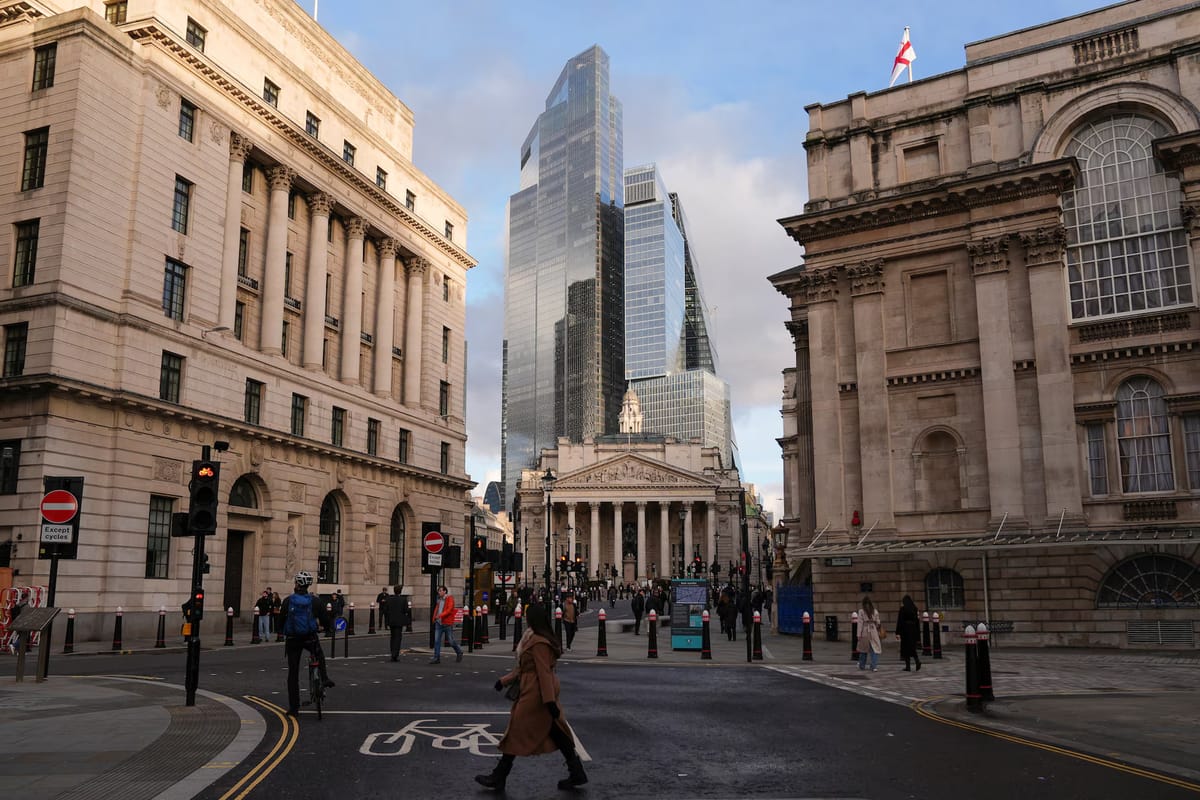
Though a great deal is often placed in economic analysis on the influence that US FDI exerts over the economy, the continued exertion of British financial control is often overlooked. In this regard, it appears that the structures of economic power have proved more resilient than the transfer of formal state administration. The City of London, as the historic core of British financial capital, continues to shape Ireland’s economic trajectory through capital flows, institutional linkages, regulatory proximity and the architecture of international finance. This influence isn’t primarily exercised through direct colonial administration, but through the quieter imperial mechanisms of investment, market access and the concentration of decision-making power in global financial centres. These arrangements raise fundamental questions about the substance of economic independence and the distribution of gains from Ireland’s integration into global capital circuits.
The Long Shadow
The long shadow of British dependence has cast itself over Ireland much longer than many care to admit. In the decades following neo-colonial statehood in 1922 and the state’s Commonwealth withdrawal in 1949, the vast majority of exports continued to flow to the United Kingdom (tariffs imposed on agricultural produce by the UK during the 1930s almost crippled the Free State), and the IR£ remained linked to £ sterling until 1979. Economic historians have documented how this structural reliance on an underperforming UK economy constrained development in Éire. Membership of the European Communities and later the single market enabled diversification, yet the deeper institutional and financial connections with London were never severed. An inherited legal tradition, language and professional networks facilitated the continued circulation of British capital and expertise.
In the mid-1960s, figures associated with the left-wing Wolfe Tone Society argued that Fianna Fáil Taoiseach Seán Lemass’ economic liberalisation - particularly the move toward freer trade with Britain - risked deepening, rather than reducing, Ireland’s dependence on British capital and markets. At a November 1965 conference organised by the Society (as the Anglo-Irish Free Trade Agreement was being negotiated), and attended by members of Irish Republican organisations, the Irish Labour Party and trade unions, speakers warned that the proposed pact would undermine the development of domestic industry under protection, flood the market with British manufactures, and amount to an “economic reconquest of Ireland” through a large-scale influx of British capital. This critique continued in the Society’s 1967 pamphlet ‘The Case Against the Common Market,’ drafted by its Economic Sub-committee. The document maintained that closer integration with the UK, presented as a stepping-stone to EEC membership, threatened industrial capacity, economic sovereignty and the possibility of an independent development strategy. Academic analysis has also noted the paradoxical character of that Agreement, which increased short-term dependence on the British market as a preparation for eventual European entry. As a neo-colony, Desmond Greaves estimated that the state was haemorrhaging large sums of money due to UK imperial policy.
The establishment of the International Financial Services Centre (IFSC) in Dublin by Charles Haughey’s Fianna Fáil government in 1987 marked a deliberate turn toward international finance. The project was marketed aggressively, including through events in the City of London, and offered preferential tax treatment designed to attract banking, fund management and related activities. Within a short period, major international banks established operations. While the IFSC was framed as a vehicle for domestic development and job creation, it also embedded Ireland more deeply within the circuits of global finance centred on London and, increasingly, New York. The regulatory and cultural proximity to British financial practices made Dublin a natural extension of City networks, rather than a fully autonomous alternative. The Central Bank of Ireland recognises this close connection and intertwinement. Major financial and insurance service entities operating in Éire, such as HSBC, Aviva, Legal & General, and Barclays - are all of UK origin.
Brexit, Funds and Capital Flows
Brexit has been widely presented as an opportunity for Ireland to capture business displaced from London. Official and industry data show substantial growth in fund assets domiciled in Ireland and increases in employment within international financial services. Estimates from City of London figures themselves indicate that Dublin was among the primary destinations for jobs moving from the UK after the loss of ‘passporting’ rights. Yet, these movements have not displaced London’s overall dominance in key markets such as foreign exchange, derivatives clearing and international debt issuance. The City has retained its position as a leading global financial centre, while Dublin functions in part as a complementary EU hub within a still-London-centred architecture. As of 2026, the UK remains the largest external borrower from banks in Éire.
Trade and investment data underscore the persistence of bilateral financial ties. The UK remains one of the state’s most important partners in the services trade, with financial services forming a substantial component. UK financial services exports to Ireland have grown in recent years, and Ireland ranks among the leading EU destinations for such exports (second only to Luxembourg). Conversely, firms and investors from the state maintain significant positions in the UK. These flows reflect not only commercial opportunity, but also the continued integration of the two economies through capital markets, professional services and cross-jurisdictional banking relationships that predate and have survived political separation. The financial services sector in Ireland has long been regarded as an offshoot of the City of London.
Foreign direct investment (FDI) statistics further illustrate the pattern. While the USA, unsurprisingly, accounts for the overwhelming majority of the stock of FDI in Ireland, the UK remains a notable source of investment. According to the Central Statistics Office (CSO), the stock of inward FDI from the United Kingdom stood at approximately €24–31 billion in recent years (depending on immediate versus ultimate investor basis). As of 2022, UK-owned MNEs accounted for a higher percentage of foreign-owned enterprises at 30.3% of externally owned enterprises, greater than the USA’s rate of 18.9%. Outward investment into the UK is also substantial. These capital movements occur within a broader framework in which London continues to act as a major intermediary and decision-making centre for international finance. The result is a form of structural dependence in which key financing decisions, risk assessments and market access for Irish entities are frequently mediated through institutions and practices shaped by the City.
The investment funds sector that currently operates in the state provides the clearest contemporary illustration of this integration. Net assets of Irish-domiciled funds reached approximately €5.5 trillion by the end of 2025, making Ireland the third-largest global funds centre and the second-largest in Europe. This growth has been driven in significant part by the relocation of activities previously centred in London and by the continued use of Irish structures by UK-linked managers and investors. Of the 1,007 fund managers with Irish and non-Irish domiciled funds, 357 are from the UK - the largest single group, surpassing both North America and Europe. The scale of these assets far exceeds the size of the domestic economy and highlights the extent to which Ireland functions as a platform within global capital networks still heavily influenced by the City. Overtures for further integration have been made in recent years, with a leading figure of the City of London Corporation referring to London, Belfast and Dublin as a “golden triangle.” In 2023, speaking as a guest at the Central Bank of Ireland’s Financial Services Conference in Dublin, Andrew Bailey (Governor of the Bank of England) even asserted that “the over-dependence argument leads, wrongly in my view, to a belief that the dependency needs to be reduced.” That same year, the Lord Mayor of London asserted that the expanding fund administration industry in Dublin depended on the business it acquired from the massive asset management sector in the City of London.
Additionally, during a housing crisis and record homelessness, CSO statistics show that, during 2025, €20.2 million was spent by companies on residential dwelling purchases with an address based in Great Britain, and a further €14.3 million on the same was spent by companies with a registered address in the off-shore British Crown Dependencies.
Connolly, Mellows and the Persistence of Economic Rule
James Connolly’s famous warning, written in 1897, and later utilised by socialists and anti-treaty republicans, remains one of the most precise diagnoses of the limits of purely political independence. 'In Socialism and Nationalism’ he stated:
“If you remove the English army tomorrow and hoist the green flag over Dublin Castle, unless you set about the organisation of the Socialist Republic your efforts would be in vain. England would still rule you. She would rule you through her capitalists, through her landlords, through her financiers, through the whole array of commercial and individualist institutions she has planted in this country and watered with the tears of our mothers and the blood of our martyrs.”
He recognised that administrative sovereignty without control over the economic foundations of society would leave the existing mechanisms of power intact. The ownership of capital, the direction of investment and the control of credit would continue to transmit external influence. In contemporary terms, the financiers and commercial institutions he identified have taken new institutional forms - investment funds, international banks, cross-border advisory services and regulatory networks - but the underlying relationship of economic power hasn’t been altered.
Later, Frank Healy, a well-known Irish Republican, asserted that one goal of partition was to remove regions where industry had been concentrated, making the ensuing state a weak, economic non-entity and resulting in a continued dependency on Britain.
Liam Mellows utilised the ‘Connollyite’ outlook following the Civil War’s outbreak. He asserted that the Free State was “British created, British controlled and serves British Imperialist interests. It is the buffer erected between British Capitalism and the Irish Republic.” More pointedly, in an excerpt published by the ‘Workers’ Republic’ newspaper, he insisted:
“If the Irish people do not control Irish industries, transport, money, and the soil of the country, then foreign or domestic capitalists will. And whoever controls the wealth of a country and the processes by which wealth is attained, controls also its government.”
Control of money, industry and the soil wasn’t a secondary question; it was the decisive question of who would determine the direction of the state. His analysis of imperialism wasn’t limited to military occupation or constitutional forms alone. It centred on the capacity of capital - particularly British capital - to shape the economic environment within which any domestic government would be forced to operate. This analysis remains as relevant in the 2020s as it did in the 1920s.
In the drafting of Bunreacht na hÉireann, a proposed constitutional provision sought to ensure that the issue of credit “should not fall directly or indirectly under the control of foreign or international financiers, nor be abused in the interests of private individuals or syndicates.” Advanced by Fr. Edward Cahill to Éamon de Valera in 1936, the clause reflected wider concerns about the Free State’s continued integration into the sterling-area financial system, explicitly centred on the City of London. The proposal was omitted from the final text, leaving the state’s monetary and credit arrangements without such explicit constitutional protection against private or external control.
UK and EU - The Constraints of Monetary Union
While the enduring influence of the City of London remains a central feature of Ireland’s position within global capital networks, the state’s integration into the present centralised euro currency system constitutes a further structural constraint on economic sovereignty. Membership of Economic and Monetary Union removed the capacity for independent monetary policy and exchange-rate adjustment, leaving fiscal policy as the primary remaining instrument of macroeconomic management. We shouldn’t forget that when the property and banking crisis erupted in 2008, this institutional framework limited Ireland’s options, contributing to the decision to issue a comprehensive bank guarantee as part of a requirement for emergency assistance from the ECB. The resulting EU-IMF-ECB programme of 2010 imposed a stringent austerity regime of public spending cuts and tax increases on a democratically elected government (government budgets were required to be externally “approved”), transferring significant elements of budgetary authority to external institutions and illustrating the constraints that membership of a centralised monetary union can place on a state’s democratic decision-making. Academic research shows that such bone-crushing austerity measures in Europe has been a major contributor to the rise of the far-right. Ireland’s continued dependence on Britain remained evident during the crisis, when the UK government agreed to provide a bilateral loan of £3.227 billion. By 2021, the state had paid €709 million in interest, with the UK barring early repayment of the loan. This made it one of the most lucrative state-to-state loans ever advanced.
Conclusion
Although reformers like Joseph Stiglitz have proposed pragmatic changes to the current system, only a state-controlled money system can achieve republican sovereignty and social justice. This analysis shows that economic autonomy has lagged behind political independence. External financial power continues to shape domestic policy, from the City of London's centrality, to euro membership's structural constraints that led to the bank bailout and austerity, to Ireland's funds sector's place in global capital networks. Traditional warnings from Connolly, Mellows, and others about independence without economic control remain relevant. Successive governments will struggle to prioritise social need over international finance until credit is issued and directed by democratic public authority, rather than private or external control.