Split! The Material Base And Political Significance Of Recent Conflict In PBP
The divisions in People Before Profit have a material base and a political significance for the socialist movement.
The divisions in People Before Profit have a material base and a political significance for the socialist movement.
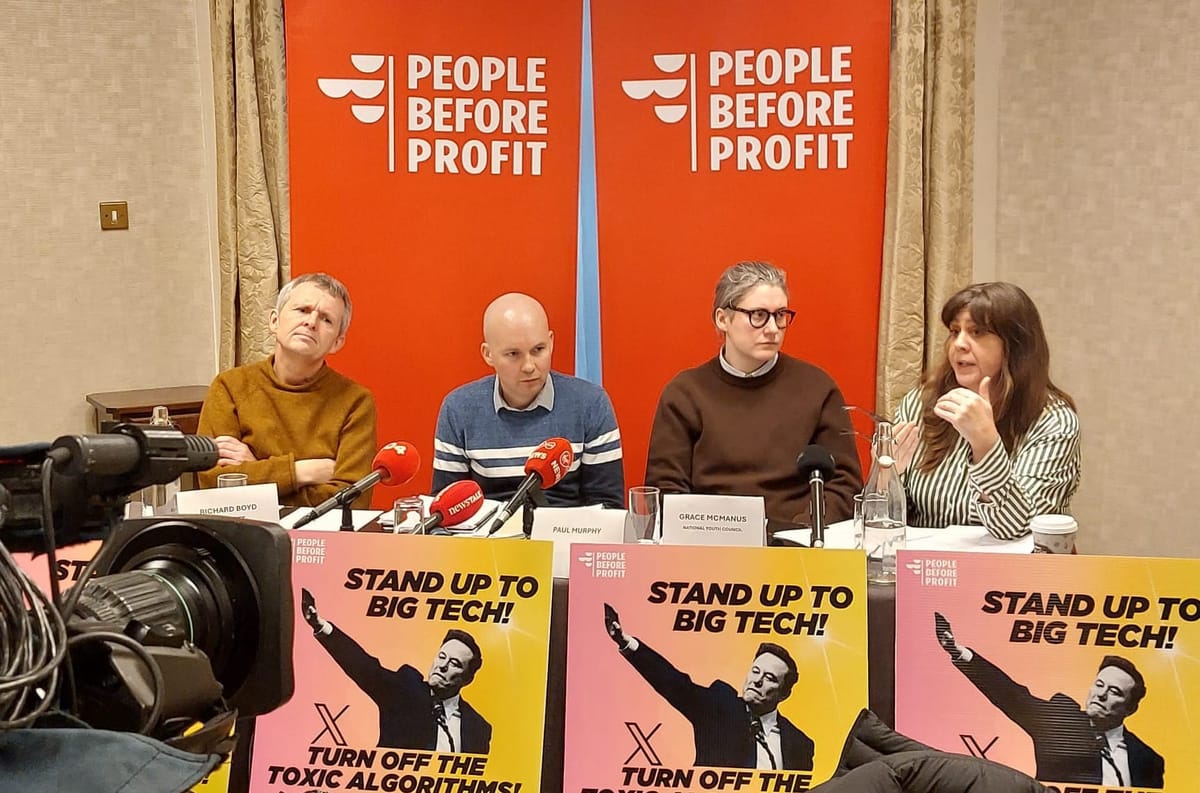
In recent weeks 15 senior members have resigned from the Socialist Workers Network (SWN).
The SWN is often seen as the major component of People Before Profit (PBP). The members of the resigning group are remaining within PbP.
The resignation statement is remarkable in that it says next to nothing about the political basis of the split, something of a tradition among Irish left groups.
That's not the case with Red Network, a group that left PbP in opposition to the idea of a Left government led by Sinn Féin.
Another group, Marxist Republican Network, remains in PbP, also in opposition to the notion of a Sinn Féin led left government, and argue an anti-imperialist perspective both in terms of a 32 county movement, and for a European wide movement against imperialism.
Anne McShane in the Weekly Worker and in Aontacht mentions a material problem within the group - the role of Richard Boyd-Barrett's salary and expenses in keeping it afloat - and a political issue - a pursued strategy of government coalition with Sinn Féin and/or the Social Democrats.
However, in the end she plumps for “An honest and open party culture”.
(By the way, Anne's claim of openness on the part of RISE is not accurate. They refuse communication with groups that are not aligned with their views. There is a tendency to cancel opposing views rather than engage in principled debate. Also, I would like some evidence of conflict between Belfast PbP and Sinn Féin. On the ground they appear close allies.)
There is a serious collapse of the SWN and of a decades long strategy of left government. Questions of democratic discourse are the medium in which this debate can take place, but they are not the issue itself.
It's the questions of socialist strategy that must be resolved.
The SWN resignation statement poses the differences as generational. The Old Guard are holding back the Young Turks.
However if we look more closely at the material basis of PbP we see right away that it is above all an electoral alliance and that the funds of the organisation are tied to the seats that it holds in the Dáil, in Stormont, and in the councils.
In many cases success in these elections depended on transfers from Sinn Féin voters, and this provided impetus for the theory of a Left Government led by Sinn Féin. This theory, always ridiculous, has become ludicrous as Sinn Féin shifted to the right and as its vote started to fall.
A different dynamic arrived with recent Dáil by-elections. Encouraged by the presidential victory of Catherine Connolly, an electoral movement, Tonn Na Clé, called for left transfers. This call did not automatically exclude Sinn Féin, but in the poll it was quite clear that the leftists did not vote Sinn Féin and the Shinners did not vote left.
In the Dublin Central election Daniel Ennis of the Social Democrats was elected to the Dáil on the back of left transfers. The Sinn Féin vote fell sharply and their votes went towards an anti-migrant right.
The reformist political currents that have been central to the Irish left are disintegrating. The currents were both reformist and electoralist and belief in the reform of Irish capital or in an electoral road for the working class are no longer convincing.
The whole electoral myth rested on Sinn Féin's leftism and on its electoral advances. The idea that Sinn Féin is predominantly a left party is ludicrous. Its vote is declining and a place in a Dáil coalition is slipping away.
Why is this? Irish capitalism is rushing full tilt towards a place in NATO and towards war with Russia. The militarisation of Ireland and entry into war would be a disaster.
At the same time the coalition is betting the farm on further economic subordination to US imperialism. There is a scramble for further financialisation and privatisation, AI appetite and data centres.
Serious attempts are being made to fragment the working class ahead of oncoming conflicts, through racism and anti-migrant sentiment.
For all the noise on the far right, the main driver of racism is the government itself.
The drive towards further financialisation is leading to a budget that will see a sharp fall in worker's standard of living, with negative wage growth coupled with high costs for basic necessities.
The public sector unions are having a song and dance over strike ballots, but the idea that they will walk out of partnership deals with the government after 40 years is implausible.
In the background, the belief that the Good Friday Agreement would lead to reform of the Northern statelet and an eventual united Ireland has faded away. The British call the shots, sectarian division is built into the system, the economy is in collapse and Sinn Féin policy is to hold on like grim death to their places in the executive.
These are the issues that confront the Irish working class. They will not be resolved by an organisation centered on parliamentary activity and with a political focus based on social issues and EDI, a belief that income from transnationals can be used to advance working class interests and with only the most abstract approach to class struggle.