Solidarity With Dublin Republicans Charged with Moving Armaments to Border
Two Dublin republicans, Isobella Perrie Sullivan and Simon Ó Donnabháin, were arrested on July 22nd and subsequently appeared in court, charged with facilitating the movement of what Gardaí described as a "highly sophisticated" bomb.

Two Dublin republicans, Isobella Perrie Sullivan and Simon Ó Donnabháin, were arrested on July 22nd and subsequently appeared in court, charged with facilitating the movement of what Gardaí described as a "highly sophisticated" bomb. It was claimed that the New IRA had planned to attack a PSNI or UK military target in the six counties. Ms Sullivan, a trainee solicitor in her twenties was granted bail. Mr Ó Donnabháin, a worker and union representative at the National History Museum, was remanded in custody.
Arrests of this kind are not without precedent in modern Ireland; republicans opposed to the Good Friday Agreement have continued to appear before the courts every year, both North and South, on similar charges. Yet in this particular case, one aspect of the media’s coverage of the arrests has been conspicuous by its absence: criminalisation. In similar past cases, outlets have routinely attempted to associate such underground republican activity with organised crime, insinuating a criminal rather than political motive. In this instance, faced with the charging of a trainee solicitor and a museum tour guide, that line of attack was simply unavailable. Both are known political activists in Dublin. Neither has any prior convictions. The establishment media was forced, however reluctantly, to treat them as political actors.
Yet this did not prevent new and unprecedented forms of hostile coverage which served to shift the conversation away from the politics of the accused. From the moment details of the case emerged, media attention fixed itself disproportionately on Ms Sullivan. Multiple national outlets opted to publish a photograph of her wearing a dress on a night out as their top story. Quickly, far-right and other anti-republican social media accounts seized on the image and launched a sustained campaign of sexualised, misogynistic abuse targeting Ms Sullivan. This continued for days, across all social media platforms. Regrettably, no socialist-feminist organisation has issued any statement of solidarity or concern.
The undeniably political dimension of the case was underscored by an unusual intervention from former SDLP leader Colm Eastwood, who publicly challenged Saoradh, the republican party with which the accused are associated, to a debate on strategy for achieving a united Ireland. Eastwood stated his intention to demonstrate "how their futile actions are holding the campaign for a new Ireland back". It remains unclear at the time of writing whether Saoradh will accept the challenge.
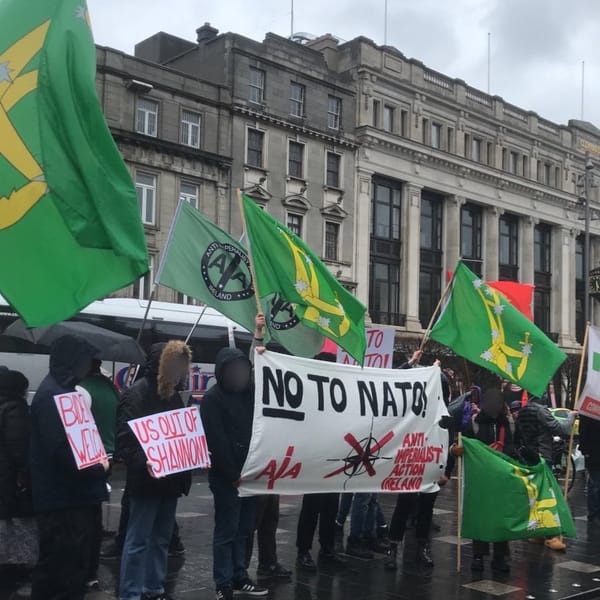
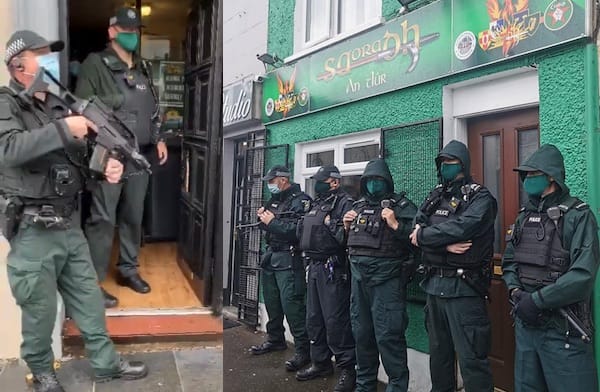
Both Saoradh and the Irish Republican Prisoners Welfare Association (IRPWA) have however issued statements of solidarity with those arrested. In press releases which followed the court appearances, they condemned the series of Garda raids carried out in connection with the investigation, which they say targeted not only the homes of the accused but those of their extended families. The IRPWA described significant property damage and trauma inflicted on those whose homes were targeted.
The statements also drew attention to the circumstances of Mr Ó Donnabháin's court appearance. Due to an ongoing dispute over the structure of solicitors’ pay, he was forced to appear without legal representation, having no means to hire a private solicitor. The welfare association linked Ó Donnabháin's case to the broader legal aid dispute and its impact on workers appearing before the courts, remarking that: “when the right to effective legal representation is determined by wealth, it is working-class communities who pay the price”.
Both accused are expected to appear in court again in October.