Republicans Decry PSNI Harassment As Terrorism Stops Surge 253% In A Year
New figures released by the PSNI show a 253% increase in stop searches between July 2025 and June 2026, which Republicans have branded “state harassment” of their communities.
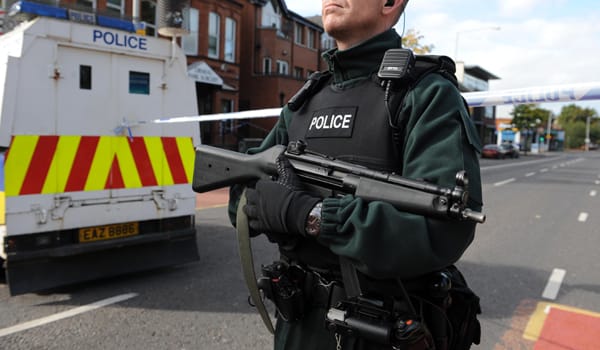
New figures released by the PSNI show a 253% increase in stop searches between July 2025 and June 2026, which Republicans have branded “state harassment” of their communities.
Officers used stop and search powers under the Terrorism Act 1,971 times over the 12-month period, up from 559 the previous year.
Vehicle searches under terror legislation saw a 517% jump alone, with a total of 630 searches.
Republican group Saoradh have said that the new figures “should come as no surprise to anyone who understands the true nature of British policing in Ireland”.
“These statistics are a stark reminder that, beneath the carefully constructed language of ‘community policing, accountability and modernisation’, the coercive machinery of British rule remains firmly in place.”
The rise in searches on "terrorism" grounds stands in contrast to a fall in the use of the Justice and Security Act, down 26% to 1,670 uses. PSNI members are increasingly reaching for UK-wide Terrorism Act powers rather than the Justice and Security (NI) Act, which is specific to Northern Ireland.
Despite the escalation in the use of these powers, their effectiveness by the PSNI's own metrics has been negligible. The overall outcome rate across all stop and search categories fell to 23%, with the arrest rate down to 7 percent — meaning more than three in four people stopped and searched by the PSNI faced no further action whatsoever, despite the law requiring “reasonable suspicion” on the part of the police.
Irish Travellers were stopped at 12 times the rate of White people, while black people were stopped almost four times the rate of White people.
Belfast City was the most heavily policed district by a wide margin, with 20 stops per 1,000 population, nearly double the Northern Ireland average of 11.
Total stop and search activity rose 10 percent year-on-year, to 20,445 people, rarely resulting in any action taken by police.