


Letter to the Irish Media on Iran
By Siraj Zaidi, Edited by Peter Irvine
Dear Editor,
This letter addresses the lack of genuine and fair coverage of the present disastrous, imposed war on Iran by the USA and Israel. What is shocking and sad to observe is the total lack of understanding and respect regarding the background to the Iranian position in this war.
First of all, a few months ago, when Iran was in the middle of negotiations with the USA, it was attacked, for the second time, as previously happened when Iran was negotiating its nuclear programme in Geneva. At that time, the attack occurred as a pre-emptive strike on innocent children in girls’ schools. 175 children and a number of innocent civilians died.
Iran is a Muslim-majority nation and was in the middle of the holy month of Ramadan. War is prohibited in this month according to the Muslim holy scripture, the Quran. The national and global Shia spiritual leader (known as a Marja-e-Taqlid), Ayatollah Syed Ali Khamenei, the Supreme Commander, was annihilated by a Tomahawk missile strike on his residential and working compound. It was instantly obliterated, along with his full family and many members of his security staff. He was fasting and praying, reading the Quran, when he was hit.
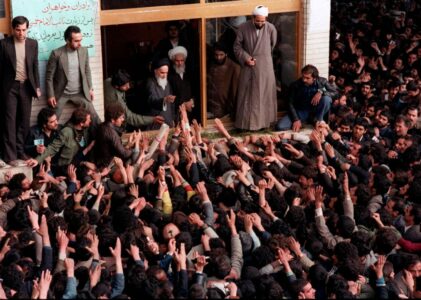
The point about Iran is that it is a deeply Shia Muslim religious nation, which emerged victoriously from the rubble of the 1979 Islamic Revolution. A system of governance was devised and successfully implemented by the late leader of this revolution, Ayatollah Syed Ruhullah Khomeini. This system is based on Islamic law as enshrined in the Muslim holy book and practised by the first Imam, Ali ibn Abi Talib, who is considered the fourth Caliph by the majority of Sunni Muslims, but for Shias is the rightful successor of Prophet Muhammad (PBUH).
The local media has little knowledge of this system. It also has an abhorrent attitude towards anything even slightly related to Islam, let alone the only genuinely established political system of Vilayat-e-Faqih. This system is layered across various levels of state governance, with a full and open democratic electoral structure. Syed Ali Khamenei succeeded Ayatollah Khomeini after his demise.
Unlike what may be seen as corrupt and election-rigging systems in the USA, we all know how Donald J. Trump came to power a second time and how his evangelical “Bible Belt” supporters ransacked the Capitol Hill building, pushing him toward attacking the Islamic Republic of Iran.
This was an illegal war, conducted without Congress, without consultation with the UN, and without any European nations. The Israeli leadership pushed him and he responded by launching an attack. This undermines international law and makes a mockery of the UN and other peaceful nations.
However, in retaliation and in defence, which Iran has the right to under international law, Iran attacked US military bases stationed in the wider Gulf region. Iran made it clear that two things would happen if it were attacked: firstly, it would strike US bases in the region, which it views as a form of colonial presence in the Arab Gulf. These bases are used to conduct attacks on Iran, while financially draining states such as the UAE, Saudi Arabia, Qatar and Bahrain by demanding vast sums for their continued presence. This amounts to an illegal colonisation of the region.
Thankfully, Iran has strong military capabilities and can sustain a war for at least five to seven years, launching an average of 300 to 500 rockets per day, without relying on proxy forces in the region.
The problem with the US President is that he is not intelligent enough to understand the Iranian nation. While he was engaged in personal misconduct, Iranians were building the foundations of their Islamic Republic after 1979. Iran is the only genuine Islamic Republic among so-called Muslim-majority nations and it is a Shia nation.
The Shia sect of Islam emerged following the great Battle of Karbala, an imposed war against the grandson of Prophet Muhammad (PBUH), Imam Hussain (AS), the third Shia Imam. This battle, which took place over 1,400 years ago, caused a major division within Islam. Though it lasted only a few hours on the 10th day of Muharram, it remains one of the most remembered events in history. It is commemorated every year by Shia Muslims through lectures, poetry and eulogies, remembering Imam Hussain, his family, and his companions who were martyred. In Iran, passion plays and re-enactments are also performed.
Iranians are therefore known for fighting on the grounds of justice, what is right and what is unjustly imposed, drawing inspiration from Karbala.
What we are witnessing now is a similar pattern emerging, whereby Sunni Muslim rulers such as those in Saudi Arabia and the UAE are aligning with the Americans against Shia-majority Iran. This sectarian divide was historically exploited by the British during their time as an imperial power in the Middle East and Mughal India.
The elephant in the room is the illegal creation of Israel in Palestine in 1947 and the subsequent destruction of Palestine before our eyes. Iran has been, and remains, the only nation to stand firmly behind the Palestinians. It has not recognised Israel as a legitimate state. Perhaps this is the main reason it now bears the brunt of the present war.