Enough With A to B Marches, We Need Confrontational Politics!
Nearly all of the political activity we are engaged in as a movement is concentrated at the low-confrontation end of the scale, and so we are not learning the lessons necessary to win the fight against capitalism and imperialism.
What does it take to change the world? More than what we’re doing now.
Three years of A to B marches and emails to our MPs have achieved nothing for Palestine beyond symbolic ‘recognition’ and a sanctions regime that is too little, too late. We allowed a genocide to happen.
In Cardiff, ‘emergency demos at the Nye Bevan statue’ are now called so regularly they have become a joke. One is called after every new welfare cut, every new war crime, and every new attack on our civil liberties. Our response as socialists - whether it is to the rise of the far-right or to the Welsh Gender Clinic cancelling all surgeries and referrals - is always the same; we shuffle in the rain from Queen Street to the BBC building, the usual suspects deliver their usual speeches, the crowd dilutes into nothing and nothing is gained. This phenomenon is repeated in every major town and city across Britain. Social media activism is rife. Very little political action in this country confronts power directly.
The few groups who have sought to confront power directly do so in an immature way. Organisations committed to sabotaging the machinery of imperialism in response to the genocide in Palestine did the hard work of finding dedicated young actionists willing to sacrifice their freedom for a just cause, only to instruct them to turn themselves in to the police after their actions, rather than attempt escape to act again. These organisations built deep networks of support, but they failed to build structures and adopt strategies that would allow them to maintain, reproduce, and expand their cadres and continue their activities long term. As a result, actionists with training, experience, and the willingness to act were locked up, leaving fewer leaders on the outside to navigate the inevitable reaction of the British state. Going to prison prevents you from being able to fight. Martyrdom is not a winning strategy.
Social media activism and sabotage represent two points on a broad spectrum of political action, but political action matures in phases. In each phase, the level of confrontation, commitment, and required organisation increases. By moving through each phase, we learn new lessons and adapt our strategies to the reality of what it takes in practice to confront power effectively and win material victories. However, as it stands, nearly all of the political activity we are engaged in as a movement is concentrated at the low-commitment, low-risk, low-confrontation end of the scale, and so we are not learning the lessons and gaining the experience necessary to win the fight against capitalism and imperialism.
We need to start engaging in more confrontational actions if we are ever going to win. We need to fill the spectrum of political action if our movement is ever going to have a functioning pipeline taking people from ‘raising awareness’ on Instagram to open, organised confrontation with the state and capitalist power.
Low end of the spectrum (Phase 1)
Low confrontation, low risk, low commitment, mobilisation over organisation, legal
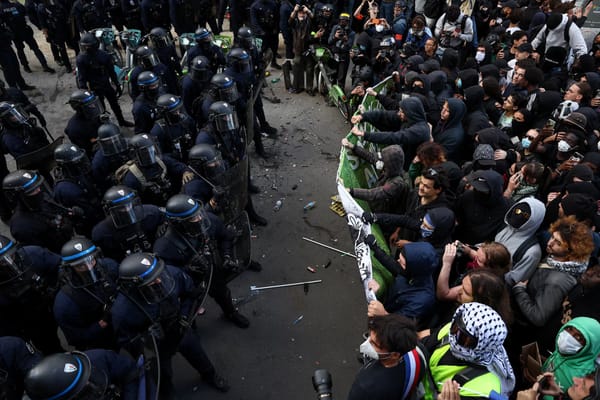
Posting on social media, signing and sharing petitions, engaging in consumer boycotts, emailing your MP, and marching from A to B on a predetermined route agreed by the police to deliver speeches does not involve directly confronting power. Yet it is the only type of political action that the majority of socialist, anti-imperialist, and liberation groups in Britain are willing to engage in.
These actions seek to undermine capitalism and imperialism using the legal avenues that capitalism permits us to use, so they are low risk by nature, and participants are reassured that there is little to no risk of arrest or violence. These actions rely on mobilisation - ‘the more people in the street, the better’ - and so in order to remove barriers to participation the required level of commitment is kept low; a few minutes to navigate an online portal, a few hours to shuffle in the rain. Participants are not expected to put in weekly or daily work to maintain and grow an organisation. They may be asked to set up monthly donations to such and such a campaign, but they are not expected to become organised.
These actions are not useless. Posts and petitions can raise awareness about important issues, share news that the mainstream media is not covering, and expose us to new ideas. Marches and demonstrations can serve as a show of strength and act as a useful stress-test for organisations to see how many people they can mobilise when needed. They can also demonstrate public opinion and ‘the will of the people’.
Yet these actions do not involve meaningfully disrupting the normal operation of state/capitalist power. Petitions and emails are easily disregarded by our parliamentarians. Traffic diversions and strategically placed police prevent A to B marches with hundreds of thousands of participants from disrupting the London economy. These actions do not confront power face-to-face or disrupt the machinery of power, and so they are easy to ignore.
Because they are so easy to ignore, these actions are quickly shown to be insufficient. Some in our movement would have us repeat these actions ad nauseum hoping for a different result, but as time goes on and our situation worsens, it is made clear that material victories can only be achieved by confronting power directly rather than symbolically, and that confronting power directly requires us to show more commitment and be more organised.
After endless A to B marches, many are asking: ‘Now what? What more can I do?’. This leads us to the underexplored middle section of the political action spectrum, where confrontational politics finally rears its head.
Middle of the spectrum (Phase 2)
More confrontation, more risk, more commitment, organised, pushing the frontiers of the law
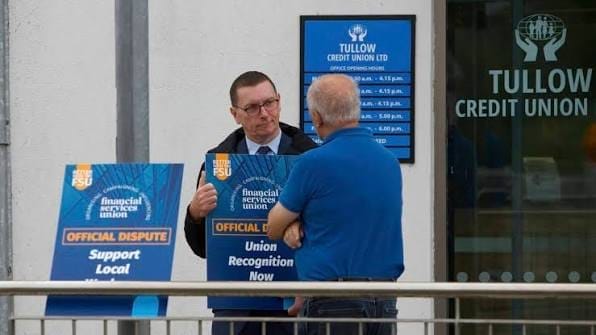
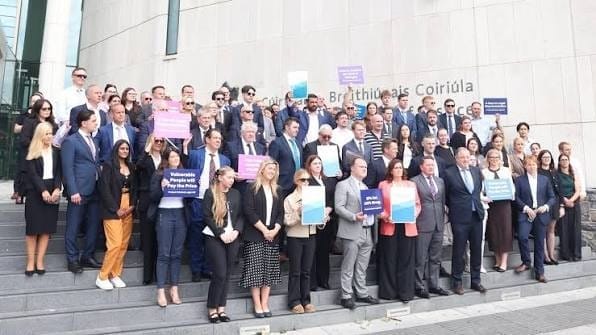
Class war takes place not only at a geopolitical level but also at a local level. It takes place every day - in your community, in your workplace, on your street, in your home. Rent extraction represents a massive transfer of wealth from the working class to the landlord class. Rising bills, falling real-term wages, and worsening workplace conditions represent a massive transfer of wealth from the working class to the capitalist class. The use of bailiffs to enforce evictions and collect debt shows the willingness of these ruling classes to use violence and confrontation to protect their assets and continue extracting wealth. Mould, damp, and disrepair - and the failure of letting agents and local authorities to address it - is an attack on the health and wellbeing of the working class, as is the managed decline of local public services. The politicians that make the decisions affecting domestic and foreign policy have local offices, hold surgeries, and attend constituency events. Letting agencies, utility companies, and banks have branches and headquarters that are accessible to the public. Your managers work in the same building you do. Cogs of the state/capitalist machine are on your doorstep.
What does it take to start winning material victories? It requires political action that disrupts the normal operation of the state/capitalist machine by confronting power directly.
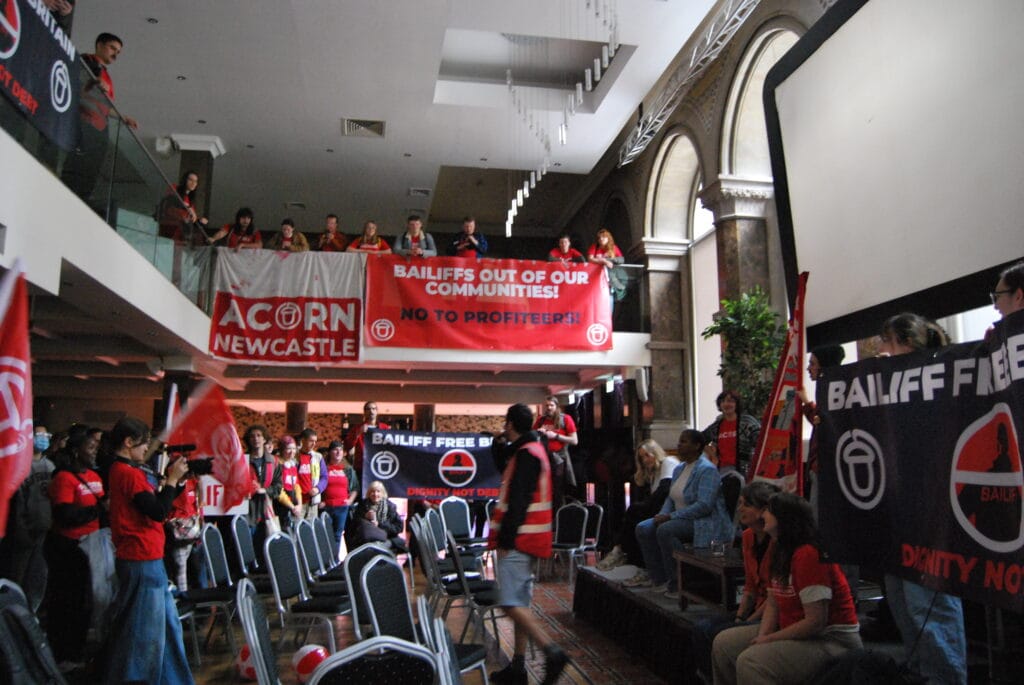
Resisting an eviction denies the landlord access to their asset in favour of keeping a working class family in their home. Marching into a highstreet branch to confront a letting agency about disrepair or deposit theft disrupts their business operation until the issue is addressed. Blockading an arms factory stops the workers from building drone parts. Infiltrating and physically disrupting an arms fair or bailiff convention wastes time and money and prevents deals being made. Occupying the lobby of a bank or a utility company forces them to the negotiating table in a way that petitions never will. Coordinated, documented, face-to-face confrontations between constituents and their councillors, Senedd Members, and MPs - in their offices and at their surgeries - force politicians to engage with demands and justify their positions.
These actions involve (often physically) forcing someone to do something they otherwise would not, or preventing someone from doing what they otherwise would. They are confrontational by nature. The lackeys of state/capitalist power (i.e. police, bailiffs, and oftentimes staff) will try and prevent normal operations from being disrupted. Therefore, there is a risk of physical violence that all participants in these actions must reconcile themselves with and prepare themselves for.
There is also a higher risk of arrest, not only because of violence but because the tactics used in these actions deliberately challenge and circumvent the usual legal avenues that capitalism permits us to use. They push against the frontiers of the law. Resisting an eviction or a deportation prevents bailiffs and officers from carrying out their duties. Blockading, occupying, or disrupting arms factories, arms fairs, bailiff conventions, or corporate offices runs the risk of being charged with aggravated trespass or obstruction of a highway.
Strength in numbers, the ability to rely on those around you, and the discipline to carry out your role and submit to the authority of action leads are key to overcoming these risks and ensuring these actions are successful. It follows that these actions therefore require a higher level of commitment from participants, along with a willingness to put in weekly or daily work to become organised, develop their political thought, and grow their organisations.
Strength in numbers requires recruitment and the retention of recruits, which in turn requires outreach and engagement. This includes door-knocking around communities, utilising existing personal networks, building membership structures, establishing practical leadership frameworks (you will learn not everything has to be a democratic decision) as well as frameworks for the division of labour and the delegation of tasks. It then requires holding regular members’ meetings to plan and coordinate political activities, conduct training exercises, and develop political thinking. Organisations must repeat and intensify these recruitment, engagement, and training activities for years if they wish to conduct actions that are bolder, more confrontational, and more effective. It may take a year to find and train the members required to resist evictions. It may take 5 years to find and train the members required to coordinate concurrent building occupation and blockades.
It would be a mistake, however, to believe that just because an action is more confrontational and requires more organisation that it is inherently more effective. Organisations may successfully grow, train, and develop their membership to be confrontational, only to miscalculate how their chosen tactics will be perceived by their supporters and the public, miscalculate how the police and the state will respond, or fall into old habits and choose a target with symbolic significance rather than a cog of the state/capitalist machine from which material victories can be won. But it is only by engaging in and practicing confrontational political action again and again that we learn what is effective and what is not. And by choosing to confront power directly to achieve material rather than symbolic aims, we give ourselves a way to measure how effective and successful our actions are; How much money did we win back for renters? How many families did we keep in their homes? How long did we stop this drone factory or bailiff company operating for?
Becoming organised broadens the horizon of what political action is possible. More of the spectrum is filled in, and by confronting power directly in more diverse ways we have more opportunities to reflect and learn how best to confront state/capitalist power and win.
With greater organisation also comes more coordinated engagement with the tactics of Phase 1. For example, if a data centre is being built in your area, rather than merely sharing a post bemoaning the rise of AI as an individual, you can organise and coordinate local communities to raise their voices collectively, articulate their demands through social media groups and the press, and engage with legal avenues like council consultations and petitions en masse. This serves to exhaust the legal avenues that capitalism and the state permits us to use; when a community responds in their thousands to consultations that otherwise get half-a-dozen responses and present articulated collective demands to their politicians, these politicians are forced to drop the facade of ‘representative democracy’, reveal their underlying class interests, and openly defy the demands of the community rather than merely ignore them.
As a result, these legal avenues are exposed as useless and insufficient to those who engage in them, which in turn delegitimises ‘politics as usual’. Support for and belief in bourgeois democracy and the capitalist legal system erodes. People begin questioning the idea that we live in a democracy where our governments and local authorities act in accordance with our interests, and will naturally veer towards either pessimistic or revolutionary conclusions. If an organisation practiced in and committed to confrontational political action is there to meet them at this critical juncture, they will be convinced to start engaging in tactics that push against the frontiers of the law to achieve the material wins they want, because operating away from those frontiers was shown to be inadequate.
A pipeline forms, drawing people from ineffectual individualistic activism to organised confrontational action. As people move through this pipeline, they become more familiar and comfortable with risk, discipline, confrontation, and organisation. They acquire tools, techniques, and experiences that allow them to confront bigger targets, disrupt more operations of the state/capitalist machine, and win greater material victories.
But depending on the severity of the crisis being confronted, organised confrontational actions that operate within the frontiers of the law - even if they push against those frontiers - may not be enough. The capitalists and imperialists will not allow their power to be confronted for long before they react and fight back through violence and lawfare. We only have to look to the British state’s response to our attempts at protesting and disrupting the genocide in Palestine for evidence of this.
Therefore, if the crisis being confronted reaches a fever pitch and the capitalists circle the wagons around their ‘normal operations of power’, conceding nothing and defying the will of the people to the point of using violence and legislative crack-downs to enforce their will, both Phase 1 and Phase 2 tactics will be rendered insufficient.
When this happens, many will lose hope and retreat from the political field, but the brave will begin asking: ‘If a community does everything it possibly can within the frontiers of the law, but is still being beaten back by state/capitalist power, what then? What other political actions are open to me now that I am experienced at organised confrontation?’. This leads us to the highest phase of political action.
High end of the spectrum (Phase 3)
Open confrontation with power and the law, total commitment, high risk, highly organised cadres
If justice cannot be achieved by acting within the law, and if there is no recourse for changing the law, then we must act outside the law. We must move on from trying to disrupt the normal operations of state/capitalist power and instead declare war on the state/capitalist machine itself. In other words, we must move on from blockades and building occupations to sabotage and guerilla action.
It would be a grave mistake, however, to believe that we can engage effectively with this type of political action before first maturing through the previous phases of political action. Sabotage and guerilla action requires total commitment and dedication. It is the ultimate form of direct confrontation with power. It requires knowingly breaking the law rather than merely pushing at its frontiers, and so participants must reconcile themselves with the fact that they will be arrested and imprisoned if they are caught, and must prepare to overcome physical violence from the lackeys of state/capitalist power to achieve their aims.
Mass membership structures that are suitable for organised confrontation within the frontiers of the law must give way to a deeper, more complex structure of organised cadres that can operate outside the law. These cadres must be trained and experienced enough to succeed in their tasks, and they must be disciplined enough to follow orders and keep their clandestine activities secret.
It follows that those who have only ever engaged in ineffectual individualistic activism do not possess the levels of commitment, discipline, risk-taking, and organisation required to engage in these actions. In contrast, those who get organised and practice confrontational political action again and again develop the skills and political thinking necessary to begin engaging in these actions.
Thus far, our movement has not done the work necessary to grow mass organisations that can teach people how to engage in organised confrontational actions, and so the few groups who have sought to confront power directly via sabotage have lacked a pool of trained, experienced actionists to draw from. As a result, the sabotage campaigns these groups engage in have been unsustainable and insufficient. They have failed to develop strategies that allow their actionists to avoid imprisonment, allow their cadres to be reproduced, and allow their activities to continue long term. They have ultimately failed to break the imperialist machine, and we must learn from this failure.
So long as the political actions we engage in as a movement remain concentrated at the low-commitment, low-risk, low-confrontation end of the scale, the highest phase of political action will remain closed to us, and our ability to confront power directly to achieve material victories for our class - and ultimately win against capitalism and imperialism - is stunted. It is therefore imperative that we start engaging in new, more confrontational forms of political action as soon as possible.
Beyond A to B Marches
All forms of political action have an appropriate time and place, and it would be wrong to think that everyone can mature through the phases of political action at the same rate and in the same way in every circumstance.
Also, there will never be a situation where only one type of political action is employed in response to a crisis. Different organisations conducting political action either inside and outside the law will have to operate side by side, with each sustaining and bolstering the other.
New recruits to our movement will naturally begin their political journey at the low-risk, low-commitment, low-confrontation end of the political action spectrum, but if they are ever going to contribute towards winning material gains, we must encourage them to mature through the phases of political action as quickly and thoroughly as possible.
Let us now be honest with ourselves; years of A to B marches and emails to our MPs have achieved nothing for Palestine, trans liberation, or the workers’ movement. We are overdue moving past these types of actions. Next time we are presented with a new welfare cut, a new war crime, or a new attack on our civil liberties, we must not make the mistake of expecting an emergency demo at the Nye Bevan statue to achieve anything. Our responses must be different, and we must engage in the hard work of building organisations that allow us to not only have more effective responses, but be proactive in the fight for socialism.
There are many who like to claim we have tried everything. We have not even begun trying.