Drogheda Community Fighting Against Proposed Data Center
A campaign has been set up by the Drogheda community to support an objection to a proposed data center.

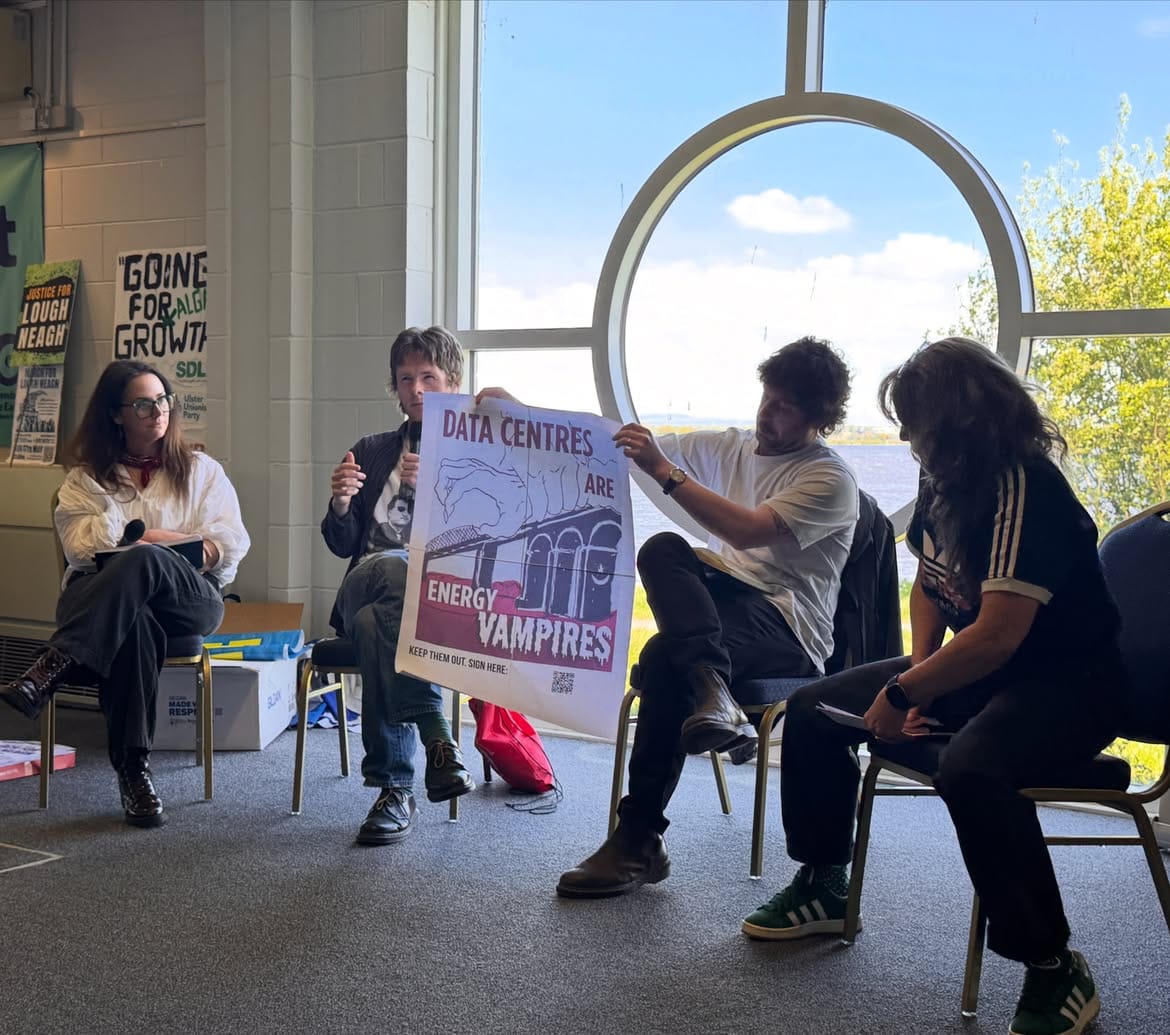
A campaign has been set up by the Drogheda community to support an objection to a proposed data center.
The objection was put forward by An Taisce, a charity working to conserve Ireland's natural environment and built heritage. The data center would be located on the Premier Periclase site. A petition has since been set up in support of the objection and has reached 750 signatures as of today.
The main organiser behind the campaign is independent People Before Profit (PBP) member and activist James Renaghan, who is not associated with any network within the party.
The campaign is being fought on many grounds, including the vast energy consumption of data centers, potential carbon emissions, and potential impact on constrained local water supplies.
“The Irish government, Labour and Sinn Féin know this, yet they are encouraging us to quietly accept the inevitable harms they'll cause to working people. There is no discussion anywhere with ordinary people about shaping and directing this technology, in keeping with a project of green transition, for the betterment of society
Electricity prices in the Republic of Ireland are over 60% above the EU average, making our bills some of the highest in the world. Because of heavy subsidisation which falls back on the taxpayer, households in Ireland are paying almost twice as much for their electricity as data centres themselves. At the same time as costs go through the roof, data centres are consuming more and more of our grid capacity, with approximately 22% of overall energy spent on data centres in 2024. This figure is constantly rising, and is expected to rise to more than 30% before the end of the decade, where the grid will struggle to meet demands. This means that emissions ‘reductions’ through new renewable energy infrastructure are cancelled out by increased demand.
During a heightened cost of energy crisis, the government’s weak measure reductions are not enough. A few cents off fuel isn’t enough. We need price controls on fuel, energy, basic groceries, plus a €500 energy credit to put money back in people’s pockets.
While an increase of data centres and a decrease in day-to-day affordability are clearly interconnected, such rapid changes will impact working people in more ways than living costs alone. The AI software that data centres power will inevitably create unemployment by outsourcing labour to emergent machinery. For local Sinn Féin and Labour councillors, who claim to be parties of the left opposition, to support a development that will directly contribute to both the affordability crisis and climate crisis suggests a lack of political direction at a time when we need it most, “ the petition reads.
“The government’s designation of parts of the River Boyne as ‘heavily modified’ could allow a proposed data centre to harm the river’s water quality, raising concerns that potential environmental impacts may not be properly assessed or managed, “ it asserts.
“The Irish people will suffer from the proliferation of data centers, while the rich will profit from them. Local councillors endorsing the proposed Datacenter bid on the Premier Periclase site is short-term opportunism at best. It will provide no answer to the current crises we're facing, and in the long-term, will make things worse, “ it concludes.
The demands of this campaign are as follows:
- Levy existing data centres to fund a €500 energy credit for households
- Price controls on fuel,energy and basic groceries
- Moratorium on new data centres
The news comes at a time when mass resistance to data centers is spreading across Ireland, with a 250-strong town hall in Kildare taking place recently against a Microsoft/Herbeta Ltd development which would consume considerable amounts of water, electricity and potentially damage local heritage. Speakers at the town hall also pointed out that 90% of Dublin data centers are located in economically deprived working-class areas.