Big Turnout For Kildare Campaign Meeting Against Microsoft Data Centers
On September 3rd over 250 residents attended a town hall, with guest speakers giving presentations on the water use, pollution, energy usage, and archaeological impact of the proposed Herbata and Microsoft data centre complexes in Naas.
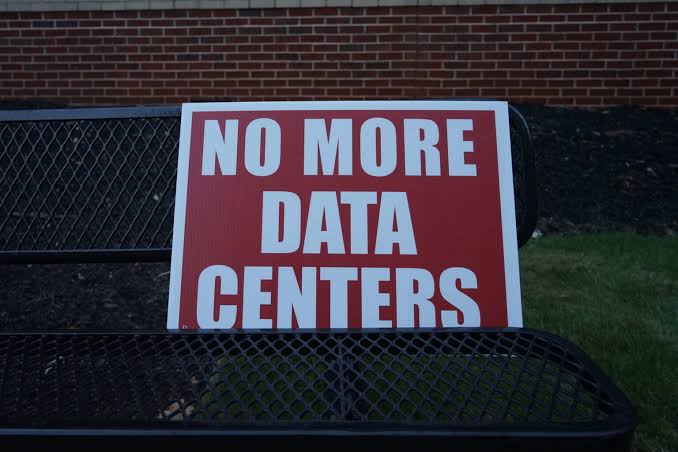
On September 3rd over 250 residents attended the first Data Centre Awareness Kildare Campaign Town Hall meeting at the Osprey Hotel, with guest speakers giving presentations on the water use, pollution, energy usage, and archaeological impact of the proposed Herbata and Microsoft data centre complexes in Naas.
Data Centre Awareness Kildare (DCAK) is a grassroots campaign of local residents and concerned citizens that aims to increase public awareness of data centre development, and advocate for greater public engagement at all stages of planning, construction, and maintenance of such large infrastructural projects in their communities.
Ireland is seeing a greater resistance to data centres recently with dozens of residents signing up to join the campaign on the night, as it has become clear that as the data centre capital of the world, there is increasing resource pressure on the local Irish communities to accommodate these large complexes. This is further exacerbated by the fact that over 75% of Irish data centres are located in Dublin, and nearly 90% of Dublin data centres are located in economically deprived communities, highlighting the inequalities within the already existing data centre rollout.
Following from this meeting, Cllr. Bill Clear committed to bringing a motion regarding data centre land zoning on the planned Microsoft site to the next meeting of the Naas Municipal District on Tuesday September 08th, with Cllr. Anne Breen vouching to support it. Motion 25 as brought by Cllr. Clear is aimed at “reviewing the existing “P Data Centre” zoning designation on lands at Jigginstown/Maudlins, Naas.” which addresses the first of DCAKs three demands the campaign asks of the Naas Municipal District councillors. The other two demands include the ending of zoning land specifically for data centres, and agreement to a data centre moratorium, both of which aim to prevent developments from going ahead without the appropriate considerations for the local community and environmental impact. Previous reporting by Aontacht has described some of the questionable circumstances surrounding the Herbata data centre, whose planning permission appeal case is set to be resolved by January 2027.
Perhaps the most prevalent sentiment of the night can be summarised by Dr Elaine McGoff from An Tasice, who questioned “Ireland is rapidly becoming the data centre capital of the world, but at what cost and who benefits?”. An independent report by KPMG for the Department of Enterprise, Tourism and Employment earlier this year heavily emphasises that stalling of the data centre rollout could limit the Foreign Direct Investment (FDI) and that “A majority of data centres in Ireland are foreign owned”, but also states that the report is “not a cost-benefit analysis”, raising questions about the utility of the report in policy decision making.
Furthermore, Dr McGoff points out that Uisce Éireann has stalled proposed housing developments for 18,500 houses in Dunsink in Dublin due to water constraints until the Shannon to Dublin water supply pipeline is in place, which is not set to be completed until after 2032, yet still supplies data centres only a few kilometres away. At the same time, another 43 data centres have planning approval across Ireland, with figures surrounding the exact water use often being obfuscated by average annual estimates, rather than focusing on peak demand. This, Dr McGoff explains, masks the issues of peak demand which kicks in once air temperatures of 25°C prevent the use of air cooling, meaning that data centres require the most water precisely when it is least available.
This comes at a time when the impacts of climate change are becoming increasingly difficult to ignore, with Met Éireann publishing a statement that the summer of 2026 was the hottest summer since records began 127 years ago, beating the previous record year in 2025.
Additionally, Ireland is estimated to be fined between €8 and €26 billion for failing to reduce its carbon emissions by 50% by 2030, possibly only reaching half that in emissions reductions. A recent report by the Irish Fiscal Advisory Council (IFAC) suggests that there will be approximately 1% annual Gross National Income (GNI) cost for Ireland to adapt to the impact of climate adaptation if a credible climate strategy is implemented, rising to as much as 4% GNI if there continues to be inaction.
It is clear that the first town hall hosted by the Data Centre Awareness Kildare campaign has struck a cord with the local residents and citizens who attended it. A strong sentiment of poorly planned pie-in-the-sky investment opportunities emerged as the group delved into the facts and figures. There was a sense of disbelief from many of the locals who had attended, who had previously not heard about the planned development of the campus 10 times the size of Croke Park only a couple kilometres from their house.
In light of the increasing impact of climate change, rising electricity costs, water scarcity, and public backlash to the ever increasing development of data centres in Ireland, a rhetorical question Dr McGoff posed hangs above the decisions of the public authorities meant to represent the interests of the people; “Whose needs are being prioritised here?”.