Andy Burnham Is Breaking The Good Friday Agreement And Nobody Is Talking About It
Britain never intended to keep its promise to Ireland. Burnham just made that official.
Good day, Aontacht readers,
And let’s be honest off the bat, The Good Friday Agreement was never designed to deliver a united Ireland. It was designed to be a plaster, applied to a wound that had been bleeding for thirty years, intended to stop the fighting long enough for Britain to regain control of the narrative. It was a containment strategy dressed up as a peace process, and for nearly three decades it has served its purpose admirably: keeping the North of Ireland firmly under British control while giving nationalists just enough hope to keep them from reaching for other means of achieving what they want.
Convenient.
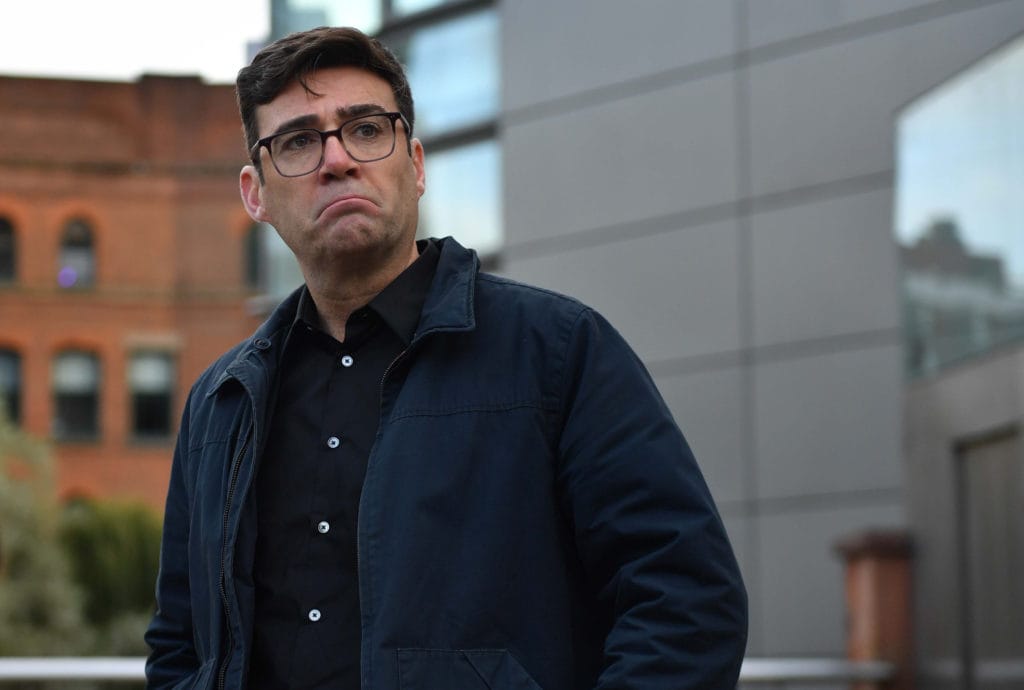
However, this week, the mask slipped entirely. Andy Burnham, on his first official visit to the North of Ireland as Prime Minister, declared that a border poll was ‘off the table.’
He cited the ‘risks’ of referendums, the divisions caused by Brexit and Scottish independence, and the need to focus on ‘what’s right in front of us in the here and now’ — cost-of-living pressures, public services, the usual managerialist platitudes of a man who has decided that the status quo is more comfortable than honouring an international agreement. Sinn Féin’s Mary Lou McDonald called it ‘divisive and ill-informed.’ Michelle O’Neill, the First Minister of the North, called it ‘anti-democratic’ and ‘completely at odds with the Good Friday Agreement.’
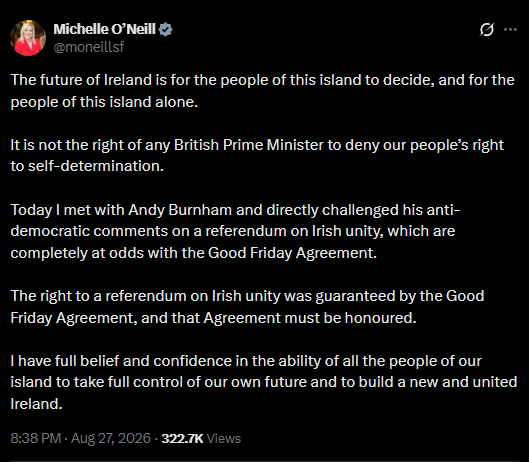
They are obviously both right but in my opinion, they are also missing the deeper point. Burnham is not breaking the agreement…he is revealing what was always there.
a one-way street paved with good intentions.
The Good Friday Agreement was a masterpiece of carefully constructed ambiguity, designed to be all things to all people and to allow both sides to claim victory. For nationalists, it contained the promise of a border poll, a mechanism by which a majority could vote for a united Ireland. For unionists, it contained the guarantee of consent — that unity would only happen when a majority wished it. The genius of the agreement, from a British perspective, was that it left the timing entirely in the hands of the British government. The Secretary of State ‘may’ call a poll if it ‘appears likely’ that a majority would vote for unity. Those weasel words — ‘may,’ ‘appears likely’ — are the escape hatch. They mean the British government can decide, at any point, that the conditions have not yet been met, that the moment is not yet right, that referendums are too risky, that there is too much going on right now, that perhaps we should all focus on the cost of living instead.
It is a one-way street paved with good intentions, and Britain controls the traffic lights. In theory, a united Ireland is possible. In practice, it will only happen when Westminster decides to allow it. This is not parity of esteem. It is British sovereignty, disguised as a handshake, and it has worked exactly as intended for twenty-seven years.
the conditions have been met.
Here is what makes Burnham’s position so particularly indefensible. The conditions for a border poll — the conditions that were supposed to trigger the British government’s duty to act — have been met. Catholics now outnumber Protestants in the North of Ireland…
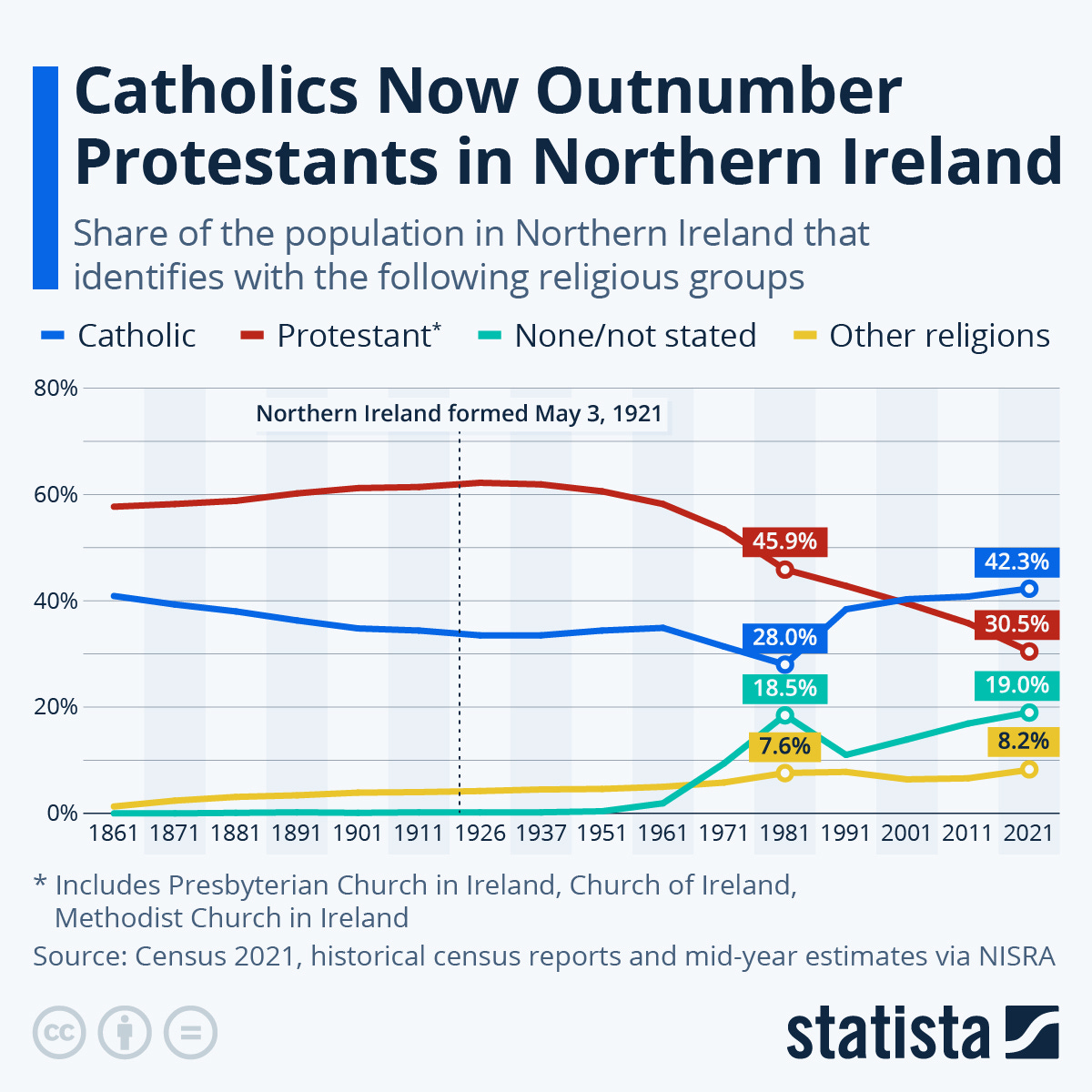
…Sinn Féin is the leading party in Stormont, and Michelle O’Neill is the first nationalist First Minister in the history of the region. Every single piece of the constitutional puzzle is in place. The demographic shift that the Good Friday Agreement implicitly acknowledged would one day arrive has arrived.
Ta ar la tagha, as I would say in the Irish language. (Our day has come.)
But Burnham says no because he says referendums are ‘divisive’. He says Brexit and Scottish independence show the risks of such processes, which is a remarkable argument from a member of a government that has spent years complaining about the damage Brexit did to the country, as though the lesson of a badly managed referendum is that we should never hold referendums again rather than that we should manage them better. It is the logic of an empire that has decided its obligations have been met, that the promise of Irish unity was a useful tool for ending a conflict and never meant to be honoured, and that the people of the North of Ireland should be grateful for the peace and stop asking awkward questions about what comes next.
And why, one might reasonably ask, would Britain hold on to a place it clearly does not want? Because this has never been about the North of Ireland. It has been about the United Kingdom’s self-image, about the Crown’s claim to territorial integrity, about the nostalgic fantasy that Britain still matters in the world. The North of Ireland is a symbol for the Brits. It has never been a priority as we can see British governments have systematically underinvested in the region for decades. The public services are in crisis, hospital waiting lists in disgrace, schools underfunded, housing unaffordable, an economy that has been stagnant for as long as anyone can remember, with power-sharing functioning primarily as a mechanism for managing austerity rather than improving lives.
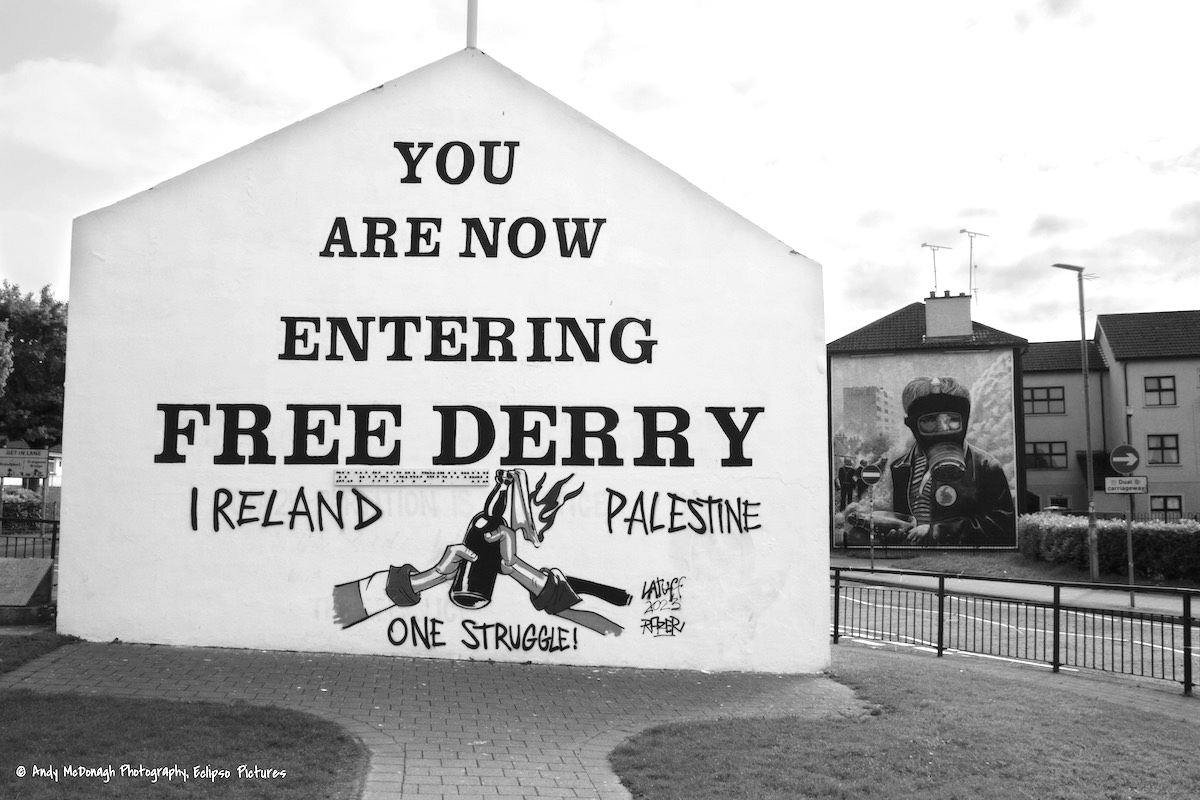
And ordinary British people, if you care to ask them, are mostly indifferent. There is no deep cultural attachment nor shared sense of shared identity of the kind that exists, even tenuously, with Scotland or Wales. The North of Ireland is an afterthought, a place that occasionally appears in the news and then disappears again. Britain does not invest in it, does not particularly care about it, and by its own population’s account would not cry if it were gone. But they will not let it go because this is empire in action — it’s the logic of a power that refuses to give up control over a territory it has no right to hold, not because it wants it, but because letting it go would be an admission of failure, and empire does not admit failure. It would be a final nail in the coffin of the glorious British Empire.
They were never going to let Ireland go easily. They just wanted us to think they might. Burnham is now seemingly making that that official, and whatever use the Good Friday Agreement had as a framework for hope, it is worth being clear-eyed about what it always was: a sticking plaster, a containment mechanism, a promise made in the knowledge that the small print would never have to be honoured. The question now is not whether Britain will call a border poll. The question is whether the Irish people will keep waiting for permission.
And on that thought, I will let you go.
This article was originally published in the Spectacle.
At the moment, the author is under immense financial pressure exacerbated by an unexpected move which was unaffordable and stressful. Please support him. If even just 10% of people reading this post ‘bought a coffee’ just *one* time a month, he could dedicate himself to this work full time and expand to bring you even more unfiltered, independent stories, every single day.