A Response From A Donetsk Resident And Ukrainian Leftist: Who Speaks For Eastern Ukraine?
What Ulyanov is doing is not simply criticism of the Ukrainian government. It is the acceptance of the core scheme of Russian state propaganda. This is not analysis. It is the justification of aggression dressed up as “anti-imperialism”.
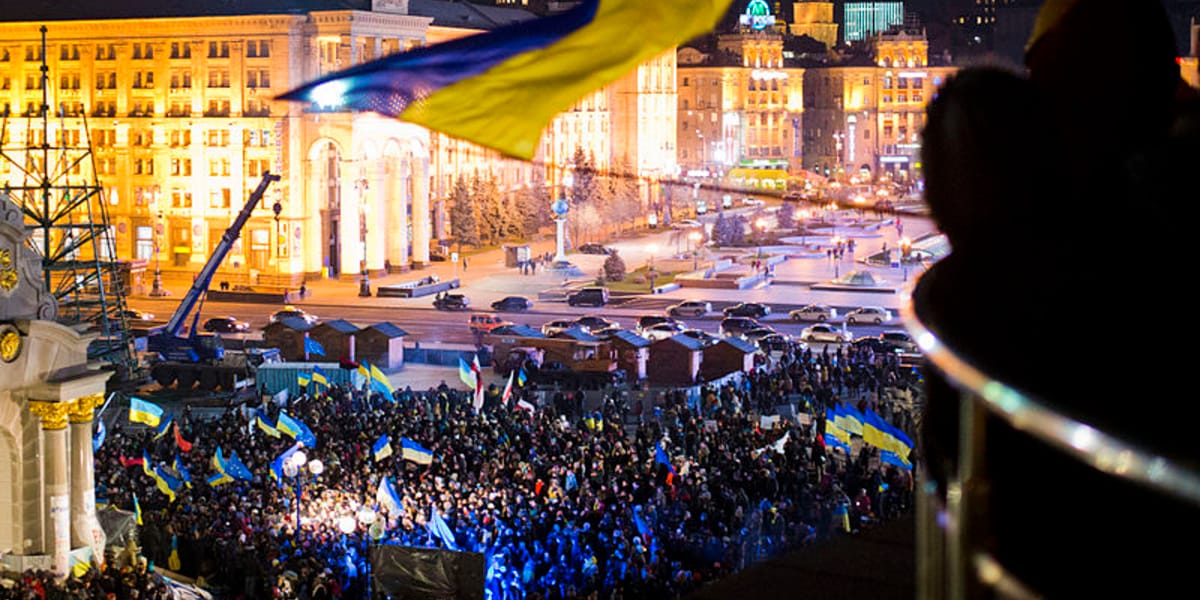
Recently, two articles were published on Aontacht Media under the name Ilya Ulyanov that claim to represent an “eastern Ukrainian” and “left-wing” perspective:
1. The Western Left Must Come To Terms With Ukraine’s Neo-Nazi Problem
https://aontachtmedia.ie/the-western-left-must-come-to-terms-with-ukraines-neo-nazi-problem/
2. The Western Left Must Stop Backing Zelensky’s Conscription Machine
https://aontachtmedia.ie/the-western-left-must-stop-backing-zelenskys-conscription-machine/
I am from Donetsk. I lived there until 2014. I was a participant in the Donetsk Euromaidan. I stood on the same square where, on 13 March 2014, Dmytro Cherniavskyi was stabbed to death. I saw pro-Russian militants beating unarmed people. After that I joined volunteer units and later served in the Armed Forces of Ukraine. From 2014 to 2018 I fought in the Donbas. I had to rebuild my life from scratch on government-controlled territory. In 2022 the Russian army came again — this time with a full-scale invasion. I fought again.
Today I am a participant of Social Movement in Ukraine and a member of the Irish Labour Party. I have criticised Volodymyr Zelensky since the first months of his presidency. I have openly criticised, and continue to criticise, his government for neoliberal reforms, the weakening of labour rights, oligarchic influence, corruption and much else. My comrades in Social Movement do the same. We are not “pro-Zelensky” activists. We do not defend every decision taken in Kyiv.
Precisely for that reason I see the difference between left-wing criticism and what these articles propose with particular clarity.
What Ulyanov is doing is not simply criticism of the Ukrainian government. It is the acceptance of the core scheme of Russian state propaganda: that Ukraine has no right to its own political choice; that it must remain in the orbit of the Kremlin; that any attempt to leave Russian control is a “Western project”; and that Russian armed intervention is merely a “reaction”. In essence this logic reduces Ukrainians to a population that must silently accept a status similar to that of Belarus under Moscow’s external control. This is not analysis. It is the justification of aggression dressed up as “anti-imperialism”.
Personal experience is not the only evidence here. It is only the entry point into a verifiable argument. This is not a text about Ulyanov being “wrong as a person”. It is an examination of two competing models of explaining Ukraine.
Ulyanov’s model: West → Maidan as a coup → civil war → Russia reacts.
Verifiable model: Mass Ukrainian protest → political crisis → Russian annexation of Crimea → armed Russian intervention in the Donbas → subsequent escalation of the conflict.
What follows is not a defence of the Ukrainian government as such. It is a test of the causal scheme.
Ukraine Must Not Choose Between Two Imperialisms
Left-wing criticism often begins with a correct thesis: the United States, the EU, the IMF and Western states have their own geopolitical and economic interests. That is true, and it can and should be criticised. But it does not follow from this that the Ukrainian people have no right to resist Russian imperialism.
A Ukrainian leftist can simultaneously criticise NATO, the IMF, the neoliberal policies of the EU, the oligarchs and the Ukrainian government — and at the same time demand an end to Russian occupation. Anti-imperialism does not mean political blindness to the empire that stands on the other side of the border.
I have criticised Zelensky since 2019. There are serious questions about the preparation for the full-scale war, about the underestimation and public denial of the scale of the threat in 2021–early 2022, and about priorities in public spending. Investigations showed that in the years before the full-scale invasion large sums were directed to road construction programmes while military procurement lagged. These are legitimate subjects of left-wing and democratic criticism. But I do not turn that criticism into a denial of Ukraine’s right to exist as a political subject.
Sources on pre-war spending:
https://prm.ua/zelenskyy-ta-yoho-komanda-vytratyly-na-dorohy-u-desiat-raziv-bilshe-hroshey-nizh-na-armiiu-rozsliduvannia/ https://kyivindependent.com/ukraine-spends-over-7-billion-on-road-repairs-in-2-years-expects-more-despite-military-threat/
This Is a War of Imperial Conquest — Not a “Civil Conflict”
What is taking place is not a symmetrical civil war. It is a war of imperial conquest conducted by a dictatorial empire. Russia is attempting to erase Ukrainian political existence on the territories it occupies.
On the occupied territories identity is systematically destroyed: the Ukrainian language is excluded from the school curriculum, history is rewritten, and children are told that Ukraine does not exist. Russian servicemen enter schools, display weapons and conduct so-called “lessons of courage”, normalising war from an early age. Children are drawn into pro-Russian structures and isolated from Ukrainian culture and identity.
Then comes deportation. Under the guise of “evacuation” or “summer camps” children are taken to Russia. Many of them never return. They are given Russian citizenship, placed in Russian families, given new names and cut off from their relatives. Return becomes practically impossible — legally, physically and psychologically. This is not chaos. This is a multi-level strategy: first identity is erased, then its destruction is consolidated through forced assimilation.
This is the system: first they break the children, then they imprison those who refuse to surrender.
Taken together — the seizure of territory by force, the destruction of Ukrainian civic life, the filtration camps, the torture prisons such as Izolyatsia, the rewriting of history in schools, and the abduction of children — this constitutes a policy of imperial genocide: the attempt to destroy a people as a political and cultural subject under the rule of a dictatorship.
Ukraine is not only defending itself — it is containing an imperial system that threatens the entire continent. What Russia is doing is not a “territorial dispute”, but a deliberate policy of destroying a people, including the deportation of children, repression and forced assimilation. This is genocide — not hidden, but effectively sanctioned at the highest level.
These meetings and public statements matter because solidarity is not just words. It is the readiness to name things for what they are and to act. It is especially important that in Ireland there are people and organisations that understand this. Unity must be preserved, and the Kremlin must not be allowed to undermine political support for Ukraine in the struggle against Russian imperialism and genocide that threatens all of Europe.
Selective Anti-Imperialism, Trump, and the Need for European Self-Reliance
Those sections of the left that demand an immediate and unconditional cut in military aid to Ukraine while Russian forces continue their offensive converge in practice with the policy advanced by Donald Trump and parts of the American right. Trump has repeatedly pressured Ukraine toward a rapid settlement that freezes territorial losses, treats the country as a bargaining chip between great powers, and opens the door to the lifting of sanctions on Putin’s regime. In substance, Trump’s approach to Ukraine and Putin’s interests align: both seek to end the war on terms that leave Russian territorial gains intact and weaken Ukraine’s capacity to resist.
When self-described leftists call for stopping weapons and forcing Ukraine into negotiations under the threat of total isolation, they are not opposing “Western imperialism” in any consistent sense. They are objectively supporting the same outcome that Trump and Putin are working toward — the subordination of Ukraine and the normalisation of imperial conquest. This is selective anti-imperialism: it focuses almost exclusively on Western power while treating Russian imperial aggression as secondary or even legitimate. In practice it becomes a left cover for the politics of the stronger empire.
European progressive forces therefore face a strategic task: to build real capacity for collective defence and political independence so that Europe is not left dependent on the will of either Washington or Moscow. The goal must be to remain united, develop alliances, and create the ability to defend democratic societies without becoming a hostage to the geopolitical games of Trump or Putin. Europe must be able to protect itself and its values without relying on imperial centres that treat smaller nations as bargaining chips.
What Ulyanov’s Articles Actually Claim
The first article states: “Far from a reaction to Russian intervention in Ukraine, the rise of the far right has been the opposite: the West’s use of ethnonationalists as its vanguard in the 2013-14 Maidan coup caused the civil war in the East, and only then drew in Russia.” The second puts in the subtitle: “Ukraine is not a sovereign country. The people of Donbass… should be left alone; the real task is decolonising a Brussels-controlled Ukraine from IMF/EU/US rule and its far-right collaborators.” The scheme is therefore: West → Maidan as a “coup” → civil war → Russia only later “intervenes”. This is the scheme that must be tested.
What International Institutions Say
To reduce the war in the Donbas to a civil war is to exclude from the explanation the decisive role of Russian military, political and material intervention.
In Ukraine and the Netherlands v. Russia the European Court of Human Rights established that the territories of eastern Ukraine under the control of the separatists were under the jurisdiction of the Russian Federation from at least 11 May 2014. The Court concluded that by that date the separatist operation as a whole was already being “managed and coordinated” by Russia; that Russia exercised effective control; that Russian military personnel were present from as early as April 2014; and that Russia exercised decisive influence on the military strategy of the separatists.
ECHR judgment:
https://hudoc.echr.coe.int/eng?i=001-222889
OHCHR already in autumn 2014 recorded that the armed formations of the so-called “DPR” and “LPR” were being reinforced by foreign fighters, including citizens of the Russian Federation. The same reports documented the arrival of heavy weapons across the border.
OHCHR, 8 October 2014:
Conclusion. The description of Russia as a late external participant does not correspond to the picture established by international institutions.
Russian Intervention in 2014: Not a “Reaction” but a Planned Hybrid Operation from the Outset
Russian intervention was not a late reaction to an already formed civil war. Detailed investigative work by the independent Russian outlet Proekt, drawing on the participants’ own admissions, shows that the armed phase in the Donbas was triggered by a deliberate operation organised and supplied from Russia.
In April 2014 a detachment of armed men led by Igor Girkin (Strelkov) — a Russian citizen and former FSB officer — crossed from Crimea into mainland Ukraine and seized the city of Sloviansk. Girkin himself later stated openly: “It was I who pulled the trigger of the war. Had our detachment not crossed the border, everything would have ended up like in Kharkiv or Odessa. There would have been a few dozen dead, burned, arrested. And that would have been the end of it. But our group set off the flywheel of the war, which is still going on now.”
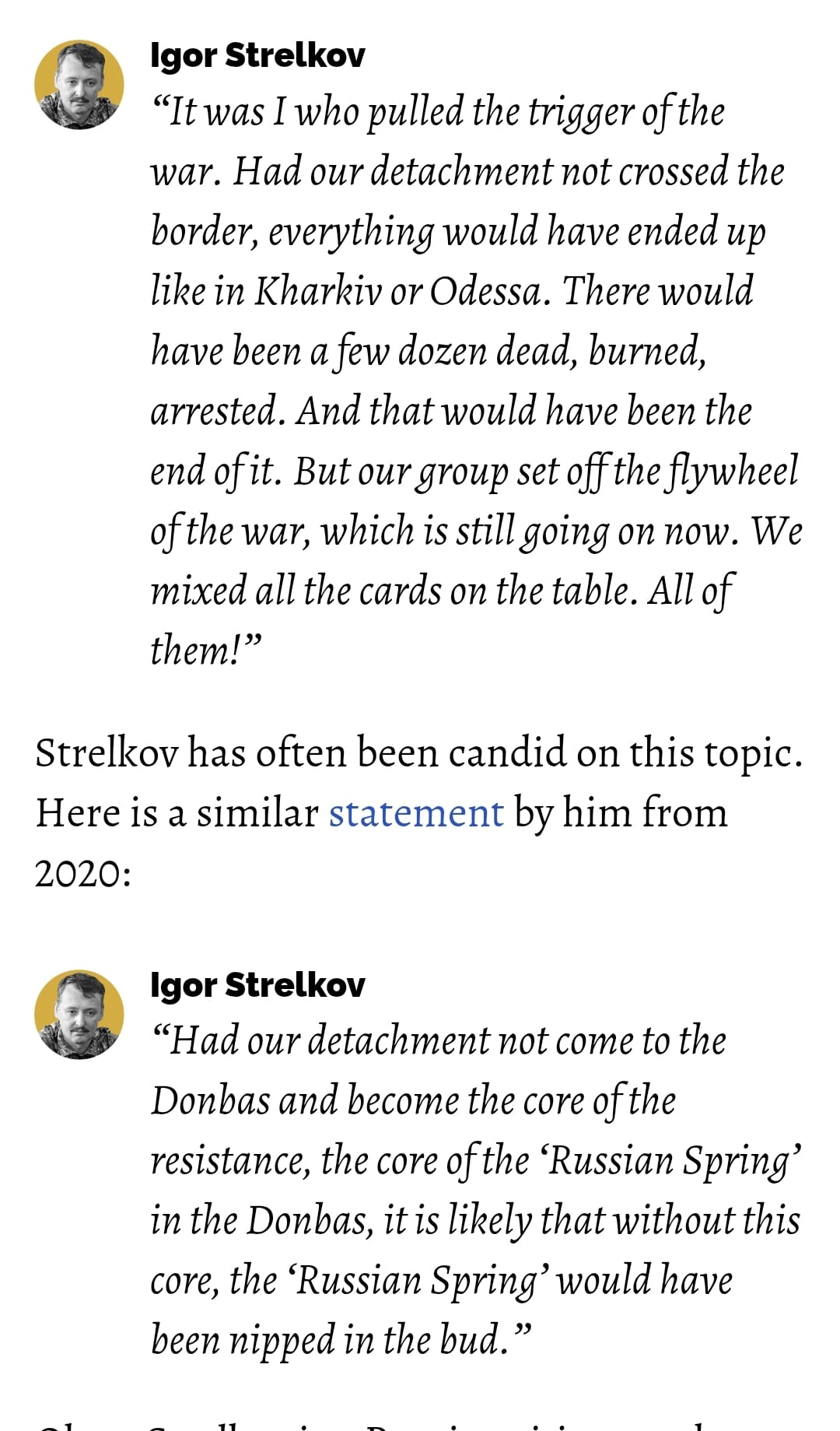
The operation was not spontaneous. According to the same body of evidence, it was financed and coordinated with the involvement of Russian businessman Konstantin Malofeev and Alexander Borodai (also a Russian citizen), who later became the first “prime minister” of the so-called DPR. Borodai has acknowledged that he stood at the origins of the march to Sloviansk and that he regularly transferred substantial sums — hundreds of thousands of dollars — to support Girkin’s group. The stated strategic purpose of the Sloviansk operation, as participants themselves described it, was to create a military foothold that would force the introduction of regular Russian troops into the Donbas.
Other key commanders of the early armed formations — including Igor Bezler (“Bes”) and Arsen Pavlov (“Motorola”) — were likewise Russian citizens with military backgrounds. Local collaborators existed, but the core command, weapons, financing, logistics and political leadership came from Russia. This was a classic hybrid operation: first denial of involvement, then the appearance of “volunteers”, and later increasingly open military support when the “militia” began to lose ground.
Therefore the claim that Russia became a participant only after a “civil war” had already formed does not withstand scrutiny. The armed conflict was ignited by an organised cross-border operation whose participants themselves later admitted that without it the uprising would most likely have been suppressed.
Source — Proekt investigation (English):
https://www.proekt.media/en/guide-en/putin-2014-en/
Open Russian Neo-Nazis on the Battlefield Since 2014
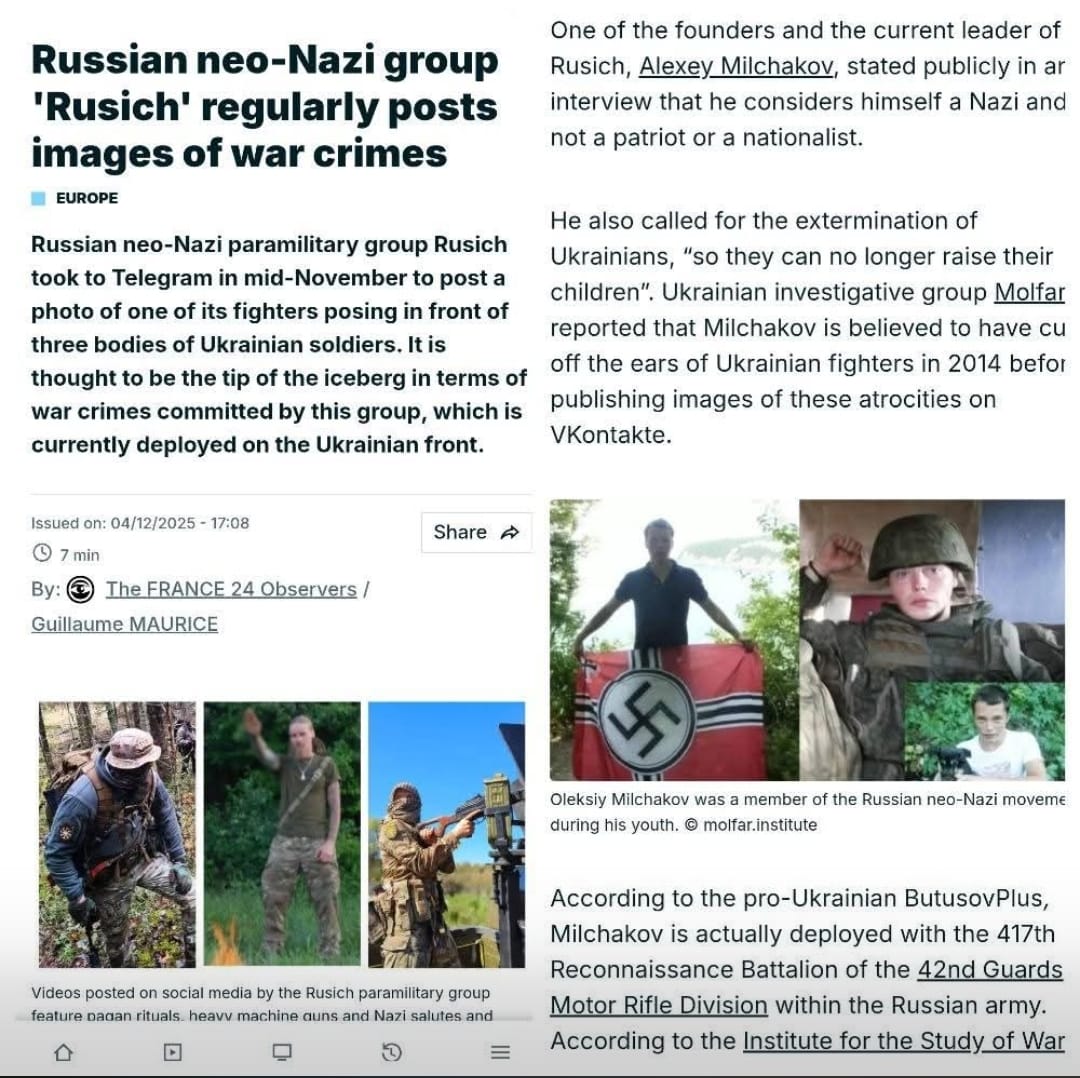
The DShRG “Rusich” group is a Russian far-right and neo-Nazi paramilitary formation that has taken part in fighting in the Donbas since June 2014. Its founder Alexey Milchakov has publicly called himself a Nazi. The group used neo-Nazi symbols and later operated with formations linked to Wagner. One of its commanders, Yan Petrovsky, was sentenced in Finland to life imprisonment for war crimes committed in Ukraine in 2014. If groups with neo-Nazi symbols have been openly fighting on the Russian side since 2014, the thesis of “denazification of Ukraine” as the main reason for Russian intervention loses logical consistency.
 The FRANCE 24 Observers and Guillaume MAURICE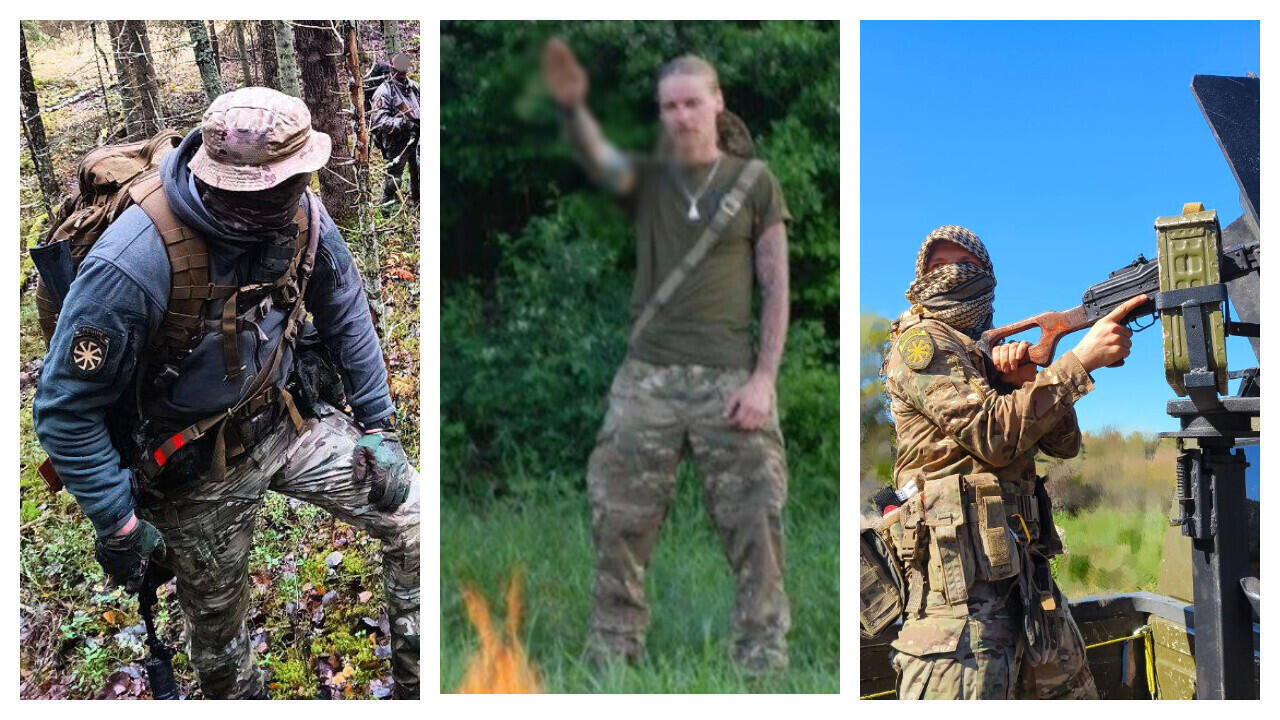
Donetsk, 13 March 2014: The Attack on the Peaceful March for a United Ukraine
On the evening of 13 March 2014 a peaceful rally “For a United Ukraine” was held on Lenin Square in the centre of Donetsk. Participants — ordinary residents, activists, students — came unarmed to express support for the country’s territorial integrity and to protest against the Russian military takeover of Crimea. A parallel pro-Russian gathering took place nearby.
When the pro-Ukrainian rally began to disperse, organised groups of pro-Russian militants broke through the thin police cordon and attacked the departing demonstrators. They threw eggs, bottles, paving stones and smoke bombs, beat people with batons and fists, and used knives. 22-year-old Dmytro Cherniavskyi — press secretary of the local Svoboda organisation and a participant in the Donetsk Euromaidan self-defence — was stabbed in the stomach while helping to cover the retreat of unarmed people. He died of his wounds in an ambulance. This was the first blood shed in Donetsk. I was there as a participant of that rally.
Contemporary English-language reporting recorded that the pro-Russian side initiated the violence. Journalists present saw pro-Russian demonstrators smash the windows of a police bus carrying self-defence members and throw gas and fireworks inside. The newly appointed governor of Donetsk region stated the following day that Russians were behind the clashes. Ukrainian officials and local journalists reported that organised groups, including people brought across the border, had been used to escalate the situation — a pattern already visible in other eastern cities that spring.
English-language sources:
https://www.cbsnews.com/news/russia-building-a-pretext-to-push-deeper-into-ukraine/
https://iwpr.net/global-voices/eastern-ukraine-two-deaths-reported-donetsk-clashes
After 13 March a systematic campaign of abductions and killings of Ukrainian activists began. People were seized on the streets, at home, at railway stations. They were beaten, tortured and thrown into basements. Volodymyr Rybak, a
Horlivka city council deputy who tried to remove a pro-Russian flag, was abducted, tortured and killed. Amnesty International, Human Rights Watch and OHCHR documented hundreds of abduction cases in April–July 2014. The goal was clear: to intimidate, to destroy any pro-Ukrainian resistance and to create an atmosphere of terror. Many of those with whom I stood on the square either left, were forced into silence, or disappeared.
Izolyatsia: A Concentration Camp Organised by the Occupation Administration Since 2014
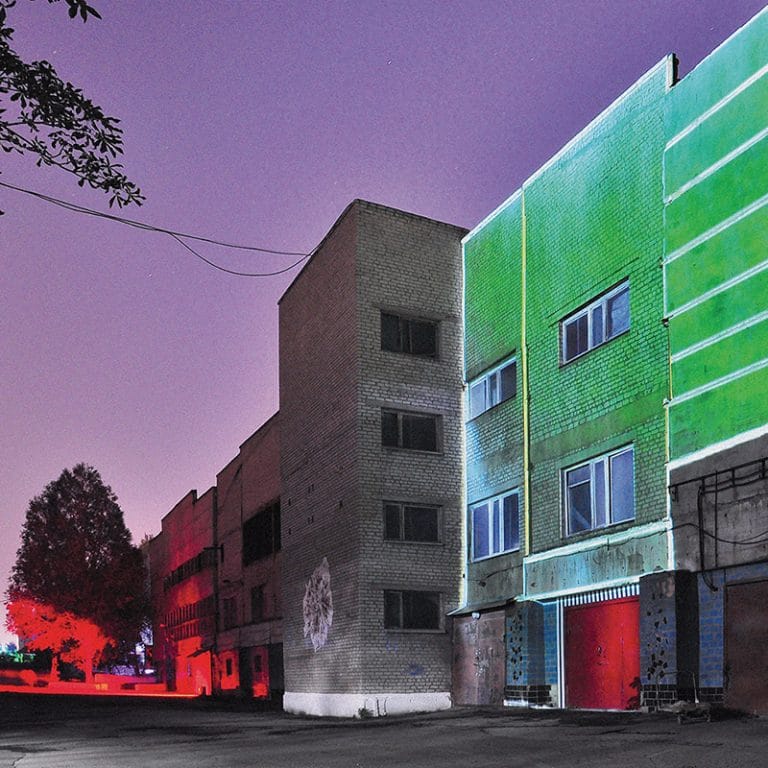
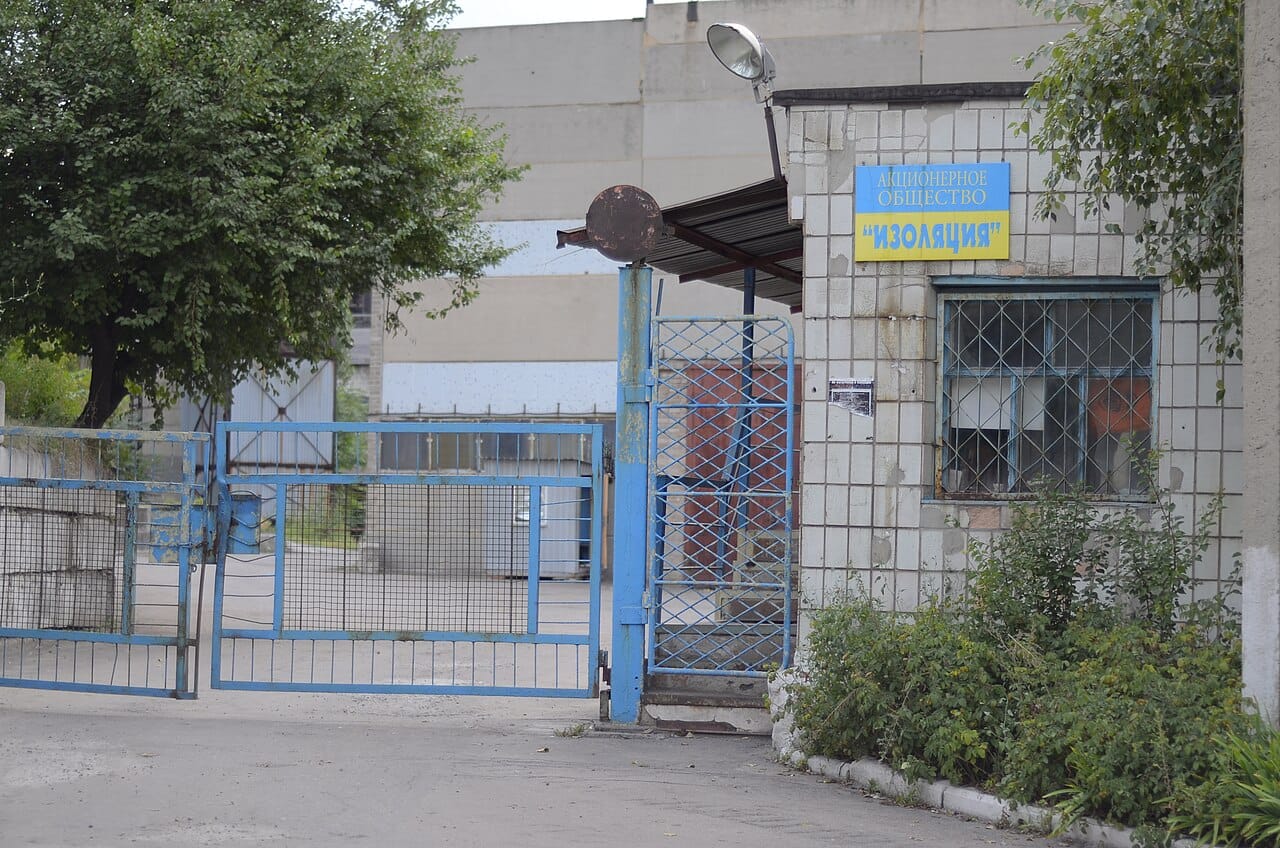
On 9 June 2014 armed formations seized the former Izolyatsia art centre and factory complex in Donetsk and turned it into a secret prison. From that moment the site functioned as a de facto concentration camp under the control of the occupation administration of the so-called “Donetsk People’s Republic”, itself directed and sustained by the Russian Federation. It was used to hold and repress political detainees — people detained for their pro-Ukrainian position, journalists, activists, and anyone suspected of disloyalty to the occupation regime.
In its thematic report on arbitrary detention, torture and ill-treatment in eastern Ukraine (2014–2021), the Office of the United Nations High Commissioner for Human Rights made Izolyatsia a separate case study. The report and the testimonies of former prisoners document: systematic arbitrary and incommunicado detention; torture including beatings with metal pipes, shovels and batons, electrocution, suffocation, cold water and prolonged stress positions; mock executions; sexual violence, forced nudity and rape; threats against relatives; and the presence of personnel who advised interrogators how to inflict maximum pain without killing the victim immediately.
International monitors were denied access for years. Former prisoners, among them the journalist Stanislav Aseyev (held for 28 months, most of that time in Izolyatsia), described conditions that closely resembled a concentration camp: hunger, denial of medical care, forced labour, constant violence and psychological terror. Later investigations concluded that the crimes committed at Izolyatsia may amount to crimes against humanity. The facility continued to operate for years as one of the central instruments of political repression on the occupied territory.
Key English-language sources:
https://ukraine.ohchr.org/en/arbitrary-detention-torture-and-ill-treatment-context-armed-conflict-EN
https://fpa.org/the-izoliatsiia-grinder-in-russia-controlled-donetsk/
https://en.wikipedia.org/wiki/Izolyatsia_prison
This is not the rhetoric of a “civil conflict between equal sides”. This is a documented system of political repression and torture organised by an occupation administration on territory over which an international court later established Russia’s effective control.
Maidan Was Not the Organisation of a Single Political Force
Maidan can be criticised for the composition of its participants, the role of the far right, the influence of Western states, violence and the subsequent decisions of the new authorities. This is a legitimate field of left-wing criticism. But Maidan was not the organisation of a single political force. Students, trade-union activists, liberals, leftists, nationalists, civic organisations and ordinary citizens with different political views took part in it. The fact that far-right groups were present does not turn the whole of Maidan into a far-right project. Likewise, Western political support does not prove that millions of Ukrainians were merely an instrument of Western states.
Maidan began as a mass protest against Yanukovych’s sudden refusal of the Association Agreement with the EU and against the violent dispersal of students. It grew into a broader uprising against corruption and authoritarian rule. Russia responded by seizing Crimea and then organising the armed seizure of part of the Donbas. One can argue about the legal nature of the change of power. One cannot automatically derive from this the thesis that Ukrainians had no political agency of their own and that Russia was merely a reactive force.
Even Under Martial Law Ukrainians Continue to Defend Democracy
In July 2025, after legislation was rapidly adopted that subordinated the National Anti-Corruption Bureau (NABU) and the Specialized Anti-Corruption Prosecutor’s Office (SAPO) to the Prosecutor General, thousands of people took to the streets in Kyiv and other cities with handmade cardboard signs. These protests — often called the “Cardboard Maidan” — were the first large-scale political demonstrations since the full-scale invasion. Under public and international pressure the most dangerous provisions were later reversed. Even under conditions of full-scale war, Ukrainian society continues to fight for democratic institutions. If Ukraine holds, it will be possible to hold elections and change the government by democratic means. If Ukraine does not hold, the practices already visible on the occupied territories will become the future of the entire country.
https://www.huri.harvard.edu/zelenskys-anti-corruption-missteps-experts-respond
Pressure on Activists and the Case of Aslan Khakimov
Real pressure on people who help Ukraine continues. One illustrative case is that of Aslan Khakimov (also known as Ruslan Puptaiev), who developed and supplied ground robotic systems used by the Ukrainian Armed Forces. Despite documented assistance to the defence effort, he faced deportation proceedings that could have returned him to Russia, where he had been sentenced in absentia. Ukrainian veterans, human-rights organisations, members of parliament and large parts of civil society publicly defended him. Courts later intervened. The case shows both the existence of pressure and the capacity of Ukrainian society and progressive forces to resist it.
The Deepest Problem of This Scheme — It Almost Completely Deprives Ukrainians of Agency
In Ulyanov’s construction Ukrainians are almost never political subjects. They are either an instrument of the West, or victims of Kyiv, or a population that must be “left alone”. There is almost no room for a simple Ukrainian “we”: we ourselves can want Europe or not want it; we can protest against our own government; we can be left, right, liberal or conservative; we can make mistakes; we can change the authorities; and we can decide for ourselves whether we want to remain part of our own state. It is precisely the right to such political agency that imperial policy seeks to deny.
“Ukraine Is Not a Sovereign Country” Confuses Two Different Things
The phrase “Ukraine is not a sovereign country” confuses external influence with the absence of sovereignty. Dependence on international creditors, the EU or military aid does not automatically mean that Ukrainians cease to be a political subject. Dozens of states of the Global South have for years depended on IMF and World Bank programmes. No serious person claims on this basis that their peoples have no right to political agency. If one applies this logic consistently, most of the Global South loses the right to be called sovereign. That is absurd. The formula “decolonise Ukraine from Brussels” removes the Russian imperial intervention from the centre of the picture and offers Ukrainians a single “alternative” — to remain under the external control of Moscow, like Belarus. This is not decolonisation. This is the justification of imperial subordination.
“Leave the Donbas Alone” — Whom Exactly and from What?
“Leave the Donbas alone” sounds humane only until one asks: whom exactly and from what? The residents of the Donbas have the right to security, life, housing and political representation. But this does not mean leaving without criticism the armed structures that established power there, or recognising those structures as the legitimate expression of the will of all the region’s inhabitants. Residents of the Donbas ≠ DPR/LPR. To reduce the region to armed structures created with decisive Russian support is once again to deprive its inhabitants of agency.
On Class, Criticism of the Government, and the Right to Resist
No serious Ukrainian leftist denies the existence of far-right groups or the problems of militarisation, corruption and class injustice under conditions of war. There are legitimate questions about mobilisation practices and about how the burden of the war is distributed. Criticism of oligarchy, neoliberal reforms and corruption remains necessary. I myself criticise Zelensky and his government for many of these things. The war, however, was started by Putin in 2014. There are serious questions about the preparation for the full-scale invasion and about spending priorities before 2022. But one basic political fact remains: if Ukraine holds, there will be elections, and Zelensky can be replaced by democratic means. If Ukraine does not hold, what is already happening on the occupied territories will be extended. Those who effectively call for the disarmament of Ukraine while the empire continues its war of conquest are calling for that outcome.
Social Movement Breaks the Main False Dilemma
Ulyanov’s articles construct a false alternative: either you support the Ukrainian state/the West, or you are a “real leftist”. The Ukrainian democratic left rejects this dilemma. Social Movement combines the defence of Ukraine, resistance to Russian aggression, independence and democracy, criticism of neoliberalism, the defence of workers, and socially oriented reconstruction. This is a left position that refuses to justify Russian intervention.
https://www.ukraine-solidarity.eu/news-and-analyses/sr-intervention-on-the-cpiml-congress-full
I am a participant of Social Movement and a member of the Irish Labour Party. These affiliations mean the same thing: a consistent left position cannot justify an empire that is trying to destroy another people’s right to exist.
Conclusion
Ulyanov’s articles claim that Maidan caused a civil war and only then “drew in” Russia. OHCHR already in 2014 recorded the cross-border inflow of foreign fighters, including Russian citizens. The ECHR established Russian jurisdiction and decisive influence from May 2014. The participants in the early armed operation themselves later admitted that without the cross-border detachment the uprising would most likely have been suppressed. Therefore the description of Russia as a late external participant does not withstand scrutiny.
I was in Donetsk when the first blood was shed. I fought in 2014–2018 and again in 2022. I have criticised Zelensky from the beginning of his rule. But I will not allow this experience to be rewritten as a “civil war” that justifies the aggressor, and I will not allow the right of Ukrainians to political choice to be reduced to a “Western project” or to the necessity of remaining in the orbit of the Kremlin.
We do not need to defend every decision of Kyiv in order to defend Ukraine’s right to exist. If Ukraine holds, we will be able to change our government. If it does not, the imperial practices already visible on the occupied territories — identity erasure, the abduction of children, torture, the destruction of political life — will become the future of the entire country. Those who call for Ukraine’s disarmament while this is happening are effectively calling for that future.
This is the principled position of the Ukrainian democratic left: criticism of one’s own state without denial of one’s own people; anti-imperialism without selectivity; socialism without the right of a stronger state to decide the fate of a weaker one. This position already exists. It needs to be heard.