


Social Conservatives Should Embrace Anti-Imperialism
Peter Irvine
For too long, social conservatives in Europe, Ireland and beyond have been drawn into a false political dichotomy that suggests the defence of traditional values requires alignment with neoliberal foreign policy, Atlanticism or interventionism. This divide is, in reality, manufactured and contrary to their own interests.
A closer look at modern anti-imperialist struggles and the societies resisting external domination shows a different pattern. Many such movements operate in socially traditional contexts, rooted in community, religious values, patriotism and often resist the cultural liberalism that dominates Western foreign policy demands. Furthermore, the first-order consequences of imperial wars, most evidently the mass displacement of peoples, have direct effects on Europe’s material conditions, including migration pressures that people debate about yet too rarely trace back to their structural causes.
Here I will endeavour to point out that social conservatives have every reason to take anti-imperialist causes seriously, not strictly speaking as endorsements, but as a corrective to a foreign policy that consistently destroys communities and undermines sovereignty. This damage is not confined to the countries subjected to imperial pressure, but extends to Western and even nominally neutral states as well. Two cases in particular, Venezuela and Nicaragua, reveal this dynamic very clearly. It is also the case that imperialist wars waged in the Middle East and Africa have resulted in a spike in inwards migration to Europe from affected countries.
Venezuela
Venezuela stands at the centre of contemporary debates about imperialism and sovereignty. In early January 2026, a US military operation captured President Nicolás Maduro in an action widely described by international analysts as controversial under established norms of international law. Opposition figures and external powers now jockey for legitimacy and control, with the contested transition drawing attention from institutions and foreign leaders alike.
Whatever one thinks of Maduro’s government, the method of removing him, a direct external military action that bypassed Venezuelan sovereignty, highlights the basic principle that when powerful states act unilaterally in the name of “order”, “security” or “democracy”, they set precedents that undermine the legal equality of nations and the principle of self-determination. These are core concerns for any consistent conservative ethic rooted in sovereignty, order and respect for community institutions.
Under the administrations of Hugo Chávez and Nicolás Maduro, a range of social policies have been enacted or retained and reaffirmed that reflect a more traditional stance on certain cultural and moral issues. Same-sex marriage remains constitutionally banned in Venezuela. Abortion is illegal in almost all circumstances, with an exception only where the woman’s life is at risk. There have also been measures in place blocking access to pornographic content.
Given these policies, the broader point is that imperial pressure, whether through sanctions, covert regime change mechanisms or overt military force does not primarily advance the dignity of nations but erodes it, with ripple effects both overseas and at home in the country of the guilty party.
Nicaragua and Liberation Theology
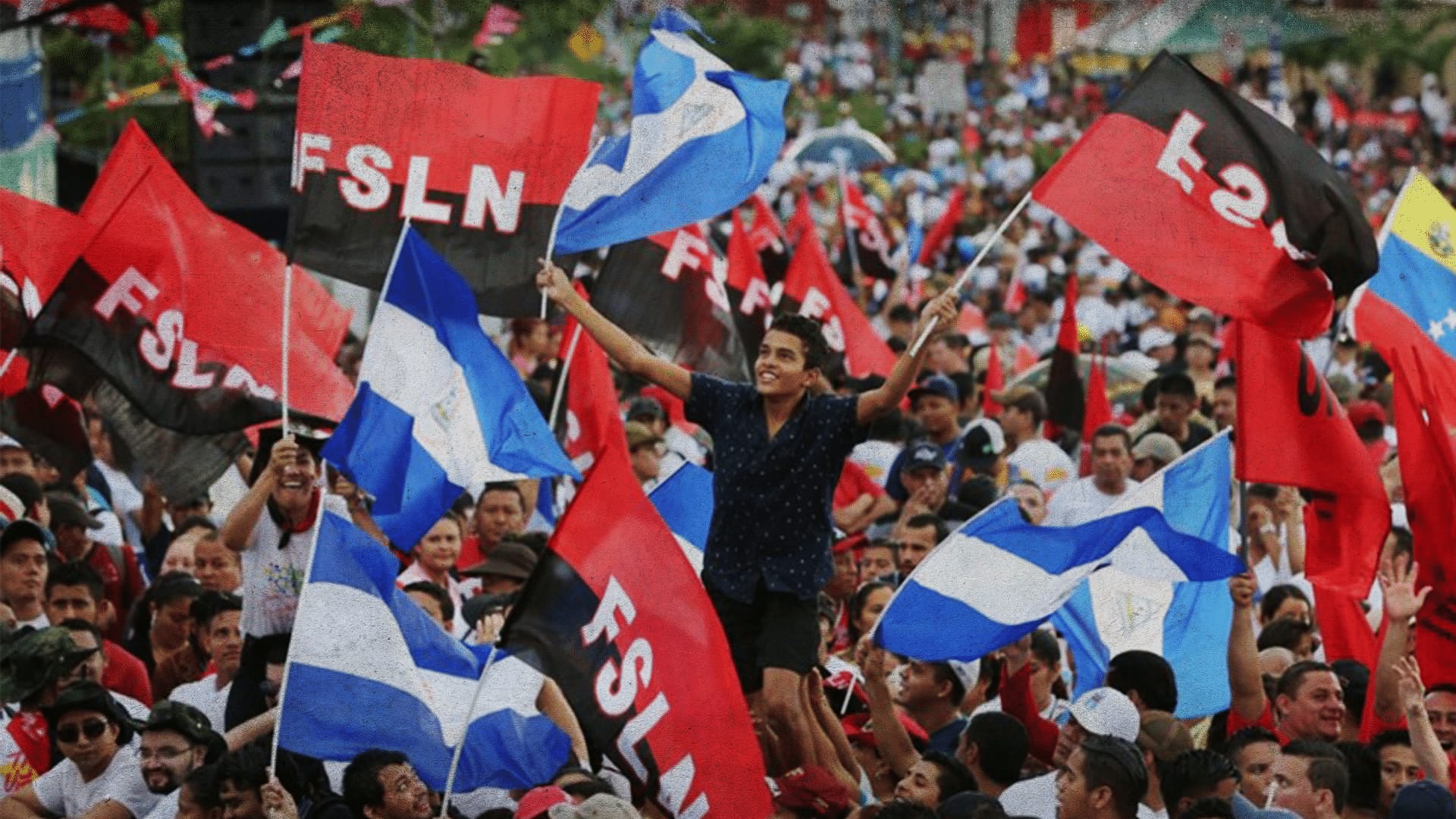
Nicaragua’s political landscape today has been dominated by Daniel Ortega and the Sandinistas (FSLN) for a number of decades. The Sandinista movement itself grew out of a 20th-century resistance to US military presence and political interference. Its ideological foundations drew extensively on Liberation Theory and Christian Socialism.
Liberation Theology, as an intellectual and religious current, emerged in mid-20th-century Latin America as a way of interpreting Christian teaching through the lived experience of the poor and oppressed. It argues that faith must be actively engaged in confronting structural injustice, promoting both spiritual and material liberation. A central objective, a “preferential option for the poor”, frames religious commitment as a basis for collective struggle, solidarity and moral duty. While it is not a monolithic political programme, its roots in community life and moral seriousness make it intellectually interesting to social conservatives who value tradition, duty and lived ethical commitments rather than abstract individualism.
The Sandinistas in Nicaragua are noticeably even more traditionalist than the socialists in Venezuela. Abortion is banned in all circumstances, without any exceptions. Liberal sex education is effectively non-existent, there are strict laws against possession of drugs and above all, Christianity and communitarian ethics are central to life there rather than liberal individualism.
Seen through this lens, the Sandinista project and its relationship to not just the Catholic faith but also to Evangelical communities as well, show that a serious, community-focused Christian worldview can coexist with resistance to global power structures. The purpose of highlighting this is to point out that anti-imperialist politics cannot be reduced to secular liberalism and even anti-religious sentiment.
Syria, Libya and Arab Nationalism
Anti-imperialism in the Middle East and North Africa, while distinct, has taken forms that are in some ways comparable to those seen in Latin America. Rather than emerging from liberal individualism, these movements were often rooted in Arab nationalism, state sovereignty, social order and resistance to external domination.
In both Syria and Libya, the governing ideologies prior to the Western intervention which devastated the countries, were shaped by a form of nationalism rooted in each country’s cultural customs. Arab nationalism, particularly in its late 20th century expression, emphasised national dignity, social cohesion, strong state institutions and resistance to foreign control. While not religious in the same way as Liberation Theology, and in fact explicitly secular in the case of Ba’athism, it shared a similar rejection of liberal moral universalism and international capitalism.
Syria’s Ba’athist state, for example, combined secular governance with relatively traditional values, strong family structures and a role for religion within society without allowing it to dominate the state while protecting minorities such as Christians. Libya under Muammar Gaddafi likewise pursued a nationalist, anti-imperialist path that rejected Western liberal norms, promoted social conservatism and maintained tight controls on cultural liberalisation. As in Latin America, the destruction of these sovereign states that upheld traditional values did not remain a local tragedy, but produced consequences that went far beyond their borders.
Wars, Destabilisation and the Middle-Eastern and African Migration Dynamic
The consequences of imperial actions are not confined to distant battlefields. The 2011 NATO intervention in Libya, for example, led to enduring instability, turning the country into a major transit point for migration across the Mediterranean. Combined with the Syrian civil war, which produced one of the largest displacement crises of the 21st century, these conflicts helped generate the refugee flows that became central to Europe’s migration debate from around 2015 and beyond.
This is all material fact:
State collapse and war create displacement of people.
Displacement, on the scales seen in Libya and Syria, produces large movements of people.
Those movements have clear effects on housing markets, demographics, public services and labour markets in destination societies.
In some European contexts, rapid increases in population have strained local services and infrastructure, widened gaps between supply and demand in urban housing and added complexity to labour markets where employers can segment workforces and weaken collective bargaining.
These are second-order effects of foreign wars that must be acknowledged if policy debates about migration are to be grounded in material reality rather than just anxieties and performative politics.
An Ethical and Material Case Against Imperialism
Why should social conservatives pay attention to these dynamics?
Sovereignty matters: A political ethic that values nationhood, community coherence and ordered social life cannot dismiss actions that undermine state autonomy under the banner of “humanitarian intervention”.
Communitarian values are compatible with anti-imperialism: Movements rooted in local tradition, religious life and collective responsibility, from Latin American ecclesial base communities to national liberation struggles, challenge the notion that anti-imperialism is inherently secular or ‘hippie’.
Material reality shapes domestic politics: Wars that uproot societies far away do not stay far away, their effects are transmitted through displacement, economic strain and political reaction. A responsible analysis of European and Irish political life must reckon with this.
Policy nuance is possible: Acknowledging that countries like Venezuela and Nicaragua can have restrictive abortion legislation, traditional views on gender and sexuality as well as a ruling party that constantly pushes Christian values does not preclude analysing those states’ positions on sovereignty, external pressure or economic policy.
Reframing the Debate
The distinction often drawn between “socially conservative” and “anti-imperialist” politics collapses under scrutiny. Far from being unrelated, they intersect in the lived experiences of peoples resisting domination, asserting dignity and building communal life in the face of external pressures.
Anti-imperialism involves an analysis of power, history and human agency. It asks who gets to decide the fate of a nation’s people and who gets to shape the rules by which they live. For social conservatives who care about community, tradition and moral seriousness, this perspective is not only compatible with their values, it could logically be seen as a necessary corrective to the Anglo-American world order that too often treats states, societies and cultures as expendable and seeks to relegate them into mere economic units.
In recognising this, social conservatives can recover a principled stance that respects both local traditions and global justice, without succumbing to the simplistic binaries of neoliberal interventionism or cultural nihilism.