
![[1919-1920] It was 100 years ago: Fiume, the last pirate utopia](https://aontachtmedia.ie/wp-content/uploads/2025/12/OIP.jpg)

![[1919-1920] It was 100 years ago: Fiume, the last pirate utopia](https://aontachtmedia.ie/wp-content/uploads/2025/12/OIP-421x300.jpg)
Title: [1919-1920] It was 100 years ago: Fiume, the last pirate utopia
Source (FR): https://www.infolibertaire.net/1919-1921-il-y-a-100-ans-fiume-la-derniere-utopie-pirate/
Originally published: 28th December 2019
Author: Emma Goldman Collective
Translated by: László Molnárfi, 2025 (From French to English)
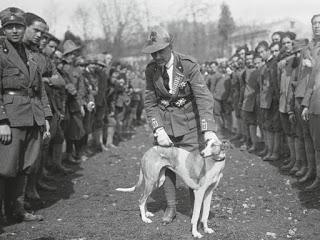
In the middle, Italian poet and adventurer Gabriele D’Annunzio
Here is the third text of the three-part series which traces pirate utopias.
« Therefore, from among the experiments of the inter-War period I’ll concentrate instead on the madcap Republic of Fiume […] It was in some ways the last of the pirate utopias (or the only modern example) — in other ways, perhaps, it was very nearly the first modern TAZ. » – Hakim Bey
The outlandish history of Fiume
After the Treaty of Versailles is signed in 1919, the victors refuse Italy the annexation of the city of Fiume (Rijeka in Croatia today) and that of Dalmatia, contrary to promises given in 1915 in exchange for the kingdom to join on the war on the side of the Triple Entente (United Kingdom, France, Russia). American President Woodrow Wilson proposes rather that it be made an independent State, so that it may serve as the headquarters of the upcoming League of Nations.
It is as such that poet and adventurer Gabriele D’Annunzio speaks of a “mutilated victory”. In April 1919, he sets up the League of Fiume, whose aim is “to defend against the League of Nations, and to represent all those peoples tormented by injustice and oppression in their fight for liberty “ (1).
On the 12th of September 1919, D’Annunzio launches an attack on Fiume, with around 2,600 Arditi, nationalists and war veterans. The French, British and American occupation troops withdraw without so much as having fired a bullet. At the same time, the Italian government distances itself from this action. So, the poet launches an appeal to solidarity and to the Italian people. Right away, the future Duce (Benito Mussolini, socialist militant who converted to nationalism, and the founder of fascism) organises a fundraising campaign to allow the insurgents to carry out their project, succeeding in raising close to 3 million liras (2).
After negotiations with the Italian government fail, D’Annunzio proclaims on the 12th of August 1920 the Italian Regency of Carnaro, derived from the name of the gulf which borders the sea-side city. The USSR is the only country which recognizes the new “State”.
According to a correspondence between anarchist Randolfo Vella, D’Annunzio explains that he is for “communism without dictatorship” and that his intention is to make the city “a spiritual island, from which radiates action, obviously communist, in the direction of all oppressed nations” (1). Anarchist writer, Hakim Bey, from his side, mentions in TAZ, Temporary Autonomous Zone, that Fiume quickly becomes a refuge: “Artists, bohemians, adventurers, anarchists (D’Annunzio corresponded with Malatesta), fugitives and Stateless refugees, homosexuals, military dandies (the uniform was black with pirate skull-&-crossbones — later stolen by the SS), and crank reformers of every stripe (including Buddhists, Theosophists and Vedantists) began to show up at Fiume in droves. The party never stopped. Every morning D’Annunzio read poetry and manifestos from his balcony; every evening a concert, then fireworks. This made up the entire activity of the government. Eighteen months later, when the wine and money had run out and the Italian fleet finally showed up and lobbed a few shells at the Municipal Palace, no one had the energy to resist.” (p.67)
The “Carnaro Charter”
On the 27th of August 1920, the “Carnaro Charter”, written by revolutionary syndicalist Alceste De Ambris in collaboration with D’Annunzio was announced. It recognizes “the sovereignty of all citizens, regardless of sex, race, language, class, religion … “. In addition, “those only are full citizens who give their best endeavour to add to the wealth and strength of the State; these truly are one with her in her growth and development”.
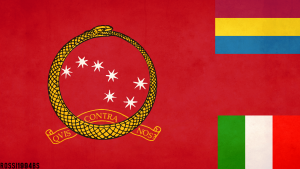
On the military level, the “Carnaro Charter” proclaims that “in time of peace and security, the State will not maintain a standing army; but all the nation will remain armed, as prescribed by law, and its forces by land and sea well and duly trained.” (1), and this, regardless of gender. The Regency takes inspiration from the Arditi, heroic Italian figures of World War I. They were composed of free soldiers and adventurers. The army of Fiume is composed of free men and women who break with the discipline and hierarchy of traditional armies. Command is exercised by a council, taking inspiration from the “soldiers’ councils” during the 1918 German Revolution and the soviets in Russia (before the betrayal by the Bolsheviks).
A pirate economy…
The money of the Italian Regency of Carnaro is not raised by duties or taxes but by theft accomplished by the Uscochi as well as the donations of partisans and donors. Hakim Bey underlines that: “The Navy (made up of deserters and Milanese anarchist maritime unionists) named themselves the Uscochi, after the long-vanished pirates who once lived on local offshore islands and preyed on Venetian and Ottoman shipping. The modern Uscochi succeeded in some wild coups: several rich Italian merchant vessels suddenly gave the Republic a future: money in the coffers!” (p.66)
The Italian standing army puts an end to the “endless party”
D’Annunzio refuses to recognize the Treaty of Rapallo (which recognizes Fiume as a free State and fixes the borders between the kingdoms of Yugoslavia and Italy). The Italian government presents an ultimatum to D’Annunzio and orders them to leave the city with his partisans before the 24th December 1920. The poet stays in place and Italy bombards the city. This event is known in Italy as the “Natale di sangue”, or the bloody Christmas.
D’Annunzio, precursor of fascism?
In this era, Italy is prey to frustration and burns with a desire for radical change. Nascent fascism sows confusion amongst many genuine militant revolutionaries. “We must not forget or overlook that numerous militant antifascists of the Arditi del Popolo and proletarian self-defense formations in Italy were at first close to the “diciannovista” and “sansepolcrismo” tendencies of fascism, and had characteristics of a left-wing and progressive movement in the Italian context, before this transformed into an imperialist and dictatorial movement under Mussolini” (1).
Mussolini co-opts numerous ideas from D’Annunzio, such as corporatism, black uniforms and oratory techniques for crowd mobilization. In fact, as underlines Hakim Bey: “D’Annunzio, like many Italian anarchists, later veered toward fascism — in fact, Mussolini (the ex-Syndicalist) himself seduced the poet along that route. By the time D’Annunzio realized his error it was too late: he was too old and sick.” (p.67)
The two other texts of the series: Neo-fascism and pirate ideology or red-brownism (French: confusionnisme, a tendency to blur the lines between the far-right and the far-left) at work and Women and pirates
(2) https://philitt.fr/2015/09/30/fascisme-drogue-et-revolution-lepisode-du-carnaro/