Why the Left Should Learn to Stop Worrying and Love Nuclear Power
One might expect, then, that the announcement of a bill to repeal the nuclear ban would be celebrated on the environmentalist left.
Garrett Greene
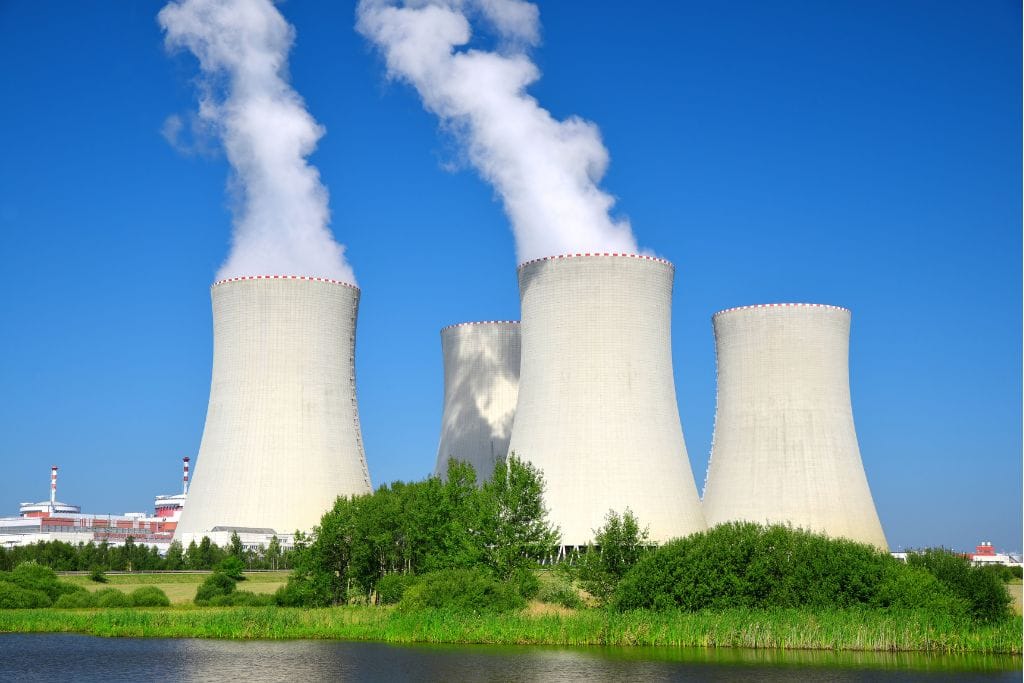
Recent statements from the Taoiseach and a private member’s bill proposed by a Fianna Fáil TD suggest that the government may soon repeal the statutory ban on developing nuclear power in Ireland. This is that rarest of things: a sensible, environmentally sound government proposal that may actually benefit workers. Nuclear power has the lowest carbon emissions of any mode of electricity generation, could massively increase our overstretched energy supply, and is recognised by UN and EU bodies as a key technology for tackling climate change. Yet the current law prohibits the state from even considering any proposal to develop a nuclear power plant. Even those who are sceptical about the practicality of nuclear power in Ireland can agree that all options for tackling the climate crisis should at least be carefully examined.
One might expect, then, that the announcement of a bill to repeal the nuclear ban would be celebrated on the environmentalist left. After all, nuclear energy is not just low-carbon, it is also cheap, plentiful, and creates the possibility of reducing carbon emissions without enforcing hugely unpopular price hikes and reductions in energy consumption on workers. But despite this possibility, or perhaps because of it, the majority of the Irish socialist left have already lined themselves up in opposition to the bill. In a depressingly familiar pattern, the left once again seems determined to hand ownership of a popular material demand, affordable electricity, to right-wing opportunists.
The need for nuclear energy
Nuclear energy could be the key to making genuine decarbonisation possible. At present, it is the only proven technology that could provide the essential baseload synchronous generation* needed to maintain an electricity grid without fossil fuels. While renewable sources like wind and solar power can greatly decrease dependence on fossil fuels, nuclear power is the only existing technology that can break it.
Nuclear energy may still be controversial, but the evidence regarding carbon emissions and long-term costs is not. The evidence is crystal clear. By far the largest and fastest reduction in carbon emissions in history was achieved by France’s Messmer plan, which built 50 nuclear plants in 10 years and slashed electricity-related emissions by 80%. The five countries with the lowest carbon intensity** in Europe all rely on nuclear power. China, the undisputed world leader in all forms of low-carbon energy technology, is investing hugely in its nuclear fleet, with 36 reactors currently under construction and 100 more planned for the next 10 years.
And nuclear is cheap. Despite the undeniably huge development costs, countries with a large share of nuclear energy consistently have the lowest electricity prices. In Europe, Hungary (50% nuclear), France (70% nuclear), Slovakia (60%) and Finland (40% nuclear) have the most affordable electricity year after year, while countries like Denmark, which pioneered the transition to wind power, are among the most expensive.
Breaking fossil fuel dependence
As recently as five years ago, it was possible to believe that, with wind power expanding and the cost of solar panels plummeting, fossil fuel dependence would soon be a thing of the past. In 2026, in the middle of a widening global geopolitical struggle in which control of fossil fuel supplies is both a key weapon and a strategic prize, this illusion is harder to sustain.
Solar power has many advantages. It is a low-carbon source, though not yet as low-carbon as nuclear, and enjoys a positive “clean, green” image. Photovoltaic (PV) panels can be deployed easily, flexibly and increasingly cheaply. Solar power can help electrify remote settlements and underdeveloped regions with poor grid infrastructure. It can reduce domestic electricity costs and emissions for homeowners who can afford rooftop installation. And for many environmentalists, it satisfies an aesthetic preference for the small and local over the large and centralised.
What PV solar power cannot do, however, is produce electricity when it is not sunny, and neither wind nor solar power can provide the baseload needed to synchronise an energy grid. For countries like Ireland, which lack significant hydroelectric potential, those essential functions must still be performed by thermal generation in the form of nuclear or fossil fuel plants. And when neither nuclear nor fossil fuels are available, as happened recently in Cuba due to the US blockade, the energy grid collapses, regardless of how much wind or solar capacity is available. Cuba’s electricity grid was not, in the end, rescued by its impressive solar programme, but by the arrival of Russian tankers which broke the American blockade and refuelled its oil-burning plants.
As the current energy crisis amply demonstrates, continued fossil fuel dependence is one of the hard technical realities of energy policy that must be grappled with if we take decarbonisation seriously.
If the massive improvements in battery technology that many hope for are achieved, wind and solar power may one day constitute 70, 80, or even 90% of electricity supply. But if fossil fuels are needed to provide the remaining baseload, countries like Ireland will remain critically dependent on oil and gas supplies which can be controlled and weaponised by external powers. While nuclear plants also need fuel, they typically require refuelling only once every two years, and it is standard practice for operators of nuclear plants to store several years’ worth of fuel supplies on site. As a result, electricity grids which derive their baseload from nuclear are far more resistant to supply shocks and external pressure on fuel supplies than those without nuclear.
For those of us who take a materialist view of world affairs, a state whose energy supply can be easily strangled by imperialist powers or disrupted by wars beyond its influence can exert little real political or economic independence. At the current historical juncture, ending dependence on imported fossil fuels should be a key goal for socialists and anti-imperialists, and not a topic on which we should indulge in fuzzy or wishful thinking.
Why does the left hate nuclear?
To summarise, nuclear power is essential to eliminating carbon emissions, solves the problem of the unreliability of renewable energy, is the cheapest source of power around, and is a powerful tool in building energy independence. So why does the Irish left hate it?
The announcement of the FF bill was surprisingly greeted with ridicule by a range of prominent left and centre-left politicians, including PBP’s Paul Murphy and Labour leader Ivana Bacik, while numerous activists and left-wing academics took to social media to denounce the proposal.
The latest FF/FF idea: Nuclear power for data centres.
— Paul Murphy 🇵🇸 (@paulmurphy_TD) May 4, 2026
They won't even give households plug in solar, but the data centres will get nuclear power stations.
They represent Big Tech, not the rest of us.
Paul Murphy reacts to the proposal on X/Twitter
The common argument can broadly be summarised thus:
Nuclear is too slow, unaffordable and will never get built in Ireland. It is the tech companies who are pushing nuclear power for their data centres. We could solve our energy problems now with solar and reducing consumption, if only they would let us.
This argument, and many similar ones by other left activists, has an intuitive appeal. FF are without doubt craven servants of capital who cannot and will not build public infrastructure; the tech elite are rightly regarded as sociopathic; and many of them seem to love nuclear power. Surely what is good for them must be bad for us?
This argument feels satisfying, but it is also self-contradictory. Energy-hungry AI companies do not care where their energy comes from. Data centres operate dozens of private gas-burning power plants, yet they are also the largest consumers of renewable energy in the country. They take as much energy as they can get from whatever source is available and are “value-neutral” regarding carbon emissions and other externalities. Tech companies, much like many workers, want energy that is cheap, reliable and available as quickly as possible.
If nuclear is slow, expensive and impractical, as Murphy and others believe, why would tech companies favour it over cheaper, faster alternatives? Moreover, if the Irish state cannot build infrastructure, then it certainly cannot build the world’s first 100% renewable energy grid, a mammoth infrastructural transformation which much larger, industrialised nations have tried and failed to achieve. So why raise this objection against one and not the other?
The explanation for this contradiction is that the left does not actually dislike nuclear power because it is logistically difficult or expensive to build. After all, these objections apply equally well to grid-scale energy storage or mass retrofitting. Many on the left simply feel uncomfortable entertaining ideas which are popular with the wrong sort of people, a common though very harmful habit of thought in left-wing circles, which has contributed enormously to the left’s loss of credibility among the working class. But more than this, the real fear is that a large-scale nuclear programme might obviate the need to greatly reduce energy consumption, a goal which has come to be seen as a moral virtue, regardless of necessity.
Mental hygiene and moral hazard
In general, industrial policy can be divided into three categories.
Category A contains policies which aim to benefit the masses at the expense of capital. Policies in Category A are like pandas: they are rarely seen in the wild outside China.
Category B contains policies which aim to benefit capital at the expense of workers, for example deregulation and privatisation of public utilities. These constitute the main stock in trade of Ireland’s political class. In the absence of concerted mass mobilisation such as the water protests, these policies tend to be implemented regardless of popular opposition.
Finally, Category C contains policies which appear to benefit both capital and workers, like developing a cheap, clean, abundant energy supply.
One might think that socialists, having more than enough of Category B to contend with, would be happy to go along with proposals from Category C. Unfortunately, for much of the left, it is more important to maintain a moral and intellectual distance from ideas, or even technologies, favoured by industrialists or right-wing populists than to evaluate them on their material merits. We must keep our thoughts clean and leave no opening for the insidious notion that they may occasionally have a point. But a piece of technology does not have a moral character. It has owners and users, potentials and pitfalls. These are what we should concern ourselves with.
For the Soviet engineers who pioneered civilian nuclear power in the 1950s, its beauty was in its scale, its ability to provide staggering amounts of energy to relieve the drudgery of domestic life and “unfetter the forces of production”. As a source of cheap, publicly owned, reliable and, above all, plentiful energy, nuclear power was one of the transformative technologies that would revolutionise class society and bring about an end to scarcity.
Since the fall of the USSR and the triumph of neo-liberalism, however, the defeated socialist movement in the West has gradually lost connection with this tradition, a process accelerated by deindustrialisation, which has shifted most mining and manufacturing to the Far East and out of the sight and consciousness of the Western left.
With no prospect of wielding industrial power itself, and detached from its industrial roots, the socialist movement in Western countries increasingly defines itself through opposition to the policies of the ruling class, often framed in black-and-white moral terms. So if capital demands growth and plentiful cheap energy, socialists must preach degrowth and frugality. Workers may demand cheap fuel and reliable electricity, but must be made to understand that this desire to have more for less is a reactionary impulse that will lead them into sin. In this way, the great weakness of wind and solar energy, that they require users to constrain their energy demands to match an unreliable supply, becomes their virtue, while the prospect of abundant energy on demand presents a moral hazard for the working class.
Ironically, the same detachment from the realities and necessities of production that leads to this thinking also means that the left’s perception of what is wasteful or sustainable can be woefully detached from reality. This includes the misconception that nuclear power is destructive and resource-intensive, while renewable energy, by contrast, is environmentally friendly and low-impact. In fact, solar and wind power actually require an order of magnitude more material resources to produce than nuclear power, with all the associated mining and environmental degradation. But the material reality of renewable energy production is safely hidden from view in China and the Global South, as is the enormous and exponentially growing quantity of waste from rapidly ageing PV panels and wind turbines.
Speaking of China, while Irish leftists wring their hands over removing a ban on even thinking about nuclear power, China’s 15th five-year plan, released this year, aims to double nuclear energy capacity by 2030. The Politburo of the CPC, a body led by engineers and which recently inducted five of China’s most decorated scientists as members, has declared nuclear development a national priority.
If the socialist-governed country that produces 90% of the world’s solar panels believes nuclear energy is compatible with socialism, and needed to end climate change, the Western left should probably pay attention.
--------------------------------------------------------
* Modern electrical systems operate on alternating current (AC), where the supply voltage oscillates at a tightly controlled frequency, typically 50Hz. To maintain a stable and reliable electricity supply, all major power sources connected to the grid must remain closely synchronised in frequency and phase to prevent power outages or damage to equipment. This becomes more challenging when a large proportion of electricity comes from intermittent renewable sources such as wind and solar. Unlike traditional thermal or hydroelectric power stations, many renewable generators are connected through power electronics and do not naturally provide the rotational inertia that helps stabilise grid frequency. Conventional power stations are still essential in providing the synchronous baseload needed to maintain synchronisation and overall grid stability.
**Carbon intensity refers to the amount of CO2 emitted per unit of electricity generated.