The Ruling Class' Profiteering From IPAS Can No Longer Be Ignored
The Irish asylum regime functions as a conveyor belt: global crises in, public money out, private profit in the middle. Profiteering from IPAS, migration and division can no longer be ignored - it must be confronted head on.
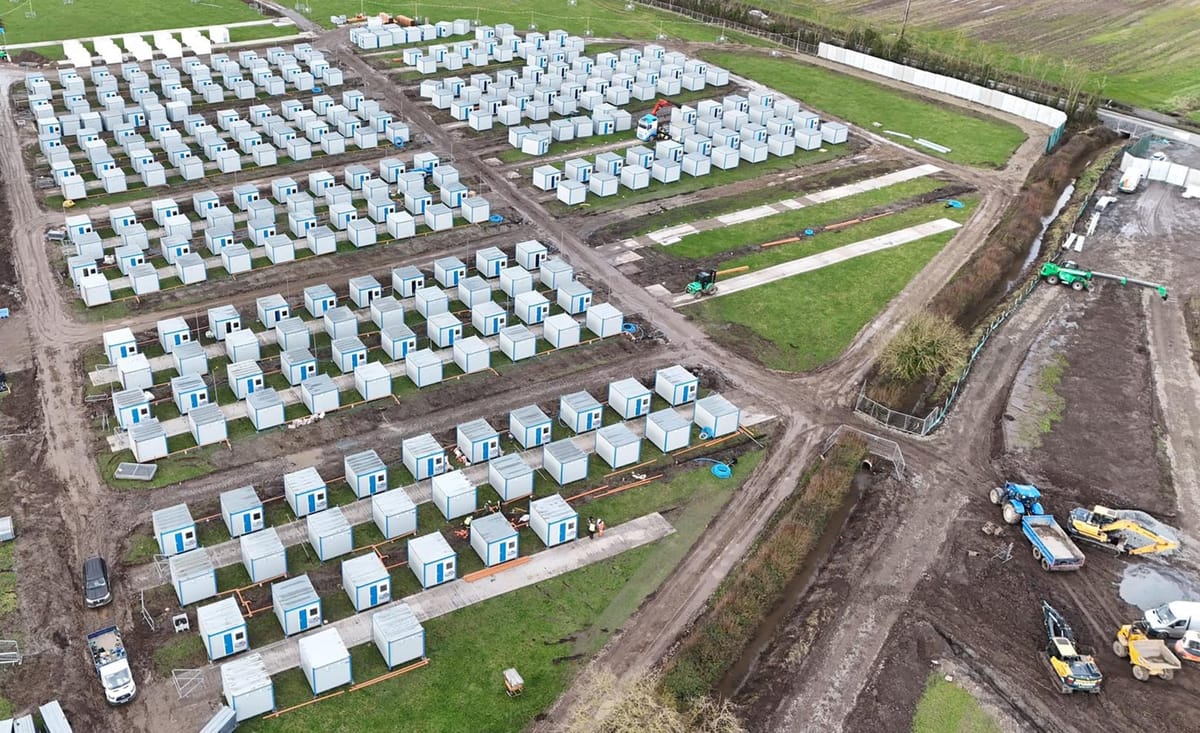
If we look at the Irish refugee system through a systemic, materialist lens, it becomes easier to see how it fits into a wider global machine of extraction and division that connects the Irish ruling elite to the Epstein class in several ways. Through this lens, we can start to reinterpret the seeming irrationality of this system as one that is working exactly as designed. The ugly genius of the present order is that refugees are first produced by elite‑driven war, debt, dispossession and imperial disorder; then warehoused in privatised accommodation; and finally used as scapegoats to divert public anger towards those most impacted by the system instead of those running it. What looks like chaos is in fact a fairly efficient division of labour: some make the crises and monetise the fallout, and the rest subsidise it, forced into competition for artificially scarce resources, and are then told to blame the people at the bottom of the heap, by the ones at the top of it. The final piece of that division of labour is political: keep those at the bottom blaming one another, instead of recognising their shared interest in confronting those at the top.
In our three-part Clear Lens series on “the Epstein class”, also known as the billionaire class, this logic is unpacked in detail, including its Irish links. The Epstein class are not (only) a handful of rich cartoon villains. They are a clandestine layer of the global ruling elite whose power emerges from the overlap between organised crime, intelligence agencies, trafficking, philanthropy, blackmail, offshore finance and “respectable” politics. Oxfam’s own figures underline what this “Epstein class” really is: in 2025 alone, billionaires added $2.5 trillion to their fortunes, roughly equal to the total wealth of the bottom half of humanity, and the 12 richest individuals on Earth now own more than the poorest 4 billion people combined.
According to the same report, billionaires are around 4,000 times more likely than an ordinary person to hold political office, while a handful of magnates own more than half of the world’s major media companies and virtually all of the top social media and AI platforms. This is not a free market; it is a dictatorship of a tiny, transnational class of parasites, enforced by information control, lawfare and state violence. Crime and formal authority do not sit in separate worlds. They are deeply interconnected and mesh and reinforce each other in ways that speed up extraction, maintain class unity at the top, divide the global majority, manufacture crises, profit from them and block any project of sovereign development or social unity that might interrupt the flow of public wealth into private fortunes. Epstein, an advisor to the global elite, taught people in his orbit how to operate inside “the real system”, the one where the biggest money is made, in trafficking, blackmail and market‑rigging rather than in the official economy, within which, the world’s “goyim” are left to fight it out over an ever-scarcer pool of resources.
Ireland’s refugee accommodation regime lets us see a local expression of this global system more clearly: crisis first, profit second, division third. One of the clearest Irish examples of that longer history runs back to former Taoiseach Charles Haughey, the dominant political figure of the 1980s who later became the symbol of a corrupt ‘Celtic Tiger’ elite. The Moriarty Tribunal, Ireland’s main judicial inquiry into political corruption, found that Haughey received a £50,000 payment from Saudi businessman Mahmoud Fustok in 1985, who was, according to The Irish Times, the brother-in-law of Saudi Crown Prince, and later King, Abdullah. Haughey claimed that this was payment for a racehorse, however, the Tribunal found that it was a corrupt payment linked to his support for passport applications by Fustok’s relatives and associates. In a separate but related scandal, the state granted Irish citizenship to eleven people linked to Saudi banker Khalid bin Mahfouz, brother-in-law and alleged financier of Osama Bin Laden and Al Qaeda, under what officials described as an “irregular and unusual” passports‑for‑investment process in return for a promised £20 million investment. Irish political corruption around passports and Saudi money was already plugged into the same offshore, intelligence‑adjacent banking circuits that would later surface in the Epstein files.
Khalid bin Mahfouz was not just any rich Saudi investor. He was chair of Saudi Arabia’s National Commercial Bank and owned roughly twenty per cent of the Bank of Credit and Commerce International, or BCCI, where he served as a non‑executive director. United States Senate investigators later described BCCI as a global machine for fraud, bribery, money‑laundering, covert intelligence work and arms trafficking, and its critics summed it up as “the Bank of Crooks and Criminals International”. Mahfouz himself paid a $225 million settlement to New York authorities over BCCI corruption, money laundering, bribery, support of terrorism, arms trafficking, and many other crimes. He acquired Irish citizenship in 1990 through the same inward‑investment regime that produced the passports‑for‑cash scandals. He also used complex banking and charitable vehicles that United States and European investigators linked to the financing of mujahideen forces and, al‑Qaeda. When the Irish state granted passports to people in Mahfouz’s orbit, it was not dealing with a neutral “job‑creating investor”, it was opening the door to a central figure in the BCCI and state-sponsored terror universe and the murky overlap of Saudi royal finance, offshore banking, Cold War jihad and terror scandals, including 9/11. Seen from that angle, the Haughey and Mahfouz passport episode looks less like a quaint piece of innocent Irish graft and more like a local interface with the same transnational underworld that would later appear around Epstein and today’s refugee‑accommodation profiteers.
The rot ran deeper than a few “brown envelopes”. The Moriarty tribunal exposed how Haughey’s inner circle built a private offshore pipeline for the Irish elite. Des Traynor, Haughey’s accountant and banker, ran an unlicensed mini‑bank out of Guinness & Mahon, channelling millions from wealthy clients into secret Ansbacher (Cayman) accounts to dodge tax and scrutiny. Haughey’s own lifestyle was part‑funded through this Cayman conduit. The man fronting the state was, behind the scenes, treating that state as something to loot and escape. The political class around him was not separate from this. Michael Lowry, hauled before Moriarty over corrupt payments in the 1990s, is now, shockingly, back in the Irish government as an “independent” TD and a reliable government prop, one of “Lowry’s lackeys” keeping the deeply unpopular ruling coalition in office as they preside over record evictions and record refugee warehousing amidst record wealth hoarding by Ireland’s elites, a class whose 11 Irish billionaires are now collectively richer than 85% of adults in the state. Billionaire Dermot Desmond also appears in those files, admitting to giving Haughey £125,000 in the 1990s to ease his cash crisis, the kind of discreet lifeline that, in the same era, allowed an over‑extended Donald Trump to be kept afloat by Rothschild bankers instead of going under, and today Desmond himself sits on that same billionaire rung, with an estimated personal fortune of over €2 billion.
If Haughey was the archetype of the brazen chancer, Bertie Ahern was the smiling manager of the same machine. The Moriarty process revealed that, as Fianna Fáil general secretary in the 1980s, Ahern signed blank cheques which Haughey then used to steal public money, a fact Ahern later admitted and said he “regretted” when confronted. Haughey was doing this while owning a private island and living a lifestyle funded by Ansbacher cash and billionaire bailouts. When people began to question the boom that this culture produced, Ahern’s instinct was not to reflect but to sneer. In July 2007, addressing trade unionists in Bundoran at the peak of the Celtic Tiger, he infamously asked how those who “sit on the sidelines, cribbing and moaning” about the economy did not “commit suicide”, remarks he was later forced to apologise for. Within a year the bubble his class had blown burst; between 2008 and 2012, during the recession and the austerity imposed by Brussels and administered by Fine Gael, Labour and Fianna Fáil, according to Tim Pat Coogan, more Irish people took their own lives in those six grim years of Troika‑dictated cuts than died in three decades of conflict in the North, a quieter class war, fought with budgets instead of bullets.
Now, right on script in 2026, the same Bertie Ahern re‑emerges to mutter darkly about “the Africans” and to reassure a racist voter that he has “no issue” with Ukrainians but thinks there are “too many” people coming from Africa and worries about Muslim children growing up here. Having helped build an economy that drove tens of thousands to emigration, indebtedness and despair, he seeks to scapegoat African and Muslim migrants for the social wreckage caused by his own class, diverting anger away from the chequebook‑signers and bond‑holders and towards the people at the very bottom of the hierarchy.
The chequebook‑signers in question are not an abstraction. Ahern’s entire career has been welded to the project that enriched men like Desmond: he signed the blank cheques that kept Haughey’s plunder rolling, and he championed the same FDI‑and‑IFSC model that turned Desmond and his peers into billionaires while loading the crash and the bailout onto everyone else. Desmond himself is a useful emblem of what Ireland has become today. A Macroom‑born billionaire, described by Epstein as the “shrewdest of Irish‑English investors” and part‑owner of a private island marketed as a place “where billionaires escape millionaires”, he was also one of the key promoters of Dublin’s IFSC, the project that hard‑wired tax avoidance and light‑touch regulation into the heart of the Irish state. The IFSC made Ireland a convenient bolt‑hole for global capital: a place to book profits, park assets and run schemes at arm’s length from the societies they extract from. Guinness & Mahon itself sat in an older web of power. The Guinness family, whose bank provided the platform for Ansbacher, are intermarried with both the Rothschilds and the Goldsmiths, two of Europe’s longest‑standing banking and bullion dynasties, named by Whitney Webb as two of the puppet‑masters of the Epstein network.
The IFSC and the whole FDI‑led “development” strategy did exactly what they were designed to do: they turned Ireland into a microcosm of the wider imperial system which prioritises Wall Street over Main Street. Today, homeowners in the state own 97% of all wealth, while renters, roughly 30% of the population and rising, hold just 3%. Nearly 17,000 people, including over 5,300 children, are officially homeless, in a country that is, on paper, one of the richest societies in human history. Those riches are not circulating through the lives of workers, tenants or small farmers, nor repairing the ecological damage done; they are hoarded by a tiny parasite class whose entire existence depends on treating the rest of society – and the land itself – as a host to be drained. This is what the Desmond‑Haughey‑Lowry order delivered: a landlord‑billionaire caste presiding over a landscape of permanent crisis – soaring rents, collapsing public healthcare, overcrowded classrooms, food insecurity, homelessness and deepening inequality, with refugees and migrants slotted in as a cheap, warehoused labour and scapegoat class within that landscape, while the people who produce the wealth are told there is “no alternative.
Put Haughey’s passports, Mahfouz’s BCCI empire, Traynor’s Ansbacher network, Lowry’s survival, Desmond’s IFSC and the Guinness-Rothschild-Goldsmith connection together and one thing is clear: long before Epstein became a household name, Ireland’s ruling layer was busy turning the country into a service station for his class. Whitney Webb’s research shows that the BCCI world overlapped with the same Gulf financial, intelligence‑linked and offshore networks that later nurtured Jeffrey Epstein’s rise, including Saudi money, shadow banking, arms deals and state‑protected organised crime. In both cases, respectable banks, development rhetoric and Western security interests sit on top of a black economy of trafficking, blackmail and covert operations. In the Clear Lens Epstein series we push this further and highlight that this class does not fear collapse, it arbitrages it. In one of the emails they examine, Epstein tells Peter Thiel that “finding things on their way to collapse was much easier than finding the next bargain”.
Disaster capitalism, in Naomi Klein’s sense, is not a glitch in the system for these actors, it is the system’s preferred way of working. War, sanctions and engineered financial shocks create refugees; those refugees then become both a revenue stream in warehousing regimes such as Ireland’s International Protection Accommodation Service (IPAS) and a pretext for far-right mobilisation that keeps the real architects out of view, with the far right acting as a bulwark against any attempt to unite and direct anger upwards towards the people and institutions driving the crises. At the same time, Islamophobia is relentlessly pumped out to make Muslim peoples on the frontlines of the anti‑imperialist struggle, in Palestine, Lebanon, Iran and beyond, look like a civilisational enemy of the modern day crusaders, rather than comrades in a shared fight against this predator class, while accusations of antisemitism are systematically weaponised to smear solidarity with Palestine and shut down criticism of Zionism, turning a clear anti‑imperialist confrontation into a tribal religious war, so that people choose sides on the basis of fear and identity instead of their real material interests – strangling any politics that might unite them against the people profiting from the crisis. Nowhere is this more obvious than the rise of “Tommy Robinson” (real name Yaxley‑Lennon) in Britain, the far‑right, anti‑Muslim agitator and key street‑level asset in the British “false-revolution” from above, financed by moneyed interests and pro‑Israel networks, reflecting Parenti’s description of fascism in “cultivating the appearance of popular politics and a revolutionary aura without offering a genuine revolutionary class content”. The Epstein files show Jeffrey Epstein and Steve Bannon trading messages about Robinson, with Bannon calling him the “backbone of England” and Epstein cheering his release from prison as they discuss building a far‑right “supergroup” ahead of the 2019 European elections.
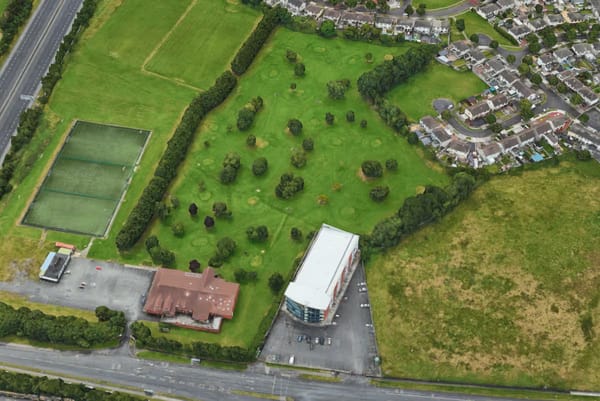
In Ireland, the interesting part is where some of that Haughey‑era Saudi money went. The only clearly traceable destination was Noel C. Duggan of Millstreet Equestrian Services, now one of the biggest direct provision centre owners in the country. Duggan was already a significant figure. As owner of the Green Glens Arena in Millstreet, County Cork, a town of only about 1,500 people, he wrote to RTÉ on the night of Ireland’s 1992 win offering the venue free of charge and successfully lobbied to host the 1993 Eurovision Song Contest, making Millstreet the smallest host town in the competition’s history and prompting BBC journalist Nicholas Witchell to dismiss the arena as a “cowshed”. However, it wasn’t only ridicule this decision brought, but substantial financial support from local and national authorities. The town’s infrastructure, including the railway station, roads and utilities, was upgraded so that the event could function, all funded by the Irish taxpayer. In practice, public money improved and valorised private land that would later become a core asset in the asylum industry. As Irish economist Conor McCabe’s work on land speculation and political economy shows, this is not a strange one‑off. It is a familiar development tactic in Ireland. Zoning decisions, infrastructure upgrades and prestige projects are used together to inflate land and property values for well‑connected owners, allowing the costs to be socialised and the gains privatised.
Millstreet Equestrian Services Unlimited Company, owned by Thomas and Noel Duggan, has now amassed over €100 million in revenue from direct provision, money funnelled from Irish taxpayers through the Irish government to an entity operating as an unlimited company that had long kept its accounts out of public view and offshored to the Isle of Man. The same logic works in reverse in the asylum system. Instead of using public investment to upgrade land that insiders already own, the state tends to locate IPAS and direct provision centres in places already written off as expendable: lower‑income towns, peripheral estates, areas with weak political clout and easy to dismiss. The social costs of the system are concentrated in working class areas which are easier to dismiss, with Irish Minister for Justice Jim O’Callaghan even now admitting there was an “overconcentration” of IPAS centres in Dublin 1. State spending on IPAS accommodation has soared to over €1.2 billion as of 2025, almost double that of 2023, even as conditions remain degrading and applications reduced. The Comptroller and Auditor General has found that Ireland’s asylum accommodation system is riddled with basic governance failures, including missing contracts, absent proof of ownership, and widespread gaps in planning permission, fire certification and insurance for sampled properties. Despite this, providers operating buildings without planning approval or fire‑safety certification were able to secure and retain large state contracts. One company alone overcharged the State by about €7.4 million in VAT across multiple centres yet continued to hold IPAS contracts after repaying the money. Another operator, Igo Cafe Ltd, a small café business that pivoted into emergency asylum accommodation, saw its income soar to almost €30 million in the second half of 2024 and according to the Business Post, paid its two directors a combined €4.6 million in a single year. The Irish asylum regime functions as a conveyor belt: global crises in, public money out, private profit in the middle.
Migrants and refugees are not an afterthought in this system, but, like children, are one of the main victims and “inputs” in the Epstein-class business model. We trace how the Zionist axis’(UK/US/Israel) wars on ‘terror’, sanctions and covert operations since 2001 have violently created tens of millions of refugees and how that human displacement feeds a huge forced‑labour and trafficking industry, with annual profits estimated at $236 billion, nearly eight times the size of the global music industry and creates a permanent pool of desperate people who can be warehoused, policed, forced into competition with workers and renters in the global north, and them blamed for it. In the Irish case, that trajectory runs from the export of “banished babies” from church-run mother and baby homes, overseen by figures such as Archbishop John McQuaid, who maintained documented links with FBI director J. Edgar Hoover, to American families, often with military connections, through to today’s IPAS regime, where people fleeing those same wars are warehoused in for-profit centres run by political insiders. The underlying logic is unchanged. Human beings are treated as movable cargo, for adoption, accommodation contracts, scientific experimentation and more, and their suffering is repeatedly converted into an asset class.
The same pattern of elite interlock appears around another family making millions from direct provision in Ireland, the family of disgraced Epstein foot soldier, Morgan McSweeney. Members of the McSweeney family, namely Tim and Carmel McSweeney in Macroom, have become significant direct provision contractors, profiting from asylum accommodation in the same region as the Duggan family. Having only incorporated the business in early 2023, public records and political financial audits indicate their firm, Tógáil Veilbhit Glas Teoranta, has taken in roughly €7 million under emergency, non-tendered IPAS contracts over only two years of operation and according to Crime World, Tim McSweeney has transferred his shares to a firm registered in Cyprus. Morgan McSweeney, an Irish political strategist based in Britain, infamously served as Keir Starmer’s chief of staff and is widely described as a key architect of the current Labour Party’s rightward, pro‑Israel turn. He resigned in 2026 after taking “full responsibility” for advising the Prime Minister to appoint known Epstein collaborator Peter Mandelson as United Kingdom ambassador to the United States. That appointment collapsed when newly released United States Justice Department files revealed the depth of Mandelson’s relationship with Epstein, including communications that suggest Mandelson shared market‑sensitive government information with Epstein.
McSweeney has worked closely with Mandelson for decades. His Labour Together project, later fined by the Electoral Commission for failing to declare hundreds of thousands in donations, has been heavily backed by Trevor Chinn, a major donor to pro‑Israel causes and to Atlanticist Labour figures from the Blair era onwards. At the same time, Irish media have noted that McSweeney comes from a family steeped in Fine Gael, one of Ireland’s neoliberal governing parties, and that his cousin Clare Mungovan has worked as an adviser to successive Fine Gael Taoisigh, Leo Varadkar and Simon Harris. A single family with deep links to the Epstein network therefore simultaneously sat at the intersection of Labour’s leadership in London, Fine Gael leadership in Dublin and the Irish refugee‑accommodation industry. This became even clearer when the files revealed that Epstein and Ghislaine Maxwell were involved in seeding and curating online forums on platforms such as 4chan and Reddit that helped incubate the MAGA movement and a wider ecosystem of far‑right extremism. Those spaces were designed to redirect anger about austerity, war and collapsing services into rage at migrants, Muslims and so‑called “woke elites”, while leaving contractors, bankers and political fixers untouched. Figures like Tommy Robinson are not portrayed as lone demagogues. They are presented as branded faces for a communications machine whose real function is to turn the fallout of elite‑driven crises into a culture war against refugees.
This is where Steve Bannon enters the Irish story. Bannon has talked publicly about wanting to help build an “Irish MAGA” formation and to cultivate an “Irish Trump”. He sees in Ireland’s mix of economic precarity, housing crisis and visible refugee accommodation the raw material for a familiar project. For the Epstein class, this is ideal terrain. They create or deepen crises abroad, which generate refugees. They warehouse those refugees in for‑profit centres at home with pre-existing manufactured scarcity and competition for resources. Then they encourage an organised far right to present those same refugees as the cause of housing shortages, hospital queues and crime. Chaos and division are not unfortunate side‑effects, they are highly profitable. This is why the far right is such an effective tool for the people who profit from this system. The suits in cabinet and the men in racist t‑shirts play different roles, but they are pulled by the same ‘invisible hand’ and protect the same flows of money and power. It takes a world in which refugees are created by war and global dispossession, then warehoused in for‑profit centres, and it tells people that the problem is the refugees themselves, rather than the contractors, fixers, political patrons and transnational networks that have made the crisis profitable. That scapegoating is not a glitch. It is how a structurally abusive system protects itself. We are therefore dealing with a predator class that understands full well that a system on its way to collapse can be more lucrative than a system at equilibrium, as long as fear and resentment can be channelled downwards instead of upwards.
The choice in front of us is not between “Irish” and “migrant”, or between one religion and another. It is between a politics that kicks down and a politics that punches up. One path is the dead end we already know: people at the top stirring up fear about refugees, Muslims or “the Africans”, spreading Islamophobia and throwing around accusations of antisemitism so that people turn on each other instead of on the system that is bleeding them dry, whether it is wrapped in respectable centrism or far‑right shouting, it serves the same interests. The other path refuses scapegoating. It connects the evicted tenant with the person in an IPAS centre, the family in emergency accommodation with the nurse working on an overcrowded ward, and workers here with those resisting the same imperial order in Palestine, Lebanon or Iran. It points, calmly and clearly, at the real problem: a tiny class sitting on the land, the banks and the guns. In the years ahead, the only serious alternative to collapse and creeping authoritarianism is to build that second kind of politics from the ground up, in tenants’ groups, workplaces, anti‑war campaigns and migrant solidarity, anything that brings people who live by their work onto the same side and begins to dismantle the machinery of extraction instead of helping it to find a new scapegoat.