“I Escaped The Zelensky Regime”: Interview With A Dissident Ukrainian
Aontacht Media sat down with Alexander, a Ukrainian dissident and former Maidan supporter who escaped the war-torn country to avoid the fate of being kidnapped from the streets and sent to be slaughtered.
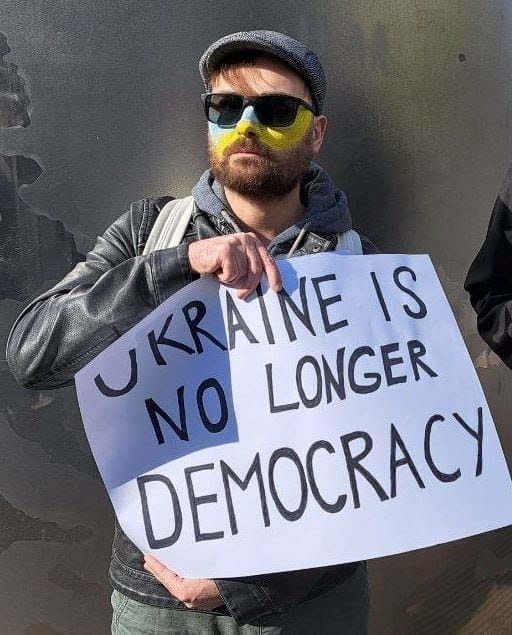
Aontacht Media sat down with Alexander, a Ukrainian dissident and former Maidan supporter who escaped the war-torn country to avoid the fate of being kidnapped from the streets and sent to be slaughtered. He had to bribe his way out. In this interview, he shares his views on Zelensky, forced conscription, Myrotvorets database of state traitors and the geopolitical situation in Ukraine. The interview was recorded the day after a significant anti-Azov and anti-conscription riot took place in a Kiev suburb.
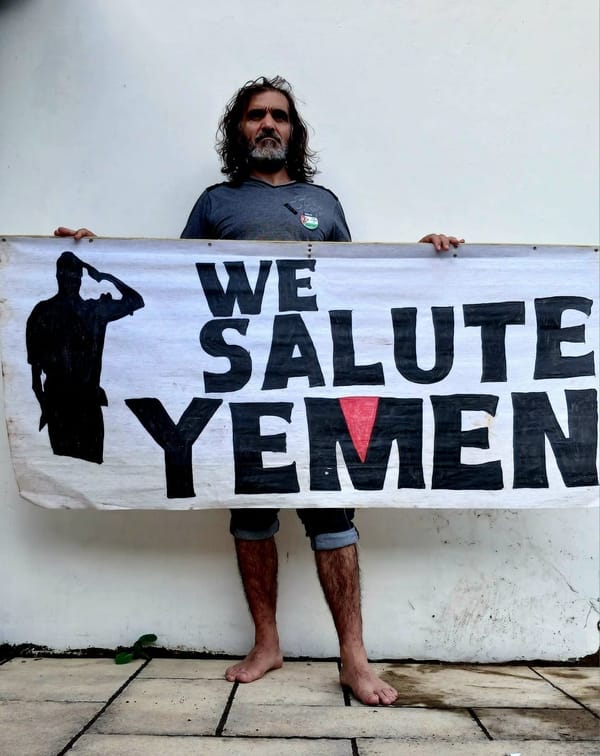
László: Hello everyone, we are here today with Alexander from Eastern Ukraine. We actually did a video with him a while ago on Aontacht Media where he was doing a protest against busification and against the Zelensky regime. Well, now he's sitting here with us and we hope to have a discussion with him about his views on Ukrainian politics and on the West's and Western media's attitude to Ukraine. So, Alexander, you said you're from Eastern Ukraine?
Alexander: I would say I am from Ukraine without dividing the country into parts. That's it. And yes, I am a Ukrainian, I am a citizen of Ukraine, and I identify myself as a Ukrainian, yeah. Unfortunately, our haters say when we make any protest, when we make any videos like this now, they say we are Russians, we work for Putin, we work for Kremlin. But no, we are protesting against Mr. Zelensky, who identifies himself as a president of Ukraine, because we love Ukraine and we don't want Ukraine to fail, to collapse. So we are real Ukrainians, but not those people who support Mr. Zelensky and his mafia.
L: Yeah, and one of the, I think, the hot topics that is being discussed currently, and the sort of flashpoint for a lot of the discussions around Russia's war on Ukraine, is of course the Ukrainian practice of busification. And we have seen just Ukrainian young men being grabbed off the street, forced into recruitment vehicles, And even the scenes coming out yesterday from Kiev where a sort of detention facility was uncovered by locals and people were being tortured inside. Can you explain what busification is and whether you have experienced this? And if you have, how have you escaped Ukraine and come here to Ireland?
A: The first thing you said is busification. That comes from the word bus. That means how they, like, conscript new soldiers, they say volunteers, to fight for Ukraine, as they believe, for Ukraine. But I actually believe they are fighting against Ukraine now, because the more Ukrainians you kill, the worse it will be for Ukraine. And the only thing that they do is just utilise people. So they claim— when I say they, I mean Mr. Zelensky, his mafia that is called the Ukrainian government for some reason, but actually they are mafia. So when a country is being attacked by another country, yes, it's okay to protect yourself, but it should be done correctly. The thing they do, they don't just conscript people into the army. It's really kidnapping. And a few days ago, I saw a video on social media when at night they dragged a naked man from his house. I don't know, maybe he was taking a shower, maybe he was sleeping or changing clothes. And so, at night, 10 armed people dragged and beat a naked man and pushed him into the bus.
So, this is what's called busification. So, dragging a person into the bus, beating, and moving to their office. I don't know what it's called. Mainly moving these people to the so-called basement. The basement means the underground floor of any building. It can be any room. Any torture room in so-called TRC, Territorial Recruitment Centre. So this is an organisation, state organisation, that should, according to the law, inform people about the war, about how they can serve in the Ukrainian army, and so on. So inform, invite, like persuade people to get patriotic and to see what they can do. So somebody might be a good driver for the army, somebody might be a good, I don't know, like technician. . So, and that's funny that officially they are called territory recruitment centres and centres of social support. So the Centre of Social Support really tortures people, illegally keeps people in those so-called basements. They beat people, sometimes they kill these people, and when relatives come to take body of their son, their brother, and see that the body is full of hematomas, it's injured, so what they say is he committed suicide.
L: What happened yesterday evening in Kiev, where hundreds protested a site where bussified people were held, and how come there was not anything about it in the mainstream Western media?
A: For some reason, nobody knows why, so they grab a man from the street or from his apartment, drag to the, basement and in a few days relatives realise that their son is dead because he for some reason decided to commit suicide. This is what's called bussification, and the thing you talked about, yes, this happened yesterday in the evening. Unfortunately, mainstream mass media here in the West, including Ireland, do not show anything. So what happened yesterday at night? I think at least 100 people, I hope more, started to take by storm some buildings in Kiev. I'm not sure what building it is. Because people, for some reason, I don't know who let them know, realised that in that building, in the basement, a few decades of Ukrainian men are kept against their will.
So maybe they are soldiers who tried to escape. Maybe they are those Ukrainian men who refused to sign the document that they are volunteers for the war. So people were kept in their basement. Some of them lose their consciousness, so they may be very— I'm sure a few people died. We will realise later. And so people revealed where that torture chamber is situated and tried to take it by storming it.
And also an ambulance came and doctors tried to come in to help those people. So what Ukrainian police did instead of protecting people— so we know what police should do for our taxes that we pay them, they should protect us— what police did, the police did not let people come in and break those prisoners free. So, what is it called? It's a so-called unofficial prison. So, can you imagine? Okay, you live in Europe, it's a prosperous, rich place. I think many viewers of this video live in Ireland. Can you just imagine, at least for a minute, that— In Ireland? Suddenly you know that somewhere in Dublin, let's say in Tallaght, anywhere, there is a house in which people are kept and tortured, and you call the police, and the police do not make those people free. They protect the people who make those tortures. Like, for you, when I tell this to people from Europe here, they cannot believe it.
L: But they call Ukraine ‘European’ and ‘democratic’ ?
A: Save you God from such democracy.
L: So maybe, you know, in 2022 there was some enthusiasm for the war, people volunteered, but as time went on, obviously Zelensky and the state ran into issues around recruitment. So they turn to forced conscription, and we know that they are conscripting, for instance, poor Hungarians and Roma people in certain territories. We know that they're conscripting young working-class men. We know that the border has actually been closed in Ukraine for the past 5 years to prevent people from leaving. My question is, is there a class aspect to this, and we know that people can escape by bribing officers. What does that say about the class dynamic here?
A: So according to this, there are 2 classes: men and women. Women are allowed to move absolutely free, out, in. So it's only about men. They call it gender equality. Okay, again, save your God from this gender equality again. And of course, it depends on your money because if you are a poor or rich woman, that doesn't matter. But if you are a poor man, you are dead.
L: So it's a dynamic between the rich and the poor?
A: Yes. So for example, fortunately, I was not the poorest, so I had this money to pay the bribe.
L: How much did you pay?
A: So maybe this sum of money is not very shocking for the Irish and for all Europeans, but for Ukraine, it's really huge money. It was, I think, about at least $5,000. And of course, I also spent some other expenses, so generally, it was up to $6,000. And like, let's assume an Irish person makes $3,000 a month, so for you, for you, it would be a 2-month salary. But let's say a Ukrainian teacher has about €300 a month, so it's like 20 months of— so impossible. And in some regions of Ukraine, you can buy a house for this money. So if it's poor people, a poor person, poor man from a small village, he has to sell a house to try to escape from Ukraine.
L: And so you would say that there is this sort of bribery scheme, right? How has this gone unnoticed or ignored by the officials? And I suppose, who is profiting from this?
A: The officials, you say it. Yeah. So definitely nothing in Ukraine works without giving a percent to the higher. So of course, those border guards who take bribes, they don't take these bribes only for themselves. They give this money, part of this money, to their bosses. Those bosses give this money, let's say, to the cabinet of ministers. Of course, I personally didn't see how they bring these bribes, but it's obvious because, first of all, we know how this all works in Ukraine. And all the time when police report that they, like, caught some people who were taking bribes, it's only because those people give little money to the police. So that's why they were caught.
L: So how did you escape? And I suppose, what would have happened to you if you hadn't paid those bribes? What happens to people who are trying to cross the border and escape Ukraine?
A: First of all, it depends on how you escape. So fortunately I had that money, so they very gently moved me out by car. But those people who do not have money, they try to cross the border on foot and they have to go over the mountains. Or they have to swim over the river. And maybe, of course, your mass media also didn't show this. As I said in the beginning, your mass media do not show the truth.
L: That's RTE, Irish Times, Irish Independent. They parrot the Zelensky propaganda line, the NATO-EU propaganda line of Ursula von der Leyen.
A: Yeah, so when I came to Europe, I was shocked because wherever I come, like to the health centre, to anywhere where there is a TV on the wall. I often saw Mr. Zelensky and everybody applauding, he is a new Churchill and so on. And really it was very painful because this is the person, I mean, Mr. Z, the person who tried to kill me, who is killing people. Of course, not personally with his hands, Yeah. But all his mafia, all his gang of thugs. Actually it's slavery of the 21st century. So we believe that slavery was abolished many centuries ago, but no, Mr. Zelensky brought slavery back to Ukraine. And you should know that on the European continent just 2,000 kilometres from this place, there is real, absolutely real slavery.
L: Yeah, what do you make of the FFG policy? Now our own government has adopted this European Union policy to turn back Ukrainian refugees if they don't have their military documents.
A: Like in the Russian Empire, in the United States of the 19th century, where people were enslaved. If a slave escapes, all: the police, the state brings the slave back to the owner. So this is absolutely the same now. So when some European politicians say that they want to bring Ukrainian men back to Ukraine, this means they support slavery. And they just bring the slaves who escaped to their owners. So modern Europe supports slavery
L: Surely there have been protests in Ukraine against this, anti-bussification protests perhaps. There is state repression, right? So people who are anti-war, like the case of Bogdan Syrotiuk and others, get put on a database of state traitors called the Myrotvorets.
A: Myrotvorets, I translate it as peacemaker. Myrotvorets in Ukrainian, so peacemaker. So it's a public database, so it's a website where they publish personal data of people who are against war, who are against slavery, who are for human rights. And for example, I'm also in that database. So I don't know how they did it. Well, let's say I really know. So, but after maybe the 2nd or the 3rd protest, the anti-war protest that I made in Dublin— so generally I made, I think, 11 or 12 protests in Dublin against the Ukrainian government and against the war. And yes, after a few protests, they noticed me. And they published my personal data like my old address, my phone numbers, my passport information, my email, my social media, and so on.
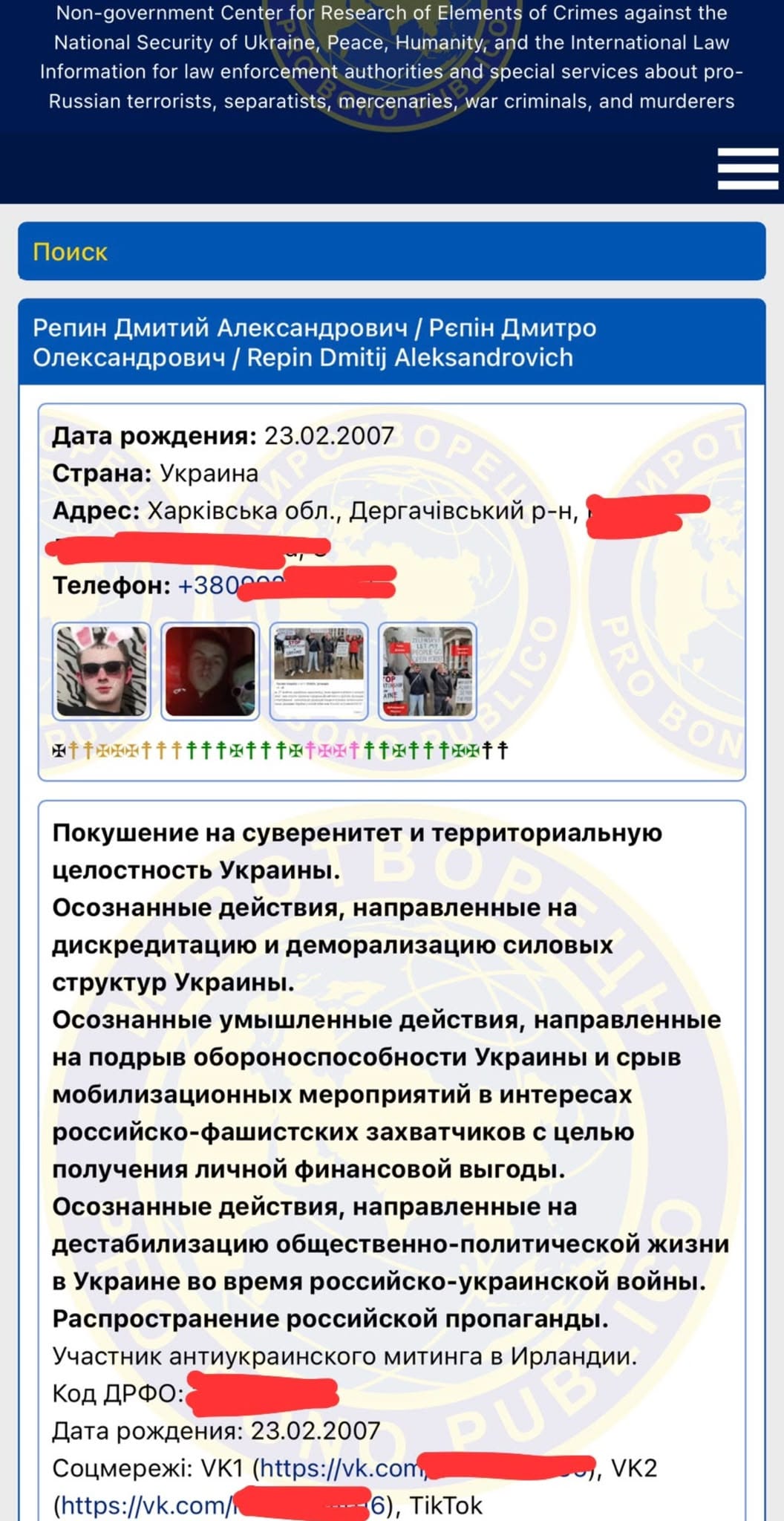
Passport details redacted in red. Translated text from Myrotvorets:
An attempted attack against the sovereignty and territorial integrity of Ukraine.
Deliberate actions aimed at discrediting and demoralizing Ukraine’s security and defense forces.
Intentional actions aimed at undermining Ukraine’s defense capabilities and disrupting mobilization efforts for the benefit of Russian-fascist invaders, with the goal of personal financial gain.
Deliberate actions aimed at destabilizing socio-political life in Ukraine during the Russo-Ukrainian War.
Dissemination of Russian propaganda.
Participant in an anti-Ukrainian rally in Ireland.
So I think that's illegal, absolutely, to publish your personal data. So actually, I am not afraid, just so I am not claiming, because what will happen if they know my personal data? So all the time when you apply documents to anywhere, you are asked to sign that agreement, like what it's called, protection of personal information, GDPR.
L: Do they work with the Ministry of Internal Affairs? I mean, how could they get all this passport information? It's supposedly an independent organisation, but we know that it's not independent.
A: Absolutely. So how can this organisation be called independent If they have access to information owned only by the government? Of course, of course they are not independent.
L: We heard a few reports that when people are actually crossing the Ukrainian border without paying the bribes, they can get killed, get shot by the border guards. Is this true?
A: We knew nothing about Tysa river before the war, but now this river is very famous because as it's a river that divides 2 countries, Ukraine and Hungary, people who escape to Europe to break free, they have to swim across that river. And for all these 5 years of the war, many dead men were found drowned in that river. And of course, we understood that it's not really so hard. The river is not very large. I think I would be able to swim it over.
So, of course, we suspected, actually we knew that those people drowned not because they were not able to swim, but a week ago the whole world was able to see the video filmed from the Hungarian— ah, no, sorry, it's not, it wasn't filmed from the Hungarian part. So that happened on the border with Ukraine and Moldova, but that doesn't matter. There is another river on the border I think Dnister, and maybe if Moldavians from their coast did not film that on their phones, we wouldn't know what really happened. So on that video I'll send you.
L: Yes, isn't it interesting that Hungary actually rejected the European Union directive to send back Ukrainian men, whereas Ireland, you know, Supposedly liberal democracy and supposedly a neutral country, right, in its foreign policy, when Fianna Fail and Fine Gael are working to get rid of our neutrality and they want us to join NATO, but for now supposedly neutral, and they welcomed the policy decision.
A: You’re making me laugh. First of all, thank you Hungary for supporting Ukrainian men. If one day something happens to the people of Hungary, believe me, we will help you. We will remember how much you helped us. And of course, thank you, Ireland, for giving us shelter. But if you start pushing our men back to Ukraine, you should know that you support slavery. Actually, I'm disappointed in Europe and the whole Western civilization. Because all these speeches about equality, progress, safety, human rights appear to be just cheap propaganda. So they talk about one thing, but really they do absolutely opposite things. And coming back to that video that I was describing, filmed from the Moldovan bank of Dniester River.So on that video, a Ukrainian man is trying to escape by swimming the river across, and 2 Ukrainian border guards on the boat chasing him, beating him with an oar, beating him with the engine of the boat, and trying to drown him. And citizens of Moldova were filming that and shouting at those border guards. They helped that man survive. But maybe if those border guards knew that nobody is filming them, they would drown, so kill that man, and we will have another report in the news that another poor Ukrainian man was not able to swim and drowned in the river on the border.
L: On a broader level, you know, What do you make of this idea of territorial integrity, which has been used by the European Union and NATO and Zelensky to argue for a maximalist solution to the war? Do you believe that an endless continuation of the war is worthwhile, or do you believe that there must be peace negotiations with Russia, as some Irish politicians like Clare Daly have called for?
A: First of all, territorial integrity of any country is important. Because if you break territorial integrity of one country, this will give the example that it's possible to do so, and the world will get into chaos. But the question is how you do that. Really, if United States of America, NATO, Europe, Great Britain, Canada, so-called the West, really wanted Ukraine to win, they would help Ukraine to win. They would give enough weapons, enough money, send their armies, and so on. But what they really do, they give Ukraine very little in order that Ukraine does not collapse generally, but also does not defeat Russia. So they keep this balance in order that the war goes on, because they all make profit from the war.
L: Is it the military-industrial complex? You would say?
A: Absolutely. This is not about people. This is not about ideals of territorial integrity, sovereignty of countries. No, this is about making money on the war. And this is the reason why your Irish, your European, American mass media do not show you videos how Ukrainian border guards are trying to kill Ukrainian men. So it's not Russian soldiers trying to kill a Ukrainian, and it's not Ukrainian border guards trying to kill a Russian soldier escaping. No, it's one Ukrainian killing another Ukrainian. People who serve the Zelensky regime trying to kill people who are trying to save their lives. And your mass media will never show the truth because they are all making profit from this war.
L: I wanted to pick up on something you said about Myrotvorets So it seems like it's a tool of political intimidation and prosecution. What I want to ask is, you know, how is it possible, first of all, that Ukrainian refugees who were living in Ireland, born in 2007, got onto this list, and it seems like this machinery, this apparatus of oppression extends— it's not just in Ukraine, but it extends worldwide. Wherever there are asylum seekers or Ukrainian diaspora living abroad, it seems that this repressive machinery is there. And it is backed by several European governments and the media.
A:
So yes, absolutely. So Ukraine is now part of this so-called Western world that is not liberal, not free anymore. And of course, they collaborate, they work together. And again, travelling back in history, like, let's say, to the Russian Empire, If, let's say, in the 19th century a slave escaped from a landlord, other landlords will do everything to bring that slave back. Because they know if their slave will escape the next day, that landlord will help to catch him and also bring back. This is happening with Ukraine and Ireland and other countries of the West. So Ukrainian slaves escaped, and now European countries are trying to bring those slaves back. So maybe, maybe, save your God from that, but maybe if war starts here in Ireland in some time and you Irish will try to escape, let's say to Ukraine, Ukraine also will bring you back.
So I'll tell the story to our viewers. So what happened, it was one of our many protests and so there were 2 boys, maybe 17 years old, like that. So they were just passing by, they stopped to ask what we were doing. We explained that we are protesting against war, against dictatorship in Ukraine, and they just asked to take a photo with us. So I don't even know their names. I don't have their contacts. So they took one photo with us and just left. And they de-anonymised them also and put them also to Myrotvorets, Peacemaker, and published their personal data. So even absolutely innocent people can be put on this list, as if they are committing a crime.
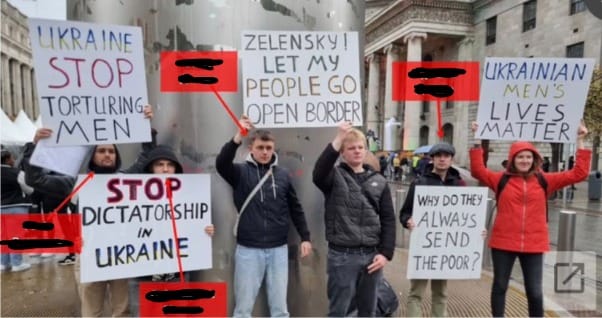
L: The Peacemaker Centre, which is Myrotvorets, actually asks law enforcement agencies to consider the data on that website as a true statement that citizens have committed deliberate acts against the national security of Ukraine, peace, human security, international law and order. This is a quote from the Myrotvorets website. Now, a lot of people, for instance, here in Ireland are on temporary status. We've already seen that Fianna Fail and Fine Gael are turning back people at the border. We also know that the Ukrainian embassy actually requested a list of those who are on temporary protection applications. So if people protest here and then are forced back to Ukraine, deported back to Ukraine, then surely that could be very damaging in terms of obviously being arrested, but also they could be forcibly conscripted or held in one of those torture centres that we I've heard about it.
A: That we started, yes, talking, discussing in the very beginning. So that's the answer. So the beginning of our interview is the answer to your question. So what can happen to me, to other people who protested against the dictatorship in Ukraine? I can be in that torture room and they will not let doctors to save my life when they beat me to death. So that's it. So if Ireland trusts in human rights and all these very good things, I think it's worth saving the people of Ukraine from Ukraine.
L: Yes, actually that was one of the titles of one of the articles on our website, and it was actually by Deaglan O'Mulrooney. who's a great writer, and it was titled, The People of Ukraine Are Fighting Back Against Zelensky. And we see that there is actually a sort of opposition to busification, opposition to Zelensky. What do you think are the— what do you think is happening right now in Ukraine? Are things shifting? Are people globally becoming more aware of the crimes of the Zelensky regime?
A: Everything is really shifting, shifting to the worse, and I cannot say what Ukrainian people are really aware about and what Ukrainian people think about all this because, of course, no sociological research is possible in a dictatorship. So go to Afghanistan, go to Northern Korea, and do true sociological research, like asking Afghanistan what they think about Islam— 100% support. Go to Northern Korea and ask what they think about closed borders, concentration camps, and Kim Jongun— 100% support. So, like, if you in Ukraine say something bad about Mr. Zelensky, so-called president, or members of his government, or Ukrainian nationalists, first of all, you are Putin's agent, you receive money from the Kremlin, from Russia, you are anti-Ukrainian, and they can come to you and you will just disappear.
L: I suppose that leads us to a more historical question of sorts. We know that in 2014, Ukraine was obviously a divided society, right, between people who wanted to push a pro-European line, and there was a lot of Western backing for that and against Yanukovych. And then of course on the other side there were also lots of people, right? What do you think? Do you think that Maidan made life better or improved democracy in Ukraine? And I suppose tied to that as well is maybe you could comment on this far-right and Nazi influence during Maidan, the Right Sector and the Azov Battalion, who are now actually integrated within the Ukrainian military And in fact have been spotted to be advertising here in Ireland to young Irish men. What are your thoughts on Maidan and what followed after?
A: Okay, so coming back to this situation in 2014, you said, yes? I think you mentioned this date because maybe our viewers do not know what was happening at that time, so I'll go back to tell the history. So really, you're right that most of Ukrainian history, so Ukrainian independence, 36 years of Ukrainian independence now, I think. And most of this time Ukraine was really politically divided into the eastern-southern region and central-western. And the eastern-southern region is mainly Russian-speaking and pro-Russian, and Ukrainians from that region didn't want to join Russia, but they wanted to integrate, like collaborate with Russia. But people from the centre and the west mainly speak Ukrainian, first of all, and they really trusted in all these European values, in all this equality, dignity, human rights, and so on. And that's interesting that personally, although I lived in the East, in the Russian-speaking part, I was all the time very much pro-European, pro-Western.
L: So your views changed?
A: Well, no, I really love Europe and West and freedom, but that Europe and that West and freedom do not exist anymore. I like that Europe that we lost. Like Europe of Isaac Newton, Europe of Charles Darwin, of science, of this beautiful cathedral . So everything good we know about Europe. That Europe is lost, and unfortunately, so we can— we will remember Europe only in photos, in historical books. That's it. And so let's come back to your question. And so, you know, maybe— no, you don't know because you definitely were not interested in the history of Ukraine. And so it was year 2010, I think, and at presidential elections there were 2 candidates: Yulia Tymoshenko, who was mainly pro-European, And Viktor Yanukovych, who was mainly pro-Russian, and Viktor Yanukovych won the elections. And Ukraine started slowly moving politically to the pro-Russian side. And so Ukrainian nationalists did not like that. And in the end of 2013, they started a big protest in the centre of Kiev, the capital of Ukraine. And in 2014, this really huge protest, so-called Maidan— Maidan means square in English. So why is it called square? Because people gathered on the central square of Kiev to protest, and so the revolution is called square, Maidan.
And so what happened? They— I don't know how they did it, but President Yanukovych escaped. To Russia. Maybe he understood that his life was in danger. I don't know. So I'm not a politician, I'm not a journalist, so I'm telling just what we saw. So President Yanukovych escaped, and so the Ukrainian parliament announced like a temporary president. I don't know what it's called. So when you lose a president, another person must take this position before the elections. And Russia disagreed with this situation because they admitted Viktor Yanukovych as a legal president, and they invaded Ukraine in 2014. This is the time when Ukraine lost Crimea and 2 regions, Donetsk and Lugansk. That's it. And so what happened then? Nationalist parties came to government. They formed a majority in the parliament, and from that time Ukraine really turned much more to Europe
L: Yes, and is it, you know, these reports of minority language rights being sort of— these laws around, laws have been passed around sort of banning minority languages or banning sort of the Russian language in education, in workplaces, and so on after Maidan?
A: Yeah, so the most strange thing for me now is that I supported Ukrainian language and wanted Ukraine to speak Ukrainian and so on, but I didn't want to be it so, so bad because now, for example, one famous politician in Ukraine a few days ago told that if a patient is talking Russian to a doctor, the doctor should not help that patient
So can you imagine this situation in Ireland? A patient is in danger, they are calling the ambulance, the ambulance comes, and the patient starts to talk English with the doctor. They say no, we will not save your life, you should talk only Irish. That's crazy. So that is not what I wanted when I was a nationalist.
L: Yeah, yeah. So it's very interesting. I mean, you know, suppose my last question to you from everything that we have discussed here is whether you feel represented in Ireland by the Ukrainian embassy or by any of these so-called NGOs, like official NGOs and what some authors in Aontacht called “Professional Ukrainians”. We do know from our research that many people who are actually running these NGOs and receiving FFG funding are actually Banderites, right sector far-right sympathisers themselves. You know, we went through their social media accounts and we have seen their involvement with the Azov Battalion or with the 3rd Assault Brigade and so on. So these people as well who are in these NGOs are already EU citizens. And it's very funny, isn't it, how they are the ones who advocate for conscription back home, living in Europe, while the Ukrainian working class is ignored and disregarded. So do you feel represented by either the Ukrainian government, the embassy, or all of these NGOs that are supposedly meant for you?
A: You're making me laugh again. There is really nothing to laugh at because we should cry, but this is my— my psyche protects from all these horrible things with laughing. I will answer your question by telling a short story. Like, you asked if a Ukrainian embassy represents me and other Ukrainians in Ireland. So the ambassador of Ukraine in Ireland, given an interview a few months ago, said that she would do everything to bring Ukrainian men back to the war. This is how the Ukrainian ambassador saves us. And for example, I'll tell you another story if you wish. One of my friends went to the Ukrainian embassy. So he lives in Ireland, he's a refugee like me, and he needed to get a new passport because his old passport expired. So he went to the Ukrainian embassy. He asked for the new passport and the ambassador said that the only document she can give him is a document to bring him back to Ukraine to fight in the war. Right. So what happened next? He tried many times to come back to the embassy to explain that he really needs a passport. They were rude, they refused. So finally he went to the embassy of Russia and quickly received Russian citizenship.
L: And it's very shocking, right, that passport renewal is actually prohibited in the Ukrainian embassy in Ireland without military documents. What do you have to say to that?
A: Well, yeah, really Ukrainian women can easily receive Ukrainian passports, Ukrainian men cannot. So, there is a way to do that. Because, uh, you can— so there is an organisation, I don't know, uh, how they work. It's legal, no problems, it's legal, but for money you can get a Ukrainian passport.
So they're just making money on this. So as a Ukrainian man, I cannot go to the Ukrainian embassy to get my passport because the only thing they can do for me is to bring me back to the war.
L: Zelensky, the state, civil service, Azov, they are getting rich on the backs of working-class young men dying on the battlefields or extracting money. Otherwise, you know, either you bribe or you go die, and it all makes money for the ruling class.
And when we point this out, oftentimes the fake left, the liberals and the mainstream media apparatus would call us pro-Kremlin or pro-Putin or Russian agents. What do you make of this?
A: So, uh, they, as they have no arguments, they have to do the only thing they can. If you say, please stop killing people, they say you are pro-Kremlin. So I answer, if, uh, to stop killing people is being pro-Kremlin, let me be better for the Kremlin.
L: I suppose I have just one, one last question for you after this fantastic podcast is, what is your message to the Ukrainian ambassador in Ireland?
A: You should be in prison.
L: Yes, Zelensky and all of the other members of the ruling class who are continuing this senseless war. Absolutely agreed, and thank you so much for coming on the Aontacht Media podcast. We appreciate your time.
A: First of all, thank you for your invitation. It's very important to deliver the truth. We are not a big mainstream mass media, but we do what we can. And so my last message to, to the men of Ireland: be careful, because it's not only a Ukrainian story. Unfortunately, one day the same can happen to you.
Aontacht Media invites other Ukrainians living in Ireland to participate in exposing the Zelensky regime and its repressive practices. We are interested in platforming neglected and stigmatised voices of TRC runaways, people who crossed the border on their own outside of checkpoints, army deserters, people listed on Myrotvorets and those who are wanted by the State in their Reserve+ app. We are also interested in highlighting the issue of consular services prohibition in Ukrainian embassies abroad, difficulties with obtaining basic documents and the concerns of Ukrainians about precarious status of temporary protection. Given security concerns we are ready to provide speakers anonymity. Translators for people with insufficient English skills will be provided if necessary.
contact@aontachtmedia.ie (Email)
+353 899 409 154 (WhatsApp)
redoctober1917.42 (Signal)