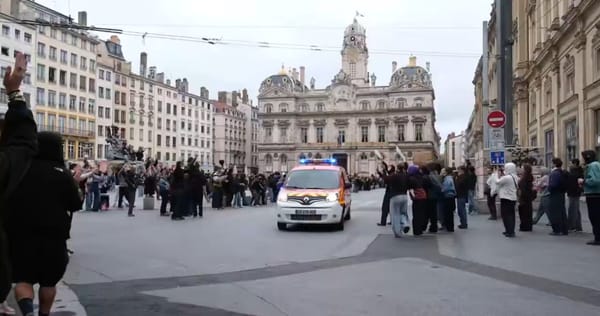
The Traumatic Aftershock of Communist Defeat in the 20th Century
The 1917 October Revolution promised a world based on self-management, and real democracy for the masses, a liberated humankind. However, a tragic series of disagreements, betrayals and lost possibilities have engendered collective trauma.
László Molnárfi
The history of Communism is the history of waiting. We wait for the working class. We watch the movement ebb, and flow. We catch those fleeting moments in which another world seems possible, only to lose it as soon as we believe to have grasped it, and we resign ourselves to wait once more. Will it, next time, be powerful enough to crush Capital once and for all? Throughout centuries Communists have dedicated their entire lives in hopes of the promised rupture, only to have been laid to rest without ever seeing it … but “even if revolutions fail, go badly, that still never stopped people or prevented people from becoming revolutionary” as eloquently put by Gilles Deleuze. And so, we wait.
Suddenly, it arrives. There is a ‘moment’ when the tension between what is and what could be reaches unbearable levels, reaching a sort of zenith, which demands that a decision be taken on the future path of the process according to György Lukács. This is Walter Benjamin’s Jetz-zeit: “a notion of time that is ripe with revolutionary possibility, time that has been detached from the continuum of history. It is time at a standstill, poised, filled with energy, and ready to take the ‘tiger's leap’ into the future”. The upsurge in activity, a sort of frenzy, releasing the tension, which is then followed by a devastating crash, as the capitalist system evens out towards homeostasis, should the revolutionary transition refuse to materialize. The protest wave eventually dies down, and the mass movement recedes, while Communists remain, trying to resurrect it. Well, eventually, even the Communists have to head home. Thermidor. Therein appears another history of Communism, of those driven to madness in pursuit of revolution, collapse, disintegration and despair, the morbid symptoms which follow each failed attempt at moving the dial. Can the clock be turned back? What if we had taken a different tactical and strategic approach? What could have been?
With each failure, the crisis of revolutionary socialism deepens, and there is an attempt to cling to what was witnessed; but those moments have long been swept away by the tides of history, albeit having left a lasting impression. What is trauma if not a threat which is recognized a moment too late, as per Cathy Caruth? It is precisely the fleeting nature of the moment which makes it so obsessive; and so dangerous. When the tide rises, and lifts all boats, it seems that the sailing is smooth, but then, a storm, and calamity out of nowhere; a master stroke to bring it all down. This deep trauma stretches across the history of the Communist movement, and has embedded itself into our organisations as neurosis, down to the mannerisms, postures and reflexes of militants. There is an auto-reflection of historical baggage in the inheritors of the Communist movement, expressing the circularity of the après-coup. The psyche finds its mirror in organisational tendencies. What we are discussing here is mental health on the Left, which is fundamentally a structural issue, arising from the triad of tension-release-homeostasis. There is no use in building the vanguard, and no use in not building the vanguard. Communists rarely take the world-historical stage. We are stuck in a marginal position unless history orders otherwise, and so, we rot away in our reading groups, in perpetual waiting for the working class to move. If World War 1 did not take place, the Bolsheviks would have been consigned to a footnote in the history books. We are, in essence, subjected to a will that is external to us, our ability to manoeuvre restricted by historical forces outside of our control, tied to it in bondage. History happens to us, rather than vice-versa. The militant minority of Communists are afflicted by events, over which we have merely limited, but not wholly insignificant power, once the vanguard has dialectically linked with the masses. Material conditions eventually assert themselves which are impossible to overcome by sheer force of will, and so far, in our most crucial moments, history has failed to turn.
The 1917 October Revolution promised a world based on self-management, and real democracy for the masses, a liberated humankind. However, a tragic series of disagreements, betrayals and lost possibilities have engendered collective trauma. Martov walks out of Congress; Kaplan shoots Lenin; Lenin puts down the Left-SR uprising; Lenin, Trotsky and Shliapnikov fight on the trade union question; the Bolsheviks slaughter the Kronstadt Sailors; Trotsky opposes Stalin, Stalin expels and murders Trotsky; Stalin executes Bukharin and so on and so forth, a series of schisms and splits which create an environment of paranoia, eventually leading to the decay of democracy, which was substituted for by back-room power struggles, culminating in the 1936-1938 purges. The backdrop of all of this, of course, is that on the international scene, the world revolution fails, notably, with the episode of the crushed 1918-1919 German Revolution, and on the domestic scene, the 1917-1921 Russian Civil War decimates the population and establishes a militaristic mindset in Bolshevik leaders. What was opened up in 1917, the outburst of social expression, was tragically foreclosed in a series of cascading failures, as (State) capitalism lived on.
Out of all of these incidents, the turning point, so to speak, is 1921, following the trade union debate which was the last instance of officially-permitted factional dissent, and where the fate of workers' democracy was ultimately decided. It is at this moment that there is a primordial traumatic departure from the revolutionary spirit of Communism, when it becomes clear that Lenin is no longer able to stem the rising tide of bureaucracy, and it is from this point onwards that the 1917 October Revolution rapidly disintegrates. Medvedev and Shliapnikov, the Workers' Opposition, Kollontai and the Letter of the Twenty Two, Myasnikov and the Workers' Group ... they saw the dangers, a moment too late perhaps, and as they were crushed, so were the hopes of workers' democracy in the Soviet Union. The Kronstadt massacre followed a few months later to finalize the end of the Revolution, so would the more anarchist-leaning of comrades believe, although it is not necessary to be on the left-deviation of socialist thought to understand the argument that historical experience may assert itself as a sediment on the contemporary movement.
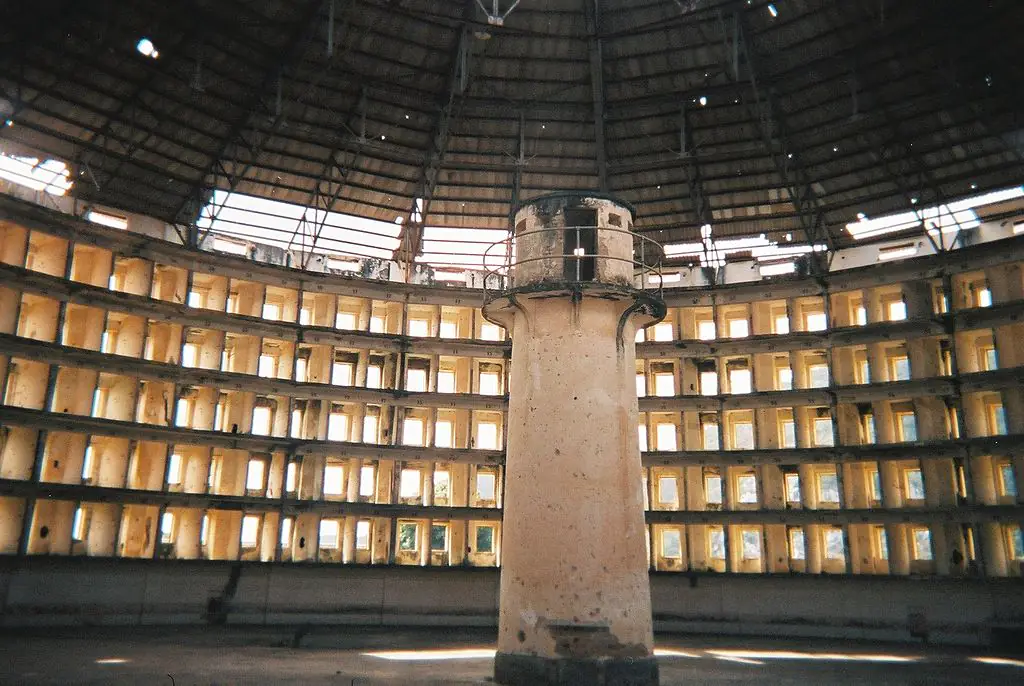
The political finds its mirror in the personal, and by 1925, 14.1% of Bolshevik Party member deaths are attributed to suicides, per Hannah Proctor’s research on the emotional impact of political defeat. The achievements of the Soviet Union were massive, no doubt, but they came with a heavy cost. It is to this day deeply embedded in the psyche of the Left to hunt for dissent in the ranks, as a form of intergenerational Freudian repetition compulsion, which lives on to this day, having been passed down from history. This meta-model of thought signifies an act of despotic overcoding of consciousness, seeking to halt differentiation, forming the core of the paranoiac machine, which will clamp down on dissenting voices wherever it may find it. Communist Parties around the world, notably, still have Constitutions of extreme rigidity and disavowal of alternative opinions, which is no accident. They re-live history, as a sort of delirium, enacting the Russian Civil War (1917-1921), as do many of its counterparts in other countries: “I am Trotsky, I am Lenin, I am Stalin … I am all the Bolsheviks that have ever lived … “. This is a neurosis: the state of siege. Against this backdrop, the disintegration of the Soviet Union and the Eastern Block in the 1990s does not help; it is yet another traumatic episode, a fracturing of the symbolic order, a loss of meaning, which is then recuperated by an infatuation with the past. It is at this point that the Communist movement disintegrates. The Palestinian struggle falls to the Oslo Trap in 1993, Sinn Féin abandons the revolutionary struggle by 1994, the South African anti-apartheid struggle, having come to power just a few years too late in a post-Soviet world, is now forced to accept neoliberal economics in 1996 and so on and so forth. Such trauma cuts right across the history of the Communist movement, and is perpetually present, being revived, in micro- and macro-political interactions, inescapably perverting the psyche. The Party becomes a psychic prison, as explored by Gareth Morgan’s metaphor in his study on organisations. This is also why we are in arrested development, seemingly ‘frozen’ in history, unwilling to re-integrate new insights from critical theory post-1920s. The abeyance structure of Communism is a traumatizing process - it is a stalled engine. Are we surprised then, by the words of Gilles Deleuze in his “Letter to Harsh Critic” from 1973, that there is an “innate spitefulness of people who come from the militant left. [...] They specialize in all forms of carefully calculated animosity, in greeting anybody, present or absent, friend or foe, and anything they say, with aggressiveness and put-downs. They don’t want to understand people, but check them over”?
This has consequences on the culture of the modern-day Left. A culture of suspicion allows people, who compete for influence in various organisations, to problematize normal behaviour and use it as political currency, in confluence with liberal identity politics. In turn, this creates a situation where comrades are anxious of hall-monitor type leftists, even if they themselves do not fall in the ranks of those who uphold the culture of suspicion willingly, and so, they uphold it unwillingly. The culture of suspicion is, at the same time, a culture of anxiety. Therefore, it is a crabs in a bucket situation, where the few are able to assert political power through interpersonal monitoring, an appeal to emotions, which has to be upheld by the many. Disagreements over political substance are transfigured into interpersonal disagreement by relying on this cultural rot, the dualism of the faithful and the traitors, a meta-model of thought handed down from history. So, purity culture is endemic on the Left, and this only serves to entrench the marginal, subcultural status of the Communist movement vis-à-vis the real movement of people engaged in class struggle.
If Marxist ideology is interpreted in a strict sense, then a kernel of dogmatism arises under the guise of dialectics. “One divides into two” for instance, the Maoist interpretation of dialectics, suggests that social reality inescapably contains a “proletarian” and a "bourgeois" line. This line of thinking was inherited from Stalinism. It was entrenched in the Soviet Union following debates in the 1920s, having defeated the dissenting philosophical tendencies which promulgated a more humanistic Marx, in tandem with the onset of the Thermidorian reaction within the State, which clamped down on opposition. In other words, there is a fixed truthhood and falsehood, which, in turn, provides the intellectual justification for the suppression of dissent, by an ever-narrowing logical sequence of “correct” decisions, and at the same time, an ever-narrowing seat of power, which eventually concentrates in the hands of a single person. In the 1960s, the Soviet apparatchiks brought this tendency to its natural conclusion, by branding dissenters as mentally ill - after all, they do not hold the sole rational line of the Party - and forcibly institutionalizing them in psych wards. Notably, it is the Trotskyist organisations in the 21st century that accentuate this tendency to its extreme, for the sole reason that they were the vanquished, hunted and killed, and this is thus deeply ingrained within their political culture, an all-encompassing paranoia which is now turned inside-out in their praxis. Dennis Tourish in his study of Trotskyist groupuscules remarks of their cult-like tendencies, from which ‘catastrophism’ stands out. This is the tendency to assert the perpetual crisis of capitalism, which is due to collapse at any moment, beset by contradictions too large to bear as a messianic force. Such is repeated across the decades (!) in the Party newspaper. This particular neurosis expresses nothing more than the desire for a renewed upsurge, to re-live, and in fact to hallucinate into existence October 1917, so much so that the Party will convince itself of perpetual crisis and demand ideological compliance from all its subjectified members. And from the fantasmatic structure therein, we can derive the rest of its behaviour: the useless selling of newspapers, flyering and protesting, cargo-cult busywork, arises from repetition compulsion. Should the Irish Left, which are run by various forms of Trotskyism, in its current state, produce a successful revolutionary movement, they will re-create this same despotic image of thought, and crush alternative forms of thinking, betraying the Revolution once again, and materialize a despotic State machinery hundred-fold worse than whatever oppressive apparatuses the liberal democrats can conjure up in defense of Capital. As such, we see a historical trauma, its psychological meta-model as an overriding dualism, its reflection in the development of Marxism, then its codification within contemporary socialist organisations, and its reproduction in organisational culture embedded in modern-day conditions as an uninterrupted logical sequence.
And so, 1917 October finds its mirror in ‘May 1968. When the Students for a Democratic Society (SDS) was on its last legs, the mass movement edging closer towards collapse, its 1969 Convention devolved into ideological infighting, a theatrical re-enactment of the Soviet Union, the warring factions being the Worker-Student Alliance Caucus (WSA) and the Revolutionary Youth Movement (RYM). Historical trauma re-surfaces in times of distress, and is repeated, as that is more familiar than facing failure. And what happened to the ‘May 68ers on a human level? The uprisings posed a grave threat to the ruling class, which they were not in a haste to forget. In order to contain the movement, an entire sociopolitical apparatus had to be erected.
The children of [France’s Revolution of] May 1968, you can run into them all over the place, even if they are not aware of who they are. Each country produces them in its own way. Their situation isn’t so great. These are not young executives. These are strangely indifferent, and for this very reason are in the right frame of mind. They have stopped being demanding and narcissistic, but they know perfectly well that nothing today corresponds to their subjectivity, to their potential of energy. They even know that all current reforms are rather directed against them. They are determined to mind their own business as much as they can. They hold it open, hang on to something possible.
- Gilles Deleuze and Félix Guattari, ‘May 68 Did Not Take Place
In a time of despair, induced by a downturn, the militants either gave up and went back to normal life, accepted the neoliberal world order (Daniel Cohn-Bendit and the Green Party in France) or turned to ultra-leftist violence, bombs, assassinations and small-scale direct action (the Weatherman Underground in the U.S, Rote Armee Fraktion in Germany, Years of Lead in Italy, etc.). The failure of a mass movement produces such morbid symptoms, at the core of which is a distrust of the people, and the belief in voluntaristic sheer force of will, which magically, is able to dislodge material conditions and in its place bring utopia. There is a profound nihilism underpinning it. This is exactly the same mechanism behind those perverted forms of socialist organizing which arose in Russia in the 1990s, the National-Bolsheviks, à la Sorelianism. There is a great human cost to being a Communist; one may pay with their sanity, victim to historical forces which are beyond individual control.
Do we not hear echoes of this today … ? After all, who can forget the ‘April-May 2024 upsurge in student organizing for Palestine propelled by October 7th 2023… ? And the student encampments … ? We watched it rise and fall. There is despair everywhere in Ireland. We are calling national student walkouts for divestment from Israel attended by 50 people. The same 100 activists are rotating around different protests. The attendance at marches for Palestine has dwindled from 80,000 at peak to 3,000-5,000. This is why the movement has descended into squabbling, petty infighting and bullying. No one knows what levers to pull to resurrect it. Everyone is disillusioned. We are running rudderless.
Bibliography
Buchanan, Ian. A Dictionary of Critical Theory. Oxford University Press, 2010.
Communist Party of Ireland. “Constitution.” Communist Party of Ireland, 13 Feb. 2021, communistparty.ie/en/policies-documents/constitution/.
Deleuze, Gilles. “Gilles Deleuze: The ABC Primer, Lecture Recording 2 - G to M, 4 February 1989 - Gilles Deleuze | the Deleuze Seminars.” Gilles Deleuze | the Deleuze Seminars, 10 Oct. 2024, deleuze.cla.purdue.edu/lecture/lecture-recording-2-g-m/.
Deleuze, Gilles , and Félix Guattari. Two Regimes of Madness : Texts and Interviews, 1975-1995. New York, Semiotext(E) ; Cambridge, Mass, 2007.
Deleuze, Gilles. Negotiations : 1972-1990. Translated by Martin Joughin, New York, Columbia University Press, 1997.
György, Lukács . A Defence of History and Class Consciousness. 2000.
Morgan, Gareth. Images of Organization. 1986. Thousand Oaks, Sage Publications, 2006, pp. 11–31.
Proctor, Hannah. Burnout. Verso Books, 9 Apr. 2024.
Tourish, Dennis . “Ideological Intransigence, Democratic Centralism and Cultism: A Case Study.” Whatnextjournal.org.uk, 1998, www.whatnextjournal.org.uk/Pages/Back/Wnext27/Cults.html. Accessed 27 Feb. 2026.