The Time Between Lightning and Thunder
The Fuel Protests have ended for the most part. There are very few strains of the movement that are still continuing at this stage, some in local areas where a dozen or two small farmers continue to organise in the countryside...
By Red-wing
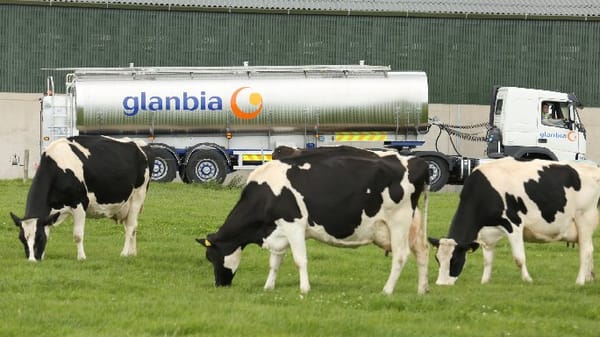
The Fuel Protests have ended for the most part. There are very few strains of the movement that are still continuing at this stage, some in local areas where a dozen or two small farmers continue to organise in the countryside with the fallback plan of slow marches through rural towns, and then there have been some calls to assemble at Leinster House in Dublin, which seem to be more hardcore right-wingers and conservatives still fanning that particular flame for their own gains. But none of this is descriptive of a meaningful movement. The "thunder" has been well and truly heard by everyone in the country.
At its height, these protests could have been described as the most important insurrectionary moment seen in Ireland since the foundation of the Free State. It was certainly the most important working-class offensive since the Water Charges and, even with that more reserved outlook, deserve to be analysed by Irish revolutionaries for a long time going forward in order to best prepare for the next time such an opportunity arises. Revolutionaries were not prepared to do anything this time, nobody on the left was, and that is very much an issue worth talking about.
In this text I plan to address the need to act quickly, thus the title of "The Time Between Lightning and Thunder", an analogy designed to describe how when such opportunities arise we must dive in head first or risk being too late to intervene at all, as is the case with this latest movement. The "lightning" is the movement commencing, and should be a signal for comrades to move quickly. We cannot know in advance how far away the "thunder" is, but by the time we hear it, it will be too late, the moment will be gone and we will have nothing left but regret and analysis to work off of. I would much rather be assisting in an ongoing movement right now instead of writing a text describing the importance of one, that's for sure.
While the Fuel Protests were still ongoing a text by Cillian O'Riain was published on Aontacht titled "Strike While the Iron is Hot". This gave a brief argument for students, republicans, workers and anti-imperialists to get involved as quickly as possible. By the time many of these groups sent out texts of solidarity towards the protests, we were already 3 or 4 days into the movement, and very few, even by that late stage, did anything material to help with them.
Texts describing how, in theory, a group, organisation or union is figuratively, abstractly standing in solidarity with a movement is next to useless unless members are explicitly given the mandates to join the protests. I read many such texts during those few, key days, none of which offered a place, a time or a method for members of any groups to intervene in the Fuel Protests.
Perhaps this was by design. After having seen Paul Murphy of PBP attempt outreach on O'Connell Street and being forced to retreat by a handful of far-right bigots perhaps groups were fearful of sending their members into the dark, potentially giving the far-right easy propaganda. Unknowing of what may happen, and wanting to avoid a potential scandal the rest of the left could use against them, words of limped solidarity were chosen over material action.
Such timidness and caution may have been considered a wise choice at the time, but I would be surprised if any group describing itself as revolutionary does not now regret not acting more decisively. I do not blame comrades for such outlooks, Ireland is not known for these types of spontaneous movements, we are still learning how to navigate such waters. They are, however, more prevalent in Europe and we would do well to not only study the Fuel Protests but also look abroad to similar instances of revolt, and here I would like to rely on my own experiences.
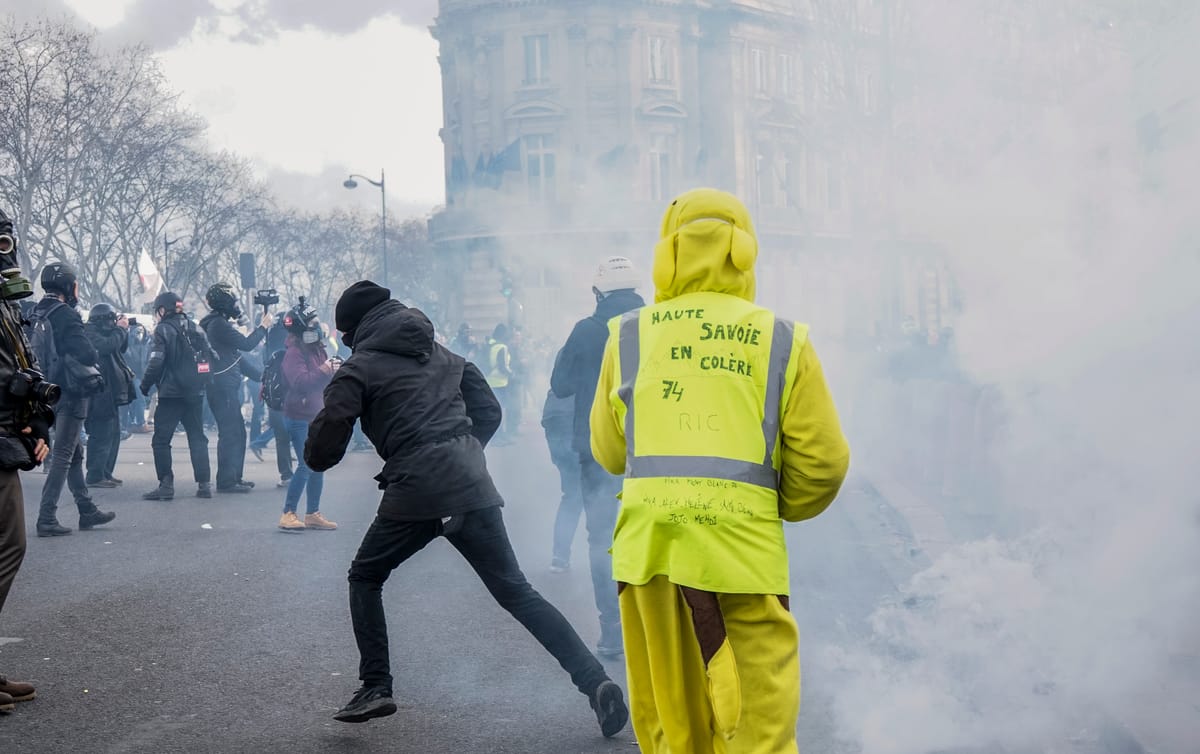
November 17, 2018, France. This was the beginning of the Yellow Vest movement in France, the closest a western nation has come to revolution in the decades preceding it, or the near-decade since. Months had been spent building up to this day online, months of opportunity for unions and revolutionary organizations to announce they would join the protests from the beginning, but on the day of November 17th 2018 any members of such organizations present with us on roundabouts were there as individuals or small affinity collectives with no mandates coming from large organizations with actual organizing or mobilisation power.
As someone who witnessed this movement first hand, I can tell you that myself and many other comrades were disappointed in the lack of a proactive approach that the left needed to take in order to seize the moment. However we went into the movement anyway, sometimes you must march with what you have, rather than wait for the cavalry, just in case it is enough.
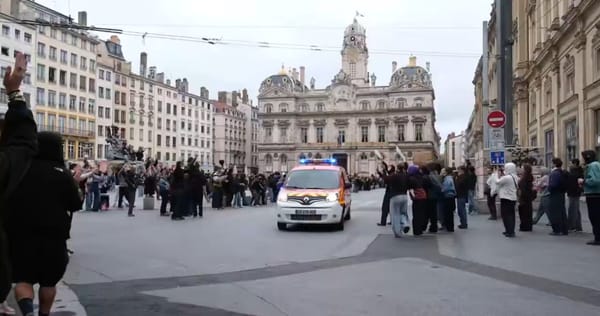
In the first few weeks of the Yellow Vests, as anyone who followed the events even online will know, there was a huge level of energy invested into trying to topple Macron and his new regime. For over one glorious month leading up to Christmas, revolution more than felt achievable, it was within sight. The gates of the Élysée Palace were broken through with diggers, and Macron was evacuated by helicopter. We felt at the time as though with enough of a push, we could truly go all the way to a more just society.
Speaking with people about this movement in Ireland as I have over the last number of years has shown me there is a level of misunderstanding with how the movement was from within. I am often asked "but were fascists and the far-right not also involved with it?" In a sense, yes. Elements of the far-right were present, especially in the beginning. But they were quickly pushed out by anti-fascist comrades in the streets.
One such instance I recall happened in Nantes. A group of us were hanging out in the middle of the afternoon after having been marching and battling cops all morning. A young man in bloc gear was beside my group, a friend and comrade of mine speaking to him about the actions of the morning. From my understanding, my comrade was listening intently to the guy's words, about why he was present. Eventually the lad felt comfortable enough with my friend to veer towards immigration as a root issue for him marching with us that day, as we were all white under our black snoods and hoods and his own group had gone to Paris that day.
My friend asked the man straight away "so, you're a faf"? Faf being the acronym for 'France aux français', used to describe militant ethno-nationalists, fascists and everything in between.
"Bah oui, pas vous ?" He replied.
We battered him like starving dogs on a lost chicken. Not only us, but the wider protest too. In fact it was an anti-fascist who picked him up, took his phone, papers (so we could identify him later) and chucked him up the road to the applause of the crowd, telling him ‘fafs’ would be treated the same anytime they showed up again in our blocs. They never did.
Nobody wants to march with Nazis, even the apolitical understand this. If you fall on them like a sack of bricks as soon as they try to embed themselves in such a movement, and you are organized enough with comrades to do so, you can very quickly get rid of any and all organised fascism within the movement.
We marched on Paris and every other major metropole in the country in a tsunami of yellow and black. We did not question who was beside us in the streets, only that we were all on the same side. If fascists were present, they kept themselves to themselves, knowing the blocs were filled with revolutionary anti-fascists. The far-right could not impose itself openly, and the general public backed us in cleaning shop when we needed to.
The only ones stopping us were the ones dismembering our comrades with grenades filled with TNT, taking their eyes with rubber bullets aimed illegally at our heads, attempting to break our resolve with baton and water cannon and ferocious state-sponsored violence.
This moment unfortunately did not last. By the end of the year, a deal was announced with an unofficial hierarchy who did not represent the movement. The SMIC (minimum wage) was to be raised by 100€ a month, along with some other minor trimmings to appease the energy of the movement.
This deal did not end the movement, which continued in many ways right up until Covid, but it did enough to blunt the sharp end of the spear aimed at Macron and the French State. Over 4000 cases of people, many of them union members, losing hands, feet and eyes were recorded during the Yellow Vest movement, which lasted from November 2018 to March 2020. The price, paid in comrades' body and blood in the hopes of reigniting the movement, should not be ignored.
As time went on, more and more unions and left-wing organizations joined the protests, brought more organizing apparatus and streamlined the way we organized, but it was too little too late. The yellow "thunder" had already been heard. The energy spent, the moment had come and gone to achieve anything meaningful.
Ask any comrade in France, from union organizer to member of an autonomous revolutionary collective what they learned from this movement and they will all tell you, the biggest regret is not having intervened and brought their organizing skills into the movement more quickly. They now know, in retrospect, that had the left involved itself from the beginning that the movement may well have achieved a much more meaningful, revolutionary, historic victory.
During the Irish Fuel Protests it is widely assumed that the Free State government was taking counsel from Brussels. I have no doubt in my mind that there would have been a clear and precise line given by the French : give them a deal as quickly as possible, before more organized forces can begin to intervene, or else you risk the perfect storm of fervent, revolutionary energy being harnessed and directed by people with the ambition to topple you.
Towards the end of the Fuel Protests we were seeing left-wing involvement begin to enter the fray, particularly in Dublin, as well as the movement beginning to spread across the border into the North. With all of this in mind, the government announced a deal, knowing that if they waited or dragged their feet much longer things would become much more serious.
The deal announced is not generous. It is designed to give many people an excuse to go home, to break the momentum and energy of the movement. Once such a deal is announced, no matter how good or bad it is, unless you already have in place an apparatus to relay why such a deal is not good enough, people will make decisions as individuals, thinking of their families and warm beds, rather than what could be achieved if we continue.
Revolutionary organizations should have been involved from the first moment in order to prevent such a breaking of ranks when, inevitably, the deal came. The lesson we must learn from this movement is the same that our comrades learned in France: if we are to achieve anything resembling progression towards a more just and equal society then we need to mix the opportunity of such spontaneous energy with political organizing only the left is capable of wielding.
We must learn to strike while our iron is hot.
We must learn to trap our lightning in bottles.
_________________
This first text was aimed at the question of why it is important to act swiftly as revolutionaries in such moments of potential history making. In the coming days I will continue with a second article describing my personal view on how we may look to intervene in such moments in the future. It is not enough to identify the failings, we must now begin the hard conversations around how we need, how we must prepare to counter them going forward.