The 2026 Tressell Festival: Is the Left At War With The Working Class?
A reflection on the 2026 Tressel Festival reveals that through its focus on social issues and its resiling away from its traditional economic raison d'etre, the Left is alienating the working class.
"We are on a mission to nothing on the combined Left if we continue to shout down genuine concerns that are raised by people who are in a desperate, obscene, disgusting battle for resources and access to services.... "
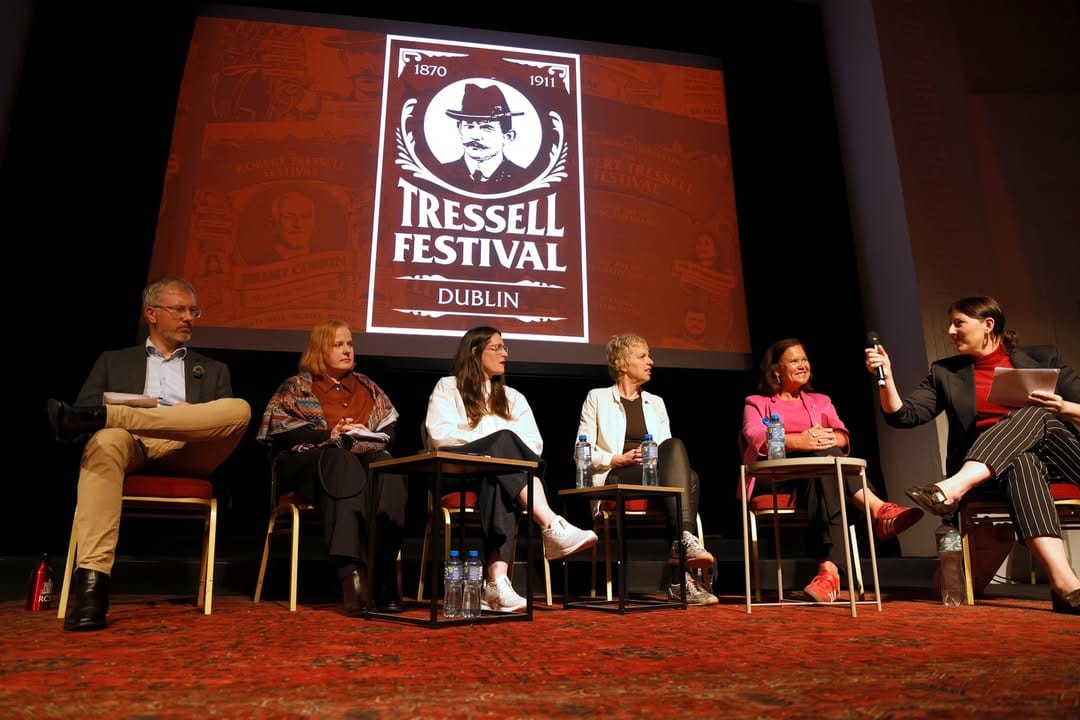
So asserted Sinn Féin leader, Mary Lou McDonald TD, in her contribution to a live panel debate on the future of the Irish Left and the potential for a common Left platform at the Tressell Festival, last Saturday the 6th of June.
The panel, chaired by Laura Pidcock former UK Labour MP, comprised leaders or representatives of all of the main Left opposition parties: Mary Lou McDonald TD (Sinn Féin), Roderic O'Gorman TD (Green Party), Ivana Bacik TD (Labour), Ruth Coppinger TD (Solidarity) and Sinéad Gibney TD on behalf of the Social Democrats.
It is significant that the only Party on the panel to invoke class in this way in respect of migration and the realities facing working class communities was Sinn Féin as per McDonald's contribution quoted above - a Party which, by its own admission, represents a Republican project rooted in the struggle for reunification and which I do not believe many on the Left consider to be Socialist.
While legitimately questioning Sinn Féin's left-wing credentials on the environment, taxation, abortion rights, gender and other matters, it is interesting that neither Labour, the Greens nor the Social Democrats referred to class in the same way in their contributions to the discussion, with some speakers appearing to suggest that merely acknowledging the tensions around migration currently blazing through working class communities would be akin to "cowtowing" to the far-right.
This reflects a very dangerous dilemma for the Left and by extension the labour movement in Ireland today: its resiling from the traditional economic raison d'être of our political cause, anchored in the material realities facing workers and their livelihoods, in favour of social issues and less relevant policy solutions. Combined with their endorsement of NGOs, charities and other outside bodies who exclusively focus on the latter, the Left and trade union movement are unwittingly alienating a huge swathe of the working population. No longer being viewed as the parties of choice for many workers, the centre-left in particular is ceding its traditional space, their voter base shifting away as working people look elsewhere for alternatives who offer more relevant solutions to their collective experience.
The trend is mirrored right across Europe whereby we see the far-right consume a great deal of the agenda previously espoused by centre-left parties. For example, the PiS in Poland argues for increasing benefits, lowering the pension age and for direct subsidies to certain classes of voters in rural areas. Similarly, the AFD in Germany and the Front Nationale in France have essentially adopted progressive left-wing economic policies, but coupled them with right-wing narratives. Alarmingly, this strategy of stealing the clothes of centre-left parties on issues of the economy has been fruitful for the Right in growing its support among working class constituencies, standing perceived by many as more effectively challenging establishment neoliberal political and economic orthodoxies than those on the Left.
There followed at Saturday’s Tressell Festival panel a lively and contentious discussion whereby chairperson Laura Pidcock put a salient question to all panelists: do you feel there is a growing disconnect between the working class and the Left in Ireland and, if so, how can this connection be strengthened or rebuilt?
The ensuing answers were symptomatic of the broader problem: Sinéad Gibney of the Social Democrats seemed to deflect, opening her contribution by remarking that Ireland has been slower than other European countries to see a "separation" emerge between the working class and the Left. Bizarrely, Roderic O'Gorman of the Greens focused on the Marriage Equality and Repeal referenda in response to this question, lauding both as ostensibly working class campaigns. By the time the conversation rambled on to Mary Lou and Ivana, it descended into a spat about property tax and which Party is the more working class in terms of its voter base. No speaker offered a clear-eyed concept of class politics. Any concept of the development of class organisation or how we can effectively engage in this terrain of struggle was distinctly absent. Such is the unchallenged dominance of corrosive Liberalism which pervades the Left today, emasculating our ability to posit a serious material economic diagnosis of the problems facing workers against the forces of private capital.
Another theme emerging very starkly here was the absolute focus on electoralism, with all speakers digressing to talk of growing the Left vote and building an electoral platform, rather than rebuilding the relationship with our class industrially or through any other activity beyond the electoral sphere. In particular, Gibney on behalf of the Social Democrats - who have recently ruled out supporting a formal left-wing alliance - remarked that she cannot see what benefits such a pact could yield beyond the Vote Left, Transfer Left campaign, which she believes has been effective in increasing vote share. This slavish loyalty to a "win-my-seat-at-all-costs" mentality and commitment to standing for nothing reflects an extremely narrow conception of democracy as being purely about elections. It is indicative of a fundamentally deferential approach to politics that now prevails across our movement, disempowering working people through limiting the parameters of their participation to electioneering.
That not one Party represented on the panel appears to centre the working class in their respective political projects is a searing indictment of any vestige of hope we have for building a successful common platform of the Left in Ireland.
Similarly on the migration question, a stifling groupthink pervades, whereby no Left party appears to offer any independent thought, solutions or leadership on this issue. By the same token, very few possess the requisite spine to challenge the chief factor driving the creation of refugees and the catastrophic destruction of their home countries: the machinations of EU and US imperialism. Instead, Parties of the Left are often happy to echo NATO on questions of foreign policy.
One thing is for certain - any attempt at a common Left platform in Ireland is doomed to failure unless it appreciates and deeply understands the material conditions endured by the working class. Such a platform must also position the involvement and active organisation of workers and the emancipation of our class at the heart of its project. It must distinguish itself from the neoliberal politics of Fine Gael and Fianna Fáil - including on the questions of migration and foreign policy.
As a starting point, we must respect that working people in Ireland have every entitlement to deeply resent an economic system which has abjectly failed them and to despise the political class which has held this system in place - all the while treating ordinary working people with contempt.
Initiatives such as the Tressell Festival are essential in my view to facilitate spaces wherein we may have these honest and necessary discussions about the defeat of the Left and how we can foster a new political culture, so that the drift to the far-right currently cascading across Europe is not emulated here. You can listen back to the full Tressell Festival Left debate here: