Seán Russell: Why I Believe He Should Be Uncritically Revered
For courage, constancy, personal sacrifice and an absolute refusal to make peace with foreign rule, Seán Russell deserves more than embarrassed or qualified commemoration.
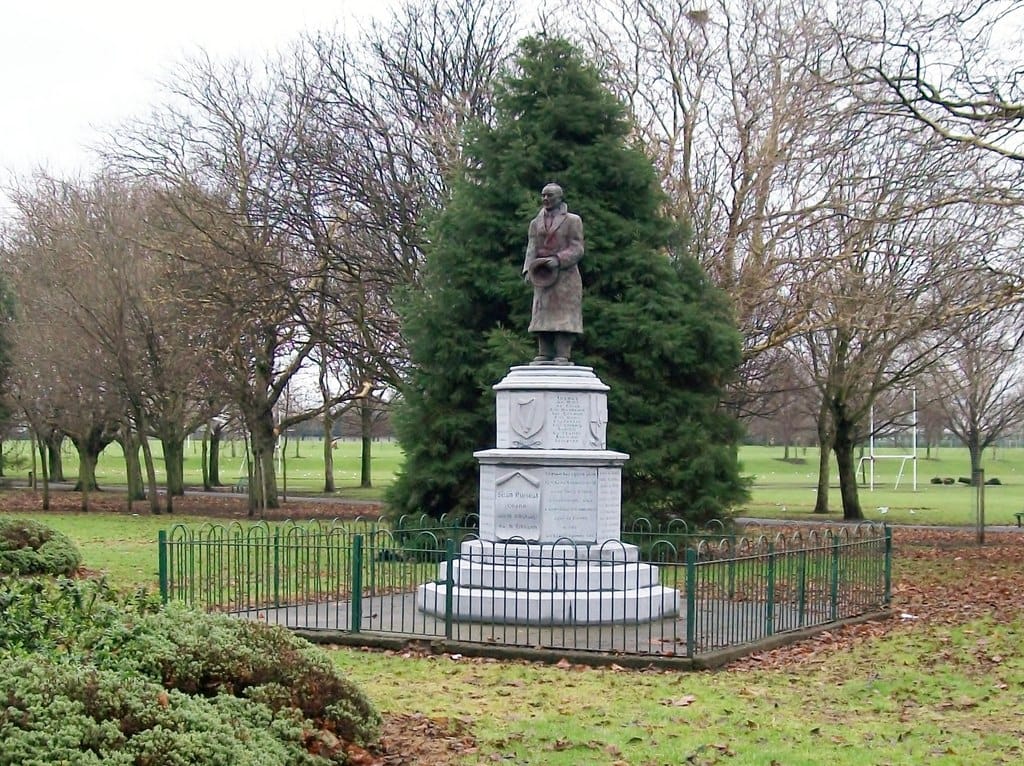
April Sheehan Corkery recently argued in Aontacht that Seán Russell should not be commemorated. I take precisely the opposite view. My title is deliberately maximalist, but it is not entirely tongue in cheek either. While there is room to criticise his military judgement, what I believe deserves uncritical reverence is the character beneath it: courage, constancy, sacrifice and an extraordinary refusal to reconcile himself to British rule in any part of Ireland.
The strongest criticism of Russell is straightforward. The S-Plan failed to achieve its immediate strategic objective. It did not force Britain to negotiate or materially advance the Republican struggle. Its gravest consequence came at Coventry in August 1939, when a bomb killed five civilians and injured 70 more. The campaign exceeded the organisation’s means and exposed the limits of determination without sufficient manpower, materiel or operational control.
But failed strategy is not failed character. Russell joined the Irish Volunteers in 1913, fought in the Easter Rising, served on IRA GHQ during the Tan War as Director of Munitions, rejected the Treaty and remained committed to physical-force Republicanism through imprisonment, defeat and organisational decline. In 1938, he helped secure the Second Dáil’s delegation of authority to the IRA Army Council. Germany was not the origin of Russell’s Republicanism. It was one late episode in a life already consumed by it.
Corkery’s central charge is more careful than the familiar accusation that Russell himself was a Nazi. She argues that this distinction is irrelevant: one need not be ideologically Nazi to be a Nazi collaborator. On the basic facts there is no reason to prevaricate. Russell sought German assistance, trained with the Abwehr, met Joachim von Ribbentrop and died aboard a German U-boat while attempting to return to Ireland.
The dispute is over what those facts mean.
If “collaborator” means simply that Russell knowingly cooperated with representatives of Germany at the time because their immediate interests coincided, there is little point disputing the word. But if “Nazi collaborator” means that Russell became a participant in, or subordinated the Irish struggle to, the political project of National Socialism, then no such case has been demonstrated. Cooperation is not subordination.
The S-Plan was devised by Seamus O’Donovan in 1938 at Russell’s request and began in January 1939. The Abwehr’s Oskar Pfaus met Russell and O’Donovan only after the campaign had opened. The S-Plan itself therefore cannot accurately be described as a German military-intelligence plan. Russell’s campaign against Britain was not created by Hitler’s war against Britain, it preceded it. His 1936 approach to the German ambassador in Washington nevertheless shows that he had already identified Germany as a potential source of assistance. That does not establish German ownership of his objective.
Russell had previously travelled to the Soviet Union seeking arms and cultivated Irish-American support for the same purpose. Seeking Soviet arms did not make Russell a communist any more than seeking German assistance made him a Nazi. His cultivation of Clan na Gael reflected the same constant purpose: he was an Irish Republican looking wherever he could for assistance against Britain.
There are obvious Irish Republican precedents. Wolfe Tone sought French assistance for a rebellion which ultimately failed; Roger Casement sought German assistance during the First World War for the 1916 Rising, which also ultimately failed. Revolutionary France, Imperial Germany and the Third Reich are obviously not interchangeable. What is clear is that generations of Irish patriots attempted to turn Britain’s international difficulties into Ireland’s opportunity.
This distinction is not unique to Irish Republicanism. Imperial Germany facilitated Lenin’s return to Russia in 1917 because Berlin expected revolution to weaken its wartime enemy. Lenin accepted because returning served the Bolshevik revolution. In 1939 the Soviet Union went considerably further, reaching an accommodation with Nazi Germany that enabled the partition of Poland. None of this made Lenin a German imperialist or Stalin a National Socialist. Political actors can cooperate where immediate interests coincide without their ultimate purposes becoming identical.
We also have unusually direct evidence of how Russell himself understood the relationship. British intelligence concluded after the war that he “plainly did not regard himself as a German agent”. Erwin Lahousen, the senior Abwehr officer who dealt with him and later testified at Nuremberg, recalled Russell declaring: “I am not a Nazi. I’m not even pro-German. I am an Irishman fighting for the independence of Ireland.” Russell added that he would accept German help if it advanced independence, but without political strings.
That position was likely naïve. It is probable that a victorious Nazi Germany would have pursued its own interests rather than respectfully confined itself to Russell’s conception of Irish sovereignty.
Russell’s narrowness was inseparable from what I admire most about him. He was no great political theorist. His objective was remarkably simple: Britain occupied part of Ireland; the Irish Republic remained the legitimate national authority; therefore the struggle against British occupation continued. Defeat, imprisonment, isolation and the possibility of an easier life never altered that conclusion.
We can therefore criticise Seán Russell the strategist. The S-Plan failed to achieve its immediate objective. Coventry was a tragedy. His confidence that German assistance could be accepted without political strings was likely misplaced. But none of this should make us admire his character less.
For courage, constancy, personal sacrifice and an absolute refusal to make peace with foreign rule, Seán Russell deserves more than embarrassed or qualified commemoration. Like Wolfe Tone, his military decisions can be criticised. The character that drove him, however, is something I believe every Irish person should uncritically revere.