Public Housing, Personal Misery: Ireland’s Mouldy State
Families continue to live with the daily reality of black mould creeping across walls, damp that never quite leaves the air, and the quiet exhaustion of trying to keep a home safe for children.
Introduction
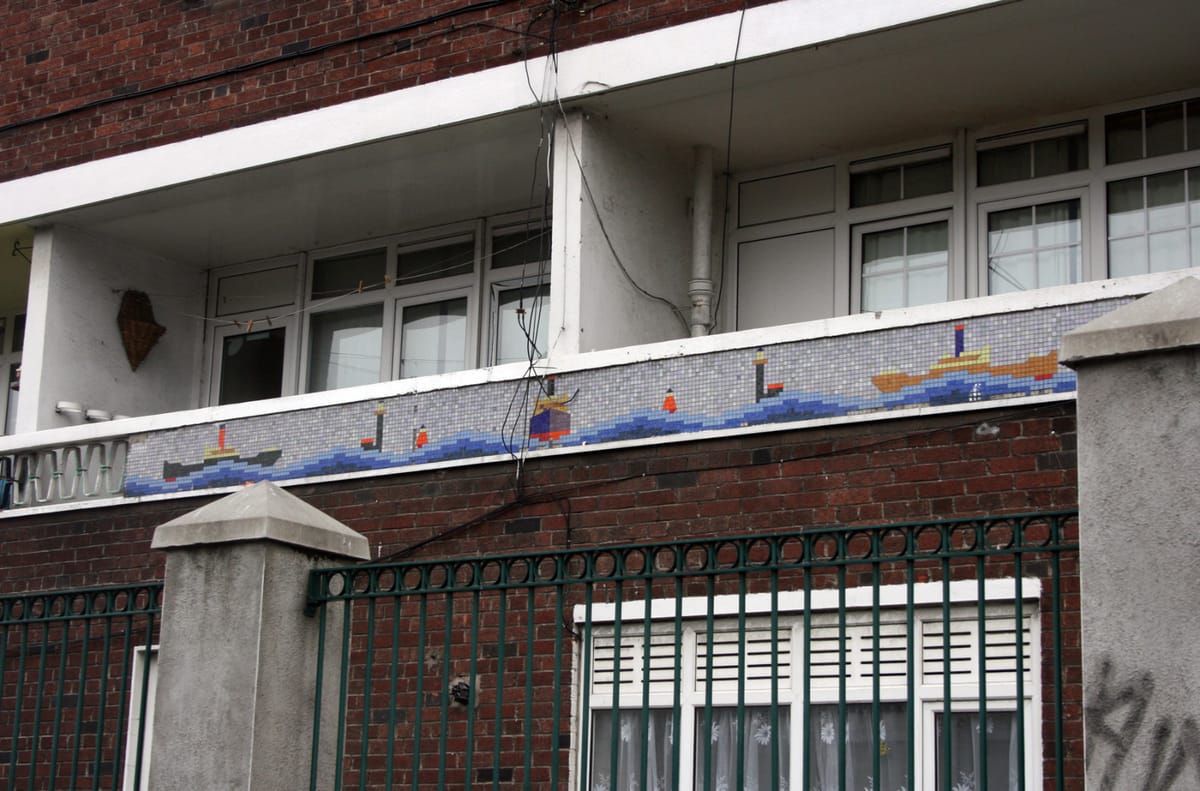
In the corners of our cities’ older flat complexes, local authority units and houses in the country towns, families continue to live with the daily reality of black mould creeping across walls, damp that never quite leaves the air, and the quiet exhaustion of trying to keep a home safe for children. One such woman shares a two-bedroom apartment in Dublin City with her husband and five of her six children. The flat measures just 43 square metres, well below the contemporary minimum for a two-bed home. Mould returns no matter how often she cleans it with bleach. Rats leave droppings near the shoes kept outside on the balcony. “We pay our rent. We keep our home best as we can. We are good tenants, but with the stress, we are just about holding it together,” she remarked.
Overview
These experiences are echoed across many local authority estates. A 2021 survey by the Robert Emmet Community Development Project found that 82 per cent of residents in Oliver Bond House reported problems with mould and damp, 73 per cent experienced draughts and heating issues, and more than a third dealt with rats or water ingress. A later study linked conditions in the same complex to higher rates of asthma: 18 per cent of residents had a diagnosis compared with 8 per cent in the wider locality. In Tyrone Place and other estates, tenants describe sleeping on sofas to avoid mouldy bedrooms, discarding clothes and belongings damaged beyond use, and the mental strain of living in spaces that feel unwell. Local authority tenants remain outside the protections of the Residential Tenancies Board (RTB). Their formal routes for redress are complaints to the landlord itself or, eventually, the Office of the Ombudsman.
Broader statistics underline the scale of the challenge. According to Eurostat data for 2023, 21.2 per cent of people in the state lived in a dwelling with a leaking roof, damp walls, floors or foundation, or rot in window frames or floor - significantly above the EU average of 15.6 per cent. For children under 18, the figure stood at 22.6 per cent. Dublin City Council manages more than 26,000 dwellings for around 68,000 households; roughly half of its stock was built between 1930 and 1977, and more than 80 per cent predates the 1992 building regulations. Across the state, local authorities owned approximately 158,772 social housing units at the end of 2025. While vacancy rates have improved, a comprehensive stock-condition survey programme remains incomplete, with only around 10.7 per cent of identified assets surveyed by mid-2026.
Nearly a decade ago, the European Committee of Social Rights examined conditions in local authority estates and found the state in violation of Article 16 of the European Social Charter. The Committee noted sewage invasions, contaminated water, persistent damp and mould, and the absence of a national timetable for refurbishment. It concluded that the State had failed to take sufficient and timely measures to ensure housing of an adequate standard for a not insignificant number of families. In successive evaluations, most recently in 2024, the Committee determined that the state had yet to achieve compliance and that advancements in regeneration of flat complexes had ceased.
Notable Cases and Key Examples
The courts have also addressed the question of fitness for human habitation in local authority dwellings. In Humphrey v Dublin City Council [2018] IEHC 193, the High Court held that a dwelling suffering from dampness and mould growth, caused by inadequate ventilation and poor insulation, wasn't fit for human habitation under the Housing Act 1966. Mr Justice Noonan observed: “to expect a young woman with two small children to reside in a dwelling which is subject to unacceptable levels of dampness and consequent mildew and mould growth is, in the early part of the 21st century, unacceptable.” The plaintiff was awarded €25,000 in damages. The judgment drew on the earlier Supreme Court decision in Siney v Corporation of Dublin [1980] I.R. 400, which recognised that damages may be recovered for physical inconvenience and discomfort arising from a breach of the implied covenant of fitness. More recently, in June 2026, the Circuit Civil Court awarded €12,500 to Danielle Hogg after finding that mould and damp in her Dublin City Council flat had aggravated her asthma.
Minimum standards for rented houses are set out in the Housing (Standards for Rented Houses) Regulations 2019. These cover structural condition, freedom from damp and heating, ventilation, sanitary facilities and more. Local authorities, as landlords of their own stock, carry the duty to meet those standards. However, the combination of an ageing housing stock and constrained maintenance budgets over many years has left a backlog that reactive repairs alone cannot clear. Preventative maintenance remains limited. When tenants report problems repeatedly and see only partial or delayed responses, the sense of unequal care is difficult to dismiss.
In Cork City, many tenants of the older “O’Byrne” flats - three-storey maisonette blocks built in the 1960s with an intended lifespan of around fifty years - continue to live with persistent damp, black mould, cold that is hard to heat, and rodent infestations. As per the renters' manual issued by Cork City Council, it’s the obligation of tenants to manage rodent infestations within their residences. However, residents reported that rodents were traversing the interconnected ceilings and walls, emerging from adjacent, unkempt, and debris-laden gardens. Inner-city complexes at Noonan’s Road, St Finbarr’s Road, Fort Street, Dean Street and several sites in Togher (Clashduv Road, Togher Road, Sycamore Place, Cherry Tree Road, Maple Place and others) have been the focus of repeated issues. A December 2025 survey by ‘The Echo’ of tenants in approximately 160 of these flats, with a 59 per cent response rate, found that 92 per cent of respondents described their homes as cold and damp with condensation problems, 85 per cent reported recurring black mould, 65 per cent cited persistent issues with rats or mice, and 72 per cent linked health problems to the conditions. Council figures covering the previous five years recorded nearly five thousand issues about damp and mould alone. While some blocks at Noonan’s Road have been emptied for demolition, tenants remaining in other complexes have spoken of rats in the walls and ceilings, mould that returns despite cleaning, and a sense of being left waiting for regeneration that has been slow to arrive.
In the Dún Laoghaire-Rathdown (South Dublin) district, a 2025 survey of 25 houses in Sallynoggin (mainly comprised of 1950s stock in Pearse Gardens and Pearse Villas), carried out by the Community Action Tenants Union (CATU) with Maynooth University’s Just Housing project, found that 88% of respondents reported at least one serious problem with condition or maintenance. The most common issue (21 of 25) was the inability to keep the house warm because of poor insulation, old or draughty windows/doors, and inefficient heating. Of these, 44% linked the lack of insulation to condensation, damp and mould. One resident described their home as like a “meat locker.”
Across Galway city and county, damp and mould have emerged as persistent problems for many households relying on social-housing supports. During 2024-2025, Galway County Council recorded 124 complaints about mould in properties let under the Housing Assistance Payment (HAP) and Rental Accommodation Scheme. In that city, councillors have described visits to homes where mould, damp and structural deterioration were affecting elderly residents, families with young children and people already living with health conditions, calling the conditions incompatible with human dignity and urging a full audit and clearer enforcement. A 2024 survey of mixed council and private tenants in the area found that the large majority were dealing with ongoing maintenance problems, with humidity and mould among the most frequently reported issues and many saying the difficulties had lasted more than two years.
Elsewhere, RTÉ ‘Prime Time’ visited the Hillview local authority estate in Co. Wicklow and documented residents living with severe damp, black mould, leaking roofs, and a visible rat infestation, with some describing homes where water ran down internal walls and rodents had chewed through plumbing. Inhabitants of two local authority estates in Co. Mayo reside in dwellings afflicted by pyrite, resulting in expanding fissures, chilly drafts, and increasing damp, yet they continue to be omitted from the Defective Concrete Block Scheme.
James Connolly: Against the Slums
More than a century earlier, James Connolly wrote of the housing conditions of Dublin’s working people with a clarity that still unsettles. In 1899, he described the accommodation of the city’s workers as “a disgrace to the City; high rents and vile sanitary arrangements are the rule.” He argued that the interests of house landlords were protected while the spirit of sanitary legislation was set at naught. His proposed remedies were practical and public-spirited: the taxation of unlet houses, and the erection at public expense of artisans’ dwellings to be let at a rent covering only the cost of construction and maintenance. His proposals from that time are essentially identical to today’s calls for a levy on vacant properties and the construction of cost-rental units. The point wasn't charity, but the recognition that a decent home is a foundation of dignity.
In 1915, reflecting on the report of the Dublin Housing Commission, he returned to the same theme. With conditions being perhaps the worst in Europe, he wrote, meant that thousands of lives were lost needlessly every year from preventable disease; cleanliness was rendered almost impossible; every handicap was placed in the way of morality. When wartime priorities diverted funds that had been promised for rebuilding, he observed that the statement amounted to a declaration that the immediate well-being of Dublin’s poor was incompatible with other interests of the state. The language is of its time, yet the underlying question - whose needs are treated as urgent - retains its force.
The parallel isn't exact, and it shouldn’t be forced. Today’s local authority tenants are not living in the same overcrowded tenements of his era. Many of the worst structural failures of the early twentieth century have been addressed. Yet, the persistence of mould, damp, inadequate ventilation and delayed repairs in state-owned housing raises a quieter, more contemporary question about the value placed on the homes of those who rely on the state as landlord. When regeneration plans are repeatedly delayed, when independent human-rights bodies continue to note the gap between obligation and delivery, and when the courts themselves have found certain dwellings unfit for habitation, the continuity of concern becomes difficult to ignore. The mission to do away with the slums and mud-cabins of old will never be completed unless central government, local authorities and tenants all take proactive steps.
Conclusion
A society that purports to value social justice cannot treat the condition of its local authority housing stock as a secondary matter. The households living with these conditions are not asking for luxury. They’re asking for the basic habitability that the law already requires and that human-rights commitments already affirm. The work of maintenance, retrofit and regeneration is practical and technical (as of 2022, approximately 40% of local authority housing has a Building Energy Rating [BER] of 'D' or lower). It’s also a question of respect: whether the homes managed by the state are regarded as places where people can live with ordinary dignity, or as places where persistent problems are allowed to accumulate. To stand by as the hovels of yesteryear re-emerge would be a socially catastrophic step for any responsible government.
The works of James Connolly remind us that housing has always been more than shelter. It shapes health, childhood, and the quiet possibility of a stable life. While the conditions facing many local authority tenants today don’t match the same extremes he described, they still fall short of what a modern public housing system should deliver. Closing that gap isn’t a matter of rhetoric. It’s a matter of sustained investment, transparent timelines, and the consistent recognition that every tenant of the state is entitled to a home that does not undermine their health or their sense of worth.