PSNI Hands-Off Approach To Loyalist Paramilitaries Is Not By Accident
During rioting in Belfast last week the particularly negligent and compliant police behaviour towards Loyalist paramilitaries has been universally acknowledged by those directly affected and those peripheral to the violence.
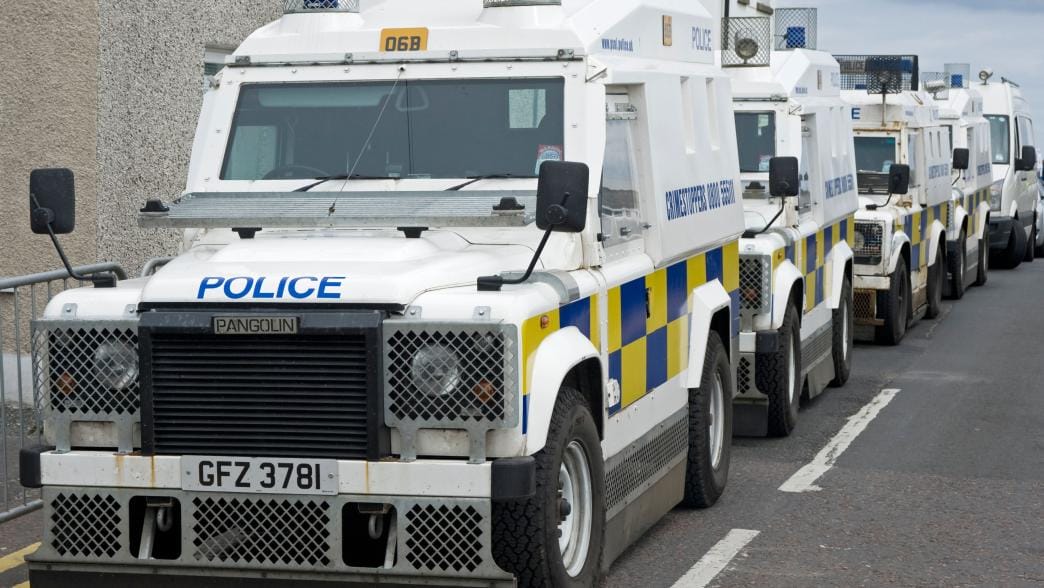
During the heavy rioting in Belfast last week the particularly negligent and compliant police behaviour towards Loyalist paramilitaries has been universally acknowledged by those directly affected and those peripheral to the violence.
In a previous article covering the events in Scarva I adopted a holistic approach to analysing the broader security strategy which showed its head in that moment of loyalist paramilitary-state cooperation as not an isolated occurrence but an inevitable consequence of the dual enforcement regime of violence the British administration employs in the North.
That perspective has been strongly vindicated in far more grotesque examples in Belfast. In the foremost instance Loyalist paramilitaries had erected checkpoints on various roads stationed by masked men tasked with hailing down vehicles for redirection of traffic to support clear streets with chokepoints for the riots. Whilst most people had been dismissed from work to ensure their safety in the wake of the violence this of course could not impede essential services such as medical care.
Nurses had approached the PSNI for advice on how to work around this – to the response that they should respect the authority of and comply with the Loyalist gangsters who were withholding them from work. To present their passes and identification, which it should be remembered displays sensitive information such as names and addresses, to men intent on sweeping the city in a wave of violence.
The PSNI is on a comfortable enough basis with organised Loyalist violence to effectively deputise their thugs with the authority to control streets and interrogate civilians for their information rather than to remove the checkpoints along the critical routes as they surely would have done with their Republican counterparts. When the British administration had deputised their forces with the authority to impede workmen from transport to work in Limerick in 1919 it became the catalyst for a general strike.
According to the testimony of nurses forced into this situation by the PSNI, multiple nurses had been turned away and impeded from doing the necessary work to save lives by these Loyalist gangsters. The British state cannot avoid letting this happen, they cannot avoid breaking this increasingly radicalising force in Protestant communities because it serves as their backup force for political control in the North. If that is the fundamental core of their counter-insurgency strategy in the North then the only reciprocal insurgent strategy can be to isolate these paramilitaries from their claimed constituents and to inject ourselves between the enforcement regime and the people of Ireland.