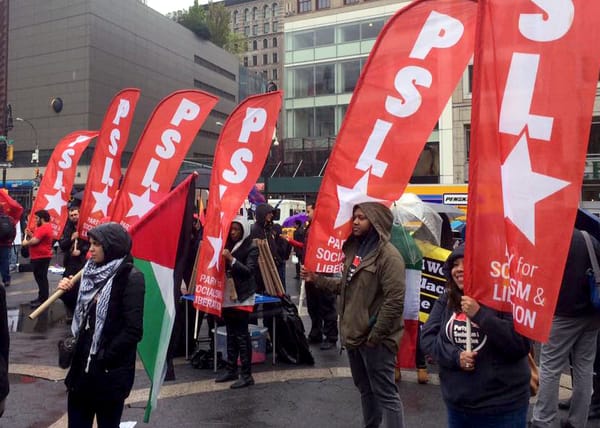
Left Appeasing NATO’s Warmongering, Fronta Poblachtach Working With Russians In Aughinish Scandal
The liberal left demands closure of Aughinish Alumina in the name of Ukraine and the environment, while Fronta Poblachtach has issued Russian apologia, and its members have actively cultivated relationships with representatives of the Russian state.
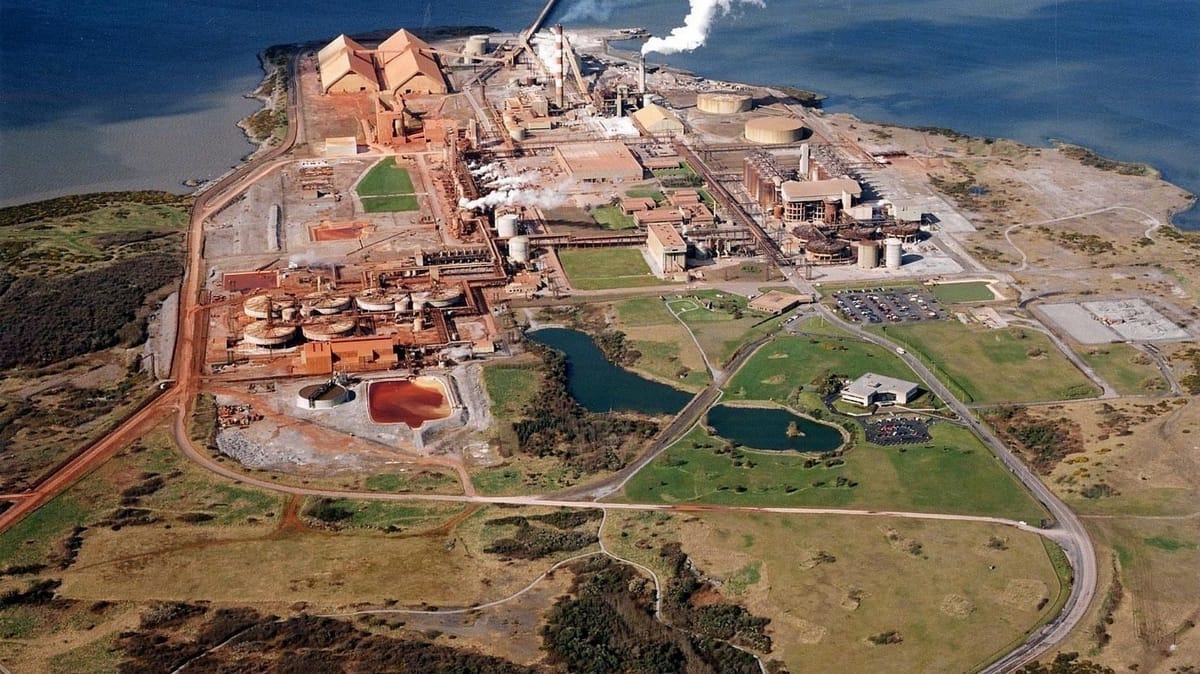
The single biggest industrial asset on the Shannon Estuary is now caught between two opposing political currents, neither of which offers a serious path forward for the workers of the region. On one side, a section of the left demands immediate closure in the name of Ukraine and the environment. On the other, Fronta Poblachtach has issued a statement that along with Fronta Poblachtach itself we must condemn in the strongest possible terms. It effectively defends the interests of a sanctioned Russian owner, and it has done so while maintaining open channels with representatives of that same foreign power. The people of West Limerick deserve better than a choice between deindustrialisation and a Kremlin-protecting operation, actively collaborating with the Russian establishment dressed in republican language.
My own positions on the wider geopolitical context are on record elsewhere, and I set them aside here and here to focus on the industrial question itself.
Fronta Poblachtach And The Russian connection
I must register my profound disgust with the recent statement issued by Fronta Poblachtach members in Limerick, and with the political orientation it represents. The statement masquerades as a defence of national sovereignty and workers' interests, but its practical effect is to shield a Russian oligarch from legitimate scrutiny, but what else would you expect from them. It is not a defence of Irish industry; it is an obstruction of the accountability that workers and communities need.
What makes their intervention particularly indefensible is the context in which it has been made. Fronta Poblachtach has not simply taken a wrong position in a local industrial dispute. Its members have actively cultivated relationships with representatives of the Russian state. They have engaged with a regime that murders trade unionists, outlaws independent worker organisation, and treats industrial assets as instruments of geopolitical coercion. For any political organisation that claims to stand for “the working class” and “national sovereignty”, such an alignment is a fundamental political failure. It is one thing to oppose the cynical use of Ukraine solidarity to deindustrialise County Limerick; it is quite another to seek out the patronage of the Kremlin and to run interference for a sanctioned corporation whose parent company serves the strategic interests of that same power. That is not anti-imperialism. It is clientelism dressed in the language of liberation.
Fronta Poblachtach asks us to believe that concerns about Aughinish – its Russian ownership, its environmental record, and the destination of its alumina – are a conspiracy orchestrated by a foreign journalist acting on behalf of EU/NATO interests. This framing is deeply unhelpful. It dismisses genuine, long-standing local worries as the product of external manipulation, and it does so while simultaneously offering no programme to bring the plant into public ownership, no mechanism for worker control, and no plan for the environmental remediation that the community desperately needs. The practical consequence of their position, intended or not, is to leave the plant in the hands of a foreign private owner whose long-term commitment to Limerick is determined in Moscow, not in the mid-West.
Roots Party has advanced a detailed, costed, and legally grounded plan for the full nationalisation of Aughinish Alumina and the construction of a publicly owned, worker-controlled aluminium smelter on the Shannon Estuary. Our position is clear: the refinery and any future smelter must be removed from all private capital, Russian or otherwise, and transferred over time to a democratic cooperative of the workforce. That is real expropriation and real sovereignty. Fronta Poblachtach, by contrast, offers no equivalent programme. It offers a defence of the current ownership structure, wrapped in a conspiracy theory.
The Caolan Robertson Factor: A Reactionary Campaign Is Not A Workers’ Campaign
The journalist at the centre of much of the recent coverage is Caolan Robertson. It is necessary to state plainly what Robertson represents.
Caolan Robertson is a far-right figure with a documented history of producing content for extreme-right and pro-NATO aligned outlets. His political trajectory places him firmly in the camp of Western chauvinism, Zionist-aligned propaganda, and reactionary nationalism. He poses as a journalist, but his work consistently serves interests that are hostile to the working class, to anti-imperialist movements, and to any genuine politics of national sovereignty that does not conform to a NATO-approved script. His sudden interest in Aughinish Alumina is not motivated by solidarity with the people of Askeaton or concern for the red mud site. It is an opportunistic intervention designed to weaponise environmental anxiety and anti-Russian sentiment in the service of a geopolitical agenda that has nothing to do with the welfare of workers on the Shannon.
We do not defend Caolan Robertson. His brand of politics is contemptible, and any campaign he is associated with must be scrutinised for its real objectives, not taken at face value as journalism. Workers should be under no illusions: Robertson is not their ally, and his narrative is not a tool of liberation.
However, Fronta Poblachtach’s use of this fact is deeply cynical. They invoke Robertson’s Zionist, pro-NATO background not to educate workers about the complex forces converging on their plant, but to discredit all criticism of Russian ownership and all scrutiny of the environmental crisis. By doing so, they attempt to shut down legitimate local grievances and to position themselves as the only defenders of the plant – a stance that conveniently requires no confrontation with Rusal and no demand for public ownership. In effect, they use the presence of a reactionary journalist as a pretext to defend a Russian oligarch. That is a political sleight of hand, and it exposes the emptiness of their supposed commitment to worker control.
The environmental concerns surrounding Aughinish are real and serious, regardless of who writes about them. The bauxite residue disposal area contains highly alkaline material, fine respirable dust, heavy metals, and naturally occurring radionuclides. The community in Askeaton has reported elevated health issues for years. Fronta Poblachtach's statement attempts to dismiss scrutiny of these hazards as part of a NATO-aligned campaign. That is a disservice to local residents. Our plan tackles these problems directly: public investment in stabilisation, EPA-supervised remediation, and a financial structure that ensures the clean-up is funded from the plant's own operations, not abandoned to the taxpayer. Fronta Poblachtach, by refusing to engage seriously with the environmental crisis and by aligning itself with the Russian representatives who have no interest in its resolution, aligns itself de facto with a polluter.
The Centre-Left Closure Demand: Sacrifice Without A Plan
I also wish to address the growing calls from some centre-left politicians, NGOs, and commentators for the immediate closure of Aughinish Alumina. These demands are advanced on grounds of solidarity with Ukraine and legitimate environmental concern, but the proposed remedy would be a disaster for the working class of the Shannon region.
Let us be plain about what closure would mean. Eight hundred skilled jobs directly lost, two to three thousand more indirect livelihoods destroyed, and the departure of the very entity that currently bears operational responsibility for a massive toxic residue site. The State would be left with an unfunded remediation liability and a hollowed-out local economy. Calling this solidarity with anyone is a confusion of categories. It is the abandonment of a working-class region, carried out under the banner of moral principle.
Roots Party stands unequivocally against Rusal's ownership. We stand against the Russian invasion of Ukraine. We stand for the rapid and thorough clean-up of the red mud site. But we will never support a course of action that punishes workers for the crimes of their employer. Deindustrialisation is not a radical policy; it is the default management strategy of a political class that has given up on production.
The centre-left closure position is, in practice, an evasion. It is the easiest thing to say. It requires no confrontation with EU state-aid rules, no battle with the Department of Finance, no innovative use of the Critical Raw Materials Act, and no challenge to the sanctity of private property. One can issue a press release expressing grave concern and then move on, while a region absorbs the consequences. The cost is borne entirely by others.
The environmental argument, when deployed to justify closure, is particularly flawed. The red mud at Aughinish is a scandal, but it is a scandal generated by private ownership, not by the chemical fact of alumina refining. Shutting the refinery does nothing to clean the site. It simply transfers the liability to the public, with no productive asset left to fund the work. Our plan addresses the environmental crisis directly, with public investment and a legally binding commitment to long-term remediation funded from operating surpluses. The closure demand offers only a toxic site and an empty treasury. That is not environmentalism; it is a managed retreat.
The Ukraine solidarity argument suffers from a similar weakness. Harming the Kremlin does not require the immiseration of workers on the Shannon. It requires the construction of genuine European strategic autonomy, including sovereign industrial capacity that reduces dependence on any external power. A publicly owned Irish smelter, powered by domestic offshore wind, contributes far more to that goal than a symbolic closure that destroys capacity and leaves a community behind.
Beneath much of this discourse is a deeper political shift. Significant parts of the centre-left have grown distant from the industrial working class. Their political base and cultural frame of reference lie more naturally with NGOs, professional advocacy, and a post-industrial outlook that regards heavy industry as a legacy problem to be managed out of existence. The closure demand is the logical expression of that outlook: decommission, transition, move on. But they never specify who will pay the price, and the answer is always the same communities that have been paying for forty years.
A "just transition" does not begin with closure. It begins with a plan. We have one. We have shown how to bring the plant into public ownership, how to fix the environmental damage, how to build a smelter that secures the region's industrial future, and how to transfer both assets to a democratic worker cooperative. The centre-left offers no equivalent plan. It offers a posture, and it is a posture that will devastate lives if it ever becomes policy.
A Different Path
The workers of the Shannon Estuary deserve an aluminium industry that belongs to them, not to Rusal, not to a data-centre multinational, not to a far-right journalist's career project, and not to any political camp that treats their livelihoods as a bargaining chip. Fronta Poblachtach's dalliance with the Russian state, and its refusal to demand public ownership while attacking legitimate scrutiny, is a betrayal. The centre-left's demand for closure, offered without a plan for the workers and communities who would be destroyed, is another. Both leave workers without agency, the environment without a funded solution, and the region without a future.
We call on socialists, trade unionists, and community activists to reject both dead ends and to support the only comprehensive alternative on the table: public acquisition, public remediation, public smelter construction, and eventual transfer to worker ownership. That path is demanding. It requires political will and legal creativity. But it is the only one that does not ask the people of Limerick, Kerry, and Clare to pay for the failures of others.