Jason Arday's Death: The Human Cost Of “The Culture War”
A person was reduced to an arbitrary, pointless battle in the culture war. A father, partner, brother, uncle and son was turned into a monument and then into a burning effigy.
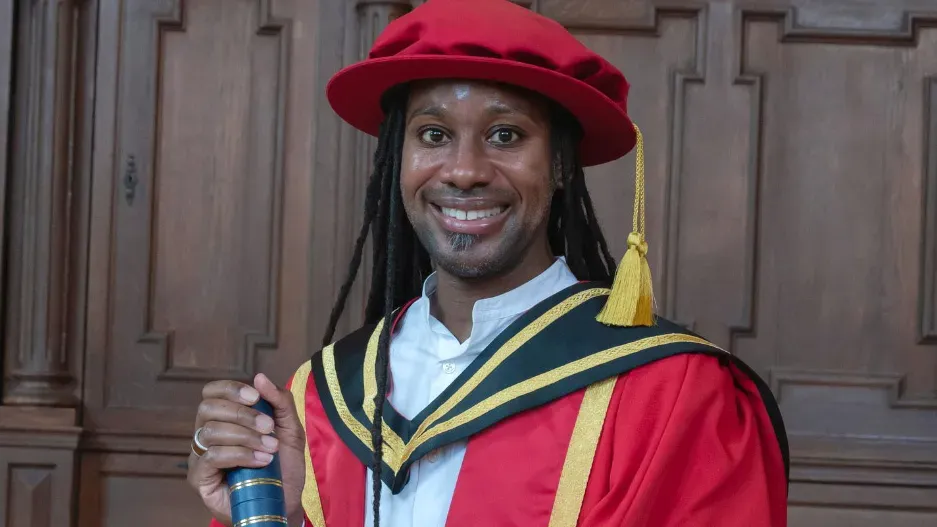
A few days ago I wrote that Jason Arday was a man, not a monument. That sentence now reads like an epitaph.
On Friday afternoon, police were called to his home in south London. A 41-year-old man, Jason Arday was pronounced dead at the scene. The death is being treated as unexpected but not believed to be suspicious. His family have asked for privacy. They have also, with more restraint than this industry and the academic institutions involved deserved, told us this truth:
“The campaign of misinformation was too much for Jason, who was a gentle man and who always wanted to see the best in everyone. We are in shock to have lost this amazing father, partner, brother, uncle and son. We won’t comment further at this point beyond asking the press to leave us alone now, and to stop the campaign of harassment which has been waged against Jason and his family for too long.”
That statement is the only text that matters now. It names what happened more precisely than any op-ed, any online “both sides” panel discussion, or any institution’s carefully worded statement. A person was reduced to an arbitrary, pointless battle in the culture war. A father, partner, brother, uncle and son was turned into a monument and then into a burning effigy.
I wrote in my previous piece that elements of both the “culture war casualty” and “compulsive liar” narratives likely contained truth, and that the real story was structural. I stand by the structural argument. What I underestimated was the human cost. The destruction did not stop once the controversy was mapped. It kept going until there was no man left, only the monument and the mob pulling it down, one twitter (I refuse to call it X) post at a time.
The machinery that killed him has identifiable parts.
- There was the ideologue: Nathan Cofnas, a self-described “race realist” who was sacked from Cambridge after writing that Black people would “disappear from almost all high-profile positions outside of sports and entertainment” under a meritocracy. He is not a neutral auditor concerned with “ethics”. He had an ideological and personal motive, and he found, in Arday, a convenient target.
- There were the amplifiers: right-wing commentators and outlets such as Toby Young, the Daily Telegraph and the Times, who took Cofnas’s allegations and fed them into the culture war circus. Each new claim became content. The format demands a villain; Arday was cast for the role without even auditioning.
- There was the institution. Cambridge initially described the accusations as a “vile smear campaign” and said he had been cleared by prior investigations. Liverpool John Moores University had already investigated the plagiarism allegations and found no academic misconduct. But as pressure mounted, Cambridge’s tone shifted. On 5 August, it announced an internal inquiry into his qualifications and honorary appointments. Jesus College launched a parallel inquiry. Glasgow University followed. Cambridge said Arday would remain in post and “continue to receive support.” He resigned the same day.
- Then there was us. The left and the cause of anti racism who had used him as one of many mascots for so long, engaged on the terms the right and the establishment set on the battlefield instead of shutting it down as the thing of nothing it was. Not only did those who supported him and were his allies abandon him before the evidence of the new inquiry were even out, but collectively we allowed the use of him as an effigy to burn all of black academia to go on. He should have never been thrust into the position of being that totem. No one should. For as long as we continue to do this with every prominent Black or minority figure, the right will continue to burn them.
What happened was a university holding a man up to the light, then holding him under the water to cover up its own abysmal record on inclusion. The institution that made him its youngest ever Black professor and used his story as proof of its own “progress” could not or would not shield him from the storm it had helped create. His resignation statement said the “relentless accusations, speculation and public commentary have taken a profound toll on me and on those I love.” The institution issued statements. He issued his resignation.
There were the press cycles. Every new headline, every new “exclusive,” every new panel discussion treated him as a public commodity. His family now asks the press “to stop the campaign of harassment which has been waged against Jason and his family for too long.” That is not a request made lightly. It is an indictment of the behaviour of the mass of media and the complete loss of ethics and decency that the culture war has fostered.
And there was the culture war itself, which needs sacrifices to sustain itself. It needs a Black man in a high position to be either a fraud or a martyr. It cannot tolerate a man who is simply a man, with errors and achievements, with a complicated history, with private struggles. The monumentalisation I warned about—the treatment of any rising person as collective property— is not just a theoretical wrong. It has now been followed by real world death.
I spent thousands of words with the founding premise of “is he a victim or a fraud” That was the wrong question.
Not because the allegations don’t matter. They do. If Jason Arday plagiarised, fabricated research or misrepresented his qualifications, those are serious matters and should be investigated properly. By fair and just process not engagement farming.
But we all accepted the premise of the culture war without questioning it: that Jason Arday had to be something. Victim. Fraud. DEI hire. Racist target. Academic fraudster. Symbol of institutional racism. Symbol of institutional decline.
He could not simply be a complicated man who had done some admirable things, some foolish things and perhaps some seriously wrong things.
We demanded a verdict because the culture war demands one.
And now the person we were demanding the verdict about is dead.
I could not give a solid conclusion then, and I cannot give one now. I wrote about Jason Arday when he was alive. I spent thousands of words trying to decide which version of him was real. I called him a possible victim, a possible liar, a symbol of institutional hypocrisy, a symptom of DEI, and a casualty of the culture war. In doing so, I did something I now realise was part of the problem: I made him into a political object too.
Sadiq Khan said Jason “was the victim of a pernicious public shaming that other people in his position simply wouldn’t have faced.” He called his death “a tragedy” and “a wake-up call.” Wake-up calls are cheap. A man is dead.
In the old biblical ritual, the community loaded its sins onto a goat and drove it into the wilderness. The goat did not survive the desert, the thirst, the hunger or the pursual of wild beasts. No one asked whether the goat had been guilty of anything, because that wasn’t important, it only needed to carry their guilt. Academia has never wanted for sin, it is full of horrible people, who spend their time robbing ideas from each other and being snobby and passive aggressive at each other at the best of times. Engaged entirely in mutually assured destruction campaigns at the worst of times. Plagiarism is so rampant and always has been that there are whole “Did you know” history pages on social media dedicated to “it wasn’t x famous person that discovered y, but this obscure oppressed person - here are the structural injustices that led to this” covering academic plagiarism spanning hundreds of years.
The question is no longer whether he was guilty. It is who built the pyre and who stoked the flames. The leaked documents, and the algorithmic amplification of every allegation. It is who stood by and called it “free speech” or “legitimate scrutiny” while a man was being dismantled in public for holding a position given to him by institutions that received none of the same scrutiny.
If Cambridge wants to do something now, it will not be enough to express “heartfelt sympathies.” It will not be enough to call the case an “aberration.” The university must commission an independent inquiry into its own conduct: why a man in its employ, who it had a duty of care to was left exposed, why its “support” consisted of statements, why its hiring review was announced only after the damage was done. It must publish the findings. It must answer to his family. He died as a scapegoat for them, they owe him that much.
If the right-wing press wants to do something now, it should stop. Not pause. Stop. The family has asked. The man is dead. There is no more engagement to be farmed from his name. But they won’t because this is exactly what they wanted.
If the race scientists and their funders want to do something now, they should explain what they thought the end point of this campaign would be. They will not. They will move on to the next target. Why? Because dead or alive they have removed another Black person from a position of influence.
As for the rest of us: the next time a Black academic is appointed, the next time a working-class person rises, the next time someone with an unusual biography is handed a platform, we should remember that the same snare is waiting. It will not treat them as a person. It will wait for a weakness, or invent one, and make money off their pelt.
I do not know whether Jason Arday would have survived even with a different response. I do not know what the investigations would have found. I no longer care, and neither should you. The investigations are now conducted in the absence of the person they were supposedly about. That is the obscenity.
What I know is this: a father, a partner, a brother, an uncle, a son, is dead. His family have asked us to leave them alone. The only decent thing left to write is that we should do so.
This is the last thing I intend to write about Jason Arday. He deserved better than to be sentenced to death in the court of public opinion. He deserved to be a man. Flaws, failings, triumphs and all. His family deserves the privacy to remember him as he was, they would know it better than any of us. May he rest in peace.