From Palestinian Disarmament to Containment: The Transformation of Power After the El Alamein Meeting
The ongoing meetings in the Egyptian city of El Alamein between Palestinian factions, most notably Hamas, reveal an important conceptual shift in approaching the issue of weapons.
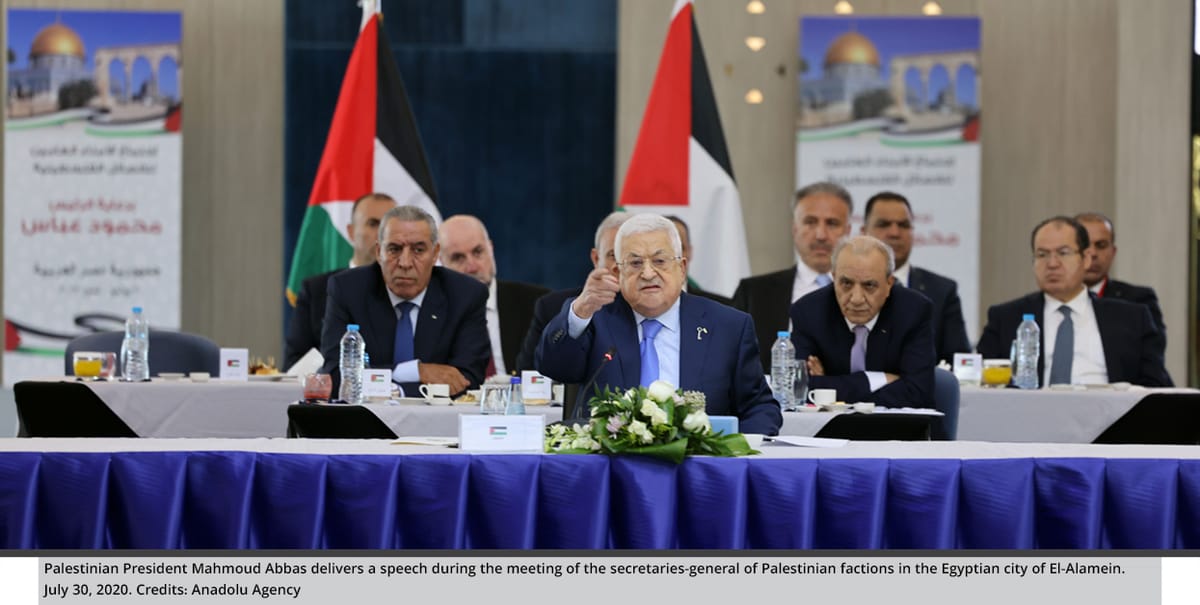
The ongoing meetings in the Egyptian city of El Alamein between Palestinian factions, most notably Hamas, reveal an important conceptual shift in approaching the issue of weapons. This shift moves from the framework of “handing over weapons” to a more complex approach based on “collecting weapons” and organizing them within a centralized Palestinian structure. This comes in the context of discussions over a document titled “A Roadmap to Complete the Implementation of U.S. President Donald Trump’s Comprehensive Peace Plan in Gaza,” which includes fifteen provisions to finalize the implementation of the Sharm El-Sheikh Agreement signed on October 9, 2025.
The eighth point in this document represents the main point of contention. However, a careful analysis of the discussions shows that the core disagreement is not merely about disarmament itself, but rather about the authority that will oversee the weapons and the mechanisms for reorganizing them within a sovereign Palestinian framework. In this context, the factions’ approach emerges, seeking to confine weapons under a “national committee,” or what may be called a Gaza Administration Committee, instead of transferring them to external parties.
This approach is based on preserving the Palestinian right to possess weapons while restructuring and organizing them in line with the political and humanitarian requirements of the current phase. Accordingly, the proposal does not call for the complete dismantling of resistance capabilities, but rather for a gradual process of collecting heavy and outdated weapons and integrating them into a centralized management system under Palestinian leadership, while excluding individual weapons from this process.
The document under discussion stipulates that the process of collecting weapons will be carried out in stages according to a defined timeline, under international monitoring through the Office of the High Representative, the Implementation Verification Committee, and the International Stabilization Force. However, the decisive element in this process is that it will be Palestinian-led, with weapons transferred to a national committee responsible for overseeing them, without any obligation to transfer them to Israel—constituting a fundamental distinction in how the process is defined.
Deliberations in the meetings indicate that Palestinian factions, despite rejecting the principle of disarmament, have shown willingness to engage with this approach due to the deteriorating humanitarian conditions in the Gaza Strip, provided that the process is gradual and synchronized with reciprocal Israeli steps. These steps include halting military operations, dismantling Israeli-backed militias, withdrawing Israeli forces to the “yellow line,” introducing a technocratic committee to govern the Strip, deploying an international force, and opening crossings.
The factions also emphasize that reorganizing weapons must be tied to a clear political horizon that includes both Gaza and the West Bank, ensuring that the process does not become a tool for weakening the Palestinian position, but rather a step within a broader political trajectory. From this perspective, confining weapons to the Gaza Administration Committee is understood as a mechanism for rebuilding Palestinian security authority, not as a concession of power.
In this framework, the factions’ insistence on the principle of “step for step” can be interpreted as an attempt to ensure a balance of commitments, preventing the weapons collection process from becoming a unilateral measure. This balance is particularly necessary in light of the absence of binding guarantees from mediators, who are themselves seeking a clear position from the factions on this issue to use in pressuring Israel and the United States.
This approach gains additional significance within the regional and international context, as some mediators suggest that global preoccupation with the U.S.–Israeli–Iranian war has given Israel greater room for maneuver in Gaza. Meanwhile, some parties are betting on potential political changes within Israel, particularly with upcoming elections, that may contribute to reshaping its positions.
In conclusion, the approach of “collecting weapons and confining them under the Gaza Administration Committee” reflects an attempt to redefine the balance of power within the Strip by shifting weapons from a fragmented factional state into a unified institutional Palestinian framework. This seeks to achieve a balance between the requirements of sovereignty and international pressures, while opening the way for rebuilding the Palestinian political and security system on new foundations.