Against The Politics of Permanent Reaction
As a grassroots (unfunded) working-class anti-imperialist organisation, we do not deny the importance of anti-racist mass mobilisation. But we must ask why outrage continues to emerge in fragmented, selective bursts that leave both the underlying social order untouched, and activists exhausted.
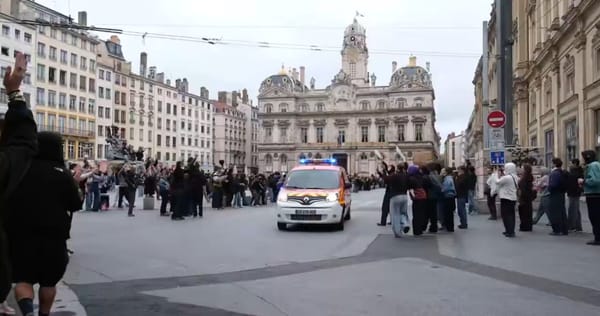
The killing of Congolese man, Yves Sakila in Dublin produced immediate outrage this week. Political parties, NGOs, and anti-racist organisations have issued statements, while some have organised demonstrations. Activists and others filled Henry Street earlier in the week with slogans against racism and hatred. Anger is real and justified.
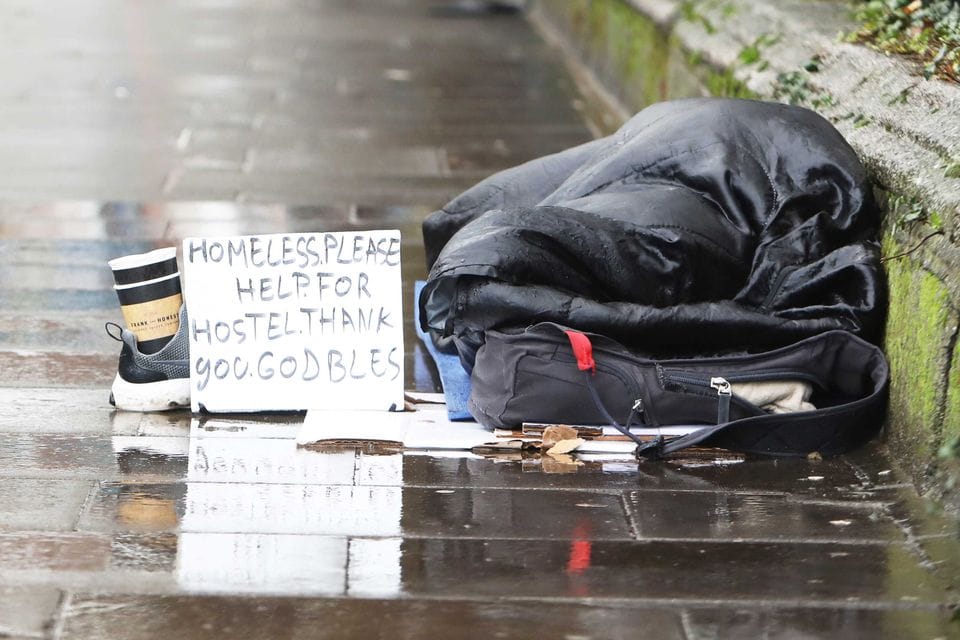
But in that same city, during the same week, another man died sleeping rough in the doorway of a church, not that far away from Yves Sakila. There are no demos or marches being organised for him. No NGO coalitions will assemble outside government buildings. His death has disappeared almost as quickly as it occurred, absorbed into the normal functioning of Irish neoliberal society. His name was Shane, by the way. But despite my best efforts, I still cannot find his full name anywhere.
As a grassroots (unfunded) working-class anti-imperialist organisation, we do not deny the importance of anti-racist mass mobilisation. But we must ask why outrage continues to emerge in fragmented, selective bursts that leave both the underlying social order untouched, and activists exhausted.
The homeless man and the murdered migrant are not victims of separate systems. They are casualties of the same brutal and cruel system. Neoliberal capitalism. From housing commodification to the commodification of compassion and even activism, from austerity to privatised social care, the vassal state of Ireland knows only one way, and that is how to manage misery while protecting wealth.
One killing is interpreted by liberal activists through the language of racism, the other through the language of unfortunate inevitability. But both (murders) emerge from a society organised around profit protection, not human need.
Liberal activism is increasingly isolating suffering into disconnected moral spectacles. Each “tragedy” that passes, daily, becomes a self-contained emotional event with its own slogans, demonstrations, and social media cycle. NGOs and political parties mobilise around moments that fit established narratives, generate visibility, and produce symbolic political capital. Yet the structure producing these cruel deaths remains fundamentally unchallenged. The result, therefore, in inevitable. Politics of permanent reaction without transformation is the norm.
One day there is a protest against racist violence. The next day there is a protest against fox-hunting. The next day there is a vigil for Gaza. The next day there is demo for SNAs. The next day Mother and Baby survivors. This pattern ensures that outrage over housing, fuel costs, healthcare, education, women’s rights. trans’ rights, refugees’ rights, or genocide…are all neatly compartmentalised, treated as though they emerged independently rather than from the totality of capitalist relations. An even stranger spectacle is to see groups outside Leinster House compete for space, and airtime on the megaphone. All working independently. Often on a Wednesday, when the Dáil is actually sitting, so a photo-op with opposition parties is possible. Some of these groups are friendly towards each other. None of them are together. United? You kidding me!
Neoliberalism survives precisely because opposition to it is fragmented exactly like this, into separate campaigns competing for attention. The homeless man, Shane, in the church doorway, above all places, exposes the uncomfortable. Capitalist society normalises certain forms of death so completely that they cease to provoke political rupture. A person dying from homelessness in one of the richest countries in Europe is treated as “tragic” or “unforgiveable”…but ordinary every day stuff all the same. The system, and its slaves absorb this barbarity effortlessly.
This is why we, whose allegiance is to the working-class and poor, diverge sharply from liberal activism. It is not about why one victim received demonstrations and another did not. The deeper question is why political energy is repeatedly directed into symbolic and isolated responses rather than into building a unified working-class movement capable of confronting the Zionist dominated imperialist system responsible for both deaths.
Without class politics, anger becomes episodic. Without organisation, grief and outrage become spectacle. Without a revolutionary horizon, every protest risks becoming another managed release valve at a vassal Dáil, within neoliberal society itself.
The main problem today with activism in Ireland, north and south, is that the social order which produced both deaths remains standing afterward, entirely intact. And even if we were all to get up and shut down the country. Then what? A great revolutionary once said, “We are not outnumbered. We are just out-organsised”. But if you ask me, there is zero organisation in Ireland.
When the liberal activist rushes from issue to issue, police brutality today, climate tomorrow, a corporate scandal next week, but never asks the central question: what class rules society, and how is its power reproduced, then how on earth can they be surprised that nothing changes?
Fragmented activism poses no threat to power. Capital can survive protests, slogans, online campaigns, petitions and performative dissent. What it cannot tolerate is an organised working class conscious of itself as a class, united across individual grievances, disciplined through collective struggle, and aimed directly at the destruction of capitalist state power. No amount of individual awareness can abolish exploitation.
Society will not change because enough individuals become ethically enlightened. History moves through class struggle. The worker evicted from housing, the the nurse crushed by austerity, or the joiner imprisoned by debt are not separate issues. They are expressions of the dictatorship of capital.
All these competing identities and temporary coalitions mean nothing. Power only fears one thing, the emergence of proletarian unity. The system teaches workers to see themselves first as consumers, demographics, or victims, rather than as members of a revolutionary class with shared material interests, and the result is politicalt impotence disguised as compassion: endless reaction, no strategy; endless visibility, no power; endless emotional catharsis, no revolution.
We need to build institutions capable of confronting and ultimately overthrowing bourgeois rule: a vanguard party (of which there is currently none in Ireland) independent unions, workers’ councils, tenants’ organisations, and DISCIPLINED mass movements.
Historical consciousness, political discipline, and collective purpose is seriously missing right now. Let’s stop with “what are we angry about today?” and start by asking “how do we build working-class power capable of ending the system that produces these crises altogether?”