A Taxonomy of Contemporary Irish Trotskyist Organizations
An ever growing critical mass of young students is drawing the correct conclusion that Trotskyism is a fifth column and an ideological disease that operates in the interests of capitalism and imperialism.
László Molnárfi, James Rochford and Alexander Homits
Introduction
Alexander Homits
As someone who took great issue with the strategic and political direction that PBP, Solidarity, SWP and the other explicitly anti-communist parties and groups that often misdirected young people, it is refreshing to finally see the primary base of recruitment ( students and young people ) be chipped away at by other students who have independently assessed Trotskyism and drawn significant conclusions about its dead end and destructive nature.
A new generation of young people who can see beyond the State Department, CIA and Mossad historiography of geopolitics and life are actively re-evaluating the political outcome and impact of Trotskyism as an ideological framework to work from and an ever growing critical mass of young students is drawing the correct conclusion that Trotskyism is a fifth column and an ideological disease that operates in the interests of capitalism and imperialism.
Trotskyism in Ireland has operated like a glorified pyramid scheme by relying on well intentioned but naive young people, using them as foot soldiers for backroom planned campaigns and most importantly of all securing and maintaining electoral positions. Trotskyism has delivered no meaningful victories in Ireland that it can call its own and instead depicted socialism and socialists as disconnected from the class and communities they purport to represent.
Hopefully this ever growing push back against Trotskyism starts the slow process of rectifying all of this and conclusively isolates Trotskyist ideology from the political left in Ireland so that we can get on with organising towards a 32-county socialist workers’ republic.
People Before Profit — PBP
László Molnárfi
This is an eclectic multi-tendency organisation, split[1] between the unorthodox Trotskyist dominant Socialist Workers’ Network (SWN), which traces its international allegiance to Tony Cliff’s International Socialist Tendency (IST), and its newspaper Rebel News, the ‘eco-socialist’ Trotskyism-ambivalent Revolutionary, Internationalist, Socialist and Environmentalists (RISE) and its associated Rupture Magazine and traces of post-Marxism, and unaffiliated post-Trotskyists and neo-Kautskyists grouped in Horizon Magazine, modelled after Cosmonaut Magazine.
PBP are programmatic nihilists, with policy positions on various issues, but without a line of march, resembling more so a collective of activists without an explicit ideological current, in a move away from vanguardism. It can be considered a severely perverted version of Trotsky’s transitional programme at most. “Ask, for example, whether PBP is a reformist or a revolutionary party and you might get a range of answers even from its members”[2], wrote one of its leading theorists, John Molyneux†. This results in a tailist attitude towards social movements where there is recruitment from a liberal stratum without the necessary heightening of class consciousness through political education, and to a lesser extent, from the ultra-left ‘actionist’ stratum, who usually break away from the organization subsequently[3]. There is thus a Brownian motion around whatever is most popular at the moment, that is regardless an overdetermined shift towards the right-deviation which slowly drags the organisation towards the liberal baseline, away from revolutionary socialism, a process which led its leftmost faction, the Red Network, to split in June 2025 and abandon Trotskyism.
The organisation is pushed to reduce talk of socialist revolution, dampen their criticism of the European Union, sideline the national question and is pressured into bourgeois electoralism, while haphazardly jumping on whatever social movement is popular in the current conjecture. The class basis of the organization shifts from a working-class base in the 2010s water charges movement to students, especially on campuses, and the middle-class. Their integration with the NGO sector, liberal parties and bureaucratic trade unions is a rising tendency within the organization, justified by the ‘Left Government’ line, which calls on the organisation to enter into a coalition with bourgeois parties; this is then mirrored in the SWN’s front organisation, United Against Racism (UAR),[4] which is a recruitment mechanism and a tool for the organization to sustain a united front with liberal forces. Kieran Allen’s theory of ‘creative illusions’ in Sinn Féin is used to justify the ‘Left Government’ position; as if the consciousness of the masses would suddenly shift towards socialist revolution upon reformist failure, it could be said that it fails to account for a reactionary turn or a return to the liberal baseline. The uncritical tailing of these social forces arises from the conception that a collection of reformist demands auto-transitions into an overall revolutionary consciousness should a crisis situation arise. In turn, this arises from the Cliffite reliance on Luxemburgist spontaneity.
There is a dearth of critique and self-critique, following a motion at the 2025 AGM, boasting of 400 attendees[5], which ‘discouraged’ external polemics, cementing a liberal deviation, emanating from the SWN-dominated headquarters which exerts downwards pressure on local branches with diverging views in order to solidify its own position. There is a lack of a political education programme. On the other hand, however, at least formally, they have democratic mechanisms, multi-tendency socialism and open factionalism, which is the strength of PBP; this is best exemplified by Rupture Magazine and Horizon Magazine, which conducts Marxist theoretical debates from a post-Marxist[6] in the former and post-Trotskyist/neo–Kautskyite intersectionalist[7] approach in the latter, whereas Rebel News functions more as a propaganda paper with occasional critiques of ultra-leftism, the IPSC and bourgeois democratic parties[8], as well as, notably, opposition to third-worldist campism[9]. The critique of ultra-leftism makes PBP to the Right of the ‘actionists’, such as AIA et al., which have an uneasy relationship with them, believing them to be too compromising on matters of militant direct action; whereas the critique of third-worldist campism makes PBP situated to the Left of AIA et al. on foreign policy. They are weak on the national question, being critical of republicanism and nationalism[10].
Solidarity (formerly known as Socialist Party) — S
László Molnárfi
An orthodox Trotskyist organization turned unorthodox, they uphold Trotsky’s transitional programme and are positioned to the Left of PBP, owing to their criticism of a ‘Left Government’ and greater emphasis on revolutionary socialism. They have a hierarchical mode of organization in which Party “full-timers” hold sway over membership, and consequently, over ideological direction, with membership vetted according to Leninist vanguardist principles, through discussions with leading cadres before onboarding. Their political education consists mainly of the ‘classics’, Marx, Lenin and Trotsky, with other traditions neglected. They have a penchant for recruiting impressionable minds from campuses, combined with democratic centralism, leading to a homogenization of the political line within the organisation. Their position on the national question is abysmal, believing that it is a sectarian distraction from class struggle, hence their rejection of republicanism and nationalism as a reactionary force; they believe that Ireland, England, Scotland and Wales should merge into a socialist federation and eventually into a Socialist European federation[11].
In 2019, their parent organization, the Peter Taaffe-aligned factions of the Committee for a Workers' International (CWI) warned that a tendency was developing within the Party to examine events through the lens of gender, rather than class struggle[12]. They subsequently split, eventually forming the International Socialist Alternative (ISA), rejecting what they saw as ‘workerism’, undoubtedly influenced by the changing class composition towards student membership after the Repeal the 8th campaigns. Taafe’s accusation of Mandelism, a concession to petty bourgeois intellectualist politics and a succumbent to opportunist pressures[13], would be consistent with the claim of increased student membership, and the subsequent shift to LGBT+, gender and campus organising as the new force for revolutionary politics[14][15]. These internal documents were leaked, rather than openly shared, which is inconsistent with the Bolshevik principle of open debate in the Party newspapers. The ‘other side’ of the split, from there came out the CWI-aligned Militant Left (ML), which advocates class-first politics. Paul Murphy’s Revolutionary, Internationalist, Socialist and Environmentalists (RISE) is also traceable back to this split, which places stronger emphasis on class but with an eco-socialist coating and is ambivalent towards Trotskyism.
Today, the Party’s socialist feminist front group, ROSA, has come to dominate much of what Solidarity does in their day to day activities. They also undertake trade union entryism in UNITE, where they have made strong inroads, taking important positions and amassing influence in the organisation towards militant politics. Youth Against Racism (YARI), their anti-racist collective, is less active nowadays.
This is a formation which is pulled in different directions. They are pulled towards anarchism on foreign policy, to the Left of PBP as well as AIA. They lean heavily towards liberal identity politics in its sectional advocacy for LGBT+ people, women and ethnic minorities to the Right of PBP. At the same time, they preach class struggle arising from the Trotskyist core, to the Left of PBP. Thus, their transitional programme is at the mercy of an eclectic form of tailism. This is a mix of simultaneous rightwards pulls and leftwards pulls, one which is overdetermined towards the former rather than the latter. As a result, they are in an electoral alliance with PBP, as well as participants in UAR, where they attend counter-demonstrations against nationalist-populist demonstrations across the country where they subsequently recruit from. Through their electoral alliance, they pull PBP to leftwards on the question of Left Government, but pull them rightwards at the same time through the identity politics lens of viewing societal change.
Revolutionary Communists of Ireland — RCI
James Rochford
The Revolutionary Communists of Ireland (RCI) are, in ideological terms, firmly orthodox Trotskyist. They describe themselves as adherents of the “orthodox Marxism” of Bolshevism and have at times styled themselves as the “Irish Bolsheviks.” The organisation is the Irish section of the Revolutionary Communists International (also abbreviated RCI), formerly International Marxist Tendency (IMT), which traces its origins to the 1992 split in the Committee for a Workers' International (CWI) led by Ted Grant.
In observing them, there is a marked tendency among their members to distance themselves from other leftist organisations. They are critical of People Before Profit (PBP) leadership, criticising them for reformism, while orbiting around them to seize recruitment opportunities. For instance, they have an article highlighting one member defecting from PBP to the RCI[16]. In addition, they tend to recruit from other leftist factions; in picking them off, being 'magpies' in a way, they have most noticeably made recruitment attempts from PBP and disaffected members following the Red Network split, using this period to criticise PBP[17] as a way to attract members. Regardless, they state that they have a long candidate period of up to or even over 3 years for anyone who comes from outside groups, as they often have countless political baggage. They highlighted that open discussion is necessary for a socialist movement. They do not seem to enjoy good relations with other leftist organisations, or they appear neutral towards them. They do not focus much on issues such as identity politics, being critical of liberal intrusion into the socialist movement; rather, they tend to focus on class, though there is space for discussions outside of class war[18]. They are critical of non-socialist republicanism and opposed to nationalism, the theoretical justification thereof being laid out in Alan Woods' "Republicanism and Revolution"; at the same time, they do not seem to follow the tradition of socialist republicanism, therefore being weak on the national question. Following the Palestinian resistance acts of October 7th, their international organisation, from which they take their line too, called to unite the Palestinian and Israeli proletariat and was critical of Hamas[19], similar to anarchists, to the Left of Solidarity, PBP and AIA. They march, walk and participate in actions of the ultra-left “actionists”[20], the liberal left and the rest of the socialist left, and set up their stalls at demonstrations, though they do not have a working relationship with any of these organisations; rather, the RCI tails along in hopes of converting people and selling papers and subscriptions, a tendency which is its defining feature.
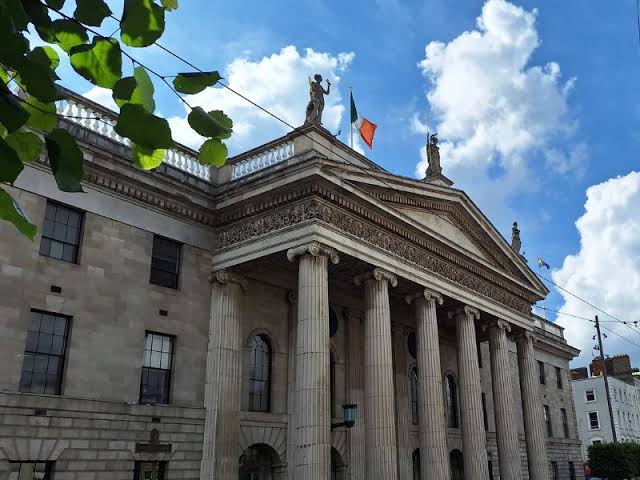
Its organisational structure is top-down, conformist and demands a high degree of ideological compliance, it being a vanguardist formation, thus their political line is homogenous as set down by democratic centralist mechanisms. Their political education is heavily partisan to the ‘classics’, Marx, Lenin, Trotsky and Connolly with a special distaste for ‘post-modern’ and ‘post-structuralist’ critical theory. They deny the Big Bang happened due to its supposed ‘undialectical’ nature[21]. They have eleven branches in Ireland to date, but despite years of organising, they have '50 to 75 members'[22], reportedly closer to 100 as of today. Despite their numbers, they appear to charge high membership dues, as they employ 2 full-time organisers. What should be pointed out here is that, like in all Left groups, the de facto centre tends to be based in Dublin, which has most of their branches in any county (3). Their recruitment strategy shares many features with most groups (PBP, Solidarity, Workers’ Party, etc.), in that it tends to involve stalls in prominent public areas, such as the GPO, Grafton Street and Mary Street. However, they do organise in busy areas in their other branches. They have expressed no intention of running a candidate in national or local elections so far, but they are not against using elections for revolutionary socialist agitation. Notably, they do hold congresses with their second Congress having been held on the 5th and 6th of April, with 50 of their members in attendance, with 56 active members in all of Ireland, with international membership in the RCI having doubled from 2,600 to 5,800[23] ,reportedly closer to 10,000 as of today.
In terms of their recruitment, there is a clear age range of members in their late teens and early twenties, who are often of a student background, at least in the Dublin area, where they hold branch meetings in Trinity College Dublin. However, they have members in other universities, such as University College Dublin and likely have branch meetings there as well. This appears to be mostly a student-body organisation, while also having some working-class members. They have a high degree of member burn-out and departures, which are then substituted for by others, but overall results in a stagnated membership. This is an organisation with a set political line, that is to say, a transitional programme, not so eclectic as PBP and as Solidarity. However, their transitional programme’s implementation tends to be maximalist, revolution shouted out into the void, as engagement with social movements is done solely for the purposes of recruitment through tailism, so a disconnect ensues. As to their overall positionality on the left- and right-deviation spectrum, Solidarity flanks PBP to the Left, but RCI flanks Solidarity to the Left, the AIA and such flank the RCI to the Left. It should be emphasised that Irish nativist spaces are aware of the RCI and have, on occasion, harassed them at their stalls, with a documented incident of their stall being thrashed by a passerby.
Like many organisations on the Left, they sell (surprisingly) a fairly high-quality magazine with articles ranging from topical issues in Ireland and internationally to selections of theory (generally from the canon, such as Trotsky and Lenin). What should be emphasised is that, in terms of recent issues in Irish society, they are writing in a populist language where they choose not to adopt moralistic language but lay the blame in institutions and government, such as in its Ballymena article[24]. This is also in line with their proclamations on anti-IPAS riots, with some of their members expressing a desire to capture and redirect these populist energies through class-based messaging[25]. In addition, they, owing to their antagonistic attitude towards liberalism, have criticised PBP and their counter-demonstrations to nationalist-populist marches, also highlighting that these stirrings are not of a purely fascist nature[26].
What should be emphasised is that, despite their sectarian nature, they rarely attack other organisations openly. They have been sharp towards the Irish government on their issues; for example, most recently on the General Budget[27]. They have not issued a specific article aimed at other Leftist organisations, aside from PBP, with the aforementioned article(s). However, they have gone after the idea of a Left government led by Sinn Féin, using their governance up north as a study not to trust them as bringers of change[28].
In essence, the RCI is too small a force to have any impact in Irish politics. Even in Leftist circles, they are acknowledged but not as a threat, despite their noticeable presence and publication if one looks or is approached by them.
Appendix - 16 Scientific Questions for Evaluation Purposes
What structural/class/ideological forces are there pressuring the organisation? Who is its class basis? Where does the organization’s “boundaries” end and where does it then connect with other social forces and groups? What is its Left-Deviation and Right-Deviation as the internal content of the organisation? What intersects/flanks it from the Left, and what intersects/flanks it from the Right? Which of these has a determining effect on the form the organization projects (under-over-determination)? What is its organisational structure, hierarchies, and who has an outsized amount of influence in each, where does power lie, what does this power want in light of the previous questions? How does organisation and ideology interact as a co-conditioning process? Who benefits? Where does it recruit from? What does the organisation say? And more importantly: What does the organisation not say, where has it dampened its critiques of an issue, and why? What has it emphasized? Where is it now? Where was it before? Where is it going?
[1] At its 2025 AGM, the 14-member Steering Committee elected 10 SWN, 2 RISE and 2 unaffiliated members.
[2]Molyneux, John. “John Molyneux: What Is People before Profit? (March 2022).” Marxists.org, 2022. https://www.marxists.org/history/etol/writers/molyneux/2022/03/pbp.htm.
[3] Action for Palestine Ireland (AFPI) is an example of this.
[4] This is the same Trotskyist formation as Stand Up To Racism (SUTR) in the United Kingdom. This is a core part of Trotskyism. It arises as a reflex from erstwhile entryism into the Labour Party.
[5]Koenig , Robin , and Cian Prendiville, eds. “PBP AGM 2025: Biggest Ever AGM Debates Strategy for Era of Extremes.” Rupture, March 18, 2025. https://rupture.ie/articles/pbp-agm-2025.
[6] Murphy, Paul. “More Lenin Needed: Review: Class War Not Culture War.” Rupture.ie, 2026. https://rupture.ie/articles/class-war.
[7]Keane, Aron. “Neither Revolutionary nor Realpolitik: A Reply to László Molnárfi - Horizon Magazine.” Edited by Diarmuid Flood. Horizon, June 11, 2025. https://horizonmag.ie/neither-revolutionary-nor-realpolitik-a-reply-to-laszlo-molnarfi/.
[8]Tadjine , Lamia. “The Workers of the World Have Had Enough of Genocide: Strategies for the Palestine Movement.” Edited by Eli Kane and Bana Abu Zuluf . REBEL, October 29, 2025. https://rebelnews.ie/2025/10/29/the-workers-of-the-world-have-had-enough-of-genocide-strategies-for-the-palestine-movement/.
[9]Daher, Joseph. “Solidarity with Palestine and the Struggle from Below.” REBEL, November 15, 2024. https://rebelnews.ie/2024/11/15/solidarity-with-palestine-and-the-struggle-from-below/.
[10] Hedges , John Hedges , and Mark Moloney. “The Hollow Populism of AAA/PBP.” Anphoblacht.com, 2017. https://www.anphoblacht.com/contents/26677.
[11] Socialist Party. “The Socialist .” Issuu, July 27, 2016. https://web.archive.org/web/20210512135000/https://issuu.com/socialistpartyireland/docs/ts_south_july_-_august_2016.
[12]Kelly, Fiach. “Socialist Party Documents Illustrate Criticism from International Comrades.” The Irish Times, March 6, 2019. https://web.archive.org/web/20230713035953/https://www.irishtimes.com/news/politics/socialist-party-documents-illustrate-criticism-from-international-comrades-1.3815624.
[13]Sell, Hannah. “Documents on the Dispute That Arose at the EC.” Socialist Party, 2019. https://acrobat.adobe.com/link/track?uri=urn%3Aaaid%3Ascds%3AUS%3Aa0ea37e7-8140-4e21-b046-e96b65c02fba&viewer%21megaVerb=group-discover.
[14]Flakin, Nathaniel . “The Split in the CWI: Lessons for Trotskyists,” 2019. https://www.leftvoice.org/the-split-in-the-cwi-lessons-for-trotskyists/.
[15] Taaffe, Peter. “In Defence of a Working-Class Orientation for the CWI.” Adobe.com, 2019. https://acrobat.adobe.com/link/track?uri=urn%253Aaaid%253Ascds%253AUS%253A72123d6f-76d4-45e9-a54f-ffaf1f51d1d3.
[16] Revolutionary Communist. Issue 2, 'Why I left PBP and joined The Irish Marxists' by Nathan Mac an tSionnaigh, p. 10
[17] Curry, Ben . “An Open Letter to PBP Members: Tax the Rich or Socialist Revolution? - Revolutionary Communists of Ireland.” Revolutionary Communists of Ireland, June 11, 2025. https://communism.ie/an-open-letter-to-pbp-members-tax-the-rich-or-socialist-revolution/.
[18] Revolutionary Communist. Issue 6, 'Justice for Harvey - sweep away this rotten system!' by RCI, p. 4
[19] Revolutionary Communist International. “Down with Hypocrisy! Defend Gaza! – RCI Statement.” Marxist.com, October 11, 2023. https://marxist.com/down-with-hypocrisy-defend-gaza-imt-statement.htm.
[20] At the October 4th 2025 port blockade for Palestine, for instance.
[21] Woods, Alan. “An Alternative to the Big Bang: ‘the Universe Had No Beginning and Will Have No End.,’” 2005. https://marxist.com/big-bang-alternative300402.htm.
[22] Revolutionary Communist. Issue 7, 'editorial,' p. 3
[23] Revolutionary Communist. Issue 4, 'A historic second congress for the Revolutionary Communists of Ireland, p. 20
[24] Revolutionary Communist. Issue 5, 'Ballymena: Unionist establishment reap what they sow' by Ewan McGrane and Fiona Lali,' p. 5
[25] Patanè, Andrea . “Class Struggle Not Broad Fronts Will Beat the Far Right - Revolutionary Communists of Ireland.” Revolutionary Communists of Ireland, May 2025. https://communism.ie/class-struggle-not-broad-fronts-will-beat-the-far-right/.
[26] Ibid
[27] Revolutionary Communist. Issue 7, 'Death by a thousand cuts: the budget and the economic storm,' by Andrea Patane, pp. 6-7
[28] Revolutionary Communist. Issue 4, 'Tectonic shifts in the North,' pp. 11 - 15
Edit Notice: Change made to feature image (25-04-26 @ 11:15 )