UCD L&H Debate - Is This Really All Our University Students Can Muster?
I went to University College Dublin expecting a debate. I left wondering whether I had just witnessed one, or some kind of ruse.
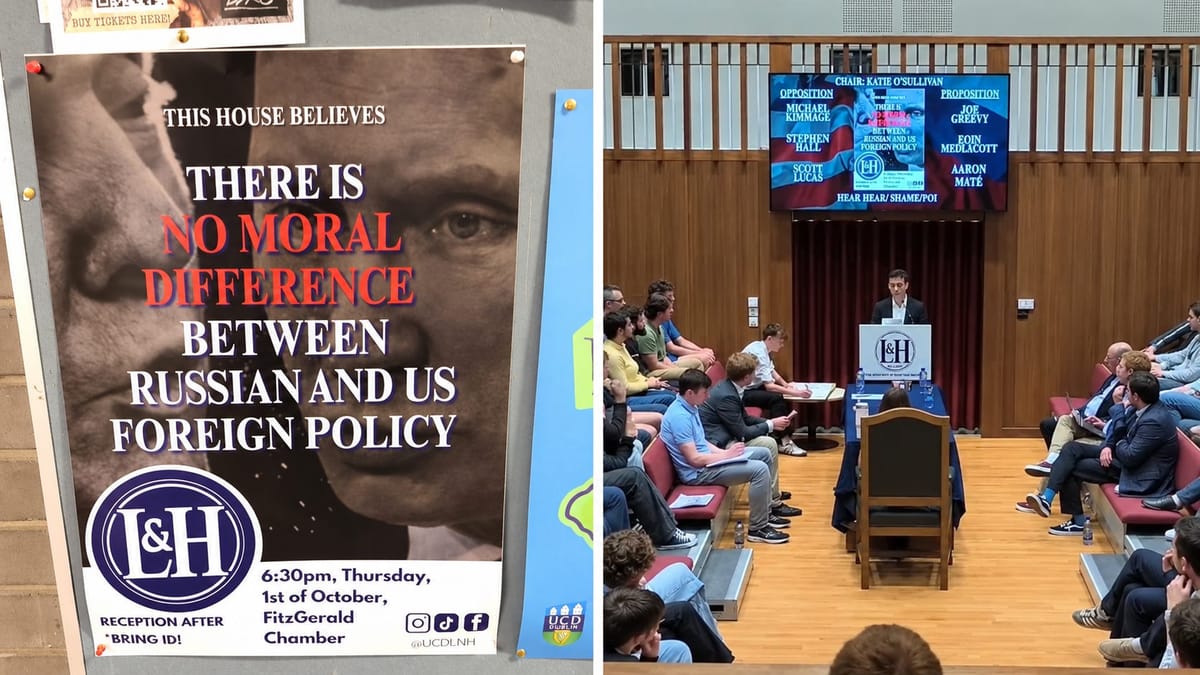
The venue itself could hardly have been better. UCD’s Garret FitzGerald Chamber is an intimate, purpose-built debating chamber, home to the university’s Literary & Historical Society. The L&H describes itself as UCD’s debating union and says that its purpose is to provide a forum in which contentious issues can be debated.
That should mean argument, disagreement, rebuttal and, above all, respect.
What I witnessed was something rather different.
The proposition concerned whether there is a moral equivalence between the foreign policies of the United States and the Russian Federation. It is a fascinating question, although by the end of the evening I had become convinced that the proposition itself was badly framed.
I don’t believe there is a moral equivalence.
But perhaps not for the reasons some of the people in that chamber expected.
Before the debate had even begun
My concerns started before Aaron Maté or any of the principal speakers had properly made their case.
A young man associated with the proceedings took to the podium and attempted some comedy at Russia's expense. Vladimir Putin was characterised in insulting terms involving being “stinky,” alcoholic and vodka-addicted.
More seriously, he referred to Russian people as “scum.”
There is no question in my mind about what was said. I was there, and my friend Clodagh, who attended the debate with me, captured the remark on video. We have the recording.
Perhaps somebody thought all this was hilarious.
I didn't. My wife is Russian.
There could easily have been Russian students, Russian citizens or people with Russian families sitting in that chamber. Whatever anyone thinks of Vladimir Putin, the Russian government or the war in Ukraine, contempt for an entire nationality has no place in what purports to be a serious academic debate.
It was particularly jarring in the Garret FitzGerald Chamber, a venue supposedly dedicated to argument, intellectual exchange and debate. Disagreement with a government is one thing. Describing an entire people as “scum” is something altogether different.
There were also people in the chamber wearing “Make Russia Small Again” T-shirts.
That was the atmosphere in which this supposedly serious discussion of Russian and American foreign policy began.
Aaron Maté opens the argument
Aaron Maté delivered the opening contribution.
I should declare my own position here. I follow Maté's journalism and generally find myself much closer to his analysis than to that of his opponents. That does not mean I agree with everything he says.
Indeed, if I had one criticism of Maté on the night, it was that he was almost too gentlemanly.
What followed his opening contribution frequently seemed to me less like rebuttal than an attempt to put Maté himself on trial.
Professor Scott Lucas repeatedly challenged Maté's expertise and journalistic standing. Maté acknowledged that he wasn't presenting himself as an academic specialist and turned the question back on Lucas.
But the attacks continued.
Lucas challenged Maté's reporting on Syria, Russia and the Organisation for the Prohibition of Chemical Weapons. In particular, the controversy surrounding the alleged chemical attack at Douma became part of the argument.
That is a legitimate subject for fierce disagreement.
What bothered me was the amount of time apparently being consumed challenging Maté personally rather than dealing with the evidence he was presenting.
Lucas also interrupted during Maté's allotted time. My recording allows the proceedings to be revisited rather than relying solely on memory.
When Lucas subsequently had the floor himself, my impression was that he was afforded considerably greater latitude, including when he exceeded his allotted time.
That may sound like a minor procedural complaint.
It isn't.
If one participant's time can be consumed by challenges and interruptions while another participant is permitted to run beyond his allocation, the audience isn't hearing an equal contest of ideas.
Syria and the OPCW
One of the most contentious exchanges involved Maté’s reporting on Syria and the OPCW.
Maté has extensively covered objections raised by inspectors associated with the investigation into the alleged April 2018 chemical attack in Douma. One of the figures involved was Brendan Whelan, an Irish former OPCW team member; another prominent dissenting inspector was Ian Henderson.
This controversy cannot responsibly be reduced to “Maté proved the OPCW lied,” nor can it be dismissed simply by calling Maté a propagandist.
There were internal disagreements concerning aspects of the Douma investigation. The OPCW leadership, in turn, strongly rejected allegations that its final conclusions had been improperly manipulated.
That is precisely why the documents and testimony deserve examination rather than ridicule.
Russia’s role in Syria deserves similar precision. Moscow had longstanding strategic interests in Syria, including its military relationship with Damascus and its naval presence at Tartus. But Russia’s 2015 military intervention also occurred at the invitation of the internationally recognised Syrian government.
Those facts can coexist.
Michael Kimmage and the question of war crimes
Another significant contribution came from Professor Michael Kimmage.
I found his presentation heavily focused on alleged Russian war crimes. Bucha featured prominently.
This is where I became increasingly frustrated.
There are serious allegations against Russian forces that deserve serious investigation. But if the subject is morality in foreign policy, why should alleged or documented abuses committed by Ukrainian forces receive so little attention?
The killing and mistreatment of prisoners, attacks on civilians in Donetsk and other incidents since 2014 are not rendered irrelevant merely because acknowledging them complicates the preferred narrative. I personally have footage of the aftermath of the Tochka-U Ukrainian missile strike on the market square in Donetsk in early 2022 and the shootings of Russian POWs in the backs of the legs in the dairy farmyard in Donetsk (All subsequently died). Most recently there was the Starobilsk atrocity, but there were no references made to any of these.
Bucha itself remains an issue on which I have serious questions concerning chronology and evidence. I do not accept every conclusion presented by Western governments and media organisations as beyond challenge. At the same time, allegations of a staged massacre are extremely serious and require evidence commensurate with the allegation. That evidence deserves examination rather than pretending a contested question can be settled in a sentence.
That is what an actual debate should do.
Examine evidence.
Not establish which evidence is permissible before the debate begins.
Joe Creevy surprised me
Joe Creevy was perhaps the most interesting speaker for me personally.
I disagreed with his conclusion on the proposition, but I recognised something in what he was saying.
He appeared genuinely tired of war.
So am I.
I am tired of the killing. I am tired of politicians and strategists discussing human beings as pieces on a geopolitical chessboard. I am tired of hearing the phrase “great-power competition” delivered as though perpetual confrontation between nuclear-armed states is simply a natural condition humanity must accept.
Creevy appeared to share at least some of that exhaustion.
Where he lost me was in rejecting the moral equivalence without, in my opinion, adequately explaining why.
That question — why? — was the very question I wanted the debate to answer.
Who wrote the “rules-based international order”?
The phrase “rules-based international order” surfaced repeatedly during the evening.
I have a problem with the phrase.
Whose rules?
Who wrote them?
Who appointed Washington, London, Brussels or NATO as the referees of humanity?
There is already an international legal architecture: the United Nations Charter, international treaties, international courts and bodies established by agreements between sovereign states.
Yet we increasingly hear about something called a “rules-based international order,” frequently invoked by Western governments.
My objection is not to rules.
My objection is to powerful states appearing to reserve for themselves the right to interpret, modify or disregard those rules depending upon their strategic interests.
That brings me to what I consider one of the elephants that should have been sitting squarely in the middle of the UCD chamber.
The RAND paper
In 2019 RAND published Extending Russia: Competing from Advantageous Ground, authored by James Dobbins, Raphael S. Cohen and colleagues.
I have referred to this document repeatedly over the years.
To me, it is indispensable reading for anybody attempting to understand US strategy toward Russia during the period preceding the present war.
I regard the document as extraordinarily aggressive. That is my interpretation, and readers should read it themselves rather than take my word for it.
What matters is that these strategic discussions existed in black and white.
Why wasn’t material like this at the centre of a debate about the morality of Russian and American foreign policy?
Why weren’t we talking seriously about the strategic thinking that preceded the catastrophe we are now witnessing?
America’s historical record cannot simply disappear
If we are going to discuss morality, let’s discuss morality.
In 1996, 60 Minutes correspondent Lesley Stahl confronted US ambassador to the UN Madeleine Albright with an estimate that sanctions against Iraq had contributed to the deaths of hundreds of thousands of Iraqi children and asked whether the price was worth it.
Albright’s answer became infamous:
“We think the price is worth it.”
She subsequently expressed regret for that answer.
But the words were spoken.
Then consider Libya.
After Muammar Gaddafi was captured and killed in 2011, Hillary Clinton, then US Secretary of State, laughed during a television exchange and remarked:
“We came, we saw, he died.”
Again: morality.
We can also discuss Iraq, Yugoslavia, Libya, Afghanistan, Syria, covert interventions, sanctions and regime-change policies.
We can discuss the Gulf of Tonkin.
We can discuss General Wesley Clark’s later account of being told of plans involving seven countries in five years.
We can discuss Patrick Clawson, Crisis Initiation, and the strategic discussion surrounding Iran.
We can discuss all of those things.
Indeed, if the proposition is about moral equivalence, how can we possibly avoid them?
My Position
I will put my cards on the table.
I believe there is no moral equivalence between contemporary Russian and American foreign policy.
I believe Russia has generally behaved more diplomatically in its external relations than the United States and has been less inclined to appoint itself policeman of the world.
Others will strongly disagree.
Good.
Then debate me.
Produce the evidence.
Show me the Russian equivalent of the post-Cold War catalogue of US-led military interventions and regime-change operations. Show me the Russian equivalent of Washington’s global military footprint. Show me where Moscow proclaimed itself the guarantor of an international order whose rules it effectively reserves the right to interpret.
And equally, where Russia has violated international law or committed abuses, put that evidence on the table too.
That would be a debate.
The Q&A that barely happened
Perhaps the most frustrating part of the evening came at the end.
A question-and-answer session had been anticipated.
I had my hand up.
There were several points I wanted to raise: RAND; the historical record of US intervention; Madeleine Albright; Hillary Clinton and Libya; Patrick Clawson; Wesley Clark; and the strategic thinking that preceded the confrontation with Russia.
I didn’t get the opportunity.
As I remember the proceedings, only one audience question was entertained.
The questioner identified himself as Syrian and launched a forceful challenge to Maté concerning Syria and the OPCW, including the credibility of the dissenting inspectors.
I am not going to call that man a “plant” without evidence. I don’t know who he was beyond what he said about himself.
What I can say is that his question was selected, that it attacked one of Maté’s central areas of reporting, and that in my view Maté was not given an adequate opportunity to answer before proceedings were brought to an end.
The audio recording provides a record of how that exchange unfolded.
And then we were told to delete recordings
There was another episode that I believe UCD should address.
We were approached concerning photographs and video recordings and told to delete material from our phones. I complied with the instruction regarding the material I was asked to delete.
I retained an audio recording on a separate phone.
That recording matters because memories differ, political arguments become heated and accusations start flying.
Audio doesn’t remember what somebody wanted to have happened.
It records what was said.
And, importantly, the opening remark describing Russian people as “scum” was also captured on video by my friend Clodagh.
So there is a record.
This Wasn't My First Experience of It
What happened at UCD did not occur in a vacuum, and it wasn't my first experience of what I regard as institutional Russophobia within Irish academia.
I had already witnessed something strikingly similar at the National University of Ireland in Merrion Square, where an event involving academics and other speakers was presented to an audience with the participation of the Ukrainian ambassador to Ireland and Dr Maxim Skrypnyk.
I went there expecting serious discussion.
What I witnessed, in my opinion, was overwhelmingly one narrative: Russia was the aggressor, Russia was the problem and Russia had to be defeated.
Where was the serious examination of the opposing evidence? Where was the interrogation of NATO policy, the history preceding February 2022, the war in Donbass, Western strategic planning or the role played by the United States and its allies?
That experience came flooding back to me while sitting in UCD.
Different university. Different speakers. Different event.
But to me, much the same atmosphere.
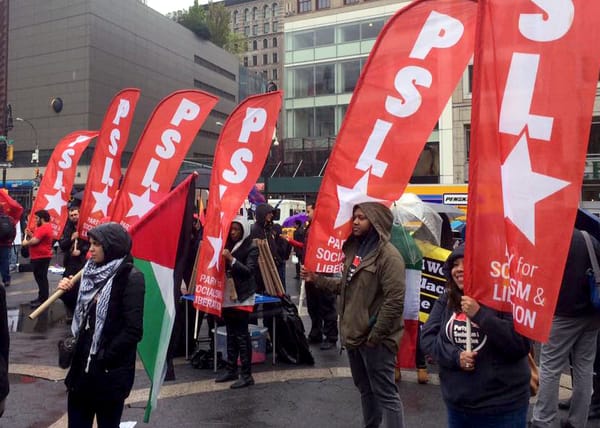
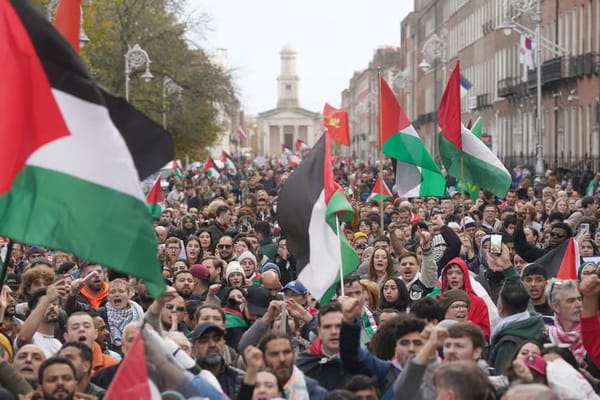
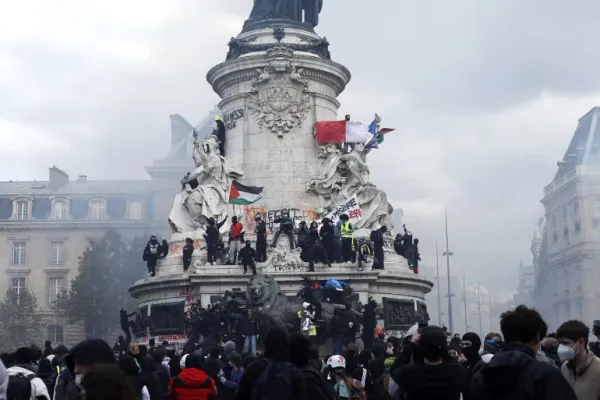
And I cannot completely divorce that experience from UCD's disputes with Palestine solidarity activists either.
A UCD student encampment established in May 2024 called on the university to sever academic links with Israeli institutions and take other measures. That encampment eventually ended following an agreement between activists and university management.
A later Palestine solidarity encampment became involved in further disputes with the university and authorities, including removal actions during 2025 and an eviction from the N11 location in January 2026.
I have strong views about all of that.
I have watched universities that pride themselves on debate, diversity and freedom of expression become considerably less comfortable when the political expression in question challenges powerful Western foreign-policy narratives.
That sends a very clear signal to me.
I believe Russophobia is being normalised within sections of Irish political, media and academic life. I also believe there is a strongly pro-Israel — and, in some circles, explicitly Zionist — current within those same institutions that deserves considerably more scrutiny than it receives.
That is my opinion. I am not presenting it as a secret memo I discovered in a filing cabinet at UCD. I am telling readers the conclusion I have reached from what I have personally witnessed.
And this debate reinforced it.
When somebody can stand in a university debating chamber and collectively insult Russian people as “scum” while making crude jokes about vodka and the Russian president before the substantive debate has even begun, I don't regard that as an atmosphere conducive to an impartial discussion of Russia.
When people can sit in the chamber wearing “Make Russia Small Again” T-shirts, that tells me something about the political atmosphere too.
And when Aaron Maté then finds himself subjected to attacks on his credibility and expertise, while the Q&A ultimately provides room for only one hostile audience intervention, I am entitled to ask whether what I attended was really the balanced intellectual contest that the word debate implies.
Others who were there may have reached a completely different conclusion.
Fine.
I am writing what I witnessed and what I concluded from it.
Universities should be precisely where uncomfortable arguments are heard, challenged and tested against evidence. They should not become echo chambers in which one geopolitical narrative is treated as respectable and its challengers are treated as suspect before they have even finished speaking.
That is what concerns me.
And after what I witnessed in Merrion Square and what I witnessed again at UCD, I no longer regard it as an isolated occurrence.
UCD: The Right of Reply
I am publishing this account now because I believe what happened in the Garret FitzGerald Chamber deserves to be placed on the public record and discussed.
I am not waiting for UCD or the Literary & Historical Society to respond before publishing it. But I want to make something equally clear: I very much want them to respond.
I intend to ensure that this article reaches people within UCD and those responsible for organising the debate. I will invite the university and the L&H to read what I have written and answer the questions it raises.
I also intend to make available the audio and video material that we managed to retain. That material matters because it provides a record of what was actually said and what happened in the chamber.
In particular, I believe UCD should address the recorded remark describing Russian people collectively as “scum.” Whatever political disagreements exist over Russia, Ukraine or Vladimir Putin, I consider that an extremely serious derogatory statement about a nationality, made in a university debating chamber where Russian students or Russian members of the public could quite conceivably have been present.
I would like UCD and the organisers to answer some straightforward questions.
Who delivered those introductory remarks, and in what capacity was he speaking?
Does UCD or the L&H consider describing Russian people as “scum” acceptable language in the Garret FitzGerald Chamber?
Does the university consider jokes portraying the Russian president in terms involving drunkenness and vodka consistent with the standards expected at an academic debate?
Why were attendees instructed to delete photographs or video recordings?
Why did the audience Q&A apparently conclude after a single audience question?
And does UCD believe the chairing of the debate gave the competing arguments an equitable opportunity to be heard and challenged?
The invitation to respond is genuine.
If UCD, the L&H, the chair or anybody directly involved believes I have represented something incorrectly or unfairly, I would like them to explain why. If important context is missing, provide it. If they stand over what happened, explain their reasoning. And if they believe an apology or acknowledgement is warranted, they have the opportunity to make one.
Most importantly, I will publish their substantive response on my Substack so that my readers can hear their position directly rather than merely my interpretation of it. I will also address whatever explanation or statement they provide.
This article is therefore not the end of the conversation.
It is an invitation to UCD to join it and save it's institution from disrepute.
The right of reply is open — and I sincerely hope they take it.
What I walked away thinking
I arrived expecting a serious examination of one of the most important geopolitical questions of our time.
I left disappointed.
Aaron Maté certainly didn’t need me to defend him. He held his own.
If anything, I thought he was too polite.
What troubled me wasn’t disagreement with Maté. Disagreement is the entire bloody point of a debate.
It was the atmosphere surrounding that disagreement: the personal attacks, the provocative opening, the T-shirts, the imbalance I perceived in the chairing, the truncated Q&A and the apparent assumption that some conclusions about Russia could simply be treated as settled.
I don’t want universities where everybody agrees with me.
I want universities where somebody can disagree with me — and then defend their argument.
I want Scott Lucas to make his case.
I want Michael Kimmage to make his.
I want Aaron Maté to make his.
I want Joe Creevy and Stephen Hall to make theirs.
And then I want the audience to be trusted to think for itself.
Because if we cannot discuss war, peace, Russia, NATO, Ukraine and American power without ridicule, national stereotyping and attempts to delegitimise the person making the opposing argument, then we haven’t strengthened our case.
We’ve demonstrated how frightened we are of having it challenged.
And in an age when politicians once again talk casually about great-power competition between nuclear-armed states, that isn’t merely an academic problem.
It is a dangerous one.