The Grassroots Is Whispering. Are You Listening To Them Or To The Reformist Politicians?
The official historiography will do its best to omit the reactions of the crowd, the voices of the subaltern, the mood of the people. Who will listen to them, and who will insist on presenting what the reformist politicians are saying as the irrevocable truth of society?
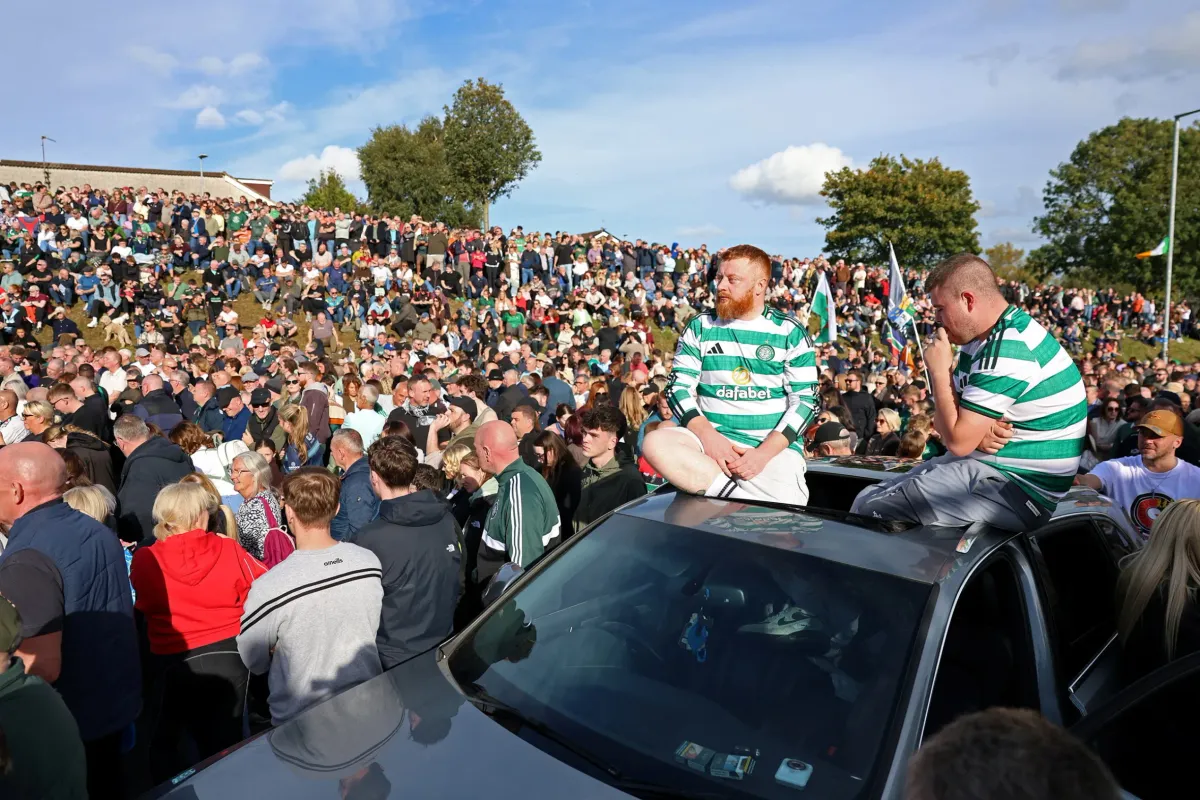
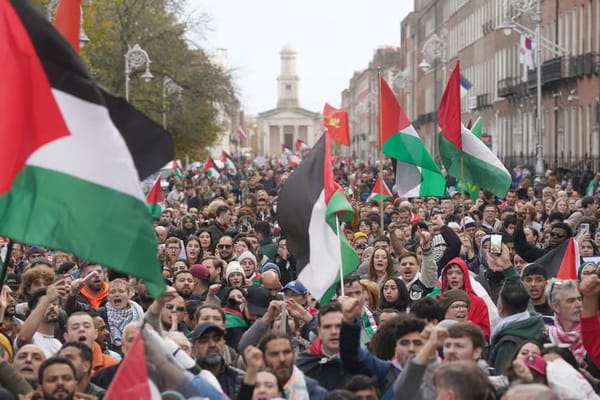
It was at 3pm today that the solidarity rally took place on Garvaghy Road. Thousands of people, locals and supporters from across Ireland and beyond, gathered to express their opposition to the Orange Order march. For the first time in 28 years, this appendage of the British state has been granted permission to march down the road of the small nationalist community in Portadown. It has developed into a standoff lasting more than a week by this point, with people power blocking the march physically, overruling the Stormont regime’s legal institutions and its continued colonial occupation.
This was inspiring. It was also inspiring to see that over 1,000 non-nationalists signed an open letter asking the Orange Order to call off its march. A Protestant woman by the name of Lindsay McLaren read out said letter.
Community leaders were well-received by the people. However, the reformist politicians speaking received criticism from the crowd, as their words were designed to pacify. There can only be intellectual honesty from the revolutionary socialists on this matter.
We saw this criticism take place, and therefore, we will report on it. There are those reactionaries who aim to shut down all discussion with the mantra of “Left Unity”, an idea which has festered in Ireland, in the cozy atmosphere of complacency, pushed by Trotskyist forces and the overselling of run-of-the-mill social democrat Catherine Connolly as a socialist heroine. These people will say such things as “it is not the time”, that for the sake of unity, criticism must be forsaken. This is the wrong approach. Revolutionaries must tell the truth. If political struggle were forsaken each time a mass protest event took place, the revolutionary movement would be forever trapped by the liberal baseline.
Within the mainstream narrative, and its media apparatus, there will be countless articles reporting on the speeches of the politicians who gathered from across the political spectrum today. The official historiography will do its best to omit the reactions of the crowd, the voices of the subaltern, the mood of the people. Who will listen to them, and who will insist on presenting what the reformist politicians are saying as the irrevocable truth of society?
We find ourselves in a situation where we no longer have the language to articulate our own un-freedom. Political events present themselves as a sort of spectacle, and resist dissection and truth. The speeches of elected politicians today were all embedded within the colonial framework of the Good Friday Agreement, stripped of political substance, an attempt at electioneering.
With the exception of Breandán Mac Cionnaith from Éirígí, the long-standing leader of the Garvaghy Community, socialist republicans were excluded from the stage. He remained principled and stoical within the sea of bourgeois politicians that surrounded him. His clear-cut identification of the Orange Order with fascism clearly made some soft-left figures uncomfortable on stage. These elected politicians and their parties dared not, and willed not, to venture beyond the respectable politics of the “peace process”, the need for “dialogue” and “compromise”. Just because these voices formed a minority on the stage, however, means not that they were lacking from the crowd.
The Social Democrats speaker Oxford graduate Patricia Stephenson lamented, in the typical welfarist manner of the soft-left, about how she is “so sorry” about all the “trauma” faced by the community, and how “these weeks are so difficult for the residents”, while also recommending that the residents engage in “compromise” and “dialogue”, in typical liberal fashion.
The crowd went quiet, and started muttering. The muttering was audible. Glances were exchanged. “Typical SocDems”, one stated. The community had, first of all, understood the events to be inspirational for their struggle. Also, at this point in time, especially with the illusions of the Good Friday Agreement being brought into question, the residents have explicitly rejected dialogue and negotiation with what Mac Cionnaith described as the “fascist” Orange Order.
When Mary Lou McDonald, from Sinn Féin spoke, she started with a simulacra of Martin Luther King. “I believe …, “ she started repeating. At this point, a voice from the crowd interrupted, “I Believe The Dark!”. This slogan, amongst other jeers, interruptions and scattered applause to this constitutional nationalist party, was commonplace last weekend too. It represents nothing other than instances of grassroots resistance to the normalisation of British occupation.
For those unaware, Brendan Hughes, nicknamed the “Dark”, was a leading Irish republican, revolutionary socialist, and former Officer Commanding of the Belfast Brigade of the Provisional Irish Republican Army. He grew increasingly critical of Sinn Féin’s direction in the 1990s after the Good Friday Agreement (GFA), slamming them for selling out the cause and administering the British occupation in the 6 counties rather than fighting for liberation. Based on the acronym, he coined the term “Got Fuck All”, stressing that the agreement sold out working-class communities and the socialist cause for which republicans fought.
What this shows is that the machine of imperialism, oiled by reformist politicians, is at work, always and everywhere. What is not said is even more important than what is said. Every political speech not merely reflects the consciousness of a political party, but actively works to construct what is permissible, and not permissible to say. As such, what is also visible is that there is always the possibility of resistance, through telling the truth; only if it is whispered, it is the task of revolutionary socialists to highlight these voices, and to refuse to tail the reformist politicians. The dominant narrative is powerful, but not all-powerful. Hope lies in a working-class, anti-imperialist movement for a 32-county socialist republic.