Referendum Refused: Government Denies Voters A Say On Triple Lock
Yesterday, the 18th of November 2026, will go down as a turning point in Irish politics. The Dáil voted by 84 to 77 against a Sinn Féin motion calling for planned changes to the Triple Lock to be put to the people in a referendum.
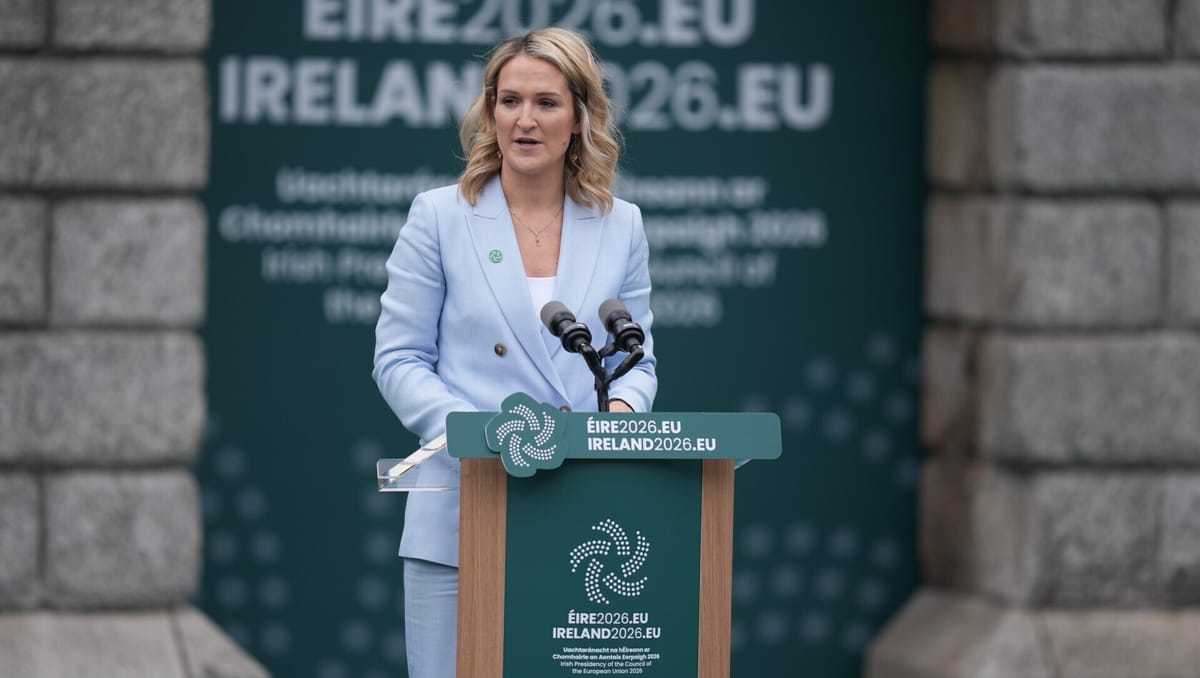
Yesterday, the 18th of November 2026, will go down as a turning point in Irish politics. The Dáil voted by 84 to 77 against a Sinn Féin motion calling for planned changes to the Triple Lock to be put to the people in a referendum. The Coalition Government, of course, held their own line, but not entirely: Barry Heneghan, who supports the government voted against it, saying that a decision on the Triple Lock should be decided by the Irish people.
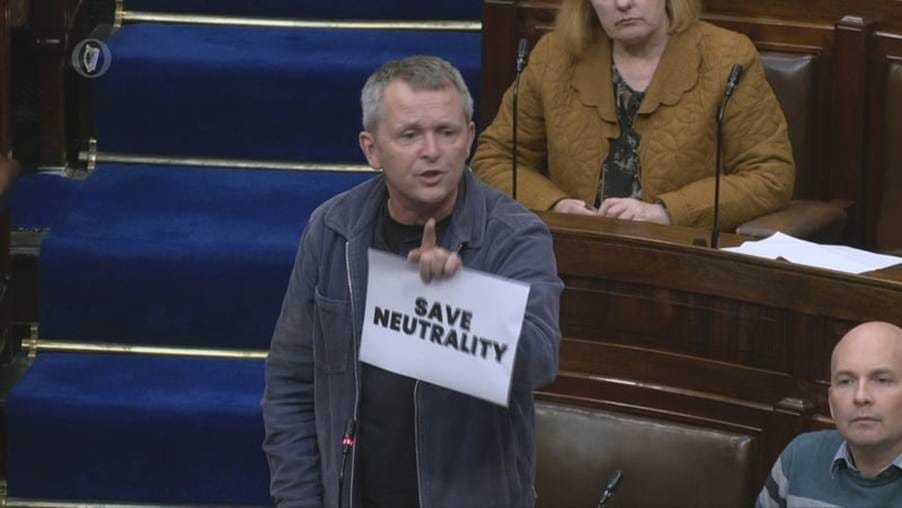
The motion targets legislation that would put an end to the requirement for UN approval when deploying Irish troops abroad, which is due to be debated at an Oireachtas committee next week and is expected to come into force by the end of the year. It should be noted that this vote followed weeks of tense exchanges in the Dáil: on the 20th of October, Opposition TDs held up “save neutrality” signs in the chamber until the Ceann Comhairle forced them to put their signs away, and the Taoiseach accused Sinn Féin of not caring about Irish neutrality for decades and arguing that the Opposition wants Russia, China and the United States to block Irish soldiers from peacekeeping in Lebanon in the future.
In the November debate during this motion, Martin claimed that Irish soldiers were being put at risk by Sinn Féin, going so far as to suggest Irish soldiers would side with Israel in future missions. For her part, Mary Lou accused the Government of hitching Ireland to Europe’s militarisation, warning that, without the UN mandate safeguard, the country would face pressure from powerful states as to where Irish troops are to be deployed. Change is happening in Irish politics without debate, Ireland is being moved deeper into EU military structures in line with NATO strategy against neutrality, one of the most important and deeply connected values to the Irish people.
However, this November setback is not the first time the Dáil has voted down putting neutrality to the people. In March 2022, following the initial weeks of Russia’s full-scale invasion of Ukraine, the Government then defeated a People Before Profit motion to hold a referendum to insert Ireland’s neutral status into the constitutions by 53 votes to 67. Prophetically, Richard Boyd Barrett warned that the Ukraine crisis was being used to push militarisation and move Ireland into EU militarisation and NATO alignment. To be clear, Sinn Féin supported this motion, with foreign affairs spokesperson echoing the same points against, what he called, “jingoism.” The then Tánaiste Simon Coveney argues that giving a constitutional guarantee of neutrality into the constitution would “neutralise the ability of the Irish Defence Forces to operate overseas” and “prevent the provision of non-lethal equipment” to Ukraine. It is here also we see a shift from the language of peacekeeping to “peace enforcement.” Now, four years later, the same camp and the same Government met again over the same question, but this time with legislation, rather than debate because they can’t argue for ending neutrality, which is what NATO, the EU and the bosses want.
What needs to be emphasised here is understanding what the Triple Lock argument is really about, it is so much more than what the Government presents as an obstacle to peacekeeping, you have to go back to two referendum campaigns that made Irish neutrality a political promise.
Ireland's military policy has been set in place since independence, from staying out of the Second World War to declining to join NATO. The Triple Lock itself predates the treaty debates: it originated in emergency legislation passed in 1960 to send an Irish battalion to the UN mission in Congo, requiring Government, Dáil and UN approval for any deployment of more than twelve troops overseas. But it was the Nice Treaty referendum of 2001, which the Irish people rejected, that turned the Triple Lock into the touchstone of neutrality. The fear that Nice would compromise Irish neutrality through its provisions for a EU Rapid Reaction Force was central to the No campaign. When EU leaders met in 2002 following the rejection, other EU governments accepted Ireland's Triple Lock declaration towards EU military activities. The European Council recognised Ireland’s right to decide, under its own constitution and whether to take part in European Security and Defence Policy, and on the strength of these declarations, the second Nice referendum passed in 2002 with 60% in favour with an explicit qualification that prevented Ireland from joining any EU common defence policy.
This same issue of neutrality came up again over the Lisbon treaty. The first Lisbon referendum in 2008 was rejected 53.4% to 46.6% , and the No campaign’s core claims included that Ireland would not be able to maintain its neutrality under the treaty with conscription being allowed into an EU military force under it. In the same year, then Taoiseach Brian Cowen presented the Irish people’s concerns to the European Council, which agreed that Lisbon did not threaten Ireland’s traditional policy of neutrality nor influence Ireland’s ability to determine its own defence spending. These commitments were encapsulated in the “Protocol on the concerns of the Irish people on the Treaty of Lisbon” attached to the Lisbon Treaty, which also states that it is a matter for any member state, including Ireland to decide, under its own domestic legal framework, to participate in any military operation. As a result of these reassurances, the Lisbon treaty was ratified by referendum in 2009.
In the face of this history, the Triple Lock is not merely a rule; it was twice the price of ratification of EU treaties. Before this month’s vote, former defence minister Willie O’Dea, hoped to keep deployments of Irish soldiers under the remit of the UN and International Law going, he also circulated a letter signed by twenty TDs calling on Fianna Fáil to oppose this abolition of the Triple Lock and to “stand up and be counted” and Seamus Healy TD of Workers and Unemployed Action taunted the Fianna Fáil TDs backing the motion whether they would “disown” de Valera, Ahern, Cowen and O’Dea, the very architects of the party’s own neutrality record.
The Government’s case is that the change is not a retreat from neutrality at all. The current mechanism of the Triple Lock is still in place, but because the five permanent members of the Security Council hold a veto, any of them can hold back authorisation; this actually happened to Ireland back in 2003, when China’s refusal of formal UN approval blocked participation in a planned mission to the former Yugoslav Republic of Macedonia, but aside from this there hasn’t been a UN approved peacekeeping mission since 2014. Removing the UN requirement would let Irish troops deploy on EU or African Union missions once the Dáil agrees and would allow for faster response times without UN approval, but it's here that critics point out that this would very easily include NATO-led missions. Furthermore, the government argues neutrality would technically be the same since Ireland would not be a member of a military alliance and Simon Harris has framed this as a change in Ireland’s role in peacekeeping missions. Who is falling for this in the face of two promises and guarantees made to get two EU treaties over the line? Is there not a feeling that Irish voters from then and now were lied to? Could this be the first time in Irish politics that promises are being formally unwound so openly on such a deeply important value to the people of Ireland with the Government deciding that this can be done by a simple majority in the Dáil rather than by referendum?
What this month’s vote settles, for now, is procedural. The question of the Triple Lock will not go to the people in a referendum, the parliamentary campaign to do so has now been defeated twice in four years, and the legal change may be enacted before the end of this year, but there are cracks; Heneghan’s defection, Fianna Fáils internal angst over the vote and the open breaking of promises made to the Irish electorate. It is important for everybody to come out this Saturday for the national “Save Our Neutrality” demonstration at the Garden of Remembrance at 2PM to show the Irish government who they’re breaking their promise to: Ireland.
Bibliography
Crowe, Richard. "Ireland's Referendum on the Treaty of Nice." ERA Forum 3, no. 3 (2002).
https://www.rte.ie/news/politics/2022/0330/1289336-ireland-neutrality-ukraine/
https://www.rte.ie/news/2026/1020/1596129-triple-lock-vote/
https://www.rte.ie/news/2026/1118/1599687-taoiseach-irish-soliders-at-risk/
https://www.rte.ie/news/politics/2023/1123/1418171-triple-lock/
https://www.iiea.com/images/uploads/resources/Ireland%2C_the_Triple_Lock_and_Military_Neutrality.pdf