Boynesiders Reject Fate as Neglected Commuter Zone
With a population comparable to Tallaght but spread over nine times the land, Greater Drogheda’s parishes, civic groups, and leftists have launched a three-pronged attack against the bureaucratic red tape delaying the regeneration and reorganisation of the Boyneside.
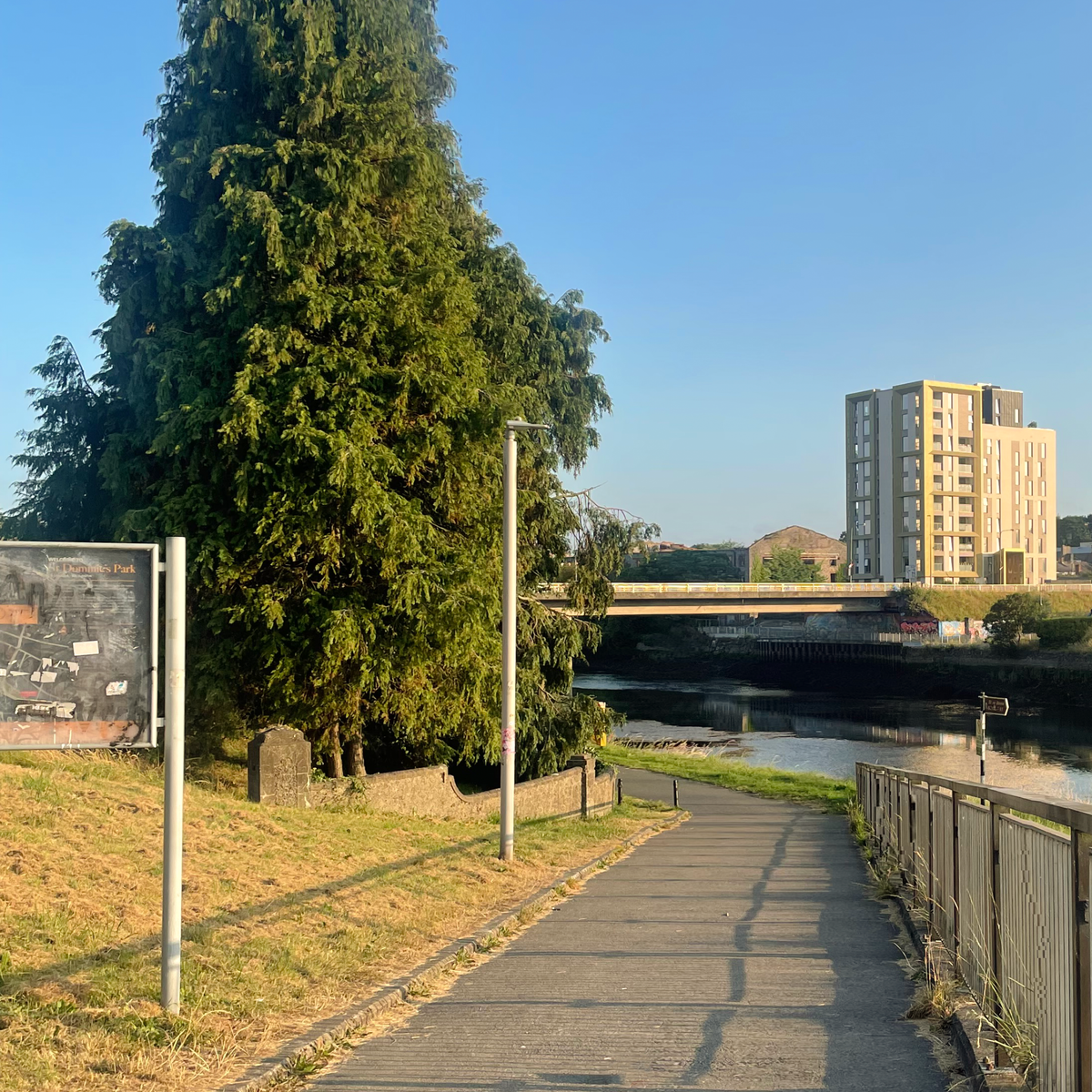
70 thousand people live in the region between Clogherhead and the River Nanny variously known as Greater Drogheda, South Louth & East Meath, Brega, and the Boyneside.
After decades of steadfast civil society advocacy by the Drogheda City Status Group and parish-level networks, three campaigns aiming to reclaim autonomy for the Boyneside have made significant headway this year.
Ballsgrove to Ballsbridge
Straddling the River Nanny is a village called Julianstown. For the thousands of people who commute from the Boyneside to Dublin every week, Julianstown’s Main Street – a road lined with a creche, a primary school, and a series of charming bungalows – has become the preferred route for motorists and buses to merge onto and off the M1. This has resulted in significant noise and air pollution, as well as risks to the safety of children, pedestrians, and cyclists.
It was on Wednesday 8 July that local residents and passers-by convened at a local eatery to discuss the creation of a new relief road that will bypass Main Street. Four routes for this new road were shortlisted and then presented at this public consultation.
Submissions to the Julianstown Traffic Relief Scheme will close on Friday 31 July, after which engineers, employers, environmentalists, landowners, An Coimisiún Pleanála, and others will be engaged.
Squeezed in the middle
In 2024, the Louth and Meath county councils published a paper declaring their intention to collaboratively develop a Joint Local Area Plan (JLAP) for the cross-county city that is Drogheda. The vision was to effectively zone and design Drogheda in a way that would ensure high levels of housing availability, the creation of sufficient amenities, environmental protection, and the stimulation of the local economy all at the same time.
However, the JLAP was stalled shortly thereafter due to a major legal development.
Chapter 6 of Part 3 of the Planning and Development Act 2024, which came into effect on Wednesday 31 December 2025, mandated that issues with county development plans must be resolved before local area plans can proceed.
Meath’s county development plan was at the time being challenged at the Supreme Court by an environmental group called Protect East Meath, which argued that too much land was zoned for housing, and that this excess housing would place an incredible strain on local infrastructure south of the Boyne. In a January 2026 ruling, the Supreme Court ordered Meath County Council to divert sufficient resources towards East Meath, effectively placing the JLAP on the backburner.
This disappointment that followed was replaced by triumph just a few months later. Inspired by the actions of Protect East Meath, three civil society groups – the Drogheda City Status Group, Development Perspectives, and Drogheda Vacancy and Dereliction – came together to threaten the Louth and Meath county councils with a High Court challenge if they did not immediately proceed with the JLAP. The councils, wary of their limited resources, bowed to the pressure in April.
Taking it to the Dáil
Determined to ease the suffering of bureaucratically challenged communities like Greater Drogheda, native Boynesider and Sinn Féin TD Joanna Byrne introduced the Local Government (Cities) Bill 2026 to Dáil Éireann shortly after the rescue of the JLAP.
The Bill, if enacted, will give official city status to the urban core of Drogheda. The urban core, together with the Louth hinterland, will be known as the Municipal District of Drogheda City. The Meath hinterland will not immediately benefit from this legislation; according to correspondence with Deputy Byrne’s office, a plebiscite would have to be held to officially transfer the Meath parts of the Boyneside to the new entity [1].
The legislation will also help other towns across the country achieve city status by setting down statutory criteria and establishing a standard application mechanism. If a community is granted status, the Minister for Local Government will confirm so through notice in the State gazette, the Iris Oifigiúil.
[1] Joanna Byrne TD, email message to the author, May 18, 2026.