You Will Own No Games
Sony’s decision to end physical disc production for new PlayStation games from 2028 point to something larger than a change in gaming habits. They are signs of an economy in which ownership is being replaced by access.
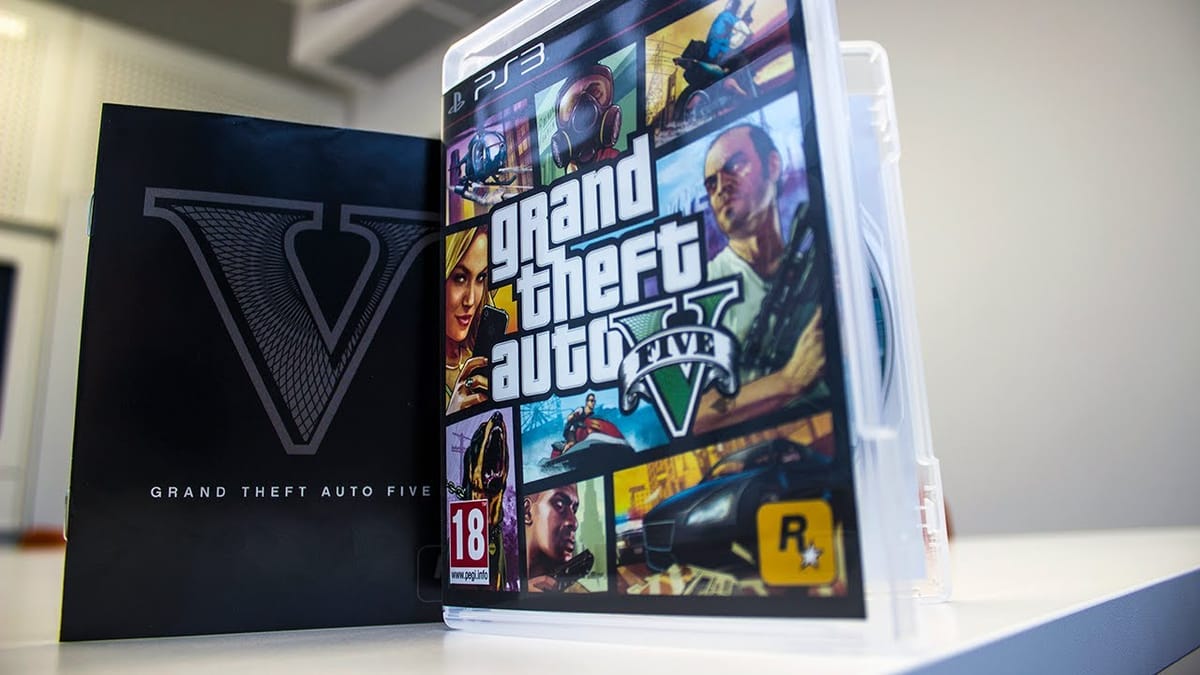
Sony has announced that physical disc production for new PlayStation games will end from January 2028. After that point, new PlayStation releases will be available through the PlayStation Store and through retailers, but in digital formats only. Existing disc releases will not be affected, but the direction of travel is now explicit. The future Sony imagines is one in which the physical game disappears.
Grand Theft Auto VI already gives us a glimpse of that future. Rockstar’s own support page says the physical version of GTA VI will contain a code for the digital download of the game, but no disc in the box. In other words, the box remains, the retail ritual remains, but the substance of physical ownership has been removed. What is being sold is not a game on a disc, but access to a digital licence.
At first glance, this may seem like a niche concern. Many players already buy games digitally. Downloads are convenient. They avoid clutter. They allow pre-loading, instant access and easier updating. The disappearance of discs can therefore be presented as a simple response to consumer preference.
But that explanation is too shallow. The decline of physical media is not only about convenience. It is about ownership.
A physical game is imperfect, but it is yours in a way a digital licence is not. It can be lent to a friend, sold second-hand, borrowed, collected, preserved or found years later in a drawer and played again. It exists outside the immediate control of a corporate storefront. That does not make the owner sovereign in an absolute sense, but it does give him a meaningful degree of independence.
Digital distribution changes that relationship. The player no longer owns a copy in the traditional sense. He owns access, mediated through an account, a platform, a storefront, a licence agreement and a network of corporate permissions. The game becomes less like a possession and more like a tenancy.
This matters because the wider direction of modern capitalism is away from ownership and towards recurring payment. The ideal customer is no longer someone who buys a product once and leaves. The ideal customer is someone permanently attached to a payment system, providing the firm with a constant stream of income.
Gaming has been moving in this direction for years. Full-price releases are now surrounded by deluxe editions, online passes, in-game currencies, cosmetic stores, battle passes, subscription catalogues and recurring services. The game itself is increasingly only the entry point into a wider system of continuing extraction.
This is not irrational behaviour by the companies involved. From their perspective, a one-off sale is limited. A subscription, however, refreshes itself every month. A digital storefront controls the terms of access. An online service keeps the player inside the ecosystem. A second-hand disc gives the publisher nothing, while a locked digital account keeps the consumer dependent.
This is not a point that depends on accepting any one ideological system or economic doctrine. The evidence is visible in the industry’s own language. Digitally distributed games generally have higher margins than retail sales, while physical copies bring manufacturing costs, retailer cuts, inventory risks and exposure to the second-hand market. A completed sale is also finite. Once the player has bought the disc, the transaction is over. By contrast, a digital storefront, subscription service or online ecosystem keeps the player attached to the platform and allows revenue to recur. The goal is not simply to sell a game, but to escape the limits of the completed sale through platform control, intellectual property, enclosure and recurring payment.
That is why the end of physical media has consequences beyond sentimentality. When discs disappear, resale is weakened. Lending is weakened. Independent preservation becomes harder. Retailers become less important. Platform-holders become more powerful. The consumer loses small but real forms of control.
The language of progress hides a transfer of power. We are told that the future is frictionless, convenient and digital. What is not emphasised is that this convenience often means the abolition of ownership. The same pattern can be seen in music, film, software and even parts of the car industry. Products become services. Purchases become subscriptions. Owners become users. Users become tenants.
This is the deeper meaning of the PlayStation announcement and the GTA VI box-without-a-disc. They are signs of an economic model in which access replaces possession and recurring revenue replaces the completed sale.
The phrase “you will own nothing” is often treated as a conspiracy slogan. But in gaming, it increasingly looks less like a prophecy and more like a business plan.
The question is not whether digital games are convenient. Of course they are. The question is what consumers are being trained to surrender in exchange for that convenience.
A society of permanent subscribers is a society of renters rather than owners. And if even leisure, play and culture are reorganised around recurring payment and corporate permission, then the disappearance of the humble game disc deserves more serious attention than it has received.