The Man With The Hat: How The Hunt For A Republican Counterfeiter Could Not Save The Dollar
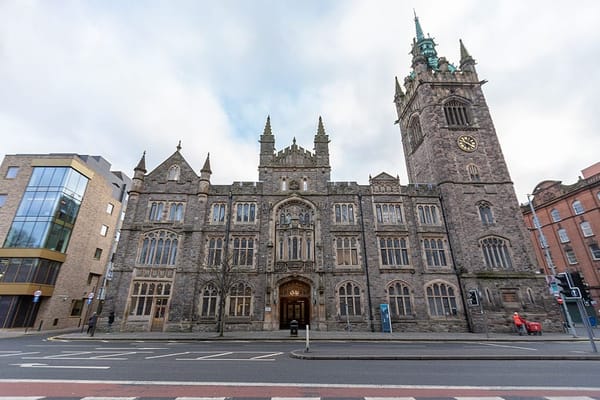
In October 2005, detectives moved quietly through a hotel in Belfast where the Workers’ Party of Ireland was holding its annual conference. The man they were looking for was its president, Seán Garland.
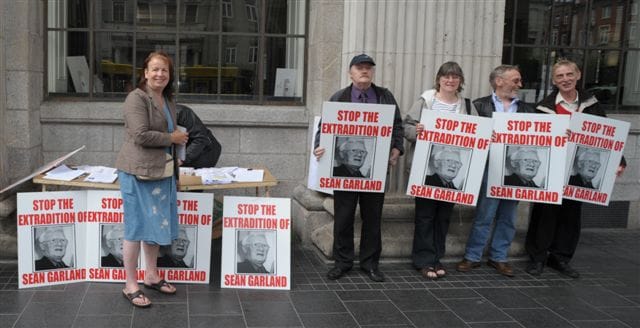
In October 2005, detectives moved quietly through a hotel in Belfast where the Workers’ Party of Ireland was holding its annual conference. The man they were looking for was its president, Seán Garland, a veteran of republican struggle since the 1950s and ardent supporter of socialist republicanism. The warrant was from America, and the case it opened read, as one Irish Times journalist put it, like “a bad airport novel”: secret meetings with North Korean spies, the best counterfeit money ever seen, a Marxist conspiracy to destabilise the US economy, bag loads of cash smuggled on the Holyhead ferry, the KGB, the Russian mafia and the Official IRA. It was formally known as “The United States of America v Seán Garland, aka The Man With The Hat,” and it charged a scheme, run over nearly two decades, to flood the world with near perfect counterfeit $100 bills.
The warrant went further with the US Attorney’s office identifying Garland as the Chief of Staff of the Official Irish Republican Army, the section of the republican movement that went to the Left, into Marxist politics in the 1970s, and alleged that Garland had used his position in the Workers’ Party with a company called GKG Comms as cover for buying, transporting and reselling “supernotes” in quantities of up to $1 million. From approximately 1989, these supernotes entered worldwide circulation, their quality was so passable that banks were routinely deceived; from bank tellers, currency experts and even advanced bill checking machines used by the Federal Reserve. When the first of these bills entered circulation in the streets of Dublin in the early 1990s, the effect was almost immediate; local businesses and banks stopped accepting $100 bills as legal tender. Investigators would describe this operation as the most sustained, destructive attack on US currency on record, which made American authorities extremely anxious to get to the source.
In following the trail of these bills, it led somewhere stranger than Dublin. In fact, it was traced back to a government printing operation in North Korea, a state whose sanction-crippled economy needed foreign currency and which, allegedly, hoped to destabilise the US dollar through flooding the international market with fakes before sharing out the profits to Marxist-leaning groups around the world. In addition, North Korean defectors confirmed that dollar production was a government operation; “We bought the best of everything, the best equipment and the best ink,” one defector described how diplomats travelling to south-east Asia mixed the fakes with genuine notes “at a rate of about 50-50.” These notes were transported out of the country in diplomatic bags and collected, allegedly by Garland himself, at the North Korean embassy in Moscow.
For the Workers’ Party and its paramilitary wing, this was apparently not a new line of business. According to the history of the party in The Lost Revolution, Group B (the Officials) had been distributing forged $100 bills since the mid-1980s, with activists believing the notes came from the USSR. CIA agents in collaboration with Irish security suggested the KGB had started the scheme, the notes were printed in North Korea and informed their Irish contacts that Group B had been awarded the “European franchise” for the Superdollar, with separate networks in the Far East and Middle East. By 1990, the Belfast organisation had established five four-man teams to exchange the fakes across Ireland; volunteers sprayed their hands with a liquid called “second skin” to bypass fingerprint detection, but the sheer volume of these high quality forged notes being moved made the operation difficult to hide.
The operation’s mechanics, as reconstructed in the indictment, were banal for all its secrecy. In October 1997, Garland allegedly flew to Moscow and to the North Korean embassy to arrange the purchase of new counterfeit bills that were designed to bypass the new security features America had introduced. In the first six months of 1998, he allegedly made three more trips to Moscow to collect batches of bills from the embassy with the bills smuggled into Dublin in bags and hidden in clothing. Couriers made more than fifteen trips on the Britain-to-Ireland ferry carrying bags of cash as ferry passengers did not have to face security checks. The conspirators were instructed to call the notes “jackets” and “paperwork”; Garland, careful never to deal directly with underlings, left negotiations to Christie Corcoran and, to throw any potential mole off their tracks, insisted the notes came from Russia rather than North Korea.
What alarmed Washington most was the escalation. The Superdollars had worried the US treasury so much that in 1996 it redesigned its $100 bill, changing Franklin’s portrait and adding an embedded security thread, watermark, microprinting and optically variable ink. To the Americans’ shock, the North Koreans needed only a few years to produce a forgery of this new note. The indictment describes Garland’s efforts, between December 1997 and July 2000, to obtain these new forgeries from North Korean sources to pass onto or resell them in the UK and elsewhere. The American response grew into a sixteen-year-long Secret Service investigation described at Garland’s arrest as one of the most significant cases in that entire investigation.
The net was closing in. Hugh Todd, an Irish counterfeit trader, was arrested in Britain in July 1994 with a bundle of fakes; British crime squad detectives tied him to Birmingham criminals Terry Silcock and Alan Jones. An undercover officer infiltrated the network in 1999, and the recordings show the conspirators boasting that Garland was “the colonel in chief” of the “old style IRA” and that when the money comes in then that money “goes back into the organisation.” With the operation shifted to Minsk to avoid detection, fake passports and Belarusian visas were arranged so Garland’s couriers could collect more notes with Garland himself allegedly flying to Copenhagen using a fake passport to book into a Minsk hotel. In 2002, more arrests were made with Levin, Silcock and Adderley being jailed in Britain for what police called the largest counterfeit dollar operation ever seen there; Silcock alone had handled $4.2 million of a $29 million operation.
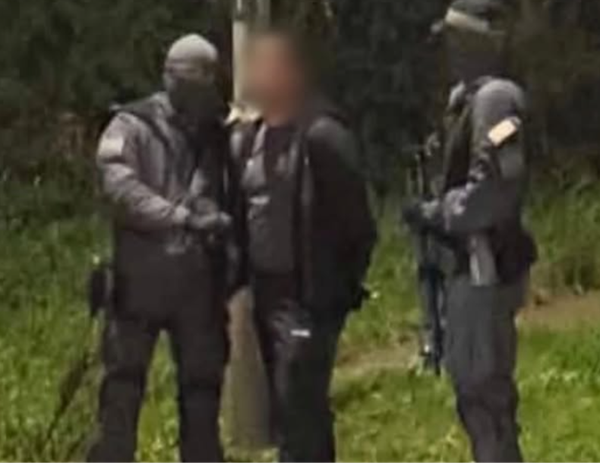
Garland himself was arrested on 7th of October 2005 in a Belfast hotel. Released on bail, Garland went south, he was re-elected president of the Workers’ Party in 2006 and fought against his extradition for years. The Dublin High Court ultimately refused to extradite the 77-year-old and referred his case to the DPP in late 2011. At his extradition hearings, US prosecutors described a “long-standing and large-scale supernotes distribution network (the Garland organisation) and detailed hotel handovers; roughly $80,000 of fake notes spread on a bed in Moscow’s Radisson, a further $160,000 to $180,000 handed over at the Savoy. By the time of his arrest, it was estimated that Garland and his associates had passed $28 million in North Korean supernotes.
The evidence was highly contested and circumstantial. It should be said plainly: Garland denied everything, he called the indictment politically motivated and was never convicted. And here the story twists into irony. For all the vigilance, the numbers were almost pathetic when comparing their effort. According to the Congressional Research Service, Garland's network distributed only a tiny fraction of the supernotes in circulation, against at least $45 to $75 million produced in North Korea in a year. The Secret Service spent sixteen years, two continents and the entire redesign of American currency fighting a man with a hat and a holdall. The dollar survived all of it, because a few tens of millions of forged paper could never bring down a currency that circulates in the hundreds of billions with two-thirds of it overseas.
Then, barely three years after Garland was led out of that Belfast hotel, the US economy imploded anyway. In September 2008 Lehman Brothers collapsed and the American financial system almost totally collapsed, not because of a single forged note anywhere in the world, but because of genuine dollars, genuinely printed by the Federal Reserve and lent against mortgages that could never be repaid. The supernote could fool a Federal Reserve checking machine; it could not touch the real economy. That feat was accomplished from the inside, by America’s own banks, with entirely legal money, in the open. The US treasury spent two decades guarding against a Dublin Marxist with Korean paper in his luggage; the vigilance was impeccable, but it was aimed at the wrong counterfeiters.
Bibliography
“Counterfeiting: Notes on a Scandal.” The Independent, 2009. https://www.independent.co.uk/news/world/asia/counterfeiting-notes-on-a-scandal-1776329.html
“The IRA Bagman and Kim Jong Il’s Hot Dollars.” The Independent. 2005. https://www.independent.co.uk/news/world/asia/the-ira-bagman-and-kim-jong-il-s-hot-dollars-518572.html
BBC News. “Seán Garland’s ‘Super Doller’ Case to Be Referred to DPP.” URL: https://www.bbc.com/news/world-europe-16762116
Hanley, Brian and Scott Millar. The Lost Revolution. London: Penguin, 2009.
O’Driscoll, Seán, and Conor Lally. “Garland Stands Accused by US over Counterfeit Made in North Korea.” Irish Times. October 2005
O’Driscoll, Seán. “US to seek ‘Fake Currency’ Extraditions.” Irish Times. October 2005.
Raidio Teilifis Eireann. “Garland Accused in Counterfeit Notes Plot.” RTE News, July 18, 2011. https://www.rte.ie/news/2011/0718/303851-garlands/
United States Attorney’s Office for the District of Columbia. “Leader of Irish Workers’ Party and Official Irish Republican Army Arrested in United Kingdom on U.S. Indictment Charging Trafficking in Counterfeit United States Currency.” Press release, October 8, 2005. https://web.archive.org/web/20051014220354/http://www.justice.gov/usao/dc/Press_Releases/2005_Archives/Oct_2005/05370.html