Gaeltacht Housing Constraints: Insights From TCD’s Research On Corca Dhuibhne
A new policy paper from Trinity College Dublin is bringing the housing crisis in Gaeltacht regions to the fore, where Gaeilgeoirí continue to be priced out.
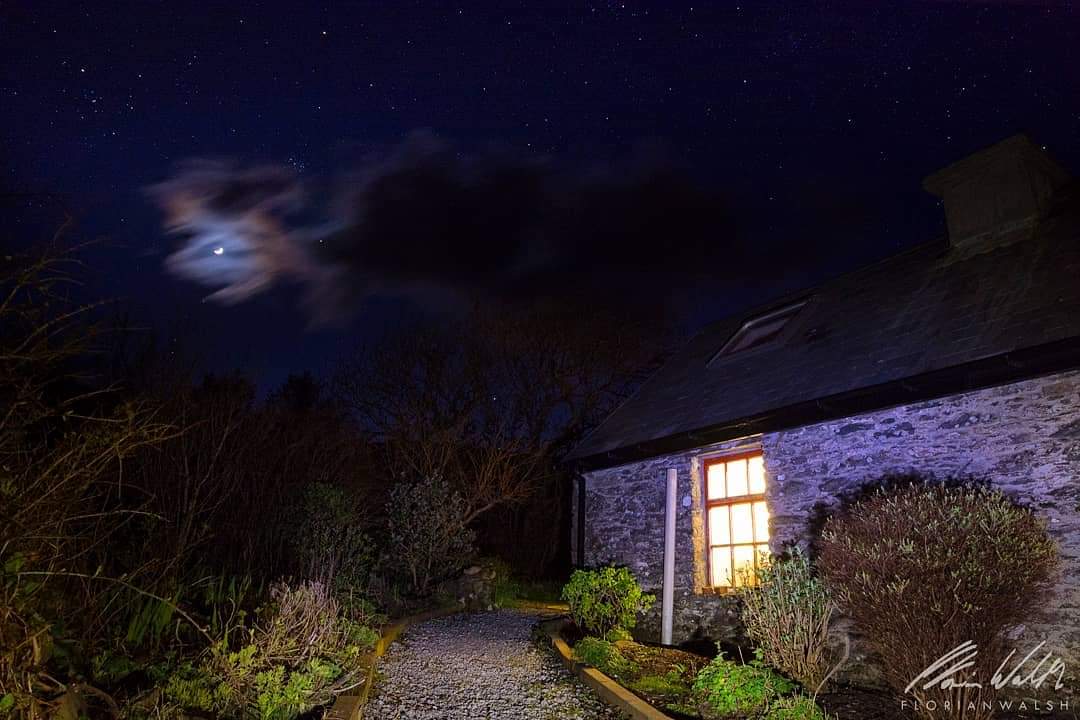
The housing crisis in the West Kerry Gaeltacht (Gaeltacht Chorca Dhuibhne), like elsewhere, isn’t a purely abstract policy problem. It's the daily reality of people who speak Irish/Gaeilge at home, raise children through the language, and watch the permanent housing stock shrink around them.
A new policy briefing paper published by Trinity College Dublin (TCD) in October 2026, titled ‘Ó Bhéal an Phobail: Tithíocht i nGaeltacht Chiarraí Thiar,’ captures that reality with unusual perspicuity. Led by Dr Ann Nolan and Dr Neasa Ní Chiaráin, it is drawn from focus groups conducted mostly as Gaeilge with residents of the West Kerry Language Planning Area and is read against Census data and the longer arc of Gaeltacht policy. The paper argues that the draft Sustainable Rural and Gaeltacht Housing National Planning Statement (2026) (NPS) will not achieve its central aim. Without direct intervention in the housing market, the researchers assert that speakers of Gaeilge with strong local connections will continue to be priced out of the very places where the language still functions as an authentic community language.
The study is modest in scope, honest about its limits and is not a statistically representative survey of the Gaeltacht as a whole. It offers a moment-in-time account of how people in one historically strong Irish-speaking district experience the collision of high house prices, scarce long-term rentals, and the steady conversion of dwellings into holiday homes and short-term lets. Five of the six focus groups were held as Gaeilge; the recordings were transcribed with the ABAIR-ÉIST speech recognition system developed at Trinity and corrected by hand. It allowed discussion that began in the language of the community to be analysed and reported without the usual filter of translation-first research. The participants’ accounts, placed beside national figures, point to a structural mismatch that language grants and planning statements alone cannot resolve.
Local incomes in the Gaeltacht Chorca Dhuibhne simply don’t stretch to current house prices or construction costs. Mortgage capacity is constrained. The State’s affordable-homeownership thresholds often sit above what working households can meet. Long-term private rental accommodation is extremely limited. The paper constructs a hypothetical couple, Sinéad and Fionn, from the study data: Irish speakers with local ties, steady employment, and the demographic and linguistic profile the draft NPS claims to support. They remain outside the market. This isn’t a outlier – it is the ordinary arithmetic of the area.
When permanent housing becomes inaccessible to the people who maintain everyday Irish use, intergenerational transmission is interrupted. The 20-Year Strategy for the Irish Language set a target of increasing the number of people who speak Irish daily outside the education system. Census 2022 recorded 20,261 daily speakers in Gaeltacht areas, 325 fewer than in 2016. The overall proportion of Gaeilge speakers in the Gaeltacht has continued to fall, even as the absolute number claiming ability has risen slightly. Housing is one of the mechanisms through which that decline is produced.
The connection between housing and language isn’t new. From the first Gaeltacht Commission in 1926, successive governments have recognised that linguistic vitality depends on the material conditions that keep communities intact. The Commission recommended improved housing, land redistribution and local employment. The Housing (Gaeltacht) Acts provided grants, not means-tested in the usual sense, whose explicit purpose was to support Gaeilge-speaking households. The Planning and Development Act 2000 required development plans covering Gaeltacht areas to include objectives for the protection of linguistic and cultural heritage. County development plans later introduced language enurement clauses requiring a demonstrated level of Irish competence for certain new dwellings.
Yet the practical record is one of partial measures and periodic retrenchment. The Gaeltacht Housing Grant Scheme was suspended in 2009 during the fiscal crisis and never restored. Austerity reduced expenditure on Gaeltacht development more sharply than the rhetoric of language revival would suggest. Economic liberalisation created some employment and slowed outward migration for a time, but it also deepened the integration of Gaeltacht areas into English-dominant commercial and cultural networks. Language planning under the Gaeltacht Act 2012 has placed heavy responsibility on local organisations, whose capacity is limited exactly where the pressures of the property market are strongest.
Against this background, the draft NPS of June 2026 represents a formal recognition that housing policy and language policy cannot be treated as separate domains. Its stated objective under the cultural and linguistic heritage principle is to facilitate Irish speakers with strong local connections to remain in, return to, or move between Gaeltacht areas. The information gathered in Gaeltacht Chorca Dhuibhne suggests that several of the proposed measures fall short of the conditions required to make that objective real.
The definition of economic need remains narrow. It emphasises occupations intrinsically tied to a rural location and sits awkwardly with state policies that promote remote work, digital employment and regional development. The concentration of listed occupations in traditionally male-dominated sectors also raises a gender-equality question that the draft doesn’t address. In multi-unit developments the proposed method for calculating the proportion of units reserved for Irish speakers would reduce existing provision in Gaeltacht Chorca Dhuibhne and similar areas. Basing future protection on declining daily-speaker numbers risks a downward spiral: as language use weakens, housing protections weaken, further accelerating the conditions that produced the decline. The reduction of the permanent-residence or enurement requirement from fifteen years to ten lacks a clearly stated rationale and weakens one of the few planning tools designed to keep dwellings in primary residential use. Linguistic Impact Statements are endorsed in principle, yet the draft leaves substantial methodological and institutional ambiguity unresolved. Participants in the study supported the idea of such statements but stressed the absence of a consistent national methodology, defined professional expertise, and an institutional structure capable of applying the requirement evenly across Gaeltacht areas.
The treatment of holiday homes and short-term rentals is particularly revealing. The draft recognises the pressure these uses create, but its principal restrictions concern new development. In small Gaeltacht communities the existing stock already converted to tourist use can represent a high share of total housing. The data indicates exactly this pattern, alongside an almost non-existent long-term rental market. Recent legislative proposals on short-term letting that apply lighter or delayed regulation to places under a 20,000 population threshold will leave districts such as Corca Dhuibhne exposed for longer. Enforcement of occupancy conditions has long been uneven; without dedicated resources for monitoring, new rules are likely to prove equally porous.
The recommendations that emerge from the study are practical rather than utopian. They call for closer integration of housing and language-planning policy, including consideration of the legal basis for proportionate regulation of residential property use in pursuit of community sustainability. Affordability thresholds for state-supported homeownership schemes need review in high-cost Gaeltacht areas. A proportion of the increased investment in social and affordable housing announced in Budget 2027 should be ring-fenced for these communities.
The forthcoming EU Affordable Housing Act (which is purportedly aimed at assisting local authorities across to tackle housing crises) offers a possible framework for designating Gaeltacht areas as housing-stress zones, unlocking powers over second homes, vacant dwellings and short-term lets. The derelict property tax introduced in the same budget could be used to return empty houses to permanent residential use, preferably through community land trusts or co-operative housing bodies rooted in the localities themselves.
Economic-need criteria should be broadened to recognise contemporary employment patterns, including remote work and professional roles that can contribute to the social and linguistic sustainability of the area. The fifteen-year enurement clause should be retained, subject to appropriate force-majeure provisions, and local authorities properly resourced to monitor and enforce it. A single statutory methodology for Linguistic Impact Statements, supported by qualified language-planning expertise and clear institutional responsibility, is required if the instrument is to have consistent effect. Finally, clearer guidance is needed on development in high-amenity and highly sensitive scenic areas, recognising that many Gaeltacht communities are concentrated precisely in such landscapes. Environmental protection and the maintenance of permanent populations need not be treated as opposing goals, but the draft currently leaves the reconciliation largely unexplained.
None of these measures will succeed if treated as technical adjustments to an essentially market-led system. The local focus groups repeatedly returned to the same point: the housing market as currently structured does not deliver permanent homes at prices local Irish-speaking households can meet. Language-specific interventions – welcome as the additional million euro for skills development in Budget 2027 may be – cannot compensate for the absence of the structural conditions that allow families to form and remain in place. The survival of a minority language as a community language depends less on the number of people who report an ability to speak it than on its routine use across generations within a viable community of speakers. When the permanent housing stock is displaced by seasonal and tourist uses, and when the cost of building or buying exceeds the incomes available from the local economy, those conditions are not met.
The timing of this paper is also relevant, as Comharchumann Chorca Dhuibhne (a local Gaeltacht development co-operative) sought to built housing units in Ballyferriter/Baile an Fheirtéaraigh, receiving a grant of €274,500 from Údarás na Gaeltachta to do so. This is because there is currently insufficient accommodation to meet the demand of its Irish language summer courses. A shortage of host families (a traditional source of accommodation) is a key cause of this, and that shortage is largely connected to the own locality’s housing crisis.
The paper is careful not to claim that housing is the sole determinant of language shift. It situates housing within a longer history of incomplete state commitment to the material basis of Gaeltacht communities. What it does claim, on the evidence of one Language Planning Area read against national trends, is that housing has become a decisive constraint. The draft National Planning Statement acknowledges the problem, but its current form doesn’t yet supply the means to address it. Whether the final version will do so depends on whether the consultation process treats the experiences recorded in the Gaeltacht Chorca Dhuibhne as inconvenient local detail, or as evidence of a structural failure that requires more than incremental change.
The pressures documented in the Gaeltacht Chorca Dhuibhne are a concentrated expression of Ireland’s wider housing failure, rather than a separate rural anomaly. Nationally, residential property prices remain exceptionally elevated relative to incomes, while long-term rental supply stays critically tight. Fewer than 2,400 homes were available to rent across the state at points in 2026. Social housing waiting lists have barely moved, despite record new-build delivery, remaining around 61,000–62,000 households. In coastal and tourist-heavy districts, the conversion of permanent dwellings into holiday homes and short-term lets intensifies the squeeze: analyses show commercial short-term listings frequently outnumber long-term rental properties by large margins, with particularly high ratios in Kerry and other western counties (as per an Indecon report submitted to the Housing Agency), and ESRI research showing a strong correlation between current short-term listings and previously recorded holiday homes in non-urban areas. Vacancy rates, though reported by the CSO to be lower than a decade ago, remain higher in rural areas (over double the rate in 2024), leaving stock unused while local households are priced out.
The extent of the housing crisis in Gaeltacht regions is finally coming to the fore, with the well-known economist David McWilliams claiming that it “is being destroyed.” The issues identified in the Gaeltacht Chorca Dhuibhne – such as mismatched local incomes and house prices, an almost non-existent long-term rental market, and the displacement of permanent housing by seasonal and tourist uses – thus mirrors the broader pattern of insufficient permanent supply, weak regulation of non-primary residential use, and affordability thresholds that exclude ordinary working households. In Gaeltacht districts, the same structural failures carry an additional consequence: the erosion of the demographic base required for intergenerational transmission of Gaeilge.
Pádraig Pearse famously opined that tír gan teanga, tír gan anam ('a country without a language is a country without a soul'). Those who hold republican values – the belief that a free Ireland must sustain the living communities and language that give it meaning – should treat the support of permanent housing in the Gaeltacht as a core campaigning priority.